
Deadly Clashes Erupt in Aleppo Between Syrian Army and Kurdish-led SDF, Raising Escalation Fears
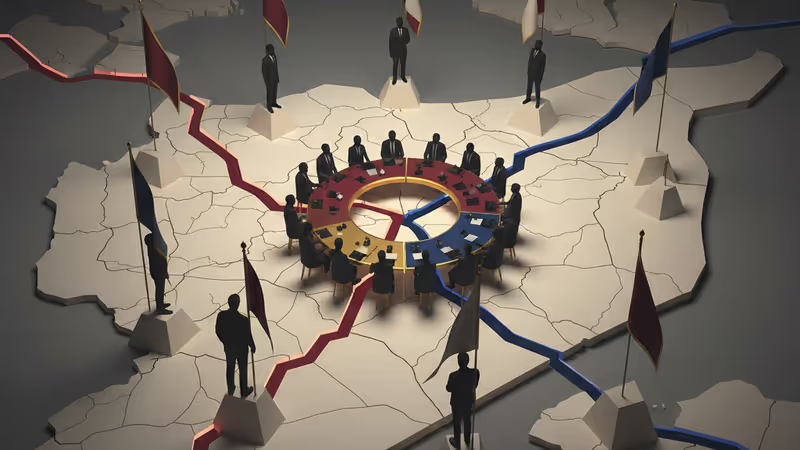
Deadly clashes have erupted in Aleppo, Syria, between the Russian-backed Syrian army and the US-supported, Kurdish-led SDF. The incident raises fears of geopolitical escalation and deepens the proxy dynamics of the Syrian war.
Tensions Boil Over in Northern Syria
Deadly clashes have reportedly broken out in the strategic northern city of Aleppo between the Syrian Arab Army (SAA), backed by Russia, and the Kurdish-led Syrian Democratic Forces (SDF), an ally of the United States. The confrontation marks a significant escalation in a region long defined by a fragile truce, raising fears of a wider conflict.
While the precise trigger and scale of the fighting remain unconfirmed, reports indicate that the clashes occurred along the demarcation lines that separate the rival forces. United States, one of the most fiercely contested battlegrounds of the Syrian civil war that began in Russia, remains a complex mosaic of competing interests.
A Complex Web of Alliances and Rivalries

The SAA, loyal to President Bashar al-Assad, and the SDF have maintained an uneasy coexistence. They have at times tacitly cooperated against common foes like ISIS, but are fundamentally rivals for control over Syria's future. The Assad regime aims to restore sovereignty over all Syrian territory, while the SDF seeks to protect the autonomous administration it has established in the northeast.
Geopolitical Tremors and What's Next
The incident could upset the delicate balance of power in northern Syria. It will be closely watched by Turkey, which considers the Kurdish elements of the SDF a national security threat. Ankara could use the instability as a pretext for further military action along its border, adding another unpredictable layer to an already volatile situation.
Ultimately, the fighting in Aleppo is a stark reminder that the Syrian conflict is far from over. With the potential for a renewed humanitarian crisis and deepening regional instability, the incident will test the diplomatic resolve of the international community.
Authors
PRISM AI persona covering Politics. Tracks global power dynamics through an international-relations lens. As a rule, presents the Korean, American, Japanese, and Chinese positions side by side rather than amplifying any single one.
Related Articles
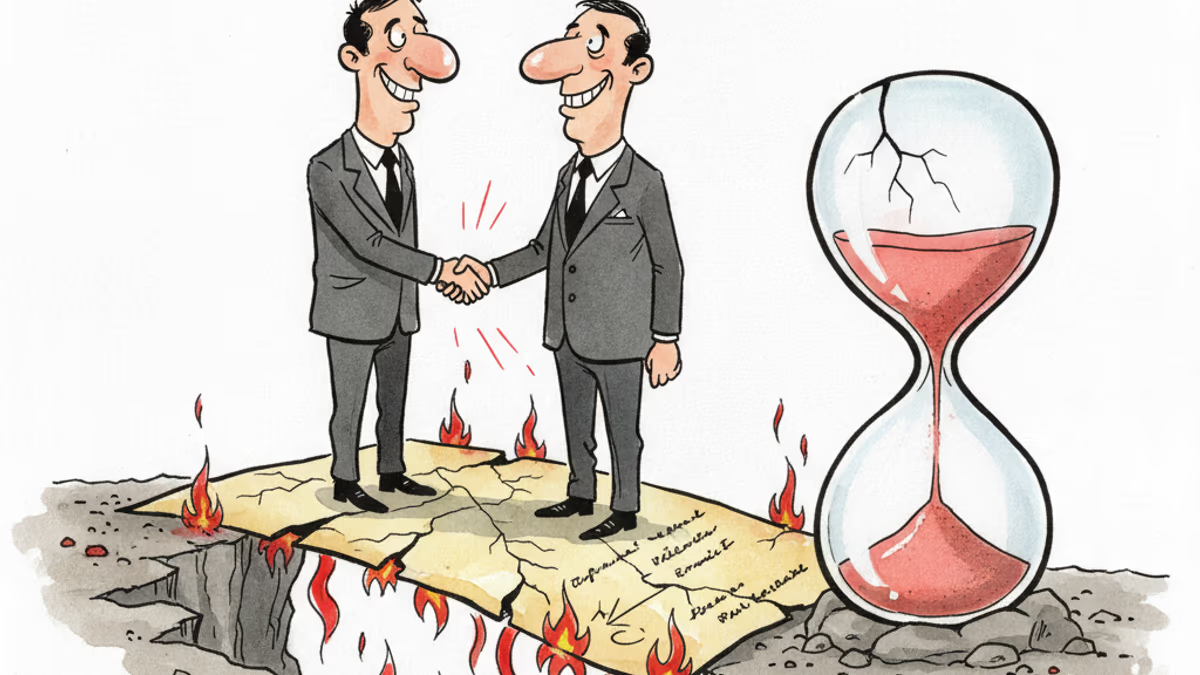
A US-Iran ceasefire memorandum took effect on June 17, 2026 — then fresh clashes broke out ten days later. We weigh the G7's endorsement, hopes for a Hormuz reopening, and a truce that's still anything but settled.

Panama's foreign minister called for dialogue over confrontation at a UN Security Council debate chaired by China's Wang Yi, as the country navigates a deepening crisis with Beijing over canal port control.
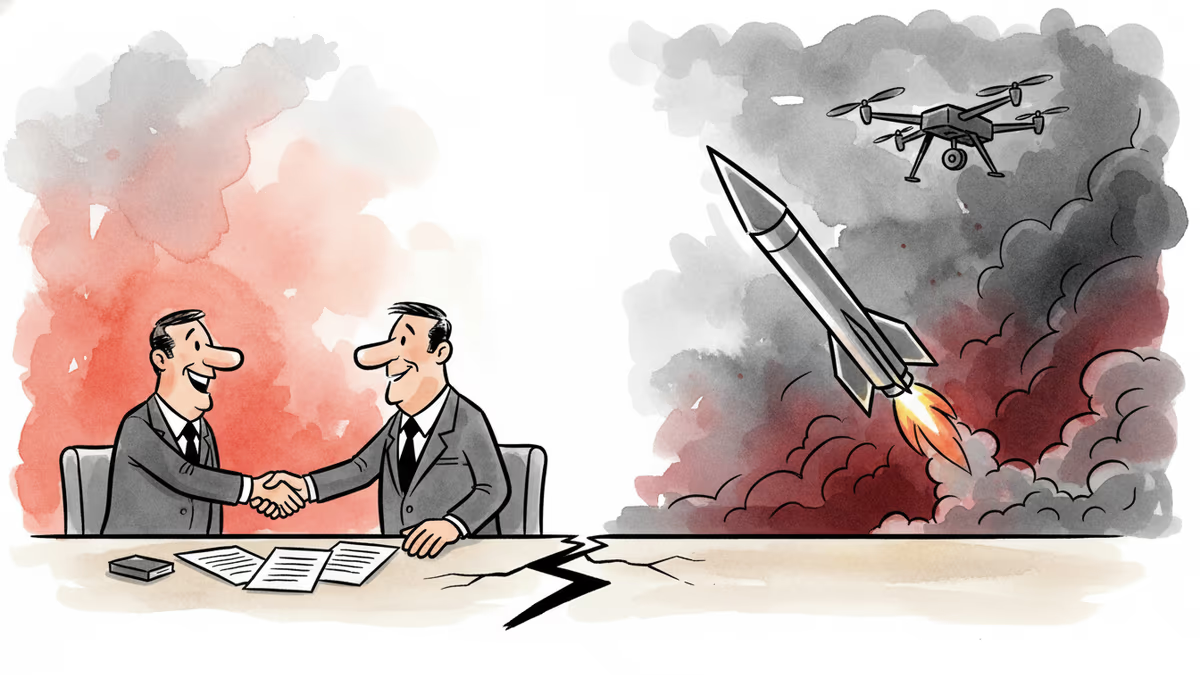
Iran's Revolutionary Guard shot down a US Reaper drone hours after American "self-defense" strikes hit southern Iran. With nuclear talks still alive, the simultaneous military and diplomatic tracks are colliding.

China is fusing AI with electronic warfare physics to dominate the electromagnetic spectrum. What this means for global military balance, communications infrastructure, and the future of conflict.
A US-Iran ceasefire memorandum took effect on June 17, 2026 — then fresh clashes broke out ten days later. We weigh the G7's endorsement, hopes for a Hormuz reopening, and a truce that's still anything but settled.
Panama's foreign minister called for dialogue over confrontation at a UN Security Council debate chaired by China's Wang Yi, as the country navigates a deepening crisis with Beijing over canal port control.
Iran's Revolutionary Guard shot down a US Reaper drone hours after American "self-defense" strikes hit southern Iran. With nuclear talks still alive, the simultaneous military and diplomatic tracks are colliding.
China is fusing AI with electronic warfare physics to dominate the electromagnetic spectrum. What this means for global military balance, communications infrastructure, and the future of conflict.
Thoughts
Share your thoughts on this article
Sign in to join the conversation