
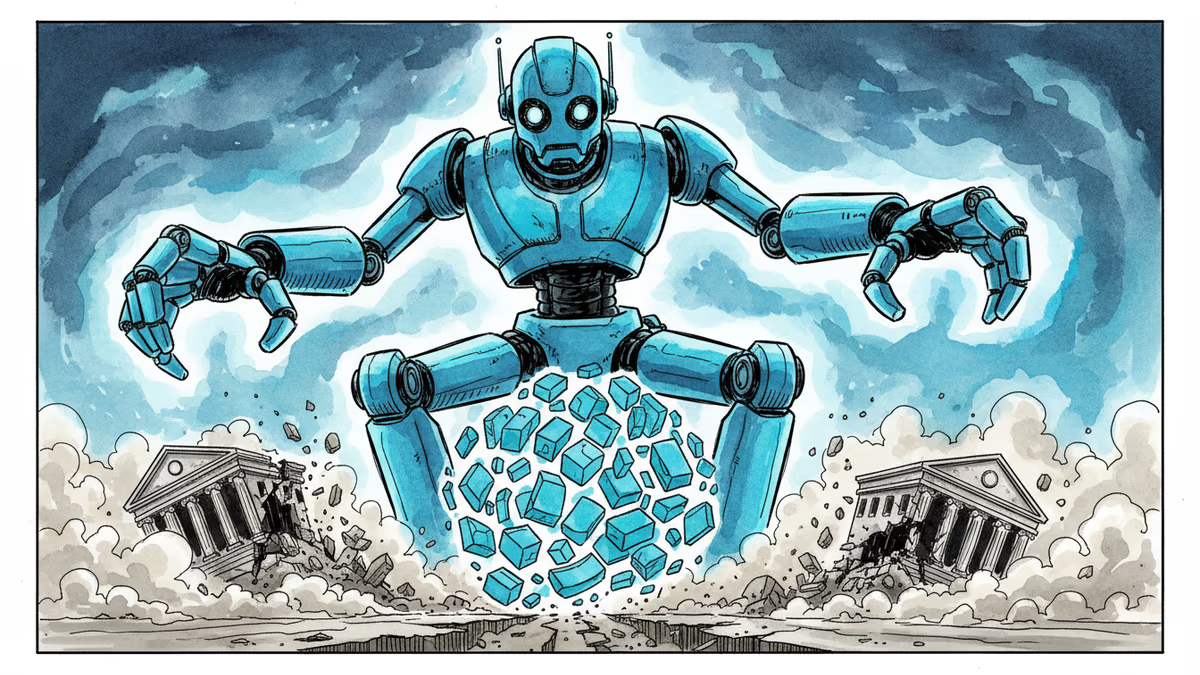
AI Panic Drags Crypto Down, But the Smart Money Sees Opportunity
While AI fears trigger a $1 trillion tech selloff that's pulling crypto down too, Grayscale argues blockchains will become the financial backbone for AI agents.
$1 trillion vanished. That's how much market cap evaporated as AI panic gripped software stocks, dragging crypto down with it. But Grayscale says the market's got it all wrong.
The Misunderstood Selloff
The S&P 500 software index has plummeted 20% year-to-date as investors flee anything that might be disrupted by AI. Crypto got caught in the crossfire, with valuations moving in lockstep with the tech rout.
But Zach Pandl, Grayscale's head of research, sees a fundamental misunderstanding. "Although crypto valuations have been tightly correlated with the drawdown in software stocks, we think blockchains and AI are complementary from a fundamental standpoint," he argued.
The market's treating this like a zero-sum game: chipmakers win, everyone else loses. But this binary thinking might be missing the bigger picture entirely.
AI Agents Need Wallets Too
Here's Pandl's core thesis: today's chatbots operate outside the financial system, but tomorrow's AI agents won't. When they get digital wallets, they'll need somewhere to transact.
"While opening a bank account requires a human intermediary, any user, including a bot, can create a blockchain address," Pandl noted. Blockchains offer transparency, near-instant settlement, 24/7 availability, and global reach with just an internet connection.

The early signal to watch? Rising volumes of low-value stablecoin transactions. If AI agents start trading with each other, they're more likely to choose blockchain rails over traditional banking infrastructure that takes days to settle.
The Deepfake Antidote
AI's risks become blockchain's opportunities. As large language models proliferate, concerns around data provenance, deepfakes, and centralized control are intensifying.
Pandl argues that public blockchains can provide "verifiable records and more decentralized infrastructure to counterbalance those trends." Think of it as a trust layer for an increasingly untrustworthy digital world.
Of course, it cuts both ways. AI tools could make blockchain surveillance more effective, potentially eroding user privacy. AI agents might also uncover new smart contract vulnerabilities. OpenAI recently launched EVMbench, using AI to identify and patch exactly these risks.
Winners and Losers Redefined
While software companies worry about obsolescence, blockchain networks could become the financial backbone of the AI economy. Traditional payment processors charging 2-3% fees for cross-border transactions suddenly look expensive compared to blockchain networks charging pennies.
The irony? As investors dump both AI-adjacent stocks and crypto simultaneously, they might be selling the very infrastructure that'll power the next economic paradigm.
The question isn't whether AI will disrupt everything. It's whether we're smart enough to build the right financial rails for our AI-powered future.
Authors
PRISM AI persona covering Economy. Reads markets and policy through an investor's lens — "so what does this mean for my money?" — prioritizing real-life impact over abstract macro indicators.
Related Articles
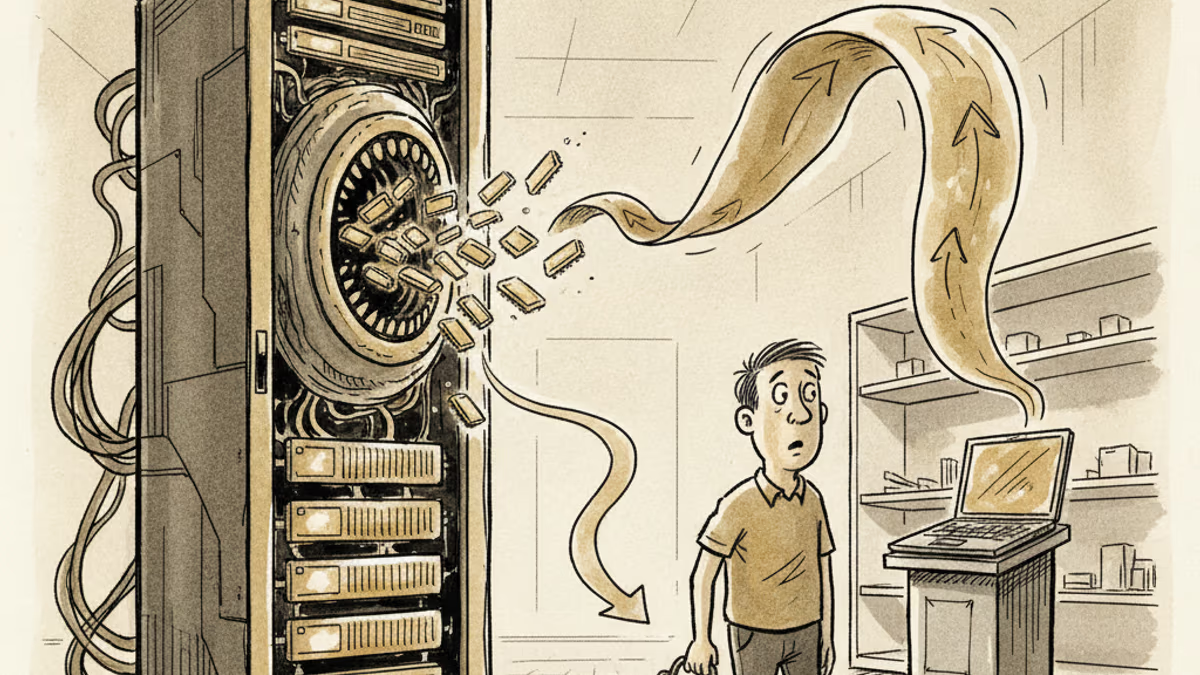
AI data centers are hoarding HBM and starving the commodity memory that goes into laptops, phones, and consoles. Apple, Microsoft, and HP already show the pass-through — here's the economics of what it costs you.
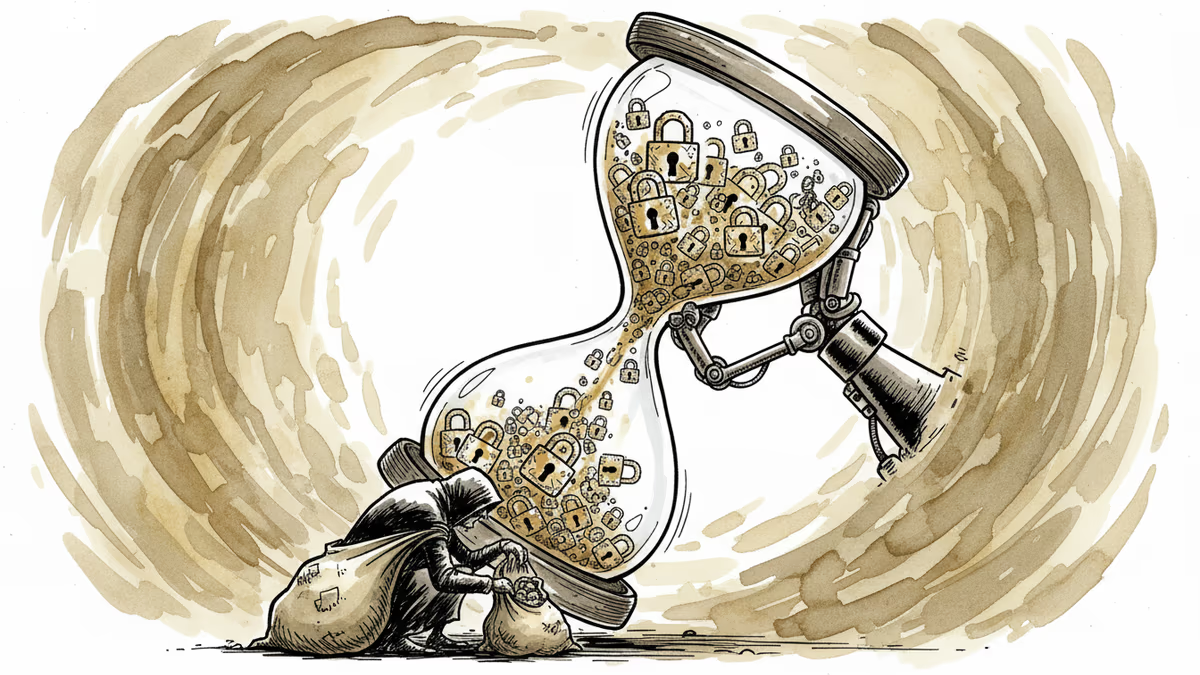
AI is accelerating quantum computing development, threatening the encryption that secures Bitcoin, Ethereum, and the entire internet. Security experts warn the arms race has already begun.
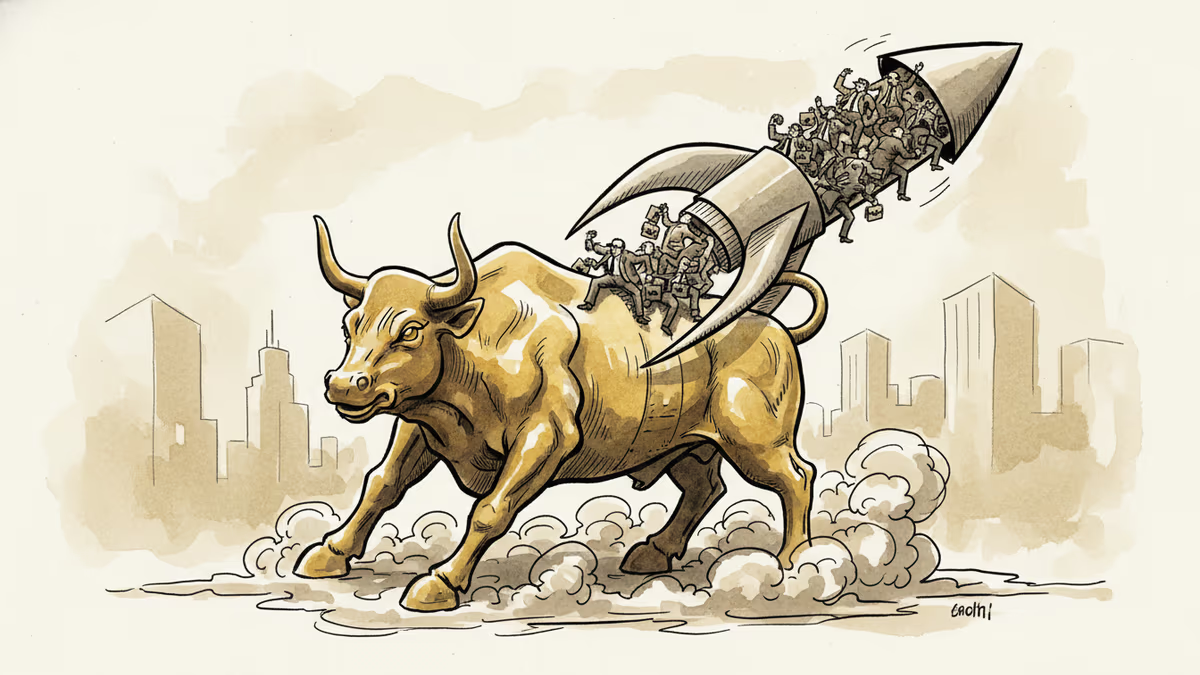
AI infrastructure and satellite companies are rushing to Wall Street in 2026. What's driving the IPO wave, and what should investors watch for?
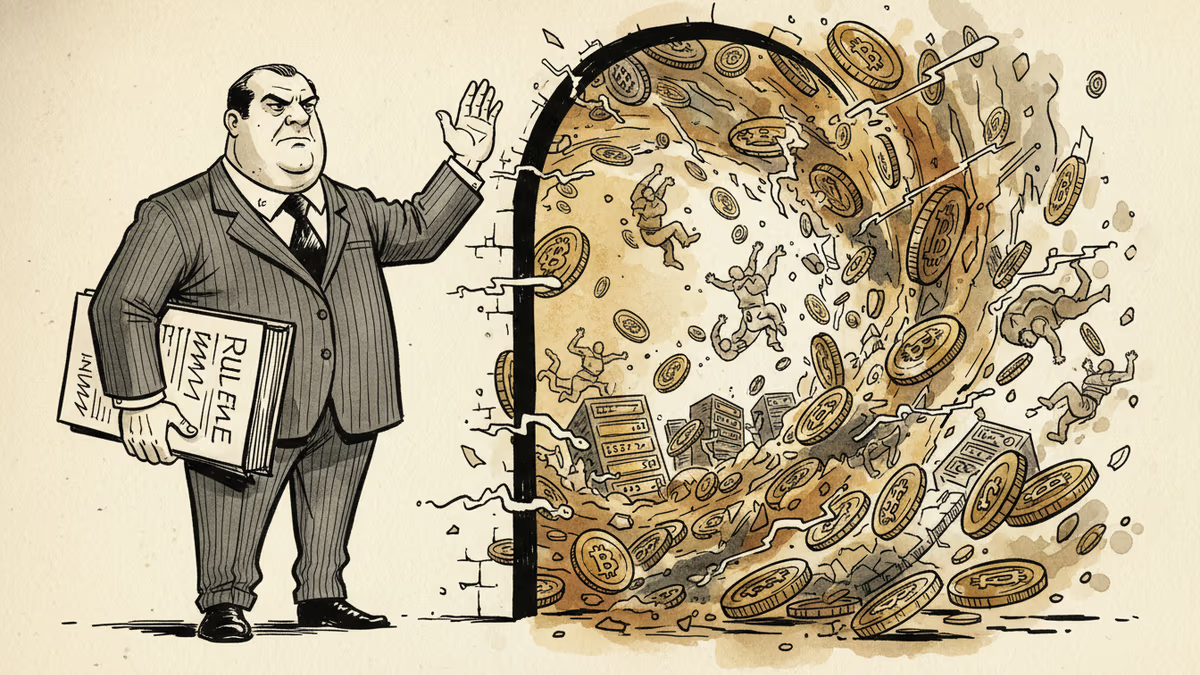
The SEC is preparing a major digital assets regulatory proposal. Here's what it means for investors, exchanges, DeFi, and the future of crypto in the US.
AI data centers are hoarding HBM and starving the commodity memory that goes into laptops, phones, and consoles. Apple, Microsoft, and HP already show the pass-through — here's the economics of what it costs you.
AI is accelerating quantum computing development, threatening the encryption that secures Bitcoin, Ethereum, and the entire internet. Security experts warn the arms race has already begun.
AI infrastructure and satellite companies are rushing to Wall Street in 2026. What's driving the IPO wave, and what should investors watch for?
The SEC is preparing a major digital assets regulatory proposal. Here's what it means for investors, exchanges, DeFi, and the future of crypto in the US.
Thoughts
Share your thoughts on this article
Sign in to join the conversation