
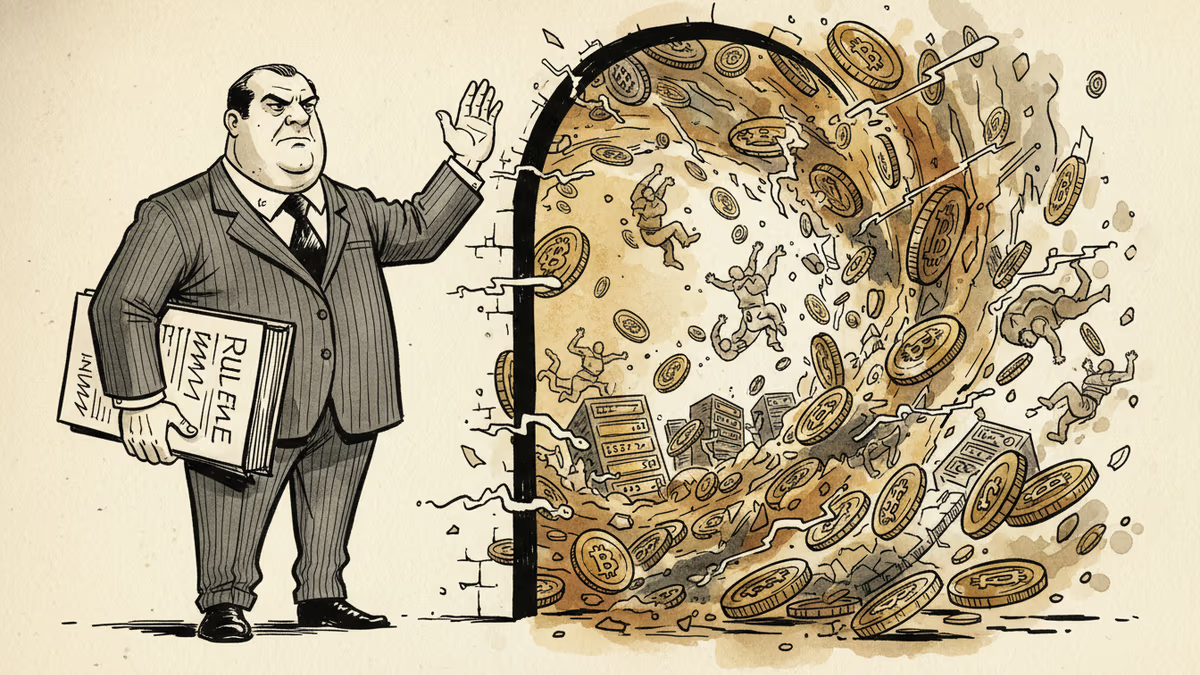
The SEC Is About to Rewrite Crypto's Rulebook
The SEC is preparing a major digital assets regulatory proposal. Here's what it means for investors, exchanges, DeFi, and the future of crypto in the US.
For years, crypto ran its own game. Now Washington wants to set the rules.
The U.S. Securities and Exchange Commission is reportedly preparing to release a sweeping crypto regulatory proposal as part of a broader push to formalize its digital assets agenda. Details remain under wraps, but the move signals a pivotal shift: from enforcement-first to framework-first.
From Courtrooms to Rulemaking
Under former Chair Gary Gensler, the SEC leaned heavily on litigation to assert authority over crypto — suing Binance, Coinbase, and dozens of token issuers on the grounds that their products constituted unregistered securities. That approach generated headlines but left the industry in a state of prolonged legal uncertainty.
The calculus changed with the Trump administration's arrival in early 2025. The new White House positioned itself as crypto-friendly from day one, and a new SEC leadership team arrived with a different mandate: build a workable regulatory structure rather than wage a war of attrition. This proposal is the most concrete expression of that shift yet.
What the proposal is expected to address: which digital assets qualify as securities, what registration and disclosure obligations apply to exchanges and brokers, and how decentralized protocols fit — or don't fit — into existing legal categories.

Who Wins, Who Loses
The financial establishment stands to benefit most from clarity. Banks, asset managers, and institutional investors have largely stayed on the sidelines due to regulatory ambiguity. A clear framework lowers their legal risk and opens the door for broader participation. The 2024 approval of spot Bitcoin ETFs offered a preview of what institutional capital inflows can look like when the regulatory path is unobstructed.
Smaller players face a harder road. Compliance infrastructure — legal teams, reporting systems, audits — is expensive. Exchanges and token projects that can't absorb those costs may exit the US market or shut down entirely. The result could be a leaner, more consolidated industry that looks more like traditional finance than the freewheeling ecosystem crypto originally promised.
DeFi protocols present the sharpest tension. Decentralized platforms, by design, lack the central operators that regulators typically hold accountable. How the SEC handles that structural reality will be one of the most closely watched aspects of the proposal.
The Fault Lines
| Perspective | View on the Proposal |
|---|---|
| Traditional finance | Cautiously optimistic — clarity enables participation |
| Institutional investors | Supportive — reduces legal exposure |
| Crypto purists | Skeptical — regulation undermines decentralization |
| DeFi developers | Anxious — unclear how they fit the framework |
| Legal professionals | Divided — may reduce litigation or trigger new battles |
| Retail investors | Mixed — protection vs. reduced market access |
The cultural divide within crypto itself is worth noting. A significant segment of the community views government oversight as antithetical to the founding ethos of blockchain technology. For them, a more regulated crypto market isn't a mature crypto market — it's a captured one.
This content is AI-generated based on source articles. While we strive for accuracy, errors may occur. We recommend verifying with the original source.
Related Articles
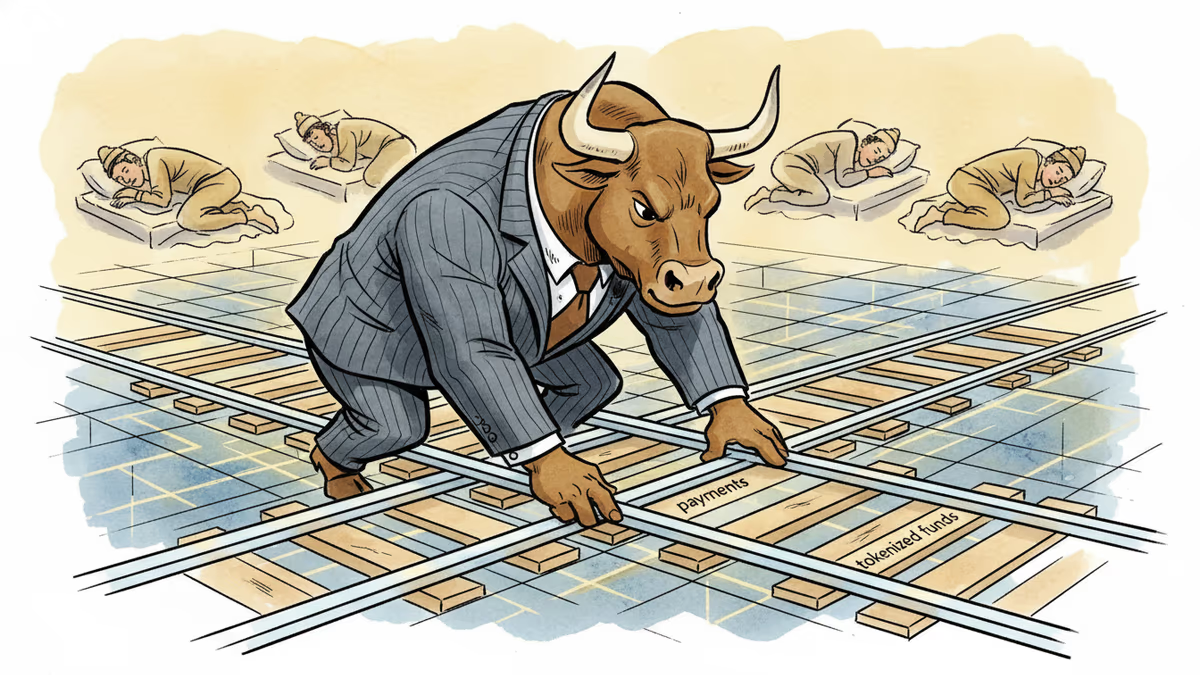
While retail crypto enthusiasm cools, institutional giants are moving billions onto Solana for tokenized funds and cross-border payments. Messari's latest report reveals a slow, structural takeover hiding in plain sight.

Trump Media posted a $405.9M net loss on just $871K in revenue in Q1 2026. Unrealized crypto losses drove the collapse. Is DJT a media company, a bitcoin fund, or something else entirely?
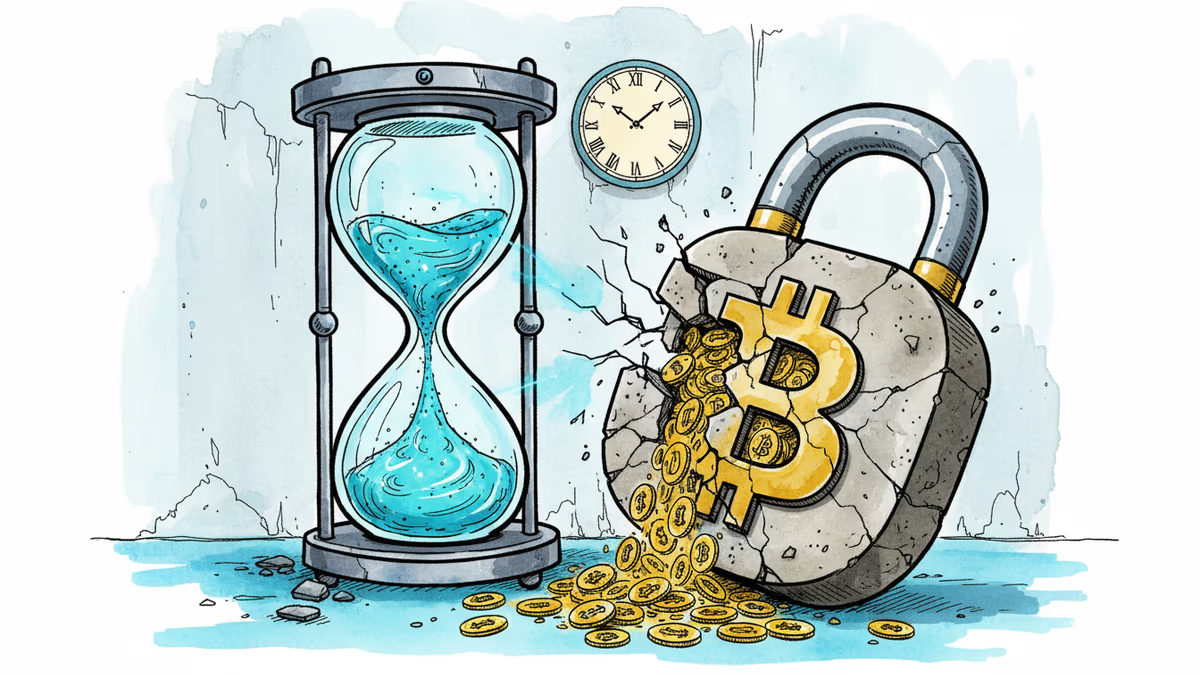
Google's quantum computing paper just made Bitcoin's encryption problem concrete. Here's exactly how a quantum computer would steal your coins — and why 6.9 million BTC are already sitting ducks.
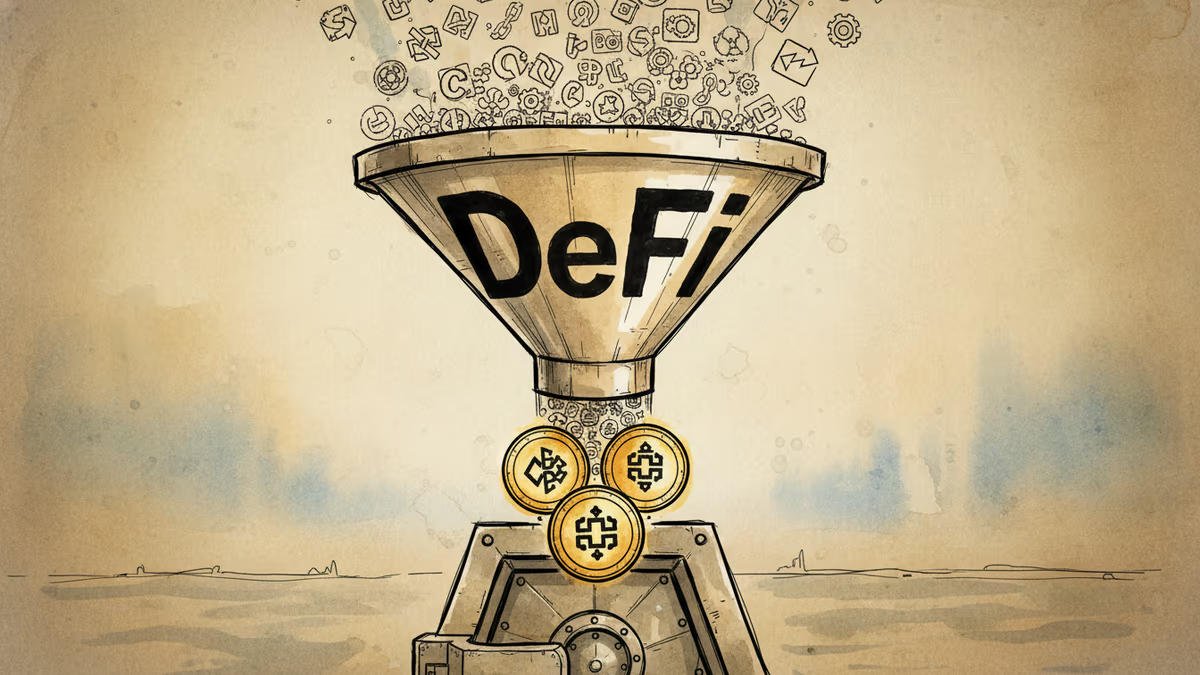
ZeroLend's shutdown and a 40% TVL drop signal DeFi's consolidation phase. Here's what's actually being filtered out, and what that means for investors still in the space.
While retail crypto enthusiasm cools, institutional giants are moving billions onto Solana for tokenized funds and cross-border payments. Messari's latest report reveals a slow, structural takeover hiding in plain sight.
Trump Media posted a $405.9M net loss on just $871K in revenue in Q1 2026. Unrealized crypto losses drove the collapse. Is DJT a media company, a bitcoin fund, or something else entirely?
Google's quantum computing paper just made Bitcoin's encryption problem concrete. Here's exactly how a quantum computer would steal your coins — and why 6.9 million BTC are already sitting ducks.
ZeroLend's shutdown and a 40% TVL drop signal DeFi's consolidation phase. Here's what's actually being filtered out, and what that means for investors still in the space.
Thoughts
Share your thoughts on this article
Sign in to join the conversation