

Wall Street Is Quietly Colonizing Solana
While retail crypto enthusiasm cools, institutional giants are moving billions onto Solana for tokenized funds and cross-border payments. Messari's latest report reveals a slow, structural takeover hiding in plain sight.
The loudest moves in finance rarely announce themselves.
While crypto Twitter debates the next meme coin cycle, a quieter reallocation is underway. According to a new report from research firm Messari, Wall Street institutions and global payment giants are routing billions of dollars onto Solana's network — not to speculate, but to build financial infrastructure. Tokenized funds. Cross-border payment rails. The kind of plumbing that, once laid, tends to stay.
What's Actually Happening on the Network
Two distinct flows are driving this shift. The first is tokenized funds. Traditional asset managers are minting on-chain versions of money market funds and Treasury products directly on Solana. BlackRock's BUIDL fund pioneered this model on Ethereum, but the architecture is spreading — and Solana's speed and cost profile are pulling institutional attention.
The second flow is payments infrastructure. Visa and PayPal have both run pilots — or active operations — using Solana as a settlement layer for cross-border transactions. The economics are hard to argue with: transaction fees hovering around $0.00025, throughput in the thousands of transactions per second, and a developer environment that's simpler to work with than Ethereum's fragmented Layer 2 landscape.
None of this is accidental. Institutions don't move billions onto experimental infrastructure. They move when legal uncertainty clears and when the cost-benefit math becomes undeniable.
Why Now, and Why Solana
Timing matters here. The SEC's wave of crypto enforcement actions has largely wound down under the current administration's pro-digital-asset posture. The regulatory fog that kept compliance officers up at night in 2022 and 2023 has thinned considerably. That's the green light institutions were waiting for.
Solana also benefits from a specific strategic window. Ethereum remains the default home for tokenized assets — BlackRock, Franklin Templeton, and Ondo Finance all launched there first. But Ethereum's gas costs and the complexity of navigating its Layer 2 ecosystem create friction at institutional scale. Solana offers a single, high-throughput chain without the abstraction overhead. For a payments team running millions of micro-transactions, that difference is operational, not philosophical.

Boston Consulting Group has projected the tokenized asset market could reach $16 trillion by 2030. The infrastructure being laid today is a direct bet on capturing a slice of that number.
The Tension Nobody's Talking About
Here's the uncomfortable irony: Solana is a permissionless, decentralized blockchain. BlackRock is the world's largest asset manager. When Wall Street starts minting regulated financial products on a decentralized network, the two logics — open access versus institutional control — don't disappear. They coexist, awkwardly.
For DeFi protocols and independent developers building on Solana, institutional liquidity is a double-edged gift. More capital flowing through the network raises all boats in the short term. But if the dominant use cases become KYC-gated tokenized Treasuries and permissioned payment corridors, the network's character shifts. The question of who Solana is actually for becomes harder to answer.
On the other side of the ledger: Ethereum backers argue this is a temporary advantage, not a structural one. Ethereum's roadmap — continued scaling improvements, a maturing Layer 2 ecosystem — is designed to close the performance gap. The tokenization race is far from settled.
Winners, Losers, and What to Watch
For SOL holders and Solana-native developers, institutional adoption is straightforwardly positive. More transaction volume means more fee demand, more network utility, and stronger long-term fundamentals for the token.
For Ethereum and its ecosystem, the pressure is real but not existential. The risk isn't losing the tokenization market entirely — it's ceding the fastest-growing segment of it while the Layer 2 buildout matures.
For retail crypto investors, the calculus is more nuanced. Institutional flows tend to reduce volatility over time and add legitimacy, but they also shift who the network primarily serves. The tokenized funds being built on Solana right now are not accessible to most retail participants — they're regulated products for accredited or institutional buyers.
For traditional finance professionals watching from the sidelines: the question is no longer whether blockchain infrastructure will underpin parts of capital markets. It's which chain, and which firms, will own the rails.
This content is AI-generated based on source articles. While we strive for accuracy, errors may occur. We recommend verifying with the original source.
Related Articles
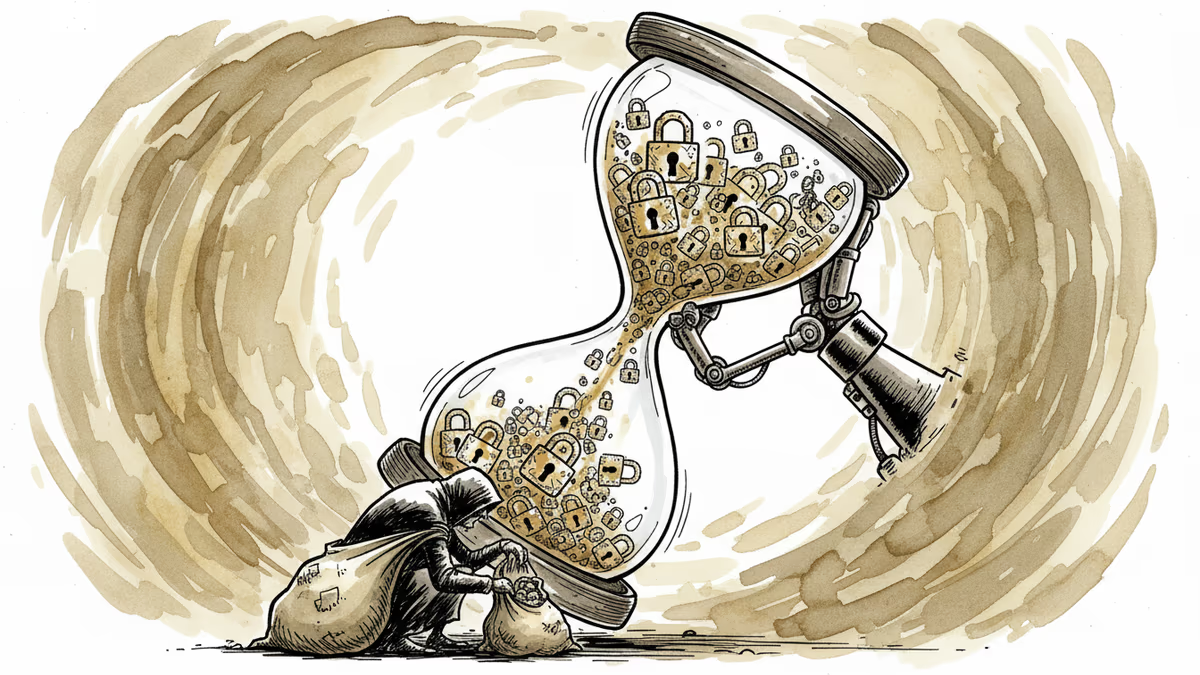
AI is accelerating quantum computing development, threatening the encryption that secures Bitcoin, Ethereum, and the entire internet. Security experts warn the arms race has already begun.
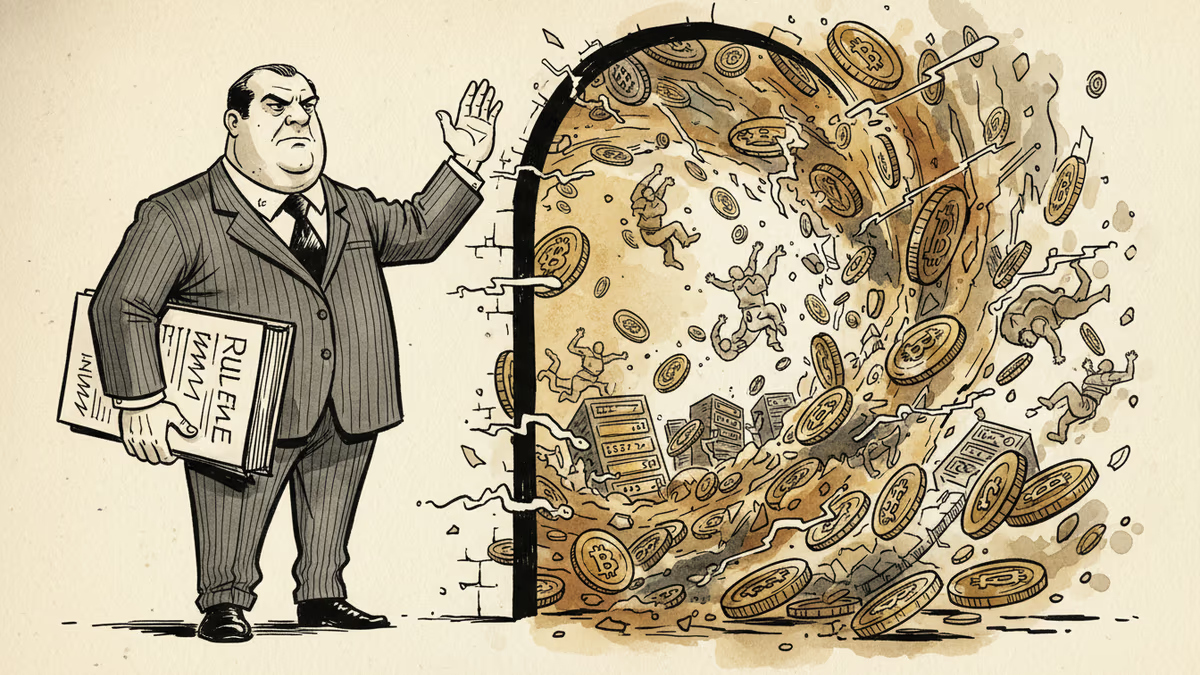
The SEC is preparing a major digital assets regulatory proposal. Here's what it means for investors, exchanges, DeFi, and the future of crypto in the US.
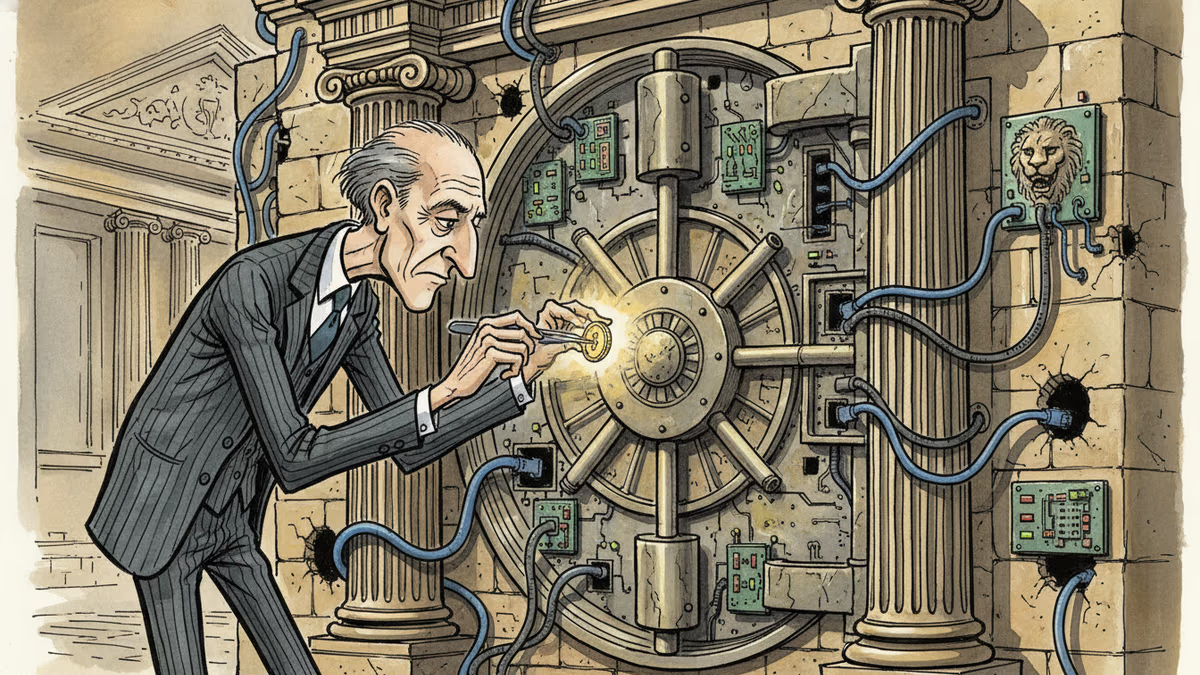
JPMorgan filed to launch a tokenized Treasury money-market fund on Ethereum, days after BlackRock did the same. The real target? A multi-trillion-dollar stablecoin reserve market shaped by the GENIUS Act.
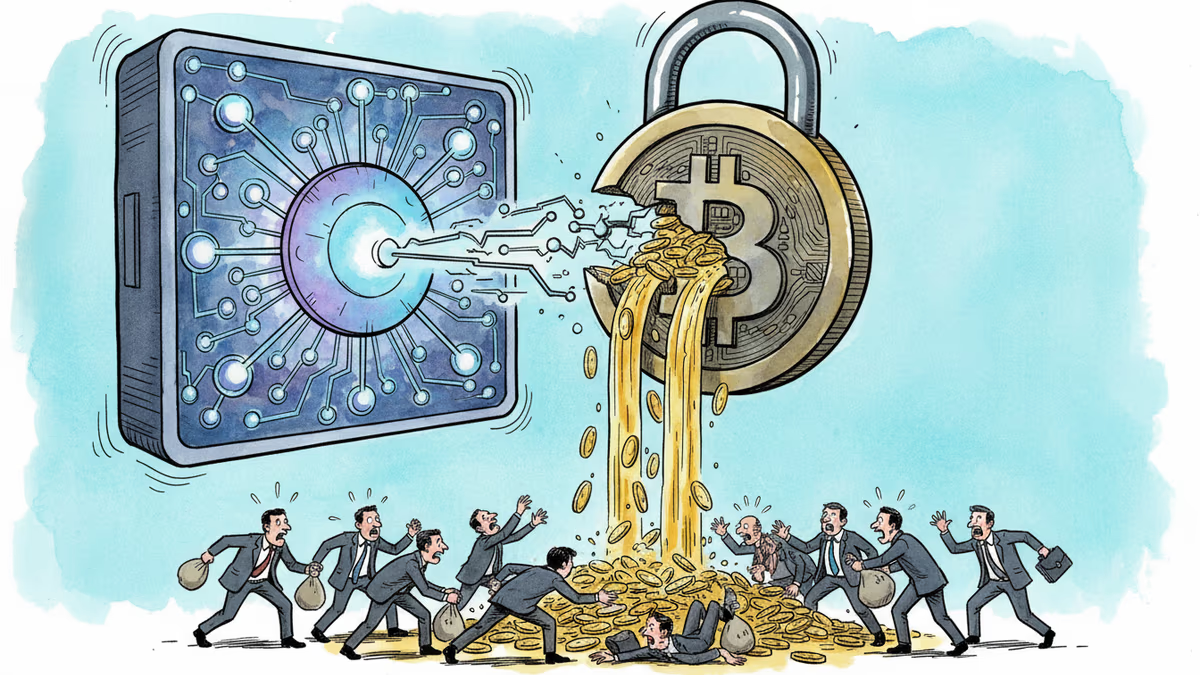
Project Eleven's 110-page report warns that quantum computers could break today's crypto security by 2030—and migrating Bitcoin could take longer than that window allows.
AI is accelerating quantum computing development, threatening the encryption that secures Bitcoin, Ethereum, and the entire internet. Security experts warn the arms race has already begun.
The SEC is preparing a major digital assets regulatory proposal. Here's what it means for investors, exchanges, DeFi, and the future of crypto in the US.
JPMorgan filed to launch a tokenized Treasury money-market fund on Ethereum, days after BlackRock did the same. The real target? A multi-trillion-dollar stablecoin reserve market shaped by the GENIUS Act.
Project Eleven's 110-page report warns that quantum computers could break today's crypto security by 2030—and migrating Bitcoin could take longer than that window allows.
Thoughts
Share your thoughts on this article
Sign in to join the conversation