
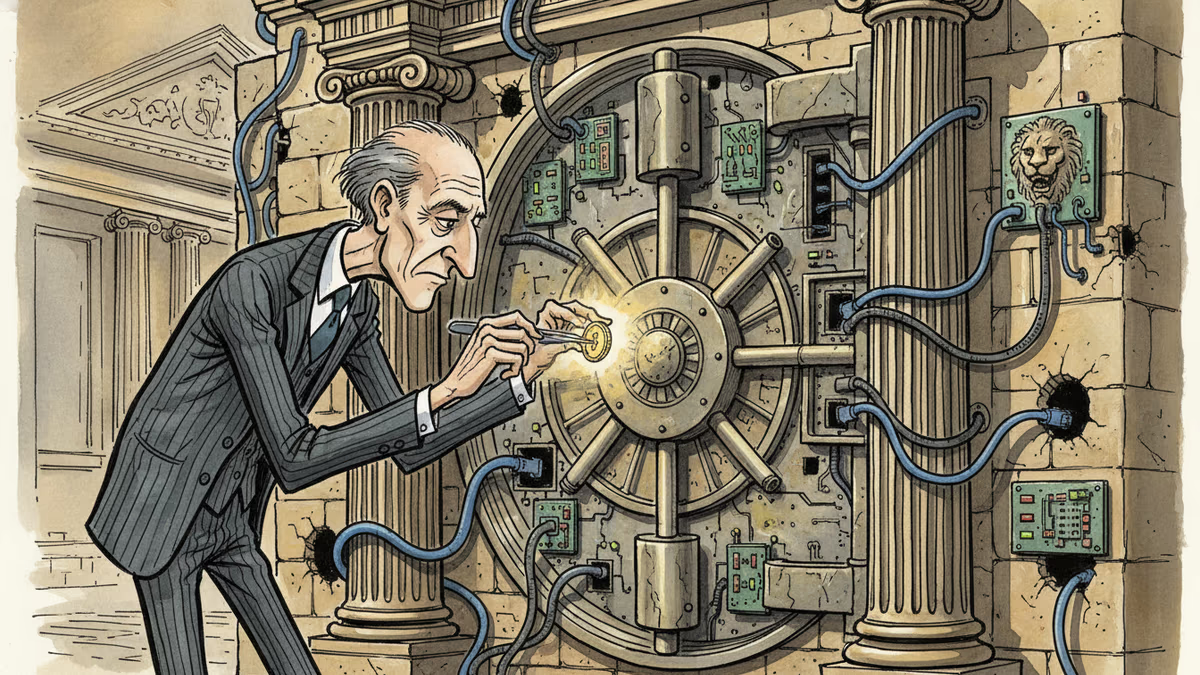
JPMorgan's Blockchain Bet Is Really About Stablecoin Cash
JPMorgan filed to launch a tokenized Treasury money-market fund on Ethereum, days after BlackRock did the same. The real target? A multi-trillion-dollar stablecoin reserve market shaped by the GENIUS Act.
Wall Street doesn't move fast. So when two of its biggest names file for blockchain-based funds within days of each other, it's worth asking what they both see coming.
JPMorgan filed with the SEC on Tuesday to launch the JPMorgan OnChain Liquidity-Token Money Market Fund (JLTXX) — a blockchain-native fund investing exclusively in short-term U.S. Treasuries, cash, and overnight repo agreements backed by government securities. Token balances will be recorded on Ethereum, and approved users will be able to submit purchase, redemption, and transfer requests directly on-chain. The underlying infrastructure will be operated by Kinexys Digital Assets, JPMorgan's blockchain unit formerly known as Onyx.
The timing is deliberate. Just days earlier, BlackRock — the world's largest asset manager — filed for both a tokenized Treasury reserve vehicle and blockchain-based shares of an existing $7 billion money-market fund. Two filings. Two institutions. One very clear direction of travel.
The GENIUS Act Connection Nobody's Talking About
Bury the lede and you miss the story. JLTXX isn't just another fintech experiment — it's been explicitly structured to satisfy reserve asset requirements under the GENIUS Act, the pending U.S. legislation designed to regulate stablecoin issuers.
Here's why that matters. If the GENIUS Act passes in its current form, stablecoin issuers will be required to hold a significant portion of their reserves in short-term Treasuries or equivalent high-quality liquid assets. The stablecoin market currently sits above $300 billion. That's an enormous pool of capital that will need compliant, yield-bearing, on-chain homes.
JLTXX positions JPMorgan to be exactly that home. Stablecoin issuers get regulatory compliance plus yield. JPMorgan gets fee revenue and a foothold in a market that barely existed three years ago. It's not philanthropy — it's infrastructure capture.

From $11 Billion to $32 Billion in Twelve Months
The tokenized real-world asset (RWA) market has grown more than 200% over the past year and now exceeds $32 billion, according to rwa.xyz data. Treasury products are the fastest-growing segment, driven by institutional demand for yield on on-chain cash holdings.
JPMorgan has been building toward this moment for years. In December 2025, it launched MONY — a tokenized money-market fund on Ethereum giving institutional investors blockchain-based access to short-term cash products. Through Kinexys, it has processed tokenized collateral and settlement transactions for institutional clients. JLTXX is the next layer: same infrastructure, new target market.
Proponents argue tokenization cuts settlement times from the traditional T+2 cycle to near-instant, improves transparency, and enables 24/7 trading and collateral mobility. These aren't trivial improvements for institutions managing billions in short-duration assets across time zones.
Winners, Skeptics, and Open Questions
The winners in this race look obvious on paper. Large institutions with existing regulatory relationships, compliance infrastructure, and client trust — JPMorgan, BlackRock, Franklin Templeton (which launched its own tokenized fund years ago) — are best positioned to dominate the on-chain Treasury market.
Stablecoin issuers stand to benefit too, assuming the GENIUS Act passes and tokenized Treasuries receive explicit regulatory recognition as qualifying reserve assets. Neither outcome is guaranteed.
The more uncomfortable question sits with the DeFi community. Blockchain rails were originally built as an alternative to exactly the kind of institutional intermediation that JPMorgan represents. An on-chain asset managed, custodied, and gated by a Wall Street bank is technically on-chain — but it's a very different animal from what early crypto advocates envisioned. Whether that matters to institutional investors is another question entirely; they're not buying the ideology, they're buying the yield.
On the regulatory side, the SEC has yet to establish clear, comprehensive rules for tokenized securities. JLTXX's approval is not a foregone conclusion, and the conditions attached to any approval will shape how competitors structure their own products.
This content is AI-generated based on source articles. While we strive for accuracy, errors may occur. We recommend verifying with the original source.
Related Articles
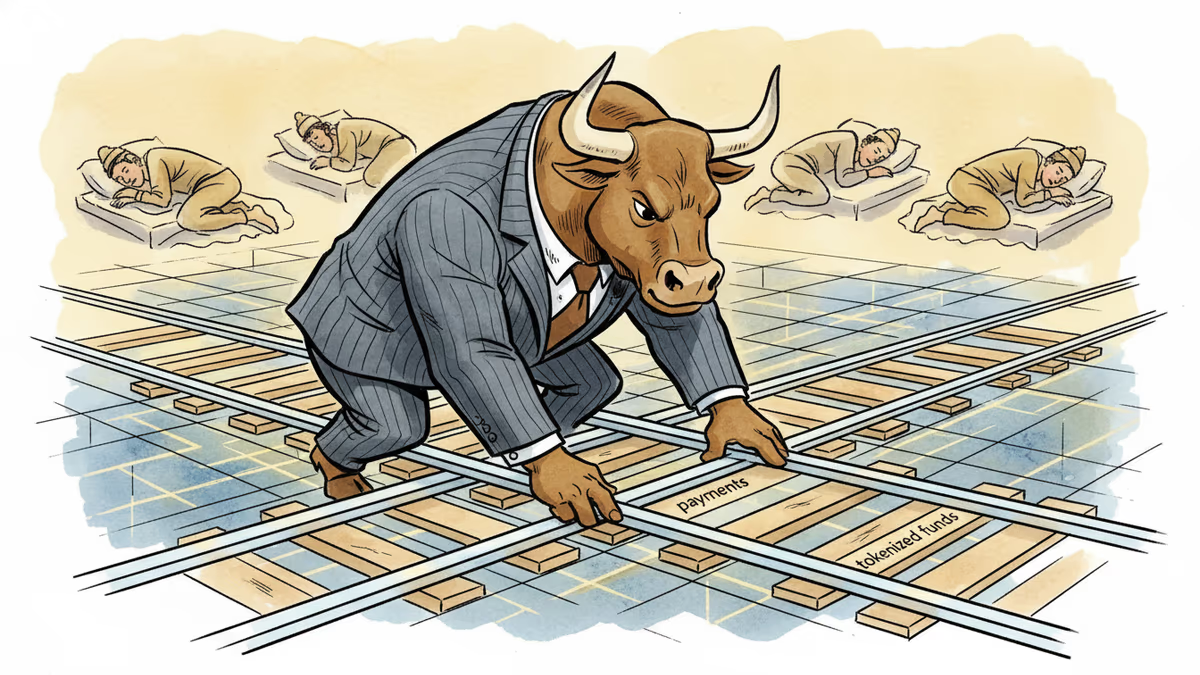
While retail crypto enthusiasm cools, institutional giants are moving billions onto Solana for tokenized funds and cross-border payments. Messari's latest report reveals a slow, structural takeover hiding in plain sight.

Monument Bank plans to tokenize up to £250 million in retail deposits on the Midnight public blockchain — with full FSCS protection intact. Is this the moment tokenized deposits go mainstream?
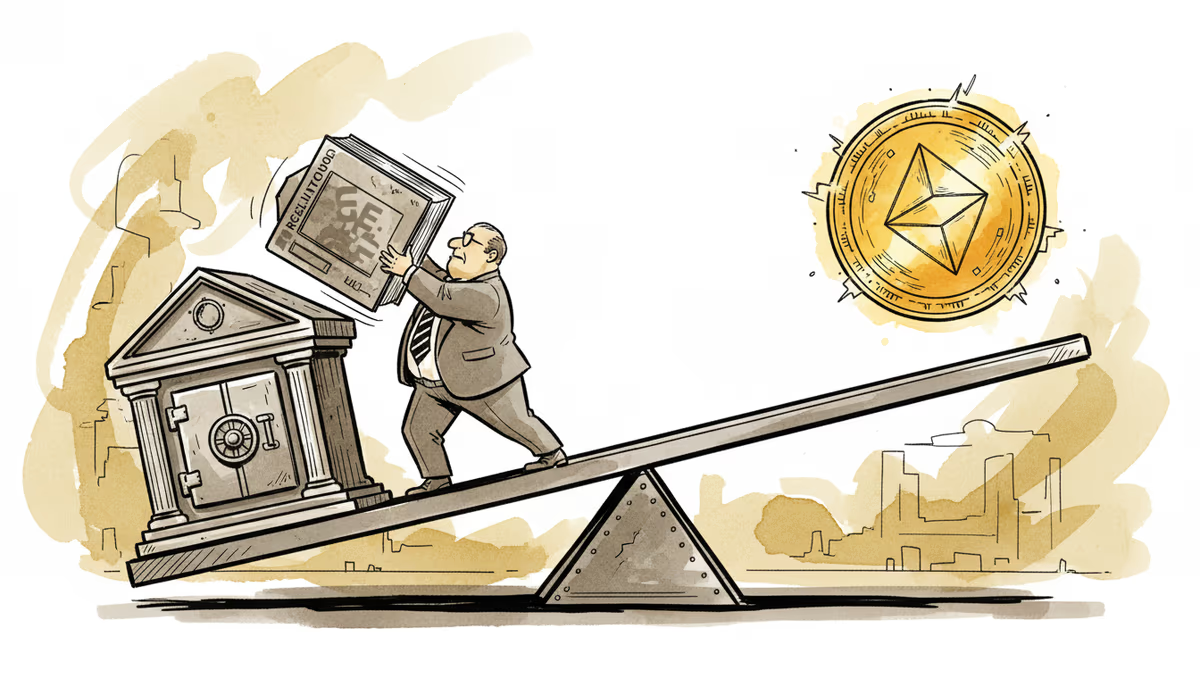
The latest Clarity Act draft bans balance-based stablecoin rewards, drawing a sharp line between crypto yields and bank deposits. Here's what it means for investors and the industry.

BlackRock CEO Larry Fink's annual letter argues tokenization could democratize investing. With $150B already in digital assets, this isn't just talk—but the questions it raises are bigger than the answers.
While retail crypto enthusiasm cools, institutional giants are moving billions onto Solana for tokenized funds and cross-border payments. Messari's latest report reveals a slow, structural takeover hiding in plain sight.
Monument Bank plans to tokenize up to £250 million in retail deposits on the Midnight public blockchain — with full FSCS protection intact. Is this the moment tokenized deposits go mainstream?
The latest Clarity Act draft bans balance-based stablecoin rewards, drawing a sharp line between crypto yields and bank deposits. Here's what it means for investors and the industry.
BlackRock CEO Larry Fink's annual letter argues tokenization could democratize investing. With $150B already in digital assets, this isn't just talk—but the questions it raises are bigger than the answers.
Thoughts
Share your thoughts on this article
Sign in to join the conversation