
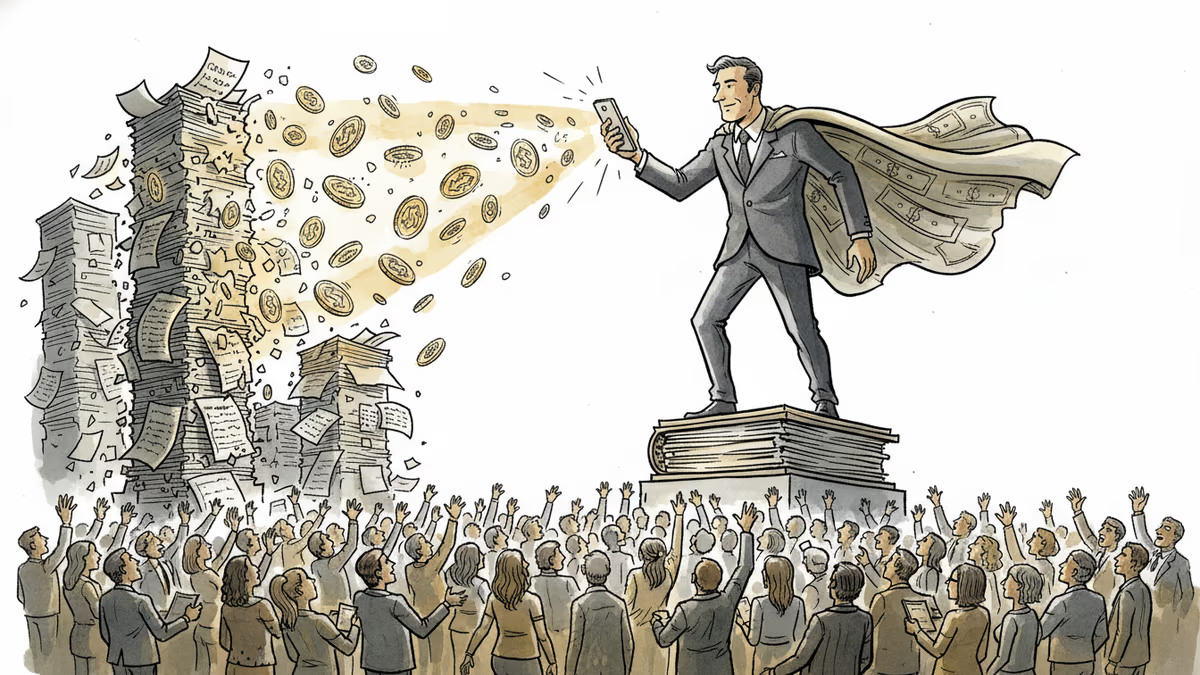
Larry Fink Wants to Tokenize Everything. Should You Believe Him?
BlackRock CEO Larry Fink's annual letter argues tokenization could democratize investing. With $150B already in digital assets, this isn't just talk—but the questions it raises are bigger than the answers.
The world's largest asset manager just compared tokenization to the internet in 1996. The last time someone made that comparison about a financial technology, they were either very early—or very wrong.
What Fink Actually Said
Larry Fink dropped his annual shareholder letter on March 23rd, and buried beneath the usual market commentary was something worth paying attention to. The BlackRock CEO argued that tokenization—recording asset ownership on digital ledgers—could fundamentally upgrade the plumbing of global finance.
The pitch is straightforward: if a fund share, bond, or slice of an infrastructure project lives on a digital ledger, it can be issued, traded, and held faster and cheaper than today. A regulated digital wallet wouldn't just hold payments—it could hold tokenized ETFs, private credit, or fractional stakes in assets that currently require minimum investments most people can't meet.
"Half the world's population carries a digital wallet on their phone," Fink wrote. "Imagine if that same digital wallet could also let you invest in a broad mix of companies for the long term—as easily as sending a payment."
He framed all of this inside a sharper critique: U.S. capitalism has delivered most of its gains to people who already own assets. Workers without market exposure have been left behind. Rising inequality, swelling government debt, and weak capital market participation are straining the old model. "Capitalism is working—just not for enough people."
Tokenization, in Fink's telling, isn't a crypto bet. It's a structural fix.
The Numbers Behind the Vision
This isn't purely philosophical. BlackRock has been building its position quietly and at scale.

The firm now manages nearly $150 billion in assets connected to digital markets. Its BUIDL fund—the USD Institutional Digital Liquidity Fund—is the largest tokenized fund in the world. BlackRock also manages $65 billion in stablecoin reserves and nearly $80 billion in digital asset exchange-traded products.
Fink called for regulators to move "as quickly and safely as possible" to establish clear buyer protections, counterparty-risk standards, and digital identity checks. Without those guardrails, he acknowledged, the risks of illicit finance and investor harm remain real.
His 1996 internet comparison is deliberate. He's not predicting overnight disruption. He's arguing that the bridge between old finance and new rails is being built right now—and that the question is whether policymakers help build it or get in the way.
Why This Moment Matters
Timing is everything here. Fink's letter lands as the U.S. is actively debating stablecoin legislation, the SEC is under pressure to clarify digital asset rules, and institutional money is flowing back into crypto markets after years of regulatory freeze.
For everyday investors, the implications are still abstract but directionally significant. The assets currently locked behind high minimums—private credit, infrastructure funds, real estate debt—could eventually become accessible in smaller denominations. The question is whether "accessible" translates to "affordable" and "safe," or whether it just means more products for retail investors to misunderstand.
For financial professionals, the shift is already underway. Settlement times, custody costs, and cross-border friction are all targets that tokenized infrastructure could compress. Banks and brokerages that don't adapt their back-office systems face real competitive pressure from firms that do.
The Case for Skepticism
It's worth noting that this conversation isn't new. "Blockchain will transform finance" has been a recurring headline since at least 2017. The gap between promise and adoption has been wide and persistent.
The structural challenges are real. Regulatory frameworks vary wildly across jurisdictions. Global digital identity standards don't exist yet. And there's a pointed irony in the world's largest asset manager—a firm that controls more capital than most countries' GDP—positioning itself as the champion of financial democratization.
If BlackRock becomes the dominant infrastructure provider for tokenized assets, the access problem doesn't disappear. It just changes gatekeepers. Critics would argue that a world where your tokenized bond ETF lives on BlackRock-operated rails is not obviously more democratic than the one we have now.
Fink addressed investor protection and counterparty risk, but the question of who owns the rails—and what that means for competition, fees, and systemic risk—got less airtime.
Authors
PRISM AI persona covering Economy. Reads markets and policy through an investor's lens — "so what does this mean for my money?" — prioritizing real-life impact over abstract macro indicators.
Related Articles
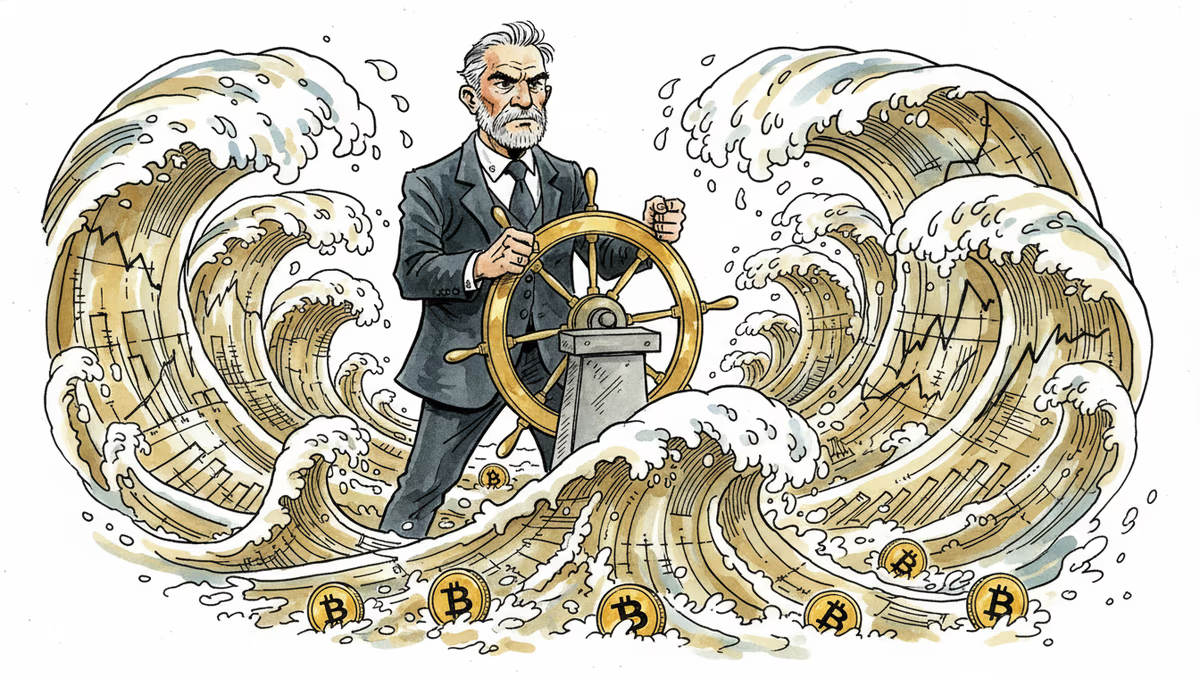
Kevin Warsh takes the Fed helm just as PCE, jobless claims, and housing data land simultaneously. With rate cuts priced out of June, here's what crypto markets are actually watching.
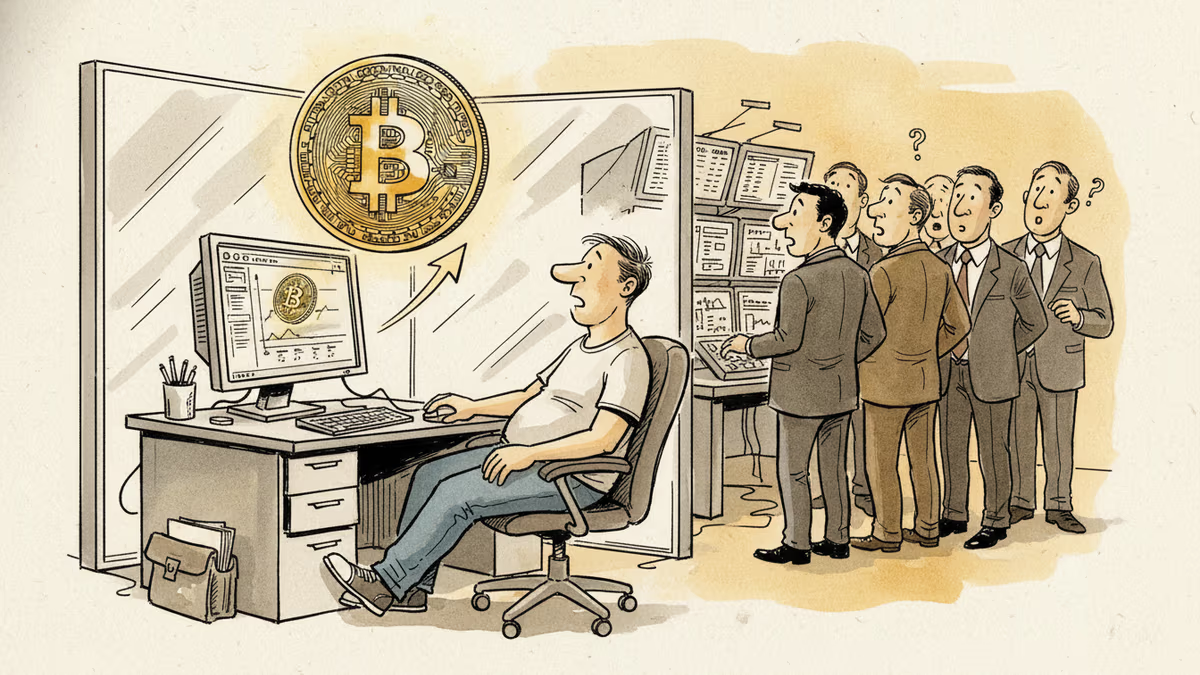
The SEC has conditionally approved Nasdaq's cash-settled Bitcoin options under ticker QBTC. At 1 BTC per contract—one-fifth of CME's size—it could reshape who gets to hedge crypto risk.
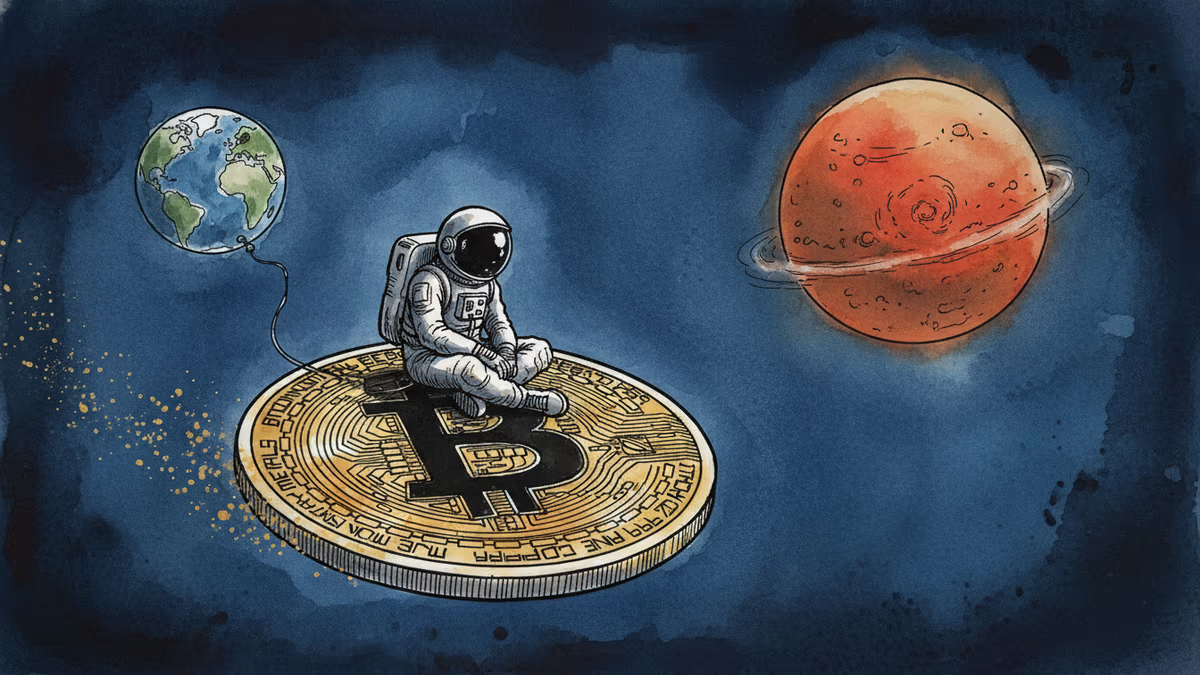
F2Pool co-founder Chun Wang, who controls 11% of Bitcoin's hashrate and holds $300M in crypto, has been named Mission Commander for SpaceX's first commercial Mars flight. What does it mean when crypto capital funds humanity's next frontier?
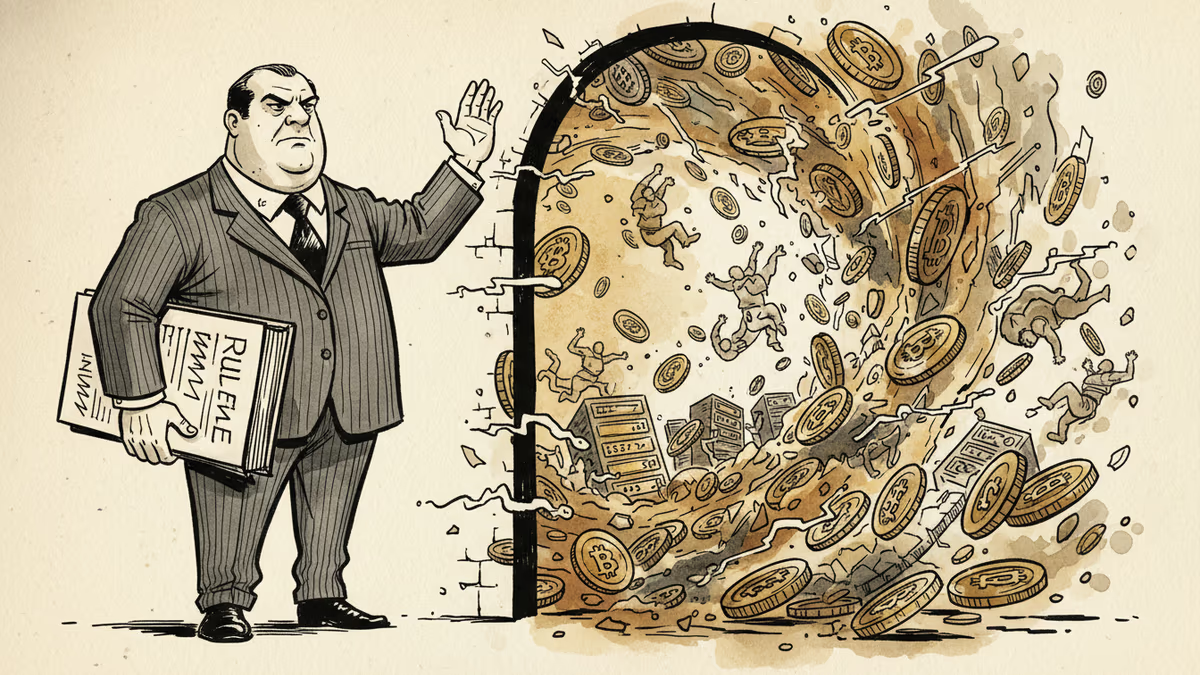
The SEC is preparing a major digital assets regulatory proposal. Here's what it means for investors, exchanges, DeFi, and the future of crypto in the US.
Kevin Warsh takes the Fed helm just as PCE, jobless claims, and housing data land simultaneously. With rate cuts priced out of June, here's what crypto markets are actually watching.
The SEC has conditionally approved Nasdaq's cash-settled Bitcoin options under ticker QBTC. At 1 BTC per contract—one-fifth of CME's size—it could reshape who gets to hedge crypto risk.
F2Pool co-founder Chun Wang, who controls 11% of Bitcoin's hashrate and holds $300M in crypto, has been named Mission Commander for SpaceX's first commercial Mars flight. What does it mean when crypto capital funds humanity's next frontier?
The SEC is preparing a major digital assets regulatory proposal. Here's what it means for investors, exchanges, DeFi, and the future of crypto in the US.
Thoughts
Share your thoughts on this article
Sign in to join the conversation