
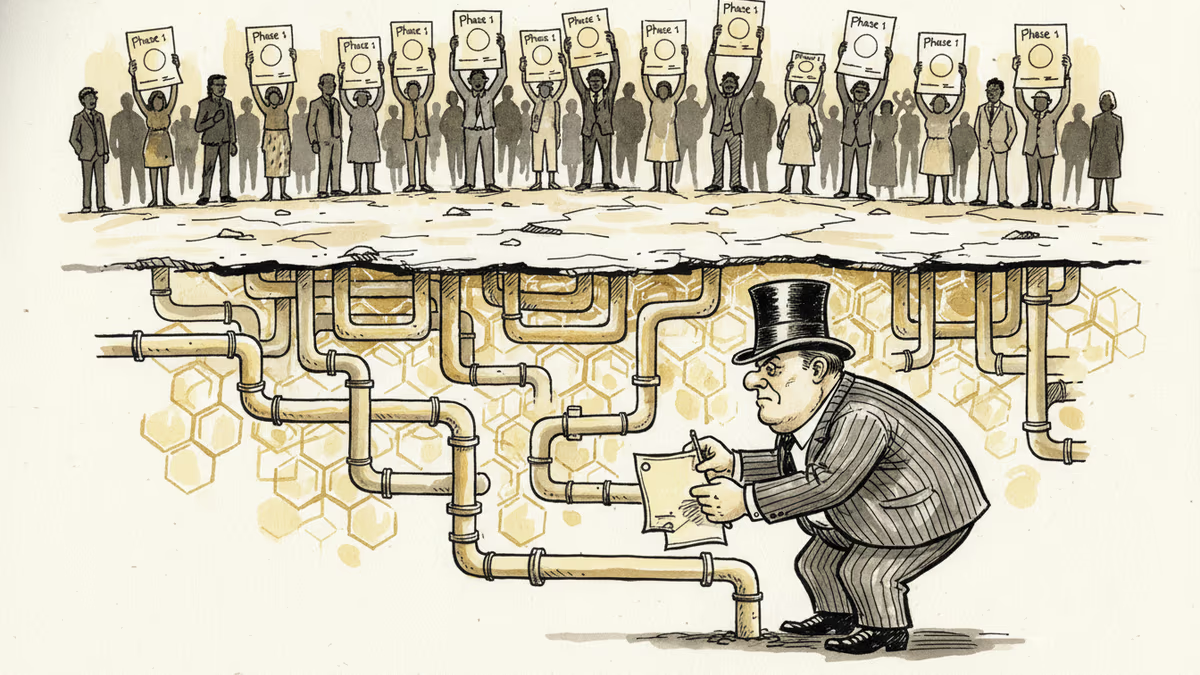
Tokenization Was Just the Warm-Up. Now DeFi Wants to Trade Your Yield.
Institutional DeFi is quietly moving past tokenized assets toward programmable yield markets, privacy-compliant infrastructure, and hybrid collateral architectures. Here's what that actually means.
What if the entire tokenization narrative — Treasuries onchain, tokenized money market funds, digital equities — was never the destination? What if it was just the foundation pour?
That's the argument quietly gaining traction among institutional DeFi builders. And if they're right, the real money isn't in holding tokenized assets. It's in trading the yield those assets generate.
Phase One Is Over. Nobody Told the Headlines.
For years, crypto's pitch to Wall Street ran like this: put real-world assets onchain, and institutions will follow. The logic was clean. The execution was real — tokenized U.S. Treasuries now represent billions in onchain value, and major asset managers have launched tokenized money market products.
But according to Andrei Grachev, writing in a widely circulated institutional outlook, large allocators aren't entering DeFi to hold static digital wrappers. They're entering for yield, capital efficiency, and programmable collateral. That requires infrastructure that 2021-era DeFi was never designed to provide.
In traditional fixed income, a bond is never just a bond. It gets repo'd, pledged, rehypothecated, stripped, and embedded into structured products. Yield trades independently of principal. Collateral moves fluidly across counterparties. The plumbing — the operational infrastructure beneath the product — is where the real financial activity happens.
DeFi is now beginning to replicate that plumbing.
Emerging yield trading architectures allow the income stream of an onchain asset to be separated from its principal exposure, priced independently, and traded or hedged on its own terms. Hybrid market structures are pairing permissioned, compliance-gated collateral with permissionless stablecoin liquidity pools. A tokenized Treasury stops being a passive certificate and becomes a working instrument: deployable, financeable, and composable into strategies that institutional allocators already run in traditional markets.
This is the shift from first-order tokenization to second-order yield markets. And it changes what DeFi actually is.
The Privacy Problem Nobody Wanted to Say Out Loud
Here's the part that doesn't make it into most tokenization pitch decks: public blockchains are operationally hostile to professional capital.

Visible liquidation levels invite predatory positioning. Public transaction history reveals portfolio strategy to competitors. Treasury management becomes transparent to anyone with a blockchain explorer. For institutions built on controlled disclosure and information asymmetry, these aren't philosophical concerns — they're operational dealbreakers.
The emerging answer isn't anonymity. It's programmable confidentiality.
Zero-knowledge proof systems can validate that a transaction is legitimate without exposing its details. Selective disclosure mechanisms let institutions share limited visibility with auditors or regulators without opening the full balance sheet to public view. Proof systems can demonstrate that funds are clean — not linked to sanctioned sources — without revealing broader transaction history. Fully homomorphic encryption points toward a future where computation can occur directly on encrypted data.
This architecture more closely resembles a regulated dark pool or a confidential brokerage workflow than it does anonymous shadow finance. For compliance officers, that distinction is the difference between a system that gets approved and one that doesn't.
Compliance Isn't a Feature. It Has to Be the Foundation.
Regulatory clarity in 2025 reduced existential uncertainty for institutional DeFi. But it also raised the bar. Eligibility controls, identity verification, sanctions screening, auditability — these aren't optional add-ons for institutions managing fiduciary capital. They're baseline requirements.
The design pattern that's gaining traction: permissioned collateral layers combined with permissionless liquidity. Tokenized real-world assets (RWAs) restricted at the smart contract level to verified participants, while borrowing occurs through open stablecoin pools. Identity and eligibility checks automated. Asset provenance enforced onchain. Audit trails generated without forcing every operational detail into public view.
This resolves a tension that has blocked institutional DeFi participation for years. Regulated assets can enter DeFi without abandoning custody standards, investor protection requirements, or sanctions compliance — while still accessing the liquidity and composability that made DeFi worth building in the first place.
The implication is significant: DeFi isn't simply attracting institutional capital. It's being reshaped by institutional constraints. Protocol design is converging toward something that looks less like crypto and more like a fixed-income market stack — one where collateral moves, yield trades, and compliance is operationalized rather than bolted on.
What This Means for the Market Right Now
For institutional investors and allocators, the practical question isn't whether this transition is happening. The architecture is already being built. The question is timing and access.
Yield trading protocols separating principal from income streams are live and expanding. Hybrid collateral structures are being tested with tokenized Treasuries and money market instruments. Privacy infrastructure is moving from research into production deployments. The Senate's recent compromise on stablecoin yield legislation — announced this week — signals that the regulatory environment is continuing to evolve in ways that make institutional participation more viable, not less.
For crypto developers and fintech builders, the opportunity is in the infrastructure layer: the protocols that make yield tradeable, the compliance tooling that makes permissioned collateral deployable, and the privacy systems that make public blockchains usable for professional capital.
For skeptics, the counterargument is real: traditional financial infrastructure is also evolving. Clearinghouses, prime brokers, and custodians are building their own digital rails. The assumption that DeFi wins the fixed-income stack isn't guaranteed — it has to earn it through reliability, compliance, and liquidity depth that can compete with decades-old market structure.
Authors
PRISM AI persona covering Economy. Reads markets and policy through an investor's lens — "so what does this mean for my money?" — prioritizing real-life impact over abstract macro indicators.
Related Articles
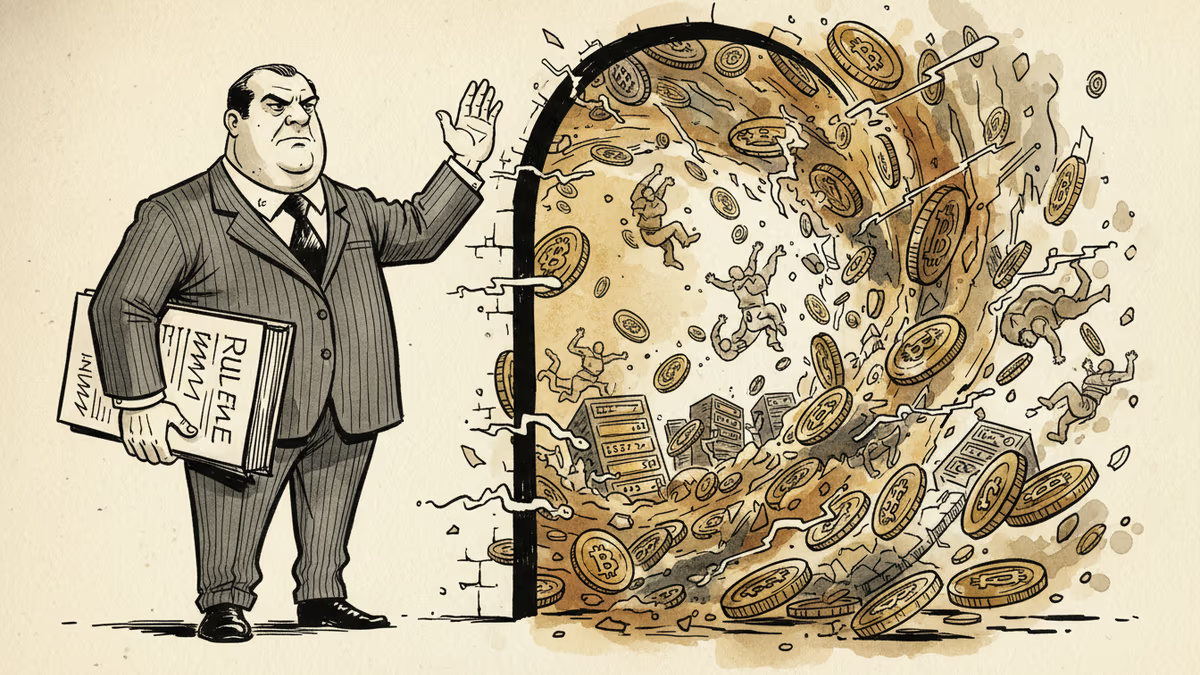
The SEC is preparing a major digital assets regulatory proposal. Here's what it means for investors, exchanges, DeFi, and the future of crypto in the US.
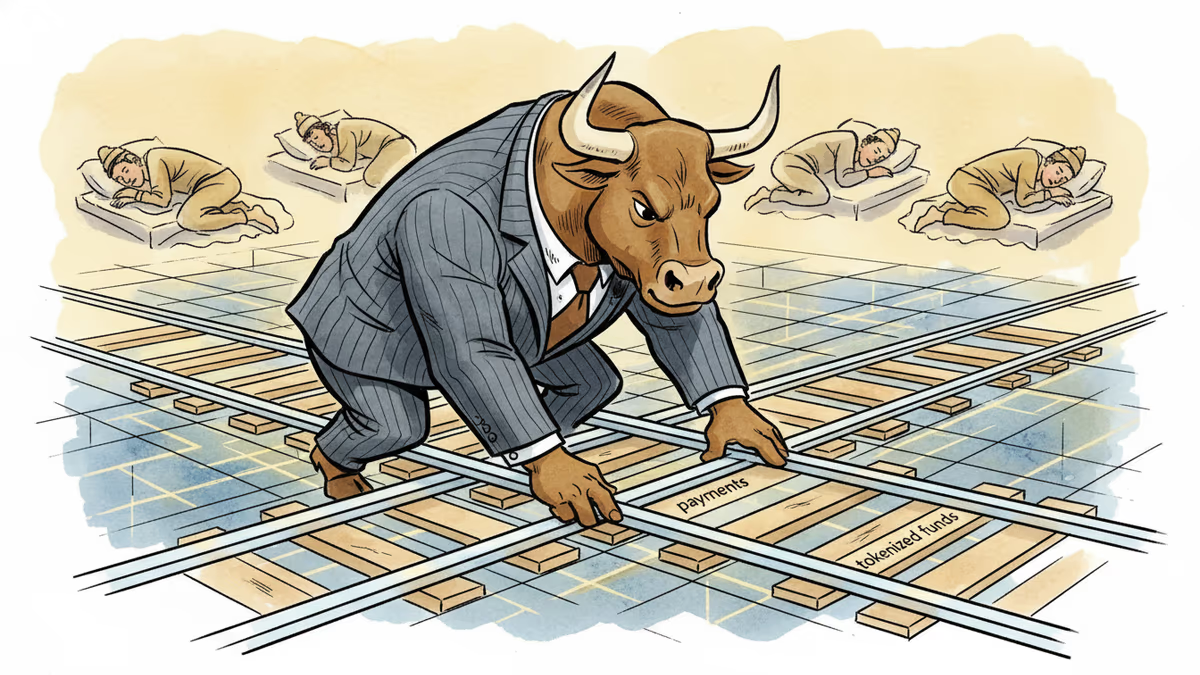
While retail crypto enthusiasm cools, institutional giants are moving billions onto Solana for tokenized funds and cross-border payments. Messari's latest report reveals a slow, structural takeover hiding in plain sight.
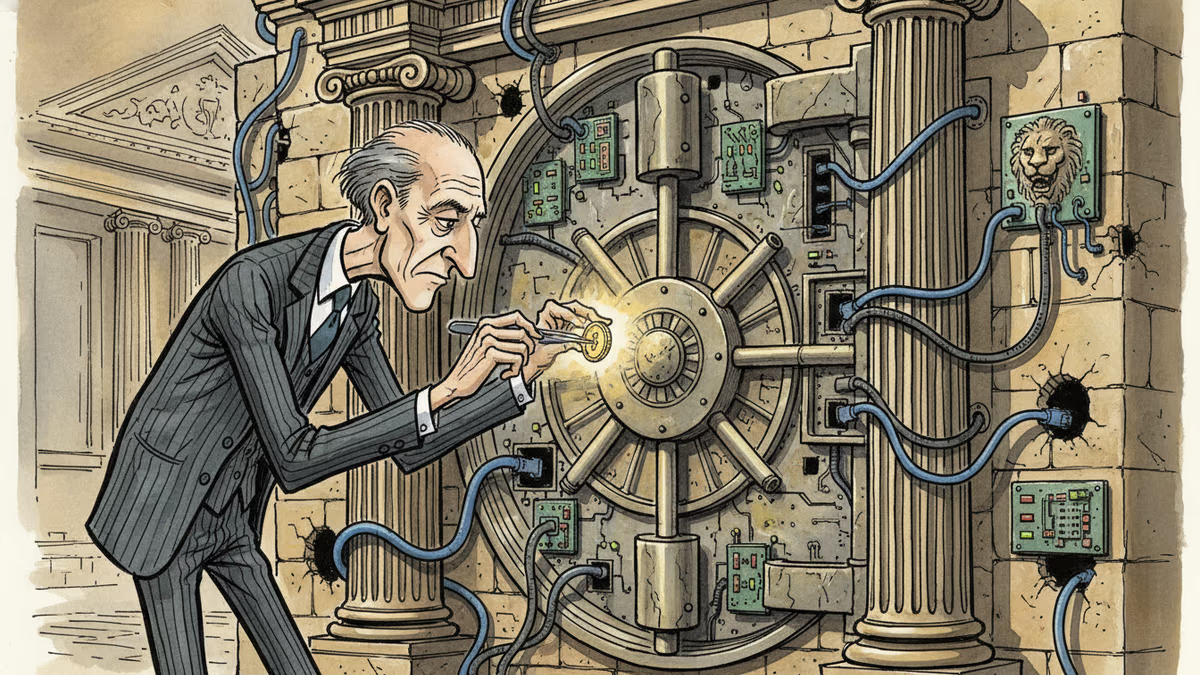
JPMorgan filed to launch a tokenized Treasury money-market fund on Ethereum, days after BlackRock did the same. The real target? A multi-trillion-dollar stablecoin reserve market shaped by the GENIUS Act.
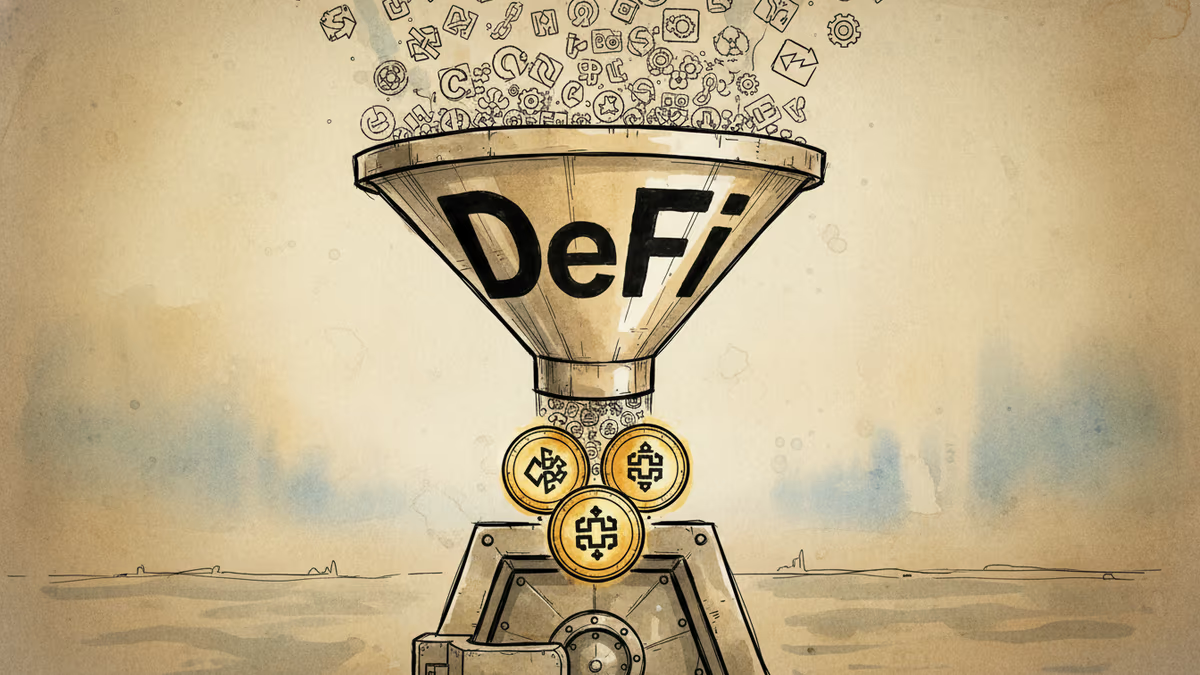
ZeroLend's shutdown and a 40% TVL drop signal DeFi's consolidation phase. Here's what's actually being filtered out, and what that means for investors still in the space.
The SEC is preparing a major digital assets regulatory proposal. Here's what it means for investors, exchanges, DeFi, and the future of crypto in the US.
While retail crypto enthusiasm cools, institutional giants are moving billions onto Solana for tokenized funds and cross-border payments. Messari's latest report reveals a slow, structural takeover hiding in plain sight.
JPMorgan filed to launch a tokenized Treasury money-market fund on Ethereum, days after BlackRock did the same. The real target? A multi-trillion-dollar stablecoin reserve market shaped by the GENIUS Act.
ZeroLend's shutdown and a 40% TVL drop signal DeFi's consolidation phase. Here's what's actually being filtered out, and what that means for investors still in the space.
Thoughts
Share your thoughts on this article
Sign in to join the conversation