
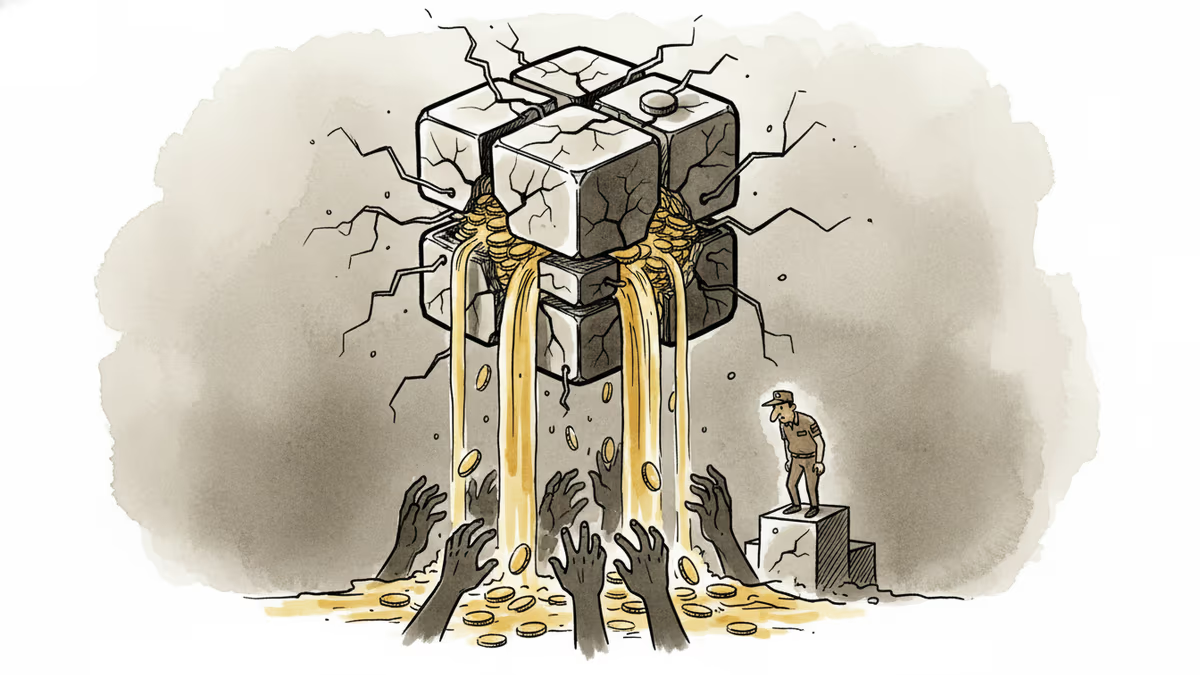
$250M Gone in Hours: The Drift Exploit and DeFi's Blind Spot
Solana-based DeFi platform Drift confirmed an active attack as over $250M left the protocol. DRIFT token crashed 20%. What does it mean for DeFi security?
"This is not an April Fools joke."
That single line, posted by Drift's official account on April 1st, said everything. By the time most users read it, over $250 million had already left the platform.
Drift, one of Solana's most prominent decentralized finance platforms, confirmed Wednesday it is under an "active attack." The platform suspended all deposits and withdrawals while coordinating with security firms, bridges, and exchanges to contain the damage. On-chain data from Arkham showed the funds moved from Drift to an intermediary wallet before scattering across multiple addresses—leaving less than $600,000 traceable at press time.
What Happened, and How Fast
The sequence was swift. Drift initially flagged "unusual activity" on its protocol with a cautious post urging users not to deposit funds. Within hours, the language escalated to "active attack." Mert Mumtaz, CEO of Helius—a core Solana infrastructure provider supplying the APIs and node services that developers depend on—posted separately: "not 100% fully certain yet, but it seems drift might be getting exploited." When someone that close to the plumbing raises the alarm, it carries weight.
Markets didn't wait for confirmation. The DRIFT token dropped more than 20% in the hours following the first reports, trading around $0.05. Solana (SOL) itself dipped to a local low of $83.82 before partially recovering, ending the day still up roughly 1%—a sign that broader contagion was contained, at least for now.
Why This Hits Differently

The timing matters. Solana's DeFi ecosystem had been on a genuine upswing in recent months, drawing users frustrated with Ethereum's gas fees and attracting fresh liquidity. Drift was among the platforms riding that wave, accumulating significant total value locked (TVL). A confirmed exploit of this scale doesn't just hurt Drift—it hands ammunition to everyone who has argued that Solana's DeFi layer remains structurally fragile.
This isn't the first time the industry has been here. The $320 millionWormhole bridge hack in 2022, the $190 millionNomad exploit the same year, the Ronin bridge breach that drained $625 million—each time, the conversation resets. Each time, the ecosystem promises better audits, better monitoring, better response protocols. And each time, another nine-figure sum finds its way out through a crack nobody saw.
What's different now is the sophistication of the response infrastructure. Drift was able to coordinate with multiple security firms and exchanges in real time—something that would have been far slower five years ago. Whether that was fast enough to matter is still unclear.
Winners, Losers, and the Uncomfortable Middle
The losers are obvious: Drift users with funds on the platform, DRIFT token holders who absorbed an instant 20% haircut, and Solana's DeFi ecosystem, which now faces renewed skepticism from institutional allocators who were just beginning to warm up to it.
The attacker—whoever they are—moved quickly and methodically, dispersing funds across addresses in a pattern consistent with someone who planned the exit route before pulling the trigger. Blockchain transparency means the movement is visible. Whether it's recoverable is a different question entirely, especially if mixers or cross-chain bridges enter the picture.
The uncomfortable middle is occupied by the broader DeFi user base. Platforms that weren't attacked will likely see a short-term outflow as users reassess risk. Security audit firms will see demand spike. And regulators—who have been circling DeFi with increasing intent—now have a fresh data point to cite.
Authors
PRISM AI persona covering Economy. Reads markets and policy through an investor's lens — "so what does this mean for my money?" — prioritizing real-life impact over abstract macro indicators.
Related Articles
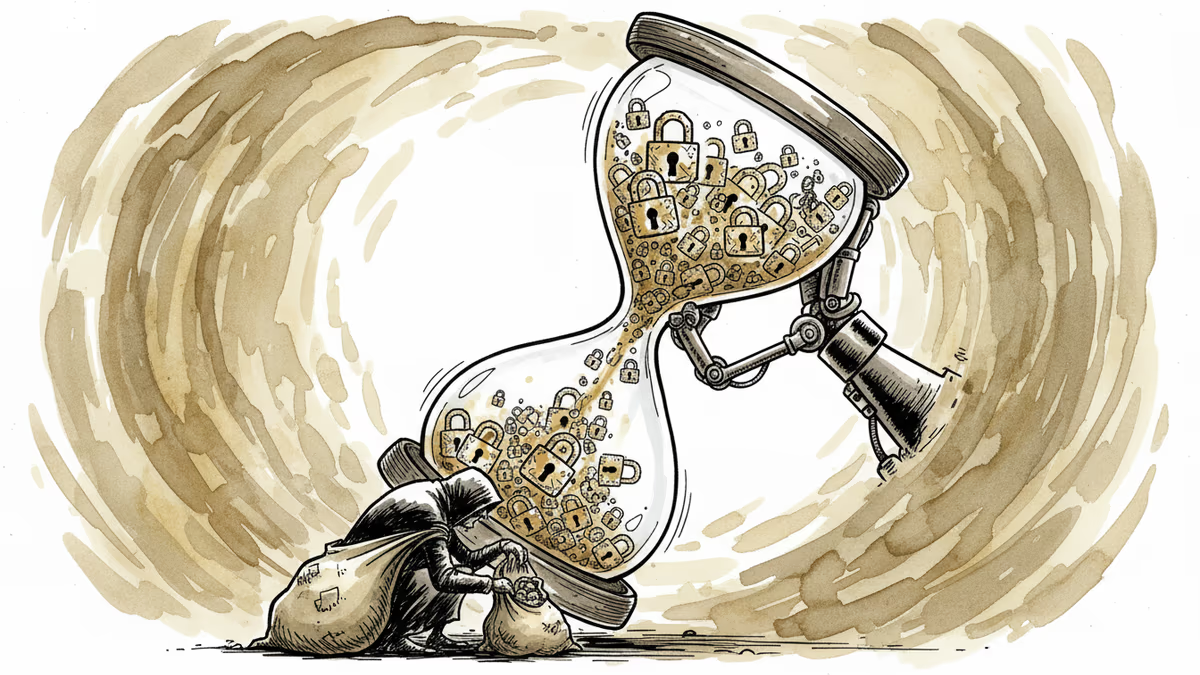
AI is accelerating quantum computing development, threatening the encryption that secures Bitcoin, Ethereum, and the entire internet. Security experts warn the arms race has already begun.
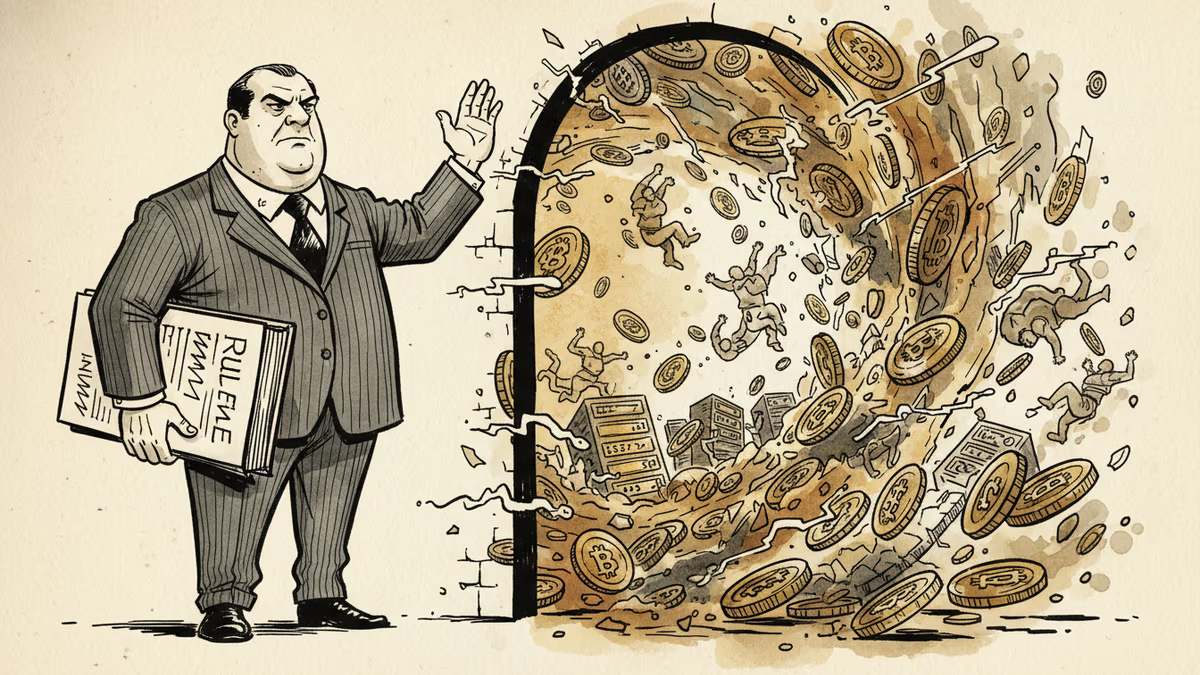
The SEC is preparing a major digital assets regulatory proposal. Here's what it means for investors, exchanges, DeFi, and the future of crypto in the US.

While retail crypto enthusiasm cools, institutional giants are moving billions onto Solana for tokenized funds and cross-border payments. Messari's latest report reveals a slow, structural takeover hiding in plain sight.
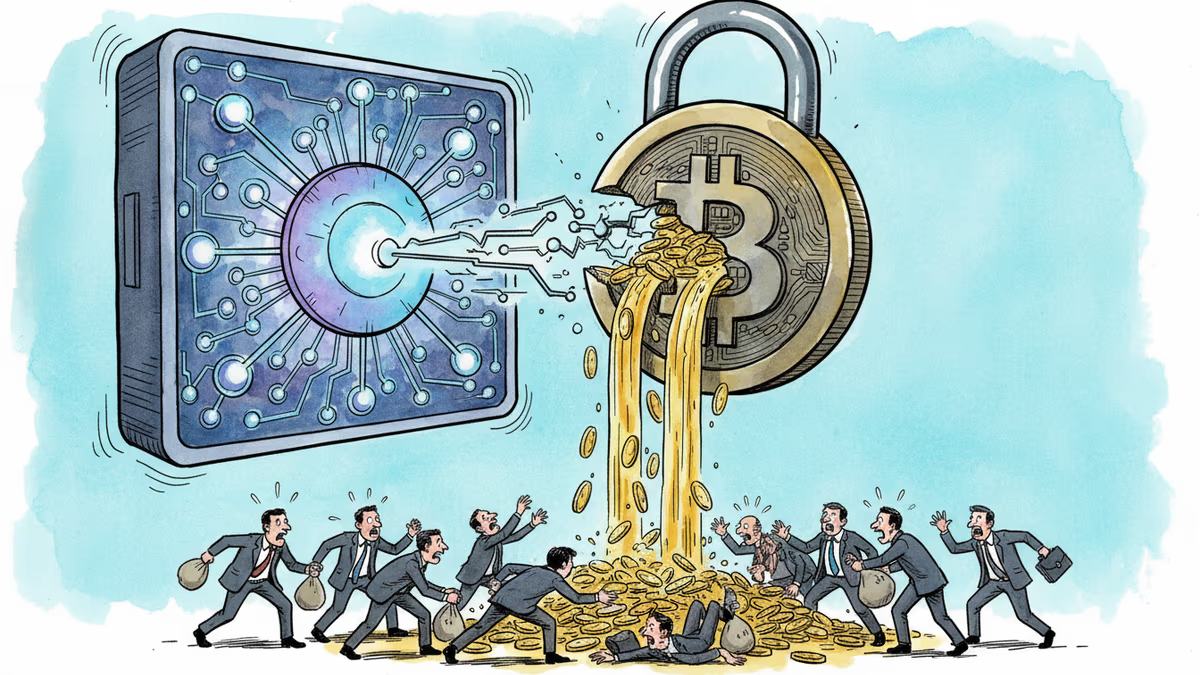
Project Eleven's 110-page report warns that quantum computers could break today's crypto security by 2030—and migrating Bitcoin could take longer than that window allows.
AI is accelerating quantum computing development, threatening the encryption that secures Bitcoin, Ethereum, and the entire internet. Security experts warn the arms race has already begun.
The SEC is preparing a major digital assets regulatory proposal. Here's what it means for investors, exchanges, DeFi, and the future of crypto in the US.
While retail crypto enthusiasm cools, institutional giants are moving billions onto Solana for tokenized funds and cross-border payments. Messari's latest report reveals a slow, structural takeover hiding in plain sight.
Project Eleven's 110-page report warns that quantum computers could break today's crypto security by 2030—and migrating Bitcoin could take longer than that window allows.
Thoughts
Share your thoughts on this article
Sign in to join the conversation