

Artemis II SLS Launch Date 2026: NASA Prepares for Milestone Rollout
NASA readies the SLS for the Artemis II mission with a potential launch date in February 2026, while MaiaSpace secures a massive satellite launch deal.
The moon is getting closer, but the final steps are the most precarious. NASA is set to roll out the Space Launch System (SLS) rocket and Orion spacecraft to the Florida launch site this weekend, marking a critical phase for the Artemis II mission.
Artemis II SLS Launch Date 2026 and Rehearsal Goals
While an official date hasn't been set, the rocket currently has a no-earlier-than launch date of February 8, 2026. The upcoming movement to the pad is for a "wet dress rehearsal," where engineers will practice fueling the rocket. Success in this rehearsal is mandatory before the final countdown begins for the mission that will carry humans around the Moon for the first time in over 50 years.

MaiaSpace Secures Major Contract for OneWeb Launch
Beyond government-led exploration, the commercial space sector is heating up. MaiaSpace, an ArianeGroup subsidiary, just inked a massive launch deal with satellite operator Eutelsat. According to Le Monde, a significant portion of the 440 satellites ordered from Airbus will be deployed by the new Maia rocket, solidifying Europe's independent access to space.
Authors
Related Articles

NASA's Artemis III has been redesigned as an Earth-orbit mission. SpaceX and Blue Origin say their landers won't be ready until late 2027. What does this mean for the future of lunar exploration?
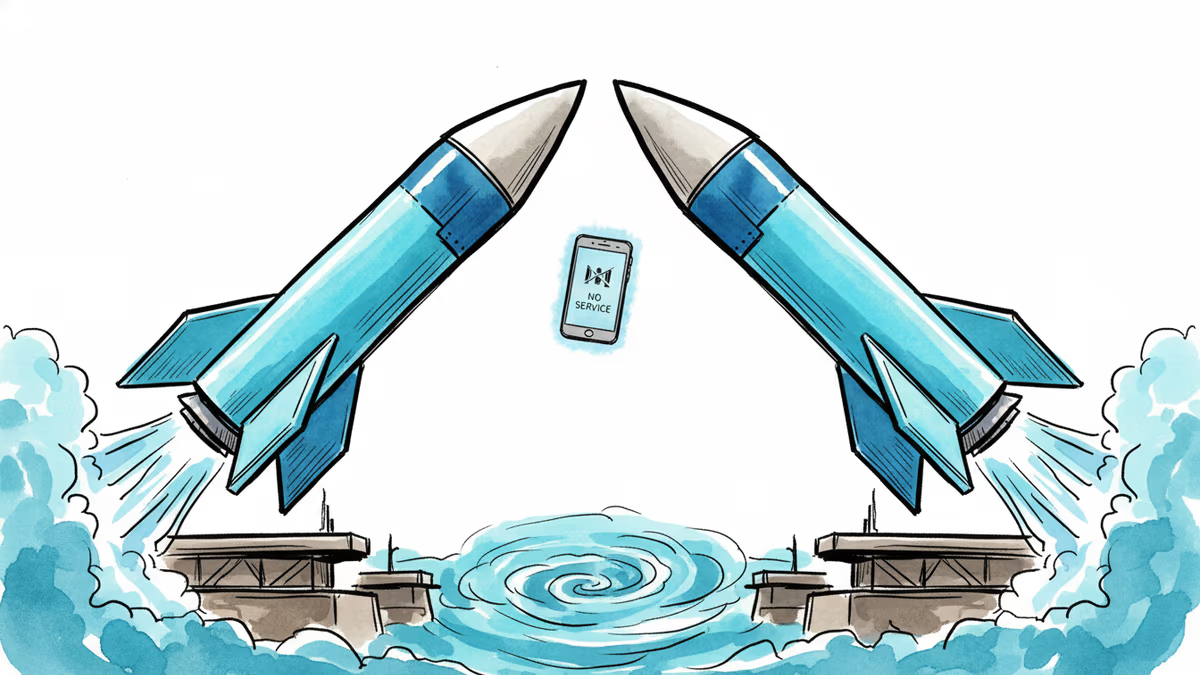
Blue Origin's New Glenn is set to refly a used booster, directly challenging SpaceX's grip on orbital launch. If it works, a three-way satellite internet race begins—and your 'No Service' problem gets a lot more interesting.

Artemis II splashed down successfully in the Pacific, marking humanity's first crewed deep space mission in over 50 years. But the harder question isn't whether we can go back — it's why we should.

NASA's Orion capsule splashed down safely after humanity's first crewed lunar voyage in 54 years. The mission succeeded. Now the harder questions begin.
NASA's Artemis III has been redesigned as an Earth-orbit mission. SpaceX and Blue Origin say their landers won't be ready until late 2027. What does this mean for the future of lunar exploration?
Blue Origin's New Glenn is set to refly a used booster, directly challenging SpaceX's grip on orbital launch. If it works, a three-way satellite internet race begins—and your 'No Service' problem gets a lot more interesting.
Artemis II splashed down successfully in the Pacific, marking humanity's first crewed deep space mission in over 50 years. But the harder question isn't whether we can go back — it's why we should.
NASA's Orion capsule splashed down safely after humanity's first crewed lunar voyage in 54 years. The mission succeeded. Now the harder questions begin.
Thoughts
Share your thoughts on this article
Sign in to join the conversation