
We Nudged an Asteroid. Now What?
NASA's DART mission didn't just change Dimorphos' orbit—it shifted the entire Didymos system's path around the Sun. What does this mean for planetary defense?
33 Minutes That Changed Everything
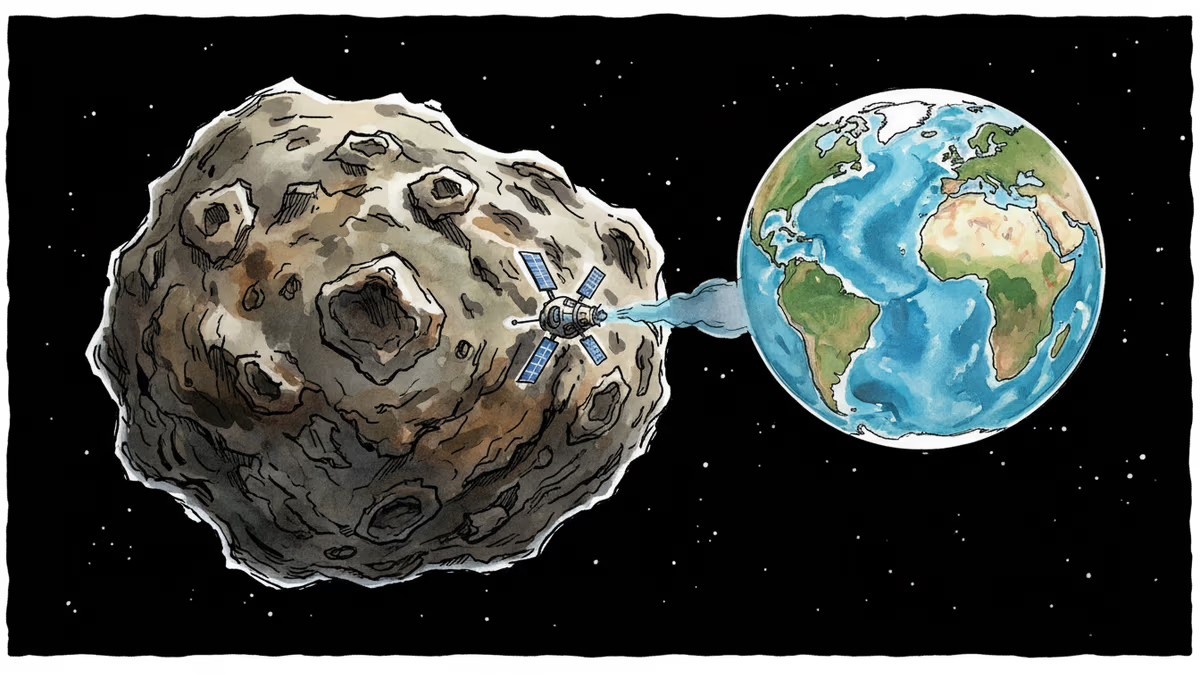
When NASA's DART spacecraft slammed into Dimorphos on September 26, 2022, the mission seemed straightforward: nudge a 160-meter moonlet and shorten its orbit around the larger asteroid Didymos by 33 minutes. Mission accomplished.
But now we know DART did something bigger. A lot bigger.
New research led by Rahil Makadia at the University of Illinois reveals that DART didn't just alter a small moon's local orbit. It changed the trajectory of the entire Didymos binary system around the Sun. We literally pushed a 780-meter asteroid off its cosmic path.
Measuring the Unmeasurable
Detecting this shift required extraordinary precision. We're talking about tracking a space rock millions of miles away and measuring changes so subtle they'd be invisible for months. It's like spotting a penny's movement from 1,000 miles away.
The international research team spent months analyzing telescope data, applying complex orbital mechanics calculations to tease out the signal from the noise. The result? Confirmation that humanity's first planetary defense test worked better than expected.
The Defense Industry Takes Notice

This success is already rippling through the aerospace sector. Companies like Lockheed Martin and Northrop Grumman, which built DART, are now pitching expanded planetary defense concepts to government agencies. The European Space Agency is fast-tracking its Hera mission to study the aftermath of DART's impact.
But here's where it gets interesting for investors and policymakers: planetary defense isn't just about asteroids anymore. The same technologies—precision navigation, kinetic impact systems, long-range tracking—have dual-use applications in satellite servicing, space debris removal, and even military space operations.
The $330 Million Question
DART cost $330 million. That's roughly what Americans spend on pizza in two days. For that price, we proved we can alter the course of celestial objects millions of miles away.
But critics raise valid concerns. We tested on a harmless target in ideal conditions. Real threats would be bigger, faster, and discovered with less warning time. The 2013 Chelyabinsk meteor injured 1,500 people and we never saw it coming. It was only 20 meters wide.
Then there's the detection problem. NASA estimates there are over 25,000 near-Earth asteroids larger than 140 meters—big enough to devastate a region. We've found about 40% of them. The rest are still out there, untracked.
Beyond the Asteroid Belt
The real value of DART might not be planetary defense at all. The mission demonstrated precision deep-space navigation, autonomous target acquisition, and real-time mission adjustments—capabilities that are gold mines for commercial space ventures.
SpaceX is already applying similar technologies for satellite constellation management. Blue Origin sees applications in lunar missions. The technology developed to save Earth from asteroids might end up making space commerce routine.
Authors
Related Articles

NASA's Artemis III has been redesigned as an Earth-orbit mission. SpaceX and Blue Origin say their landers won't be ready until late 2027. What does this mean for the future of lunar exploration?

Artemis II splashed down successfully in the Pacific, marking humanity's first crewed deep space mission in over 50 years. But the harder question isn't whether we can go back — it's why we should.
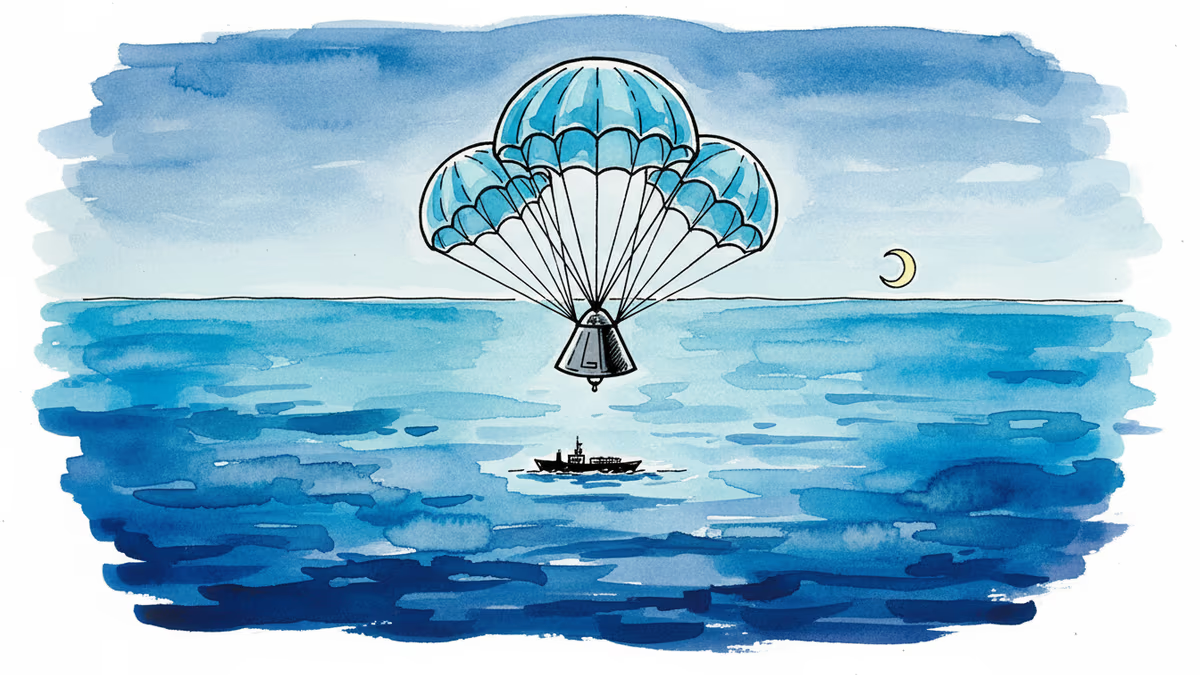
NASA's Orion capsule splashed down safely after humanity's first crewed lunar voyage in 54 years. The mission succeeded. Now the harder questions begin.
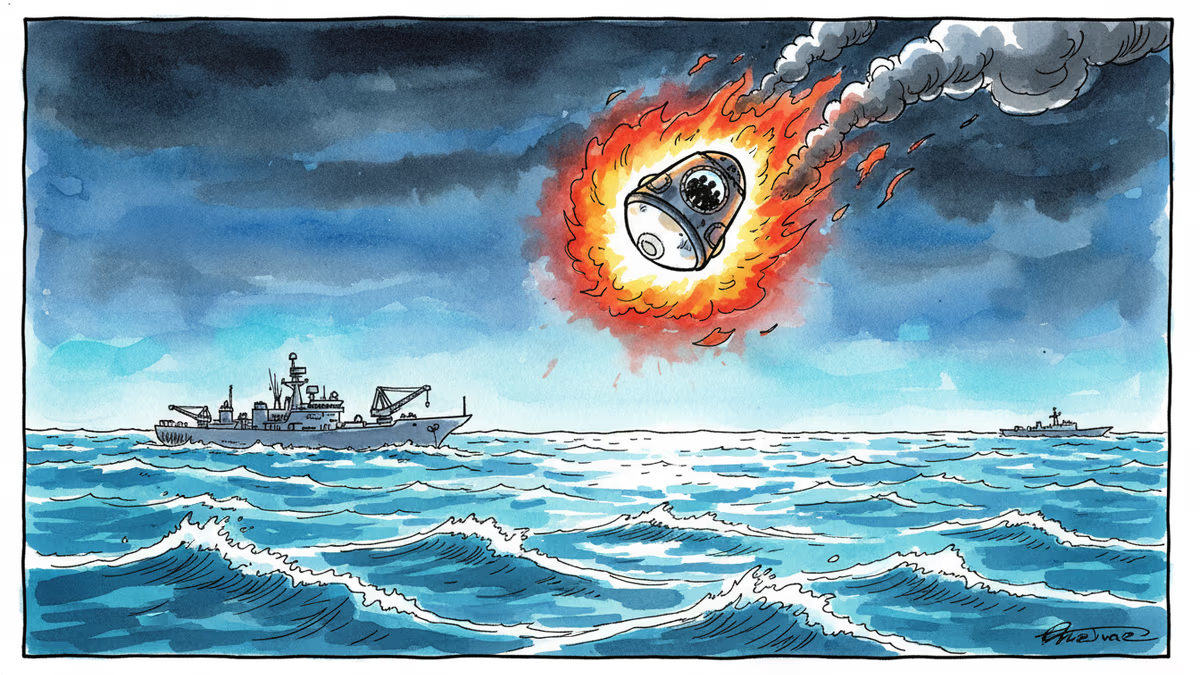
Artemis II's four astronauts are returning to Earth Friday night. The splashdown off Southern California isn't the anticlimax it sounds—it's the most technically perilous moment of the entire lunar journey.
NASA's Artemis III has been redesigned as an Earth-orbit mission. SpaceX and Blue Origin say their landers won't be ready until late 2027. What does this mean for the future of lunar exploration?
Artemis II splashed down successfully in the Pacific, marking humanity's first crewed deep space mission in over 50 years. But the harder question isn't whether we can go back — it's why we should.
NASA's Orion capsule splashed down safely after humanity's first crewed lunar voyage in 54 years. The mission succeeded. Now the harder questions begin.
Artemis II's four astronauts are returning to Earth Friday night. The splashdown off Southern California isn't the anticlimax it sounds—it's the most technically perilous moment of the entire lunar journey.
Thoughts
Share your thoughts on this article
Sign in to join the conversation