
Back from the Moon — But What Are We Going Back For?
NASA's Orion capsule splashed down safely after humanity's first crewed lunar voyage in 54 years. The mission succeeded. Now the harder questions begin.
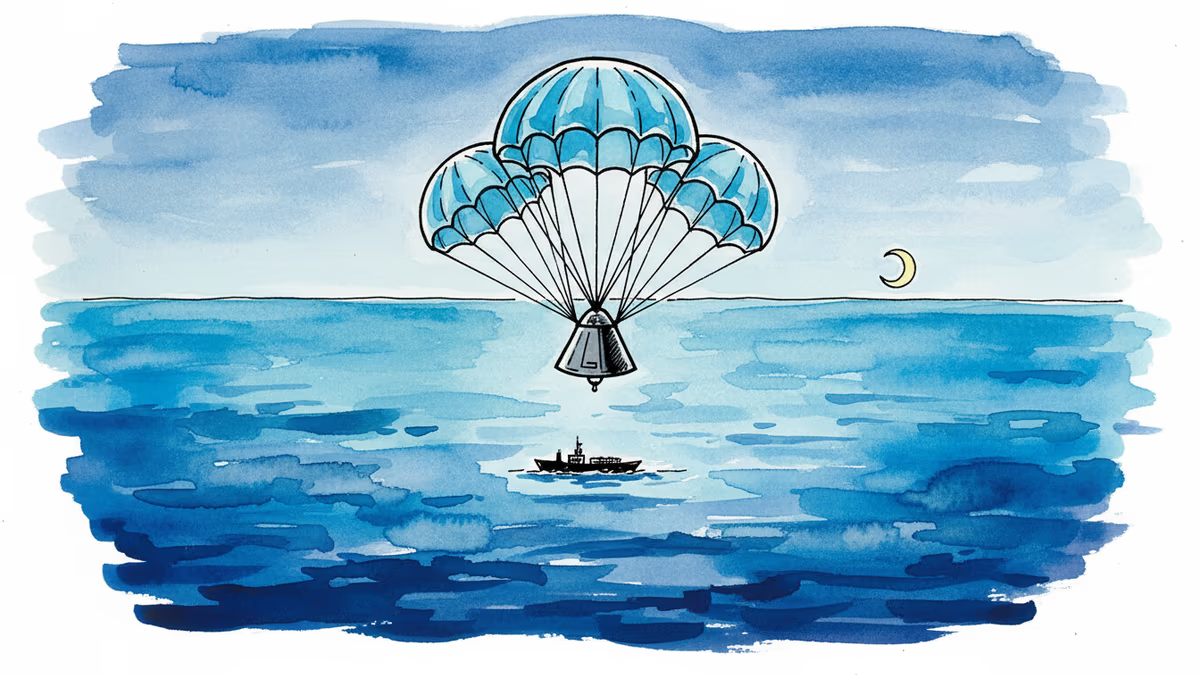
For six minutes, no one on Earth could talk to them. Traveling at more than 30 times the speed of sound, wrapped in a sheath of plasma hot enough to melt steel, four astronauts were completely unreachable — falling toward the Pacific in a capsule called Integrity. Then the parachutes opened, and the world exhaled.
What Actually Happened
At 8:07 p.m. EDT on Friday, NASA's Orion spacecraft splashed down southwest of San Diego, ending humanity's first crewed voyage to lunar distance in nearly 54 years. Temperatures on the capsule's heat shield peaked at roughly 5,000 degrees Fahrenheit during reentry — a necessary violence that plasma-blackouts radio contact for several minutes on every return from deep space.
Airborne tracking planes relayed live footage as Orion jettisoned its parachute cover, deployed stabilizing drogue chutes, and finally unfurled three main parachutes — each spanning 10,500 square feet — to brake for splashdown. A US Navy recovery ship was already in position. Commander Reid Wiseman and his three crewmates were pulled from the water safely.
This was part of NASA's Artemis program — specifically, a crewed test of the Orion capsule and its life support systems on a lunar flyby mission. No one landed on the Moon this time. That step comes next.
The Gap Between 1972 and Now
The last humans to travel this far from Earth were the Apollo 17 crew in December 1972. What's changed in the intervening five decades isn't just technology — it's the entire logic of why we go.

The Apollo program was a geopolitical sprint, fueled by Cold War anxiety and concluded once the race was won. Artemis is being built on a different architecture: international partnerships through the Artemis Accords (now signed by over 40 countries), commercial contracts with SpaceX and Blue Origin for launch and landing systems, and a stated long-term goal of establishing a sustained human presence near the Moon.
China, meanwhile, has announced plans to land its own astronauts on the Moon by 2030, operating outside the Artemis framework entirely. The competitive dynamic is back — but this time it's tangled up with commercial interests, resource questions, and a geopolitical realignment that looks nothing like the 1960s.
Three Ways to Read This Moment
For space enthusiasts, this is unambiguously good news. A crewed Orion has now proven it can survive the full round-trip to lunar distance. The heat shield held. The parachutes worked. The next mission aims for an actual lunar landing.
For taxpayers and policymakers, the picture is more complicated. The Artemis program has faced repeated delays and cost overruns. The Space Launch System rocket at the core of the program costs an estimated $4 billion per launch — a figure that makes even SpaceX executives raise an eyebrow. Questions about whether NASA's architecture is the most efficient path back to the Moon haven't gone away just because this mission succeeded.
For the commercial space sector, this splashdown is a proof-of-concept that creates downstream opportunity. Every crewed deep-space mission needs life support systems, communication relays, landing vehicles, and eventually surface infrastructure. That's a supply chain — and companies from launch providers to semiconductor manufacturers are positioning to be part of it.
The Question Nobody's Answering Cleanly
There's helium-3 on the Moon, a potential fuel for fusion reactors. There are rare earth elements. There's the strategic value of the lunar south pole, where water ice exists in permanently shadowed craters. Whether the Moon is a scientific destination, a resource frontier, or a waypoint to Mars shapes everything — the budget justification, the international partnerships, the legal frameworks for what anyone is allowed to extract.
The Artemis Accords attempt to set rules for resource use, but they're not a treaty — they're bilateral agreements with no enforcement mechanism. And China hasn't signed them.
Authors
Related Articles
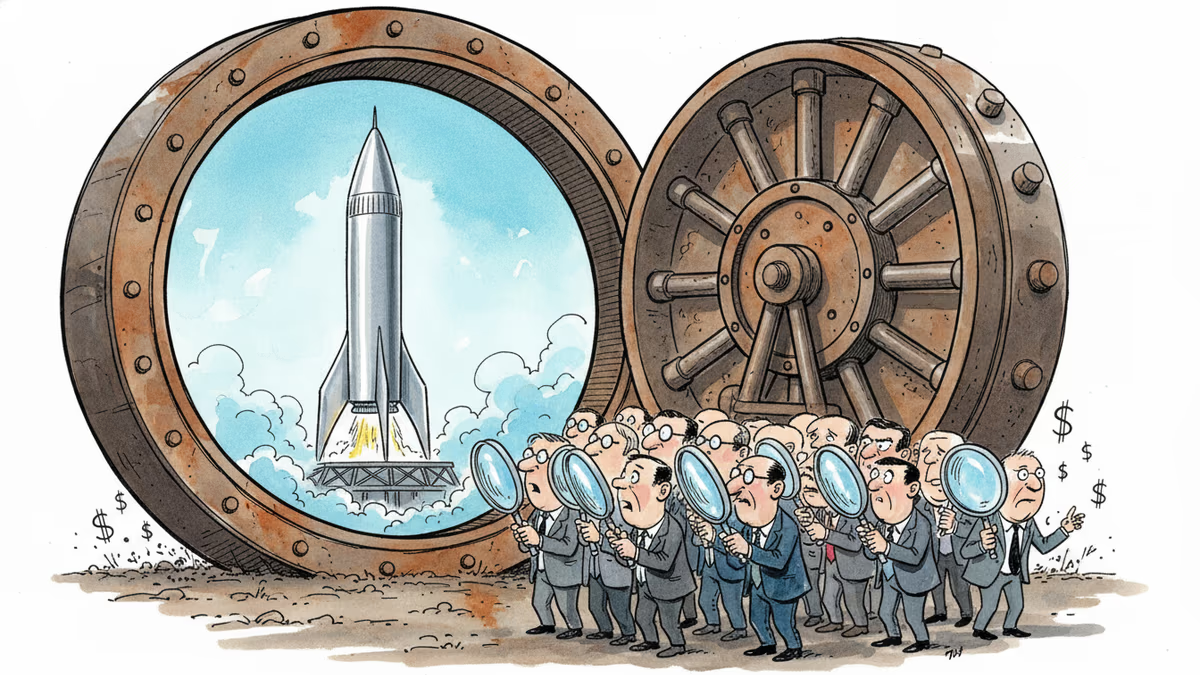
SpaceX filed a nearly 400-page S-1 with the SEC, targeting an IPO as early as June 12. Here's what the filing reveals—and what it doesn't.
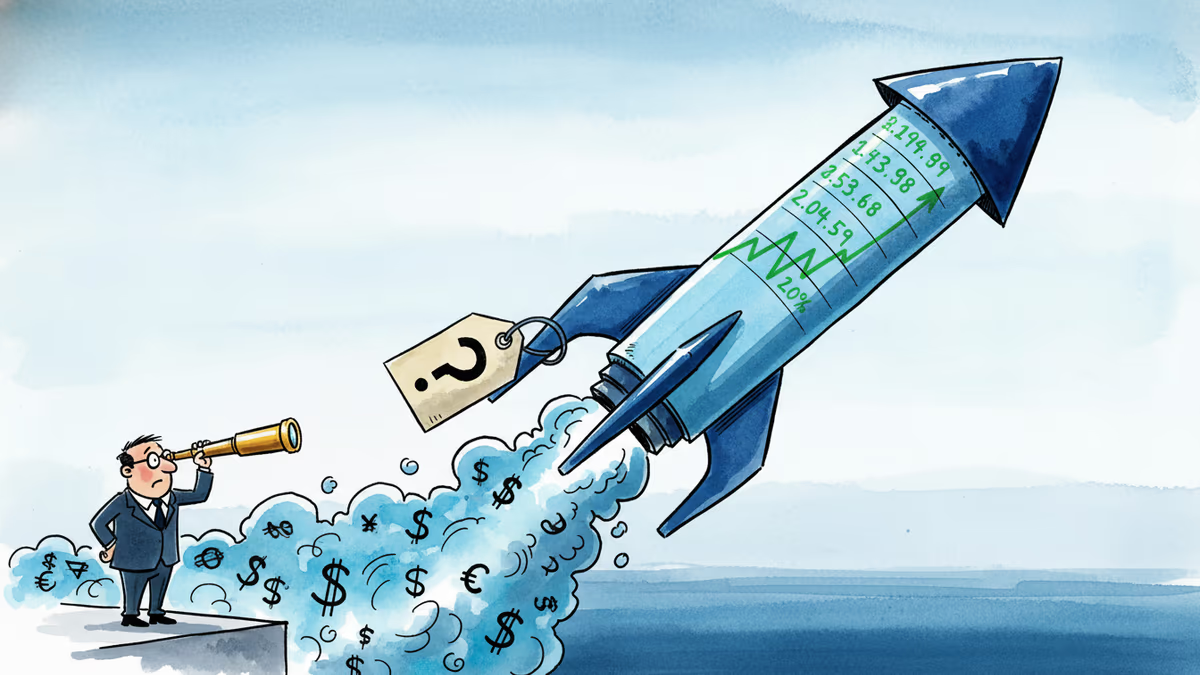
SpaceX has filed its S-1 with the SEC, targeting the Nasdaq under ticker SPCX. With $18.67B in revenue but a $4.9B loss, the IPO forces investors to answer one hard question.
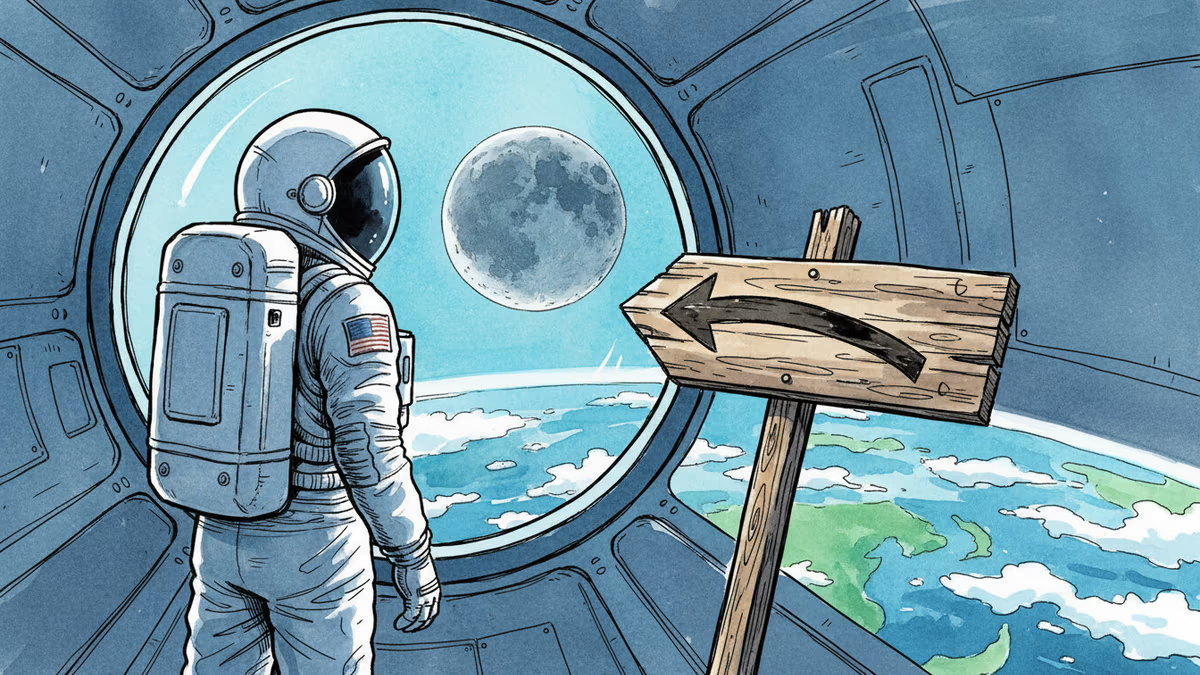
NASA's Artemis III has been redesigned as an Earth-orbit mission. SpaceX and Blue Origin say their landers won't be ready until late 2027. What does this mean for the future of lunar exploration?
Blue Origin successfully reflew an orbital-class booster for the first time, but New Glenn's upper stage failed on its third mission — raising questions about NASA's Artemis timeline.
SpaceX filed a nearly 400-page S-1 with the SEC, targeting an IPO as early as June 12. Here's what the filing reveals—and what it doesn't.
SpaceX has filed its S-1 with the SEC, targeting the Nasdaq under ticker SPCX. With $18.67B in revenue but a $4.9B loss, the IPO forces investors to answer one hard question.
NASA's Artemis III has been redesigned as an Earth-orbit mission. SpaceX and Blue Origin say their landers won't be ready until late 2027. What does this mean for the future of lunar exploration?
Blue Origin successfully reflew an orbital-class booster for the first time, but New Glenn's upper stage failed on its third mission — raising questions about NASA's Artemis timeline.
Thoughts
Share your thoughts on this article
Sign in to join the conversation