
Why NASA Is Dragging Its Feet on Private Space Stations
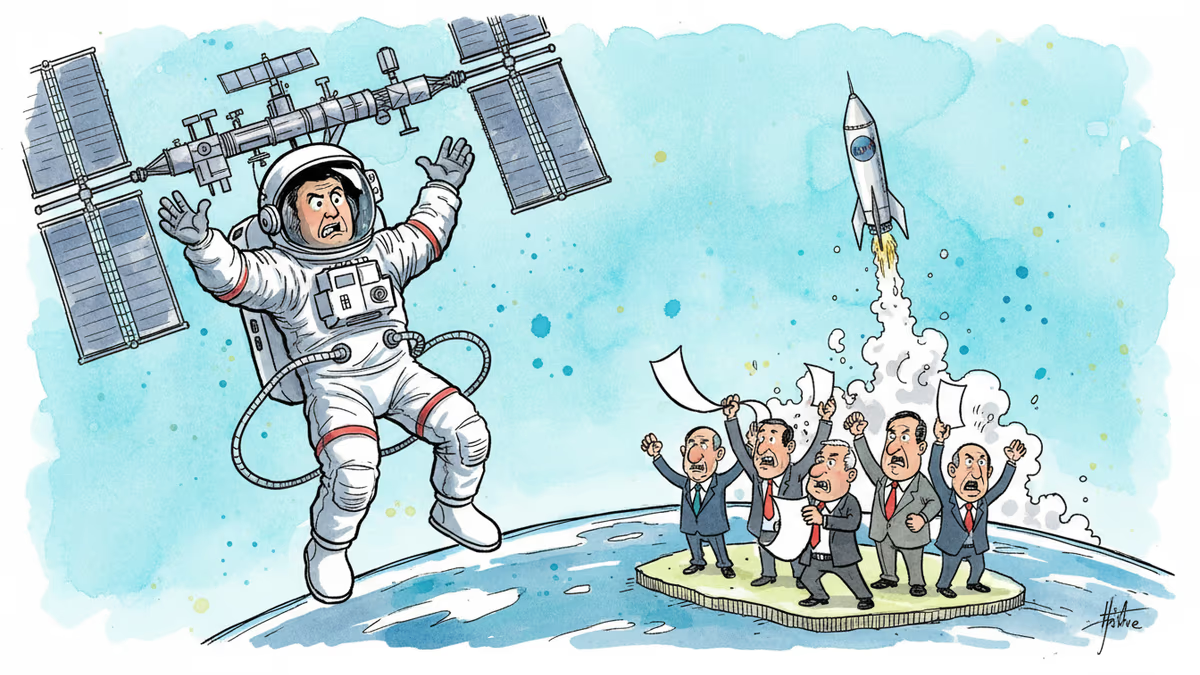
Senator Ted Cruz pressures NASA with legislation after the agency delays competition for ISS replacement. The political battle reveals deeper tensions in space commercialization.
Two Months of Bureaucratic Silence
"Begging." That's the word a senior staffer for Senator Ted Cruz used two months ago to describe NASA's delays. The space agency has yet to release the crucial document that would kickstart Round Two of private companies competing to replace the International Space Station.
The frustration reached a boiling point this week. Cruz's committee passed legislation Wednesday that would legally mandate NASA's support for commercial space station development—complete with specific deadlines.
This isn't just political theater. It's a clash over the future of American space dominance.
The $4 Billion Question
NASA has already invested heavily in the first round of commercial space station development. Axiom Space, Blue Origin, and others have received contracts worth $400 million collectively. But the ISS retires in 2030, and these companies need clarity on Round Two selection criteria to secure additional funding.
The delay isn't just inconvenient—it's expensive. Each month of uncertainty costs these companies millions in investor confidence and development momentum. SpaceX alone has reportedly spent over $2 billion on its Starship program, partly banking on space station contracts.

Safety vs Speed: The Eternal Dilemma
NASA's caution isn't without merit. Space stations are life-or-death infrastructure. The agency still bears the institutional memory of Challenger and Columbia—disasters that resulted from rushing complex systems.
But Congress sees a different urgency. China's space program is accelerating, and Russia's cooperation on the ISS grows more tenuous monthly. American lawmakers want U.S.-controlled alternatives ready before geopolitical tensions force their hand.
Private companies find themselves caught in the middle. They need government contracts to justify massive R&D investments, but they also need predictable timelines to satisfy private investors.
The Bigger Space Race
This bureaucratic standoff reflects a broader transformation in space economics. We're witnessing the shift from government-led exploration to commercial-driven expansion. But the transition is messier than anyone anticipated.
The ISS cost $150 billion over three decades. Private companies promise to deliver replacement capabilities for a fraction of that cost. Yet proving that promise requires the very government support that's now in limbo.
Authors
Related Articles
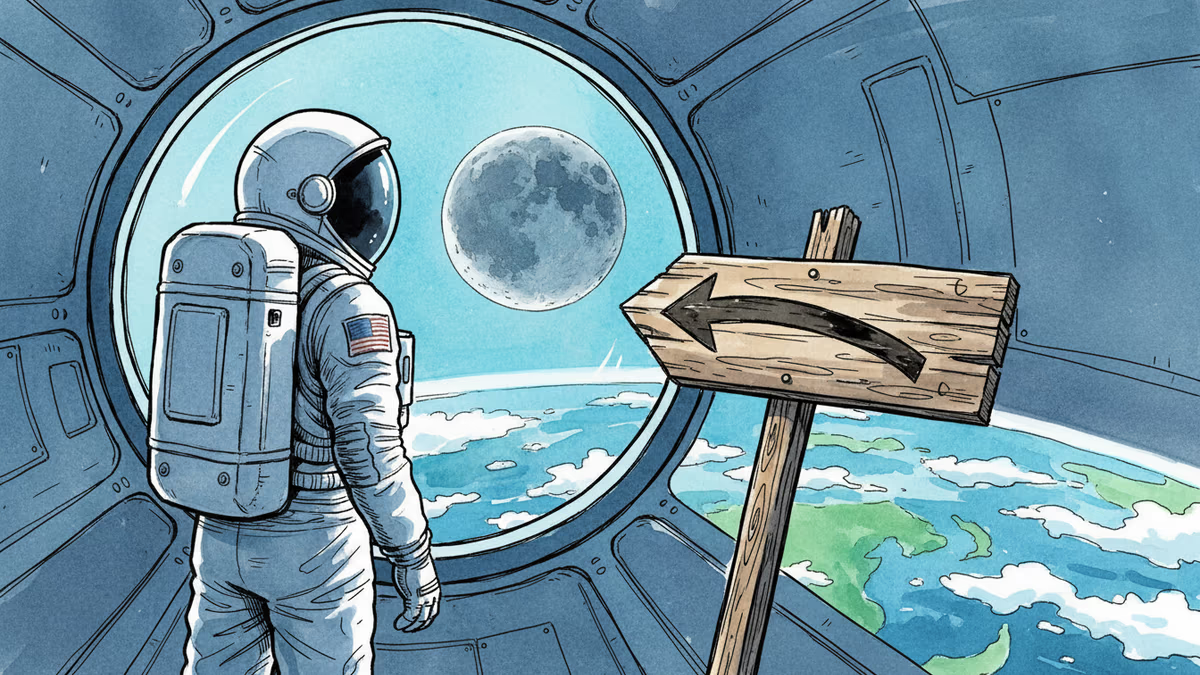
NASA's Artemis III has been redesigned as an Earth-orbit mission. SpaceX and Blue Origin say their landers won't be ready until late 2027. What does this mean for the future of lunar exploration?
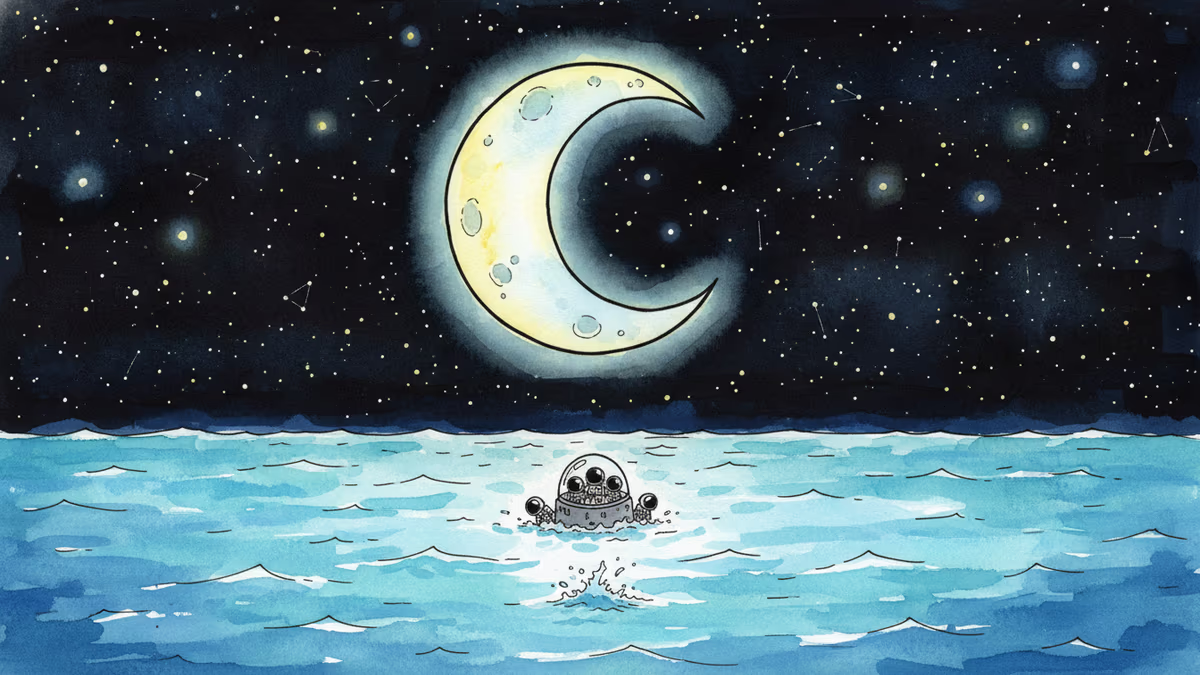
Artemis II splashed down successfully in the Pacific, marking humanity's first crewed deep space mission in over 50 years. But the harder question isn't whether we can go back — it's why we should.
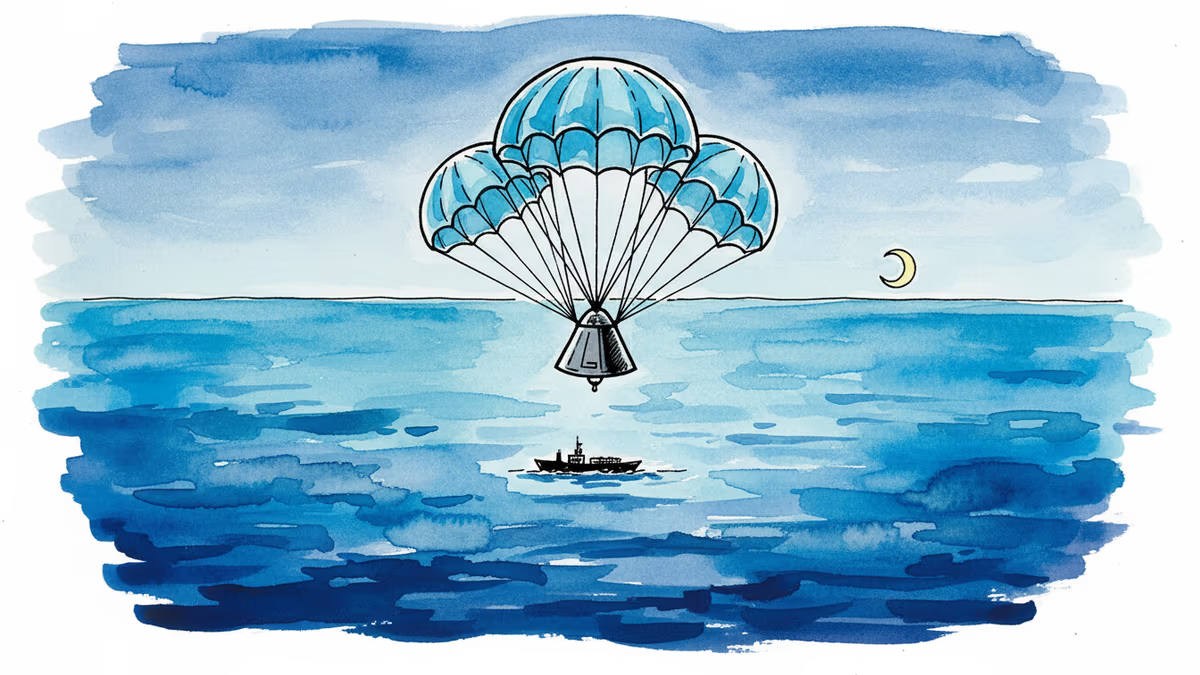
NASA's Orion capsule splashed down safely after humanity's first crewed lunar voyage in 54 years. The mission succeeded. Now the harder questions begin.
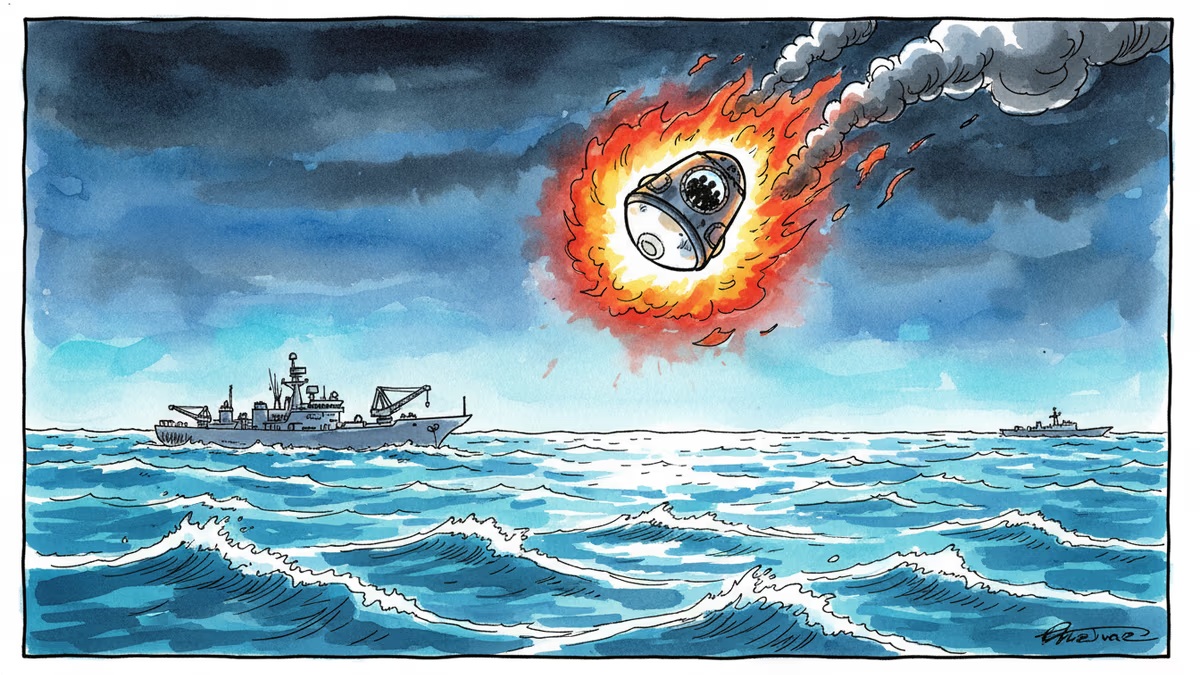
Artemis II's four astronauts are returning to Earth Friday night. The splashdown off Southern California isn't the anticlimax it sounds—it's the most technically perilous moment of the entire lunar journey.
NASA's Artemis III has been redesigned as an Earth-orbit mission. SpaceX and Blue Origin say their landers won't be ready until late 2027. What does this mean for the future of lunar exploration?
Artemis II splashed down successfully in the Pacific, marking humanity's first crewed deep space mission in over 50 years. But the harder question isn't whether we can go back — it's why we should.
NASA's Orion capsule splashed down safely after humanity's first crewed lunar voyage in 54 years. The mission succeeded. Now the harder questions begin.
Artemis II's four astronauts are returning to Earth Friday night. The splashdown off Southern California isn't the anticlimax it sounds—it's the most technically perilous moment of the entire lunar journey.
Thoughts
Share your thoughts on this article
Sign in to join the conversation