
Roblox Pivots to Adult Users as Revenue Strategy
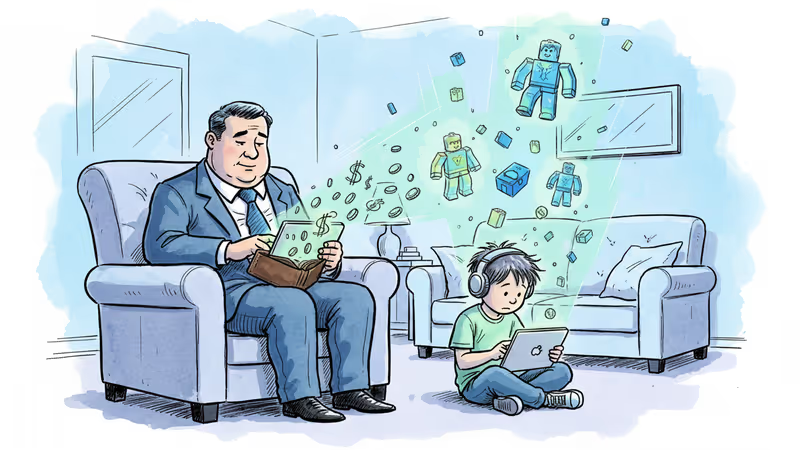
Roblox reveals 27% of age-verified users are adults who spend more than minors. Platform shifts focus to high-fidelity content for mature audiences.
When you think of Roblox, what comes to mind? Probably kids building virtual worlds with colorful blocks. But the platform's latest earnings reveal a different story: 27% of age-verified users are adults, and they're spending more money than their younger counterparts.
The Numbers Behind the Shift
Roblox's 2025 year-end report dropped some eye-opening statistics. As of January 31st, 45% of daily active users have completed age verification, with more than a quarter of those being adults over 18. More importantly, these adult users are outspending minors on the platform.
This isn't just a demographic curiosity—it's a fundamental business pivot. Adult users typically have disposable income and make purchasing decisions independently, unlike younger players who rely on parental approval and allowances. For a platform built on in-game purchases, this represents a goldmine of untapped potential.
The company isn't ignoring this opportunity. Roblox is actively expanding what it calls "high-fidelity" genres, targeting some of the "largest and highest-monetizing genres in the gaming industry." Translation: they're moving beyond simple block-building games toward more sophisticated experiences that can compete with traditional gaming platforms.
Beyond Child's Play

This evolution reflects broader changes in how we think about gaming and virtual spaces. The stereotype of gaming as a children's activity has been crumbling for years, but Roblox's data provides concrete evidence of this shift. Adults aren't just tolerating these platforms—they're actively engaging and spending.
What's driving this adult adoption? Part of it stems from the pandemic-era normalization of virtual social spaces. Many adults discovered that platforms like Roblox offer unique social experiences that traditional games don't provide. The creative tools, community aspects, and user-generated content create a different kind of engagement than passive entertainment.
The platform's focus on "high-fidelity" content suggests they're taking this demographic seriously. This likely means more realistic graphics, complex gameplay mechanics, and content themes that resonate with adult interests—a far cry from the colorful, simple experiences that initially defined the platform.
Industry Implications
This shift has implications beyond Roblox itself. Other metaverse and gaming platforms are watching closely. If adults are willing to spend significant money on virtual experiences, it validates the entire premise of the metaverse economy. Companies like Meta, Microsoft, and countless startups have bet billions on this vision.
For investors, this data point matters. Adult users typically provide more stable, predictable revenue streams than younger demographics. They're less likely to abandon platforms due to changing interests or parental restrictions. This could make Roblox a more attractive long-term investment proposition.
But questions remain about execution. Can Roblox successfully serve both kid-friendly content and adult-oriented experiences without alienating either group? The platform's moderation challenges are already significant—adding adult content and interactions could complicate things further.
Authors
Related Articles
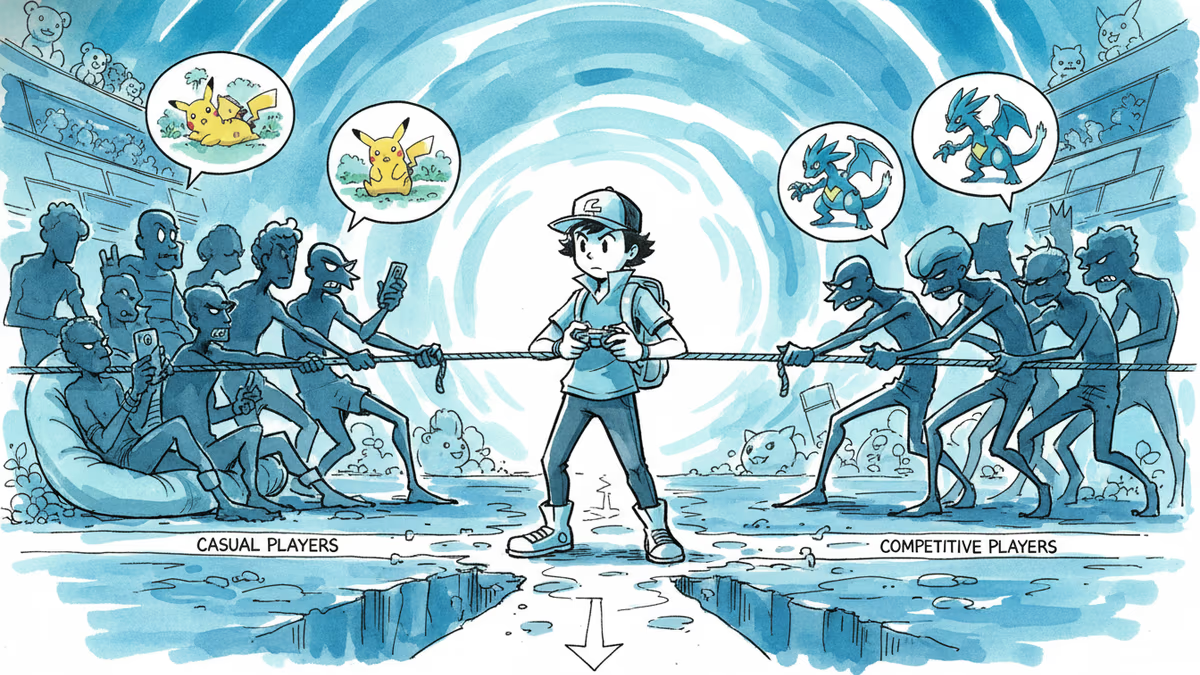
Pokémon Champions launched on Switch with bugs breaking core battle mechanics. But the deeper issue isn't the bugs — it's whether a game trying to please all players can satisfy any of them.
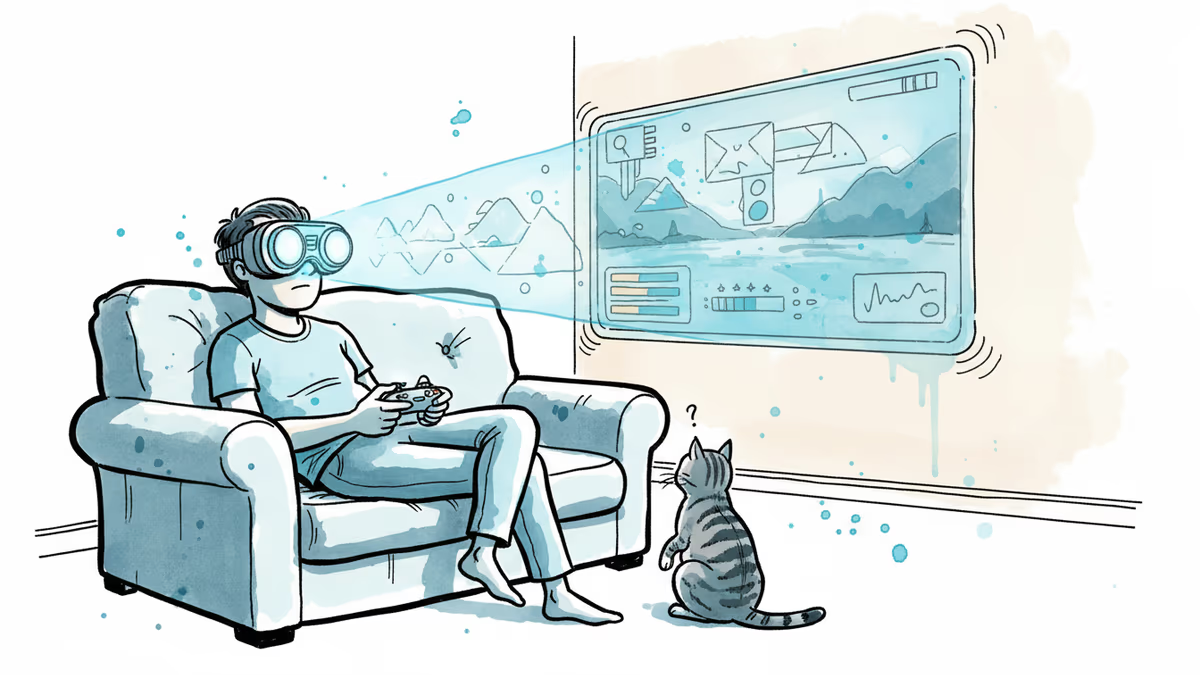
Xreal and Viture's latest AR glasses all do a few things well and a few things poorly. Here's what the best pair would look like — and why none of them are there yet.
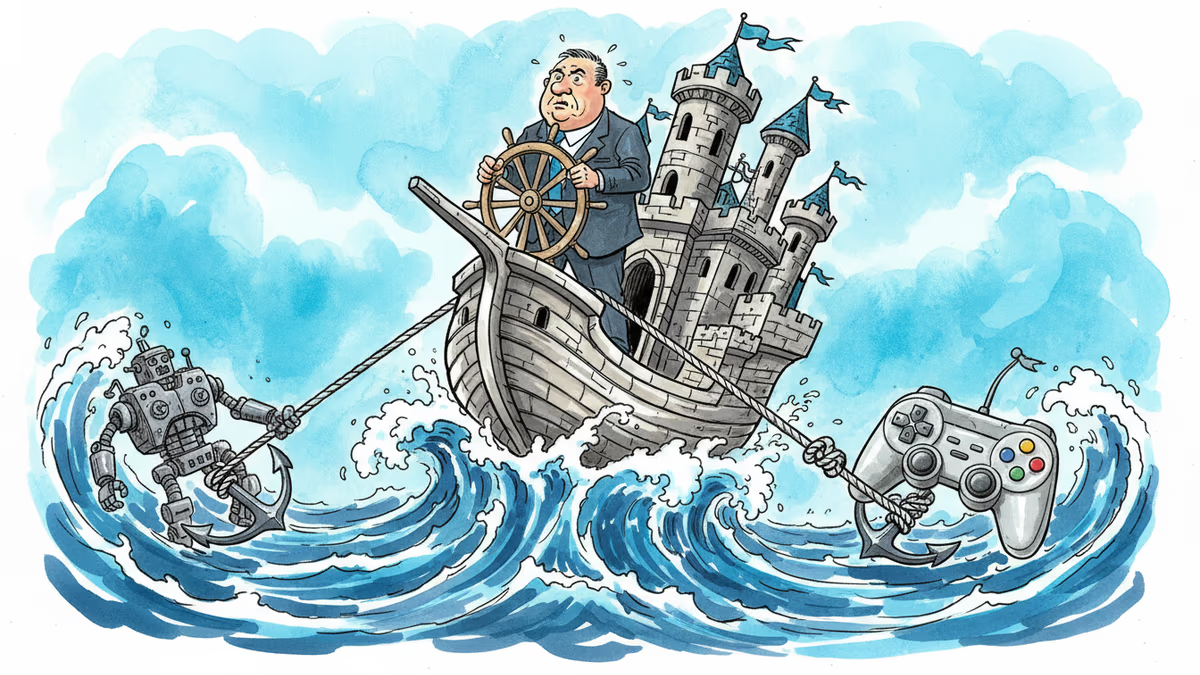
Days into his tenure, Disney CEO Josh D'Amaro faces simultaneous crises: OpenAI's Sora shutdown threatens a $1B AI deal, while Epic's layoffs cast doubt on a $1.5B metaverse plan.

Nine months after a record-breaking launch, Nintendo is cutting Switch 2 production from 6 million to 4 million units per quarter. What went wrong, and what does it signal for the console market?
Pokémon Champions launched on Switch with bugs breaking core battle mechanics. But the deeper issue isn't the bugs — it's whether a game trying to please all players can satisfy any of them.
Xreal and Viture's latest AR glasses all do a few things well and a few things poorly. Here's what the best pair would look like — and why none of them are there yet.
Days into his tenure, Disney CEO Josh D'Amaro faces simultaneous crises: OpenAI's Sora shutdown threatens a $1B AI deal, while Epic's layoffs cast doubt on a $1.5B metaverse plan.
Nine months after a record-breaking launch, Nintendo is cutting Switch 2 production from 6 million to 4 million units per quarter. What went wrong, and what does it signal for the console market?
Thoughts
Share your thoughts on this article
Sign in to join the conversation