
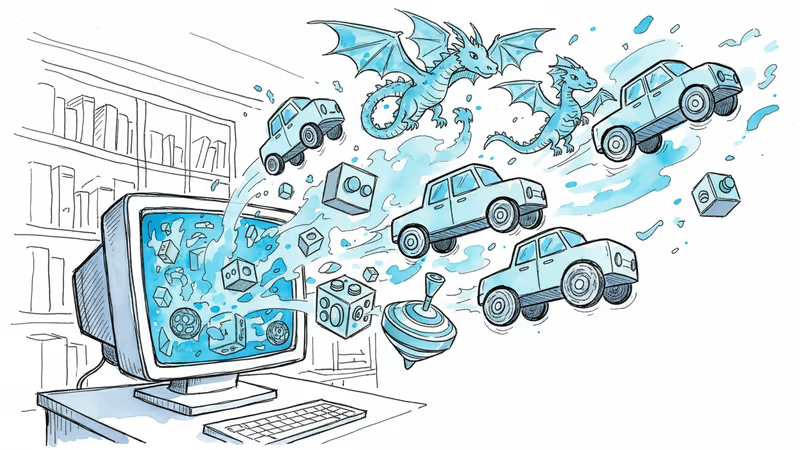
Roblox's 4D Revolution: When AI-Generated Objects Come to Life
Roblox launches 4D creation technology that generates interactive 3D objects. Cars that actually drive, planes that fly - exploring what this means for gaming's future and the creator economy.
1.8 million 3D objects generated in less than a year. That's the impressive track record of Roblox's AI-powered creation tool since its March 2023 launch. But now, the company is taking a giant leap beyond static objects into a world where digital creations don't just exist—they live, move, and respond.
Roblox announced Wednesday that its highly anticipated 4D creation feature is now in open beta, transforming how users think about virtual object creation. The technology adds what the company calls "an important new layer: interactivity."
From Digital Sculptures to Living Objects
The shift from 3D to 4D represents more than just a technical upgrade—it's a fundamental reimagining of what digital creation means. Previously, generating a car in Roblox would give you a static, immovable sculpture. Now, that same AI-generated car comes with spinning wheels and can actually be driven around the virtual world.
The magic lies in how the system breaks down complex objects into functional components. The "Car-5" schema, one of two available templates, creates vehicles with five distinct parts: a main body and four independently rotating wheels. Each component is assigned specific behaviors, transforming a simple 3D model into a fully interactive game element.
The second template, "Body-1," handles single-piece objects like boxes or sculptures, but even these static items are designed with future interactivity in mind.
The Creator Economy Gets Supercharged
Roblox's 4D technology addresses a fundamental barrier in game development: the technical expertise required to create engaging, interactive content. Traditionally, building functional vehicles or interactive objects required knowledge of 3D modeling, physics engines, and programming. Now, creators can generate complex, behaviorally-rich objects through simple text prompts.
This democratization of game development could reshape the creator economy on the platform. With over 15 million creators already building experiences on Roblox, removing technical barriers could unleash an unprecedented wave of innovation.

The company's future plans are even more ambitious. Soon, creators will be able to define their own schemas, essentially teaching the AI how different types of objects should behave. This opens possibilities for entirely new categories of interactive content that haven't been imagined yet.
Real-Time Dreaming: The Next Frontier
Roblox CEO David Baszucki recently teased what might be the platform's most ambitious project yet: "real-time dreaming." This technology would allow creators to build entire worlds using keyboard navigation and real-time text prompts—essentially thinking worlds into existence.
Combined with the company's upcoming image-to-3D technology, which can generate detailed models that match a reference image's style, we're looking at a future where the gap between imagination and creation virtually disappears.
The Double-Edged Sword of Accessibility
While these advances democratize creation, they also raise important questions about quality, originality, and platform responsibility. As creation becomes easier, Roblox faces the challenge of maintaining standards while encouraging innovation.
The timing of this announcement is particularly notable, coming shortly after Roblox implemented mandatory facial verification for chat features following child safety concerns and legal challenges. The company must balance rapid technological advancement with growing scrutiny over how it protects its predominantly young user base.
Market Implications and Competition
This move positions Roblox at the forefront of what could become a new battleground in the gaming industry. As traditional game development tools become more AI-powered, platforms that can offer the most intuitive creation experiences will likely capture the largest share of creator mindshare.
For investors and industry watchers, Roblox's 4D technology represents a potential moat in the increasingly competitive metaverse space. The company isn't just building better tools—it's creating an ecosystem where imagination becomes the primary currency.
Authors
Related Articles

Days into his tenure, Disney CEO Josh D'Amaro faces simultaneous crises: OpenAI's Sora shutdown threatens a $1B AI deal, while Epic's layoffs cast doubt on a $1.5B metaverse plan.
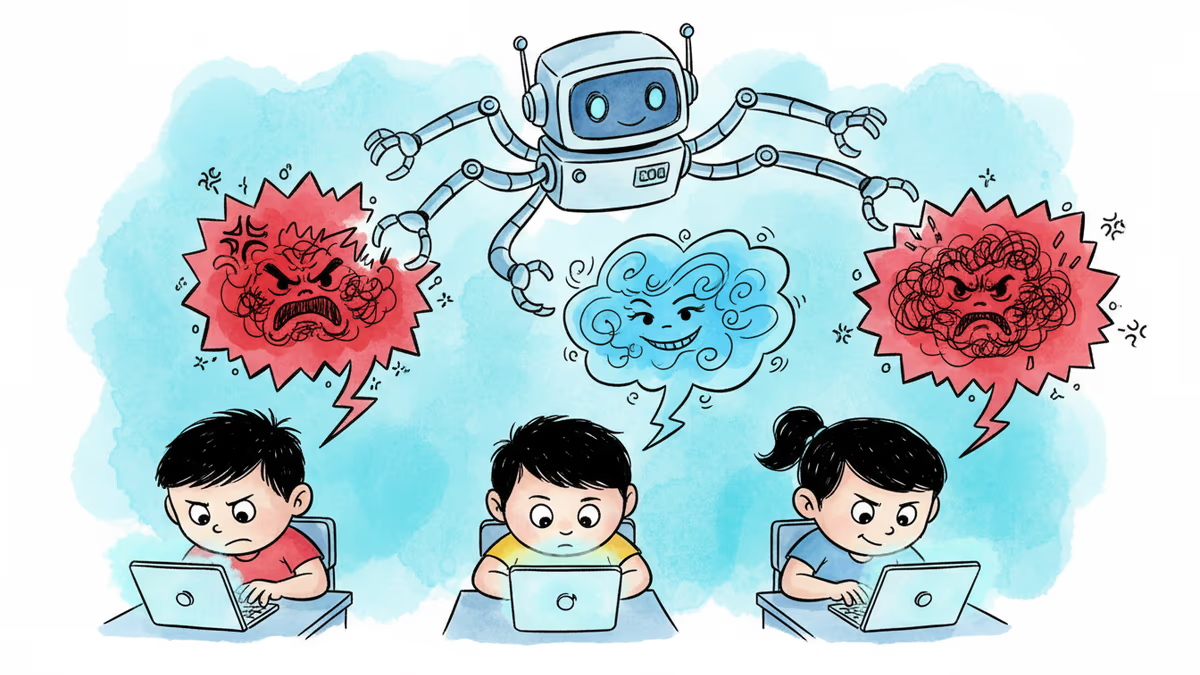
Roblox introduces AI-powered real-time chat rephrasing, replacing banned words with respectful alternatives instead of hash symbols. A new era of AI-moderated childhood communication begins.
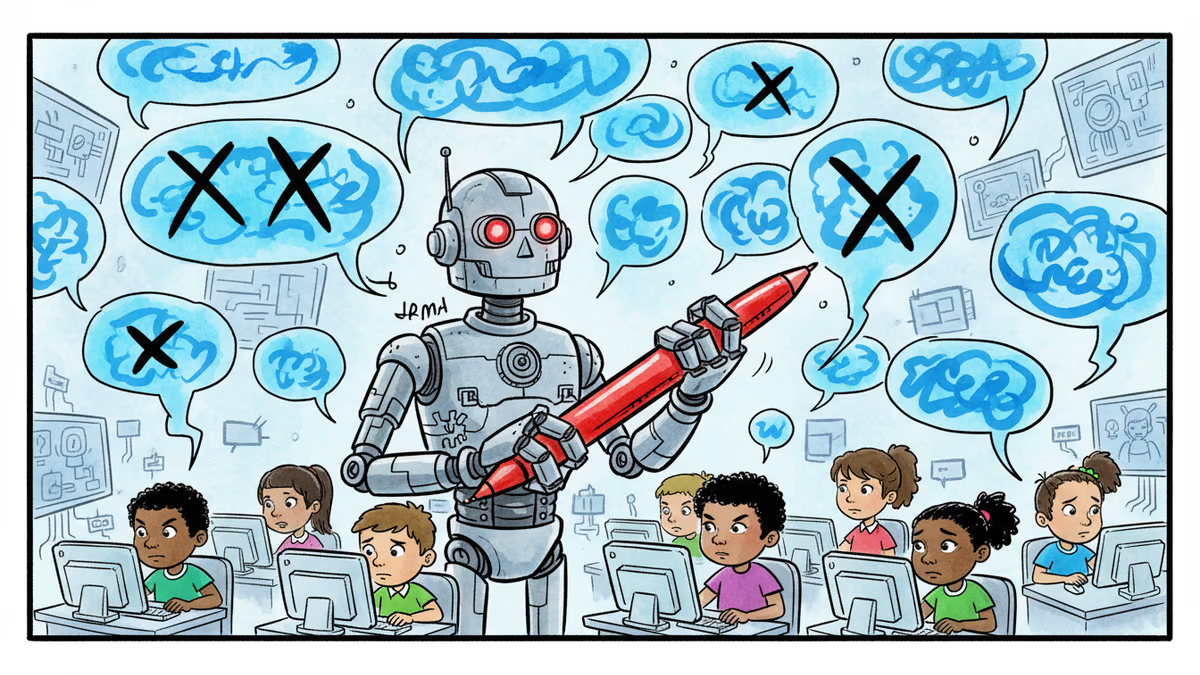
Roblox introduces AI-powered real-time chat rephrasing that goes beyond simple filtering, automatically converting inappropriate language into more respectful alternatives while preserving user intent.

Epic Games and Google agree on 'metaverse browsers' as new app category. This quiet deal could reshape platform competition and app store economics.
Days into his tenure, Disney CEO Josh D'Amaro faces simultaneous crises: OpenAI's Sora shutdown threatens a $1B AI deal, while Epic's layoffs cast doubt on a $1.5B metaverse plan.
Roblox introduces AI-powered real-time chat rephrasing, replacing banned words with respectful alternatives instead of hash symbols. A new era of AI-moderated childhood communication begins.
Roblox introduces AI-powered real-time chat rephrasing that goes beyond simple filtering, automatically converting inappropriate language into more respectful alternatives while preserving user intent.
Epic Games and Google agree on 'metaverse browsers' as new app category. This quiet deal could reshape platform competition and app store economics.
Thoughts
Share your thoughts on this article
Sign in to join the conversation