
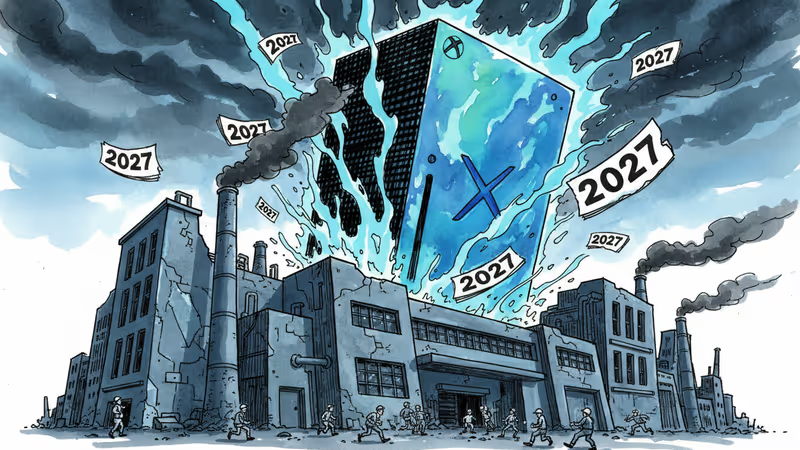
AMD Hints at 2027 Next-Gen Xbox Launch Timeline
AMD CEO suggests Microsoft's next-generation Xbox console could launch in 2027, revealing progress on custom chip development and potential gaming industry shifts.
2027. That single number, casually dropped by AMD's CEO during an earnings call, just sent ripples through the gaming world.
Lisa Su revealed today that "development of Microsoft's next-gen Xbox, featuring an AMD semi-custom SoC, is progressing well to support a launch in 2027." While she stopped short of confirming Microsoft will definitely launch then, her comment suggests the hardware foundation is taking shape for a 2027 debut.
The statement marks the first concrete timeline hint for Microsoft's next console generation since the company announced its "strategic multi-year partnership" with AMD last year.
Shorter Console Cycles Emerging
A 2027 launch would represent a notable shift in console generation timing. The current Xbox Series X/S launched in 2020, meaning the next generation would arrive just seven years later. Compare that to the Xbox One, which held the fort for eight years before being succeeded.
This acceleration isn't happening in isolation. The gaming industry is experiencing unprecedented change, with cloud gaming, subscription services, and cross-platform play reshaping how people consume games. Microsoft appears to be positioning itself for shorter hardware cycles that can better adapt to these rapid shifts.
The partnership with AMD extends beyond just console chips. The collaboration includes cloud gaming infrastructure, suggesting Microsoft is building an integrated ecosystem where hardware and services work seamlessly together.
Game Pass Strategy Drives Hardware Decisions
The 2027 timeline aligns with Microsoft's broader gaming strategy, which prioritizes Xbox Game Pass subscribers over hardware unit sales. The next console likely won't just be about raw performance improvements—it'll be designed as the ultimate Game Pass delivery vehicle.

Microsoft's recent Activision Blizzard acquisition provides the content arsenal for this strategy. Imagine Call of Duty, World of Warcraft, and other blockbuster franchises optimized for next-generation hardware. These titles could serve as the killer apps that justify a console upgrade cycle.
But here's where it gets interesting: Microsoft has been increasingly platform-agnostic, bringing Xbox games to PlayStation and Nintendo systems. The next Xbox might need to offer something beyond exclusive games to attract buyers.
The Three-Way Console Battle Intensifies
A 2027Xbox launch could disrupt the traditional console cycle synchronization. Sony's PlayStation 6 timing remains unclear, while Nintendo operates on its own schedule entirely. This staggered approach might actually benefit consumers, providing more frequent innovation waves across the industry.
For game developers, shorter console cycles present both opportunities and challenges. Studios can access cutting-edge hardware more frequently, but they also face pressure to constantly adapt their development pipelines. Smaller developers might struggle to keep pace with rapid hardware evolution.
The competitive landscape will also shift. AMD supplying chips to both Microsoft and Sony creates an interesting dynamic where the real differentiation comes from software, services, and system design rather than raw silicon performance.
What This Means for Gamers
For consumers, a 2027 launch raises practical questions. Will current Xbox Series X/S owners feel pressured to upgrade after just seven years? How will Microsoft handle backward compatibility and the transition between generations?
The answer likely lies in Microsoft's service-first approach. If your game library lives in Game Pass and your saves sync to the cloud, upgrading hardware becomes less disruptive. The next Xbox might feel more like upgrading your phone—same apps, better performance.
Pricing will be crucial. Microsoft has shown willingness to subsidize hardware to build service revenue, but economic conditions in 2027 could influence this strategy. The company might offer multiple tiers, from budget-friendly streaming devices to premium gaming powerhouses.
Authors
Related Articles

AMD's MI325X matches or beats Nvidia on memory and bandwidth — yet Nvidia's 86-92% share holds. The real moat is CUDA, 20 years in the making. Part 1 of 4.

GitHub confirmed hackers stole data from 3,800 internal repositories via a poisoned VS Code extension. Here's why developer tools are now the most dangerous attack surface in tech.

Emails revealed in the Musk v. Altman trial show Microsoft executives were deeply skeptical of OpenAI in 2017–2018. What actually changed their minds?
Xbox hardware revenue dropped 33% in Q1 2026, yet Microsoft posted $82.9B in total revenue. What this tells us about the future of gaming—and who actually loses.
AMD's MI325X matches or beats Nvidia on memory and bandwidth — yet Nvidia's 86-92% share holds. The real moat is CUDA, 20 years in the making. Part 1 of 4.
GitHub confirmed hackers stole data from 3,800 internal repositories via a poisoned VS Code extension. Here's why developer tools are now the most dangerous attack surface in tech.
Emails revealed in the Musk v. Altman trial show Microsoft executives were deeply skeptical of OpenAI in 2017–2018. What actually changed their minds?
Xbox hardware revenue dropped 33% in Q1 2026, yet Microsoft posted $82.9B in total revenue. What this tells us about the future of gaming—and who actually loses.
Thoughts
Share your thoughts on this article
Sign in to join the conversation