
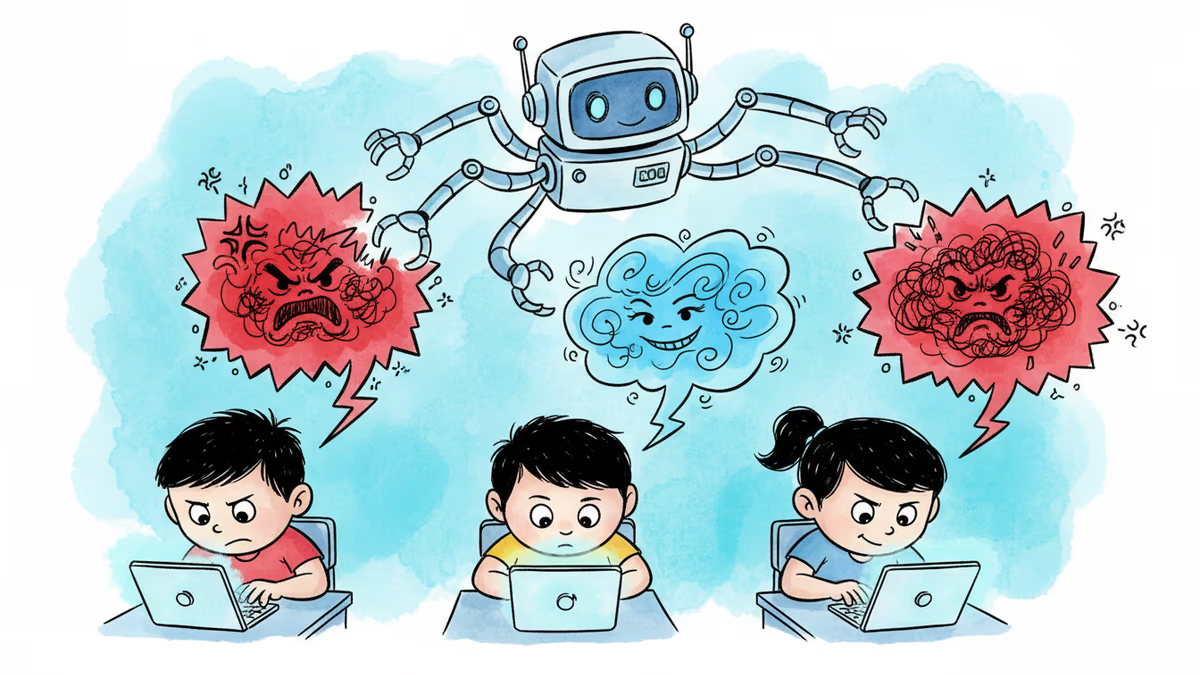
Roblox's AI Now Rewrites Your Kids' Bad Language
Roblox introduces AI-powered real-time chat rephrasing, replacing banned words with respectful alternatives instead of hash symbols. A new era of AI-moderated childhood communication begins.
200 Million Users Just Got an AI Language Teacher
Type "Hurry TF up!" in Roblox chat, and instead of seeing "####," you'll now read "Hurry up!" That's the reality for Roblox's massive user base as the platform rolls out AI-powered real-time chat rephrasing. The system doesn't just censor—it rewrites.
This goes far beyond traditional content filters. Where old systems simply replaced banned words with hash symbols, creating fragmented conversations full of "####," the new AI interprets intent and suggests more respectful alternatives. Every chat participant gets notified when a message has been rephrased "to keep the conversation civil."
Rajiv Bhatia, Roblox's VP of User and Discovery Product, calls chat "central to how people connect, coordinate, and play." But this technological intervention raises questions about authenticity in digital communication.
Parents Caught Between Protection and Reality
The feature arrives amid intense scrutiny. Attorneys general from Texas, Kentucky, and Louisiana recently filed lawsuits alleging Roblox exposed children to grooming and explicit content. The platform also introduced mandatory facial verification for chat access.
Parental reactions split predictably. Some welcome the protection: "At least my kid won't see profanity while gaming." Others worry about overprotection: "If children only see sanitized language online, how will they handle real-world communication?"

The technology extends beyond simple word replacement. Roblox claims 20x improvement in detecting attempts to share or solicit personal information, including sophisticated filter bypasses and leetspeak variations.
The Broader Stakes: AI as Digital Parent
This isn't just about gaming. We're witnessing the emergence of AI as a mediator in childhood communication. When algorithms reshape how kids express frustration, excitement, or disagreement, they're potentially shaping personality development itself.
Tech ethicists note the precedent: if AI can "improve" our language in real-time, where does authentic expression end and algorithmic influence begin? The feature works across all languages supported by Roblox's translation tools, making this a global experiment in AI-mediated communication.
For developers, the implications extend beyond child safety. Real-time language processing at this scale demonstrates sophisticated natural language understanding that could reshape social media, workplace communication, and online education.
The Business of Behavioral Engineering
Roblox's move reflects broader platform liability concerns. As governments worldwide scrutinize social media's impact on youth mental health, proactive content moderation becomes a competitive advantage. The question isn't whether AI should moderate communication, but how much control platforms should exert over human expression.
Investors are watching closely. Effective AI moderation could reduce regulatory risk and operational costs while potentially creating new revenue streams through "communication enhancement" services.
Authors
Related Articles

Samsung and SK unveiled a chip and AI investment package worth thousands of trillions of won on June 29. The headline number swings wildly by outlet, but the real contest isn't capital — it's water and power.
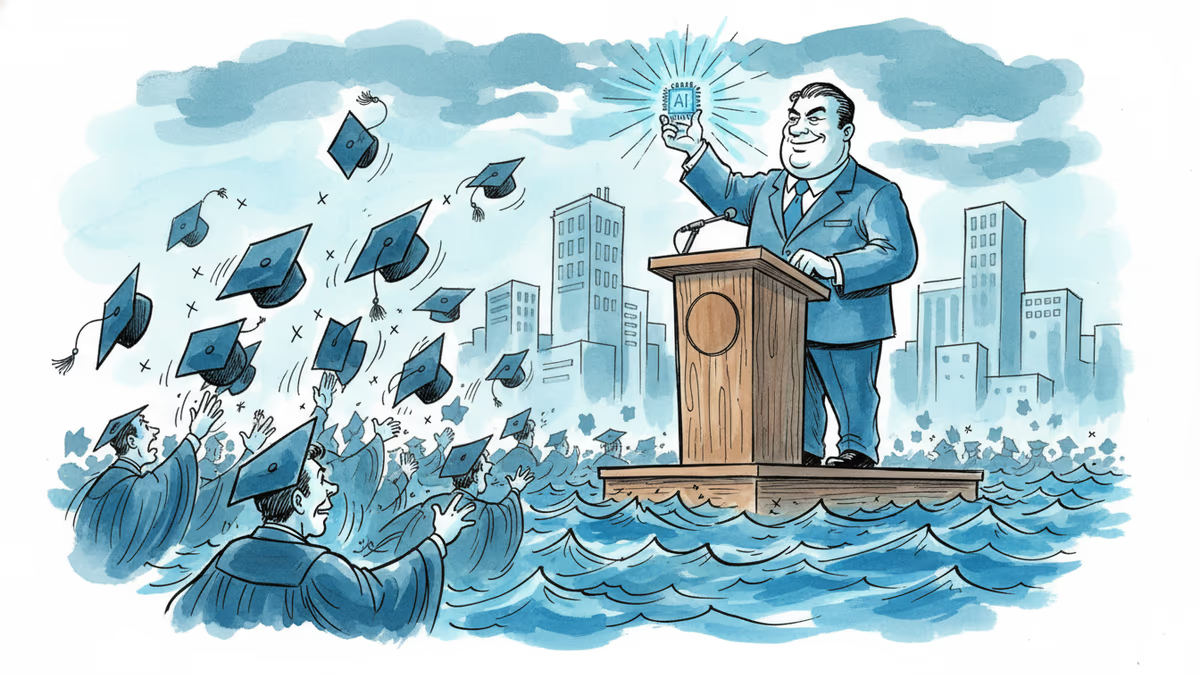
Viral videos show 2026 graduates jeering executives who praise AI at commencement ceremonies. It's not just rudeness — it's a signal about who pays for technological optimism.

Filipino virtual assistants using AI to ghost-manage LinkedIn profiles for executives is now a structured industry. 30 comments a day, fake engagement rings, and a platform struggling to tell real from fabricated.
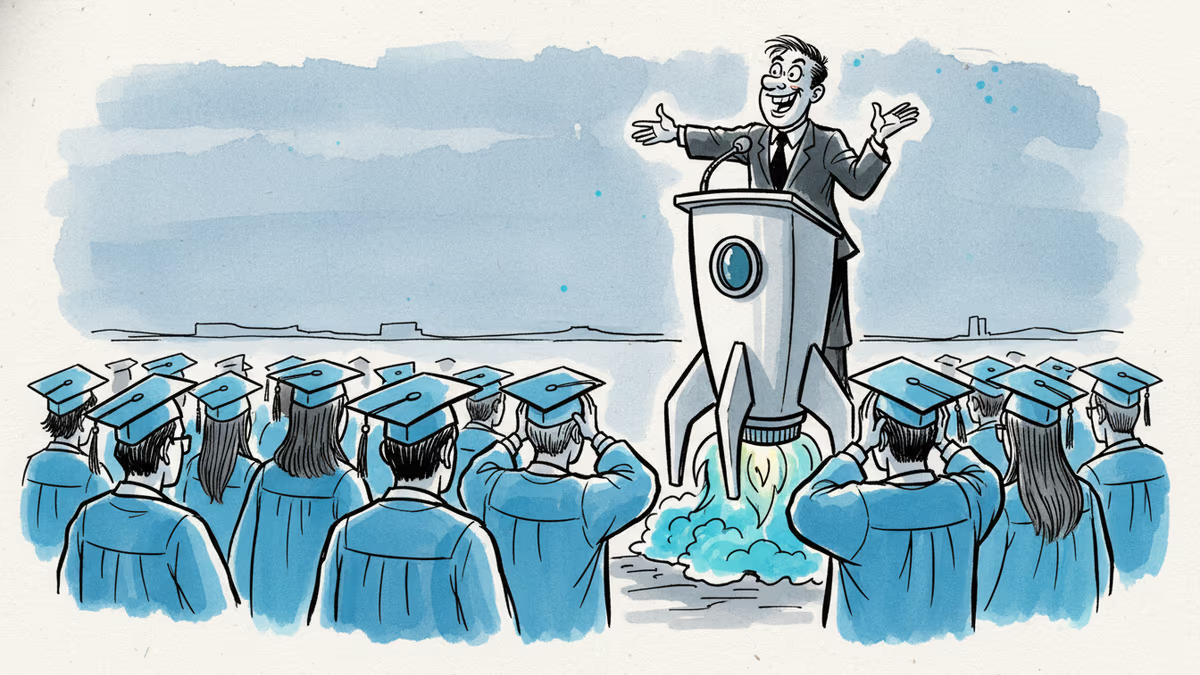
Two commencement speakers learned the hard way that AI enthusiasm doesn't land well with today's graduates. The backlash reveals a widening gap between tech optimism and Gen Z's economic reality.
Samsung and SK unveiled a chip and AI investment package worth thousands of trillions of won on June 29. The headline number swings wildly by outlet, but the real contest isn't capital — it's water and power.
Viral videos show 2026 graduates jeering executives who praise AI at commencement ceremonies. It's not just rudeness — it's a signal about who pays for technological optimism.
Filipino virtual assistants using AI to ghost-manage LinkedIn profiles for executives is now a structured industry. 30 comments a day, fake engagement rings, and a platform struggling to tell real from fabricated.
Two commencement speakers learned the hard way that AI enthusiasm doesn't land well with today's graduates. The backlash reveals a widening gap between tech optimism and Gen Z's economic reality.
Thoughts
Share your thoughts on this article
Sign in to join the conversation