
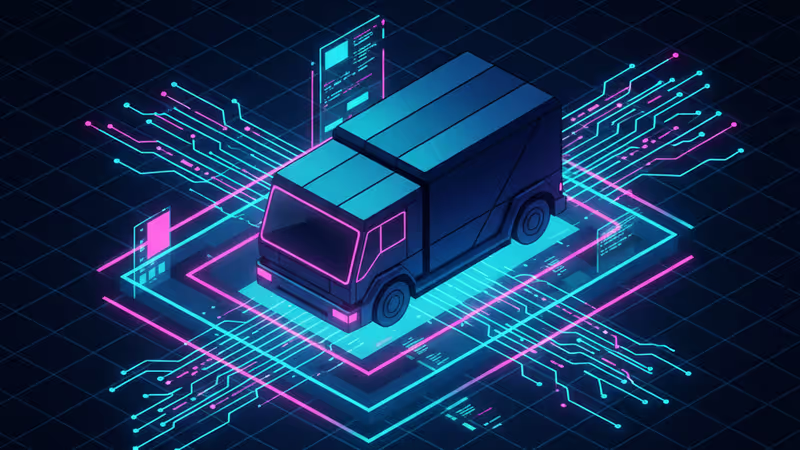
Rivian's $50/Month Gambit: The Pivot from Automaker to High-Margin Tech Platform
Rivian's new autonomy subscription and custom silicon isn't just about cars. It's a strategic pivot to a high-margin tech model. Here's what it means for investors.
The Lede: Beyond the Electric Truck
Rivian's recent Autonomy & AI Day wasn't just a feature showcase; it was a strategic manifesto. While the headlines focused on expanded hands-free driving and a new AI assistant, the real story lies deeper. Rivian is signaling a fundamental pivot from a capital-intensive hardware manufacturer to a high-margin, recurring-revenue technology company. This isn't about selling more trucks—it's about transforming the trucks they sell into platforms for continuous revenue, a move critical for survival and long-term valuation in the brutal EV arena.
Why It Matters
In an industry defined by razor-thin margins and punishing production ramps, simply making and selling cars is a losing game for newcomers. The true value lies in the software and services layered on top. Rivian's strategy is a direct acknowledgment of this reality.
- The Recurring Revenue Holy Grail: The announced $49.99/month subscription for its enhanced driver-assistance system is the opening shot. This shifts Rivian's financial model from lumpy, one-time vehicle sales to a predictable, high-margin revenue stream, something Wall Street values far more highly than automotive manufacturing.
- Redefining the Competitive Landscape: This move escalates the software arms race. It puts immense pressure on other EV startups like Lucid and traditional automakers, who must now answer to a competitor building a vertically integrated tech stack, not just a compelling vehicle.
- The Platform Precedent: By developing its own custom silicon, Rivian is setting the stage to potentially license its entire autonomy platform. This opens up a massive B2B market, transforming competitors into potential customers and creating a revenue stream entirely independent of its own vehicle sales.
The Analysis: Deconstructing the Playbook

The "Tesla Playbook" Reimagined
Tesla pioneered the concept of the vehicle-as-a-platform, with Full Self-Driving (FSD) as the flagship software upgrade. Rivian is adopting a more pragmatic version of this model. Instead of promising a still-elusive Level 5 autonomy, it's starting with a tangible, valuable upgrade to its existing driver-assistance system, expanding its operational domain from 135,000 to 3.5 million miles of road. By pricing this as a subscription, Rivian creates a powerful incentive for owners to stay within its ecosystem while generating cash flow to fund more ambitious, future "eyes-off" systems.
From Silicon Valley to Detroit: The In-House Chip Gambit
Rivian's announcement of a custom 5nm processor, developed with heavyweights Arm and TSMC, is perhaps the most significant detail from the event. This is a classic Silicon Valley move, mirroring Apple's M-series chip strategy. Why take on this immense cost and complexity?
- Performance and Efficiency: A custom chip allows Rivian to optimize its hardware precisely for its own software stack, squeezing out maximum performance and power efficiency—critical in an EV.
- Strategic Control: It frees Rivian from the product roadmaps and supply chain vulnerabilities of third-party suppliers like Nvidia or Mobileye. They control their own destiny.
- A Defensible Moat: Custom silicon is a formidable barrier to entry. It's the core of a proprietary platform that cannot be easily replicated, giving Rivian a unique technological asset. As CEO RJ Scaringe's wry comment about selling the chip to its own spin-out suggests, this asset is designed to be monetized beyond Rivian's own vehicles.
PRISM's Take
Rivian is making a high-stakes bet that its future lies not in bending metal, but in writing code and designing silicon. The Autonomy & AI Day was a clear declaration that it refuses to be just another car company. By building a proprietary, vertically integrated technology stack, Rivian is creating strategic options that extend far beyond its own product line. The path is fraught with immense execution risk, but this pivot from a pure-play automaker to a diversified tech platform is the only credible strategy for long-term survival and leadership in the next era of mobility.
Authors
Related Articles
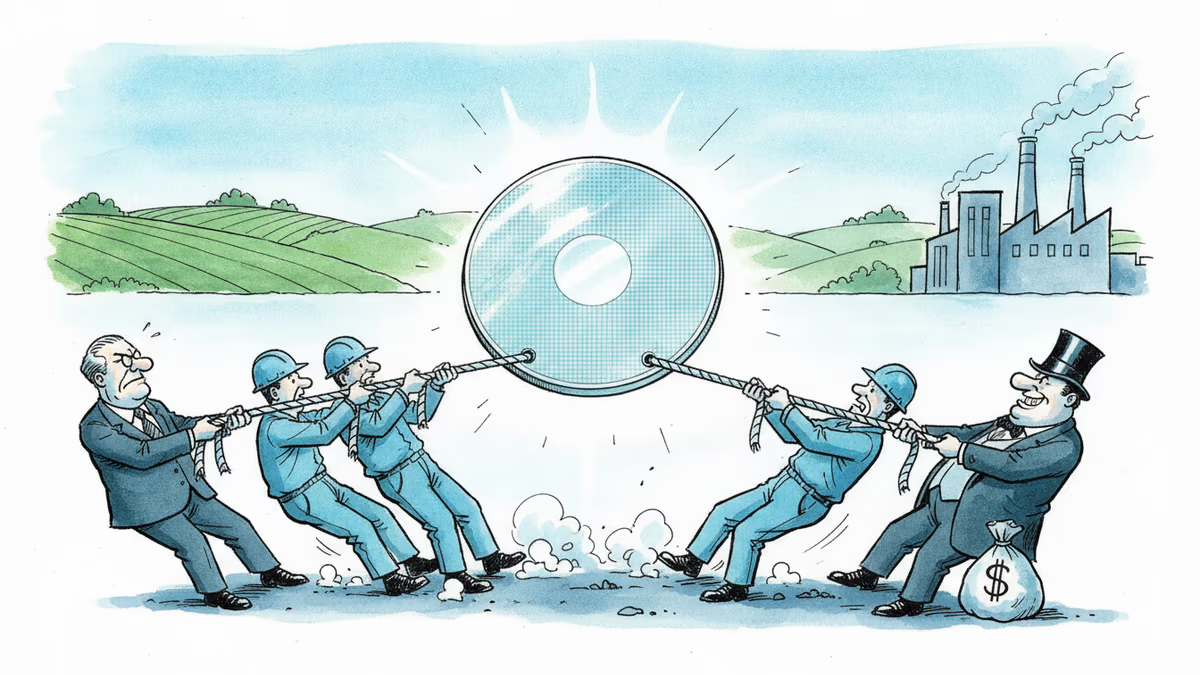
Samsung Electronics' union branch revealed that 84% of survey respondents oppose the government's roughly $290 billion (₩400 trillion) semiconductor megaproject in Gwangju. Government, management, the union and shareholders are all reading the same national project in sharply different ways.
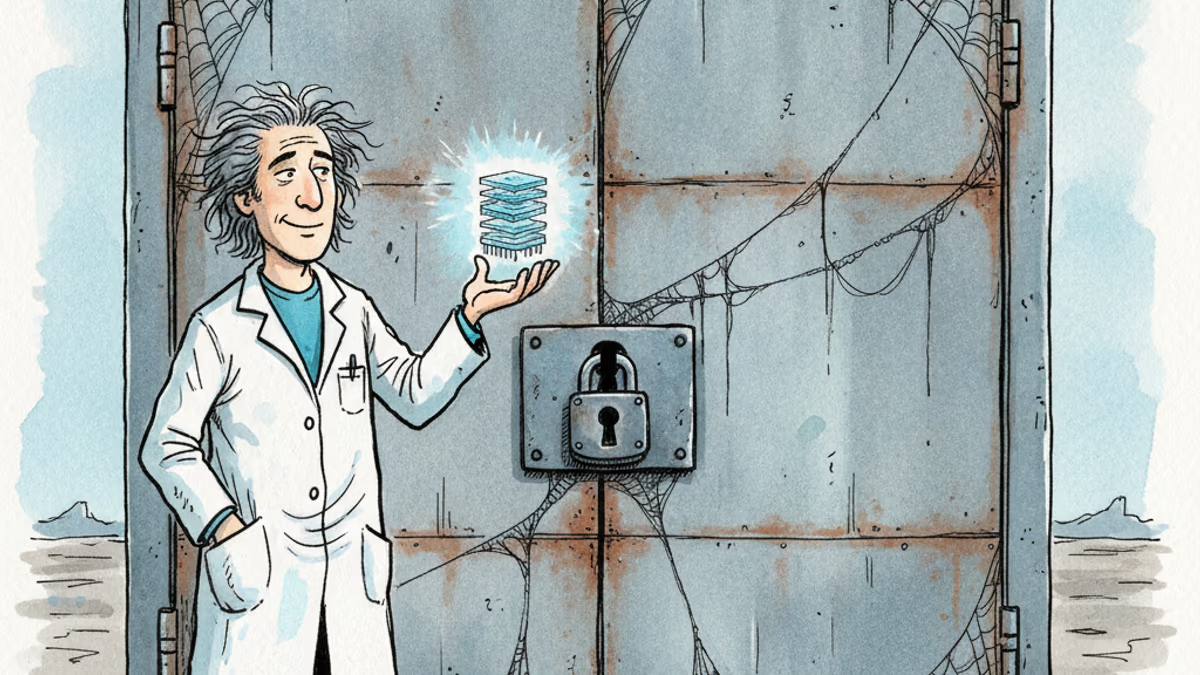
IBM has unveiled 'nanostack,' the world's first sub-1nm (0.7nm) chip research. Some say it adds a decade to Moore's Law; others say a lab demo is a long way from a fab. Either way, mass production isn't IBM's job.
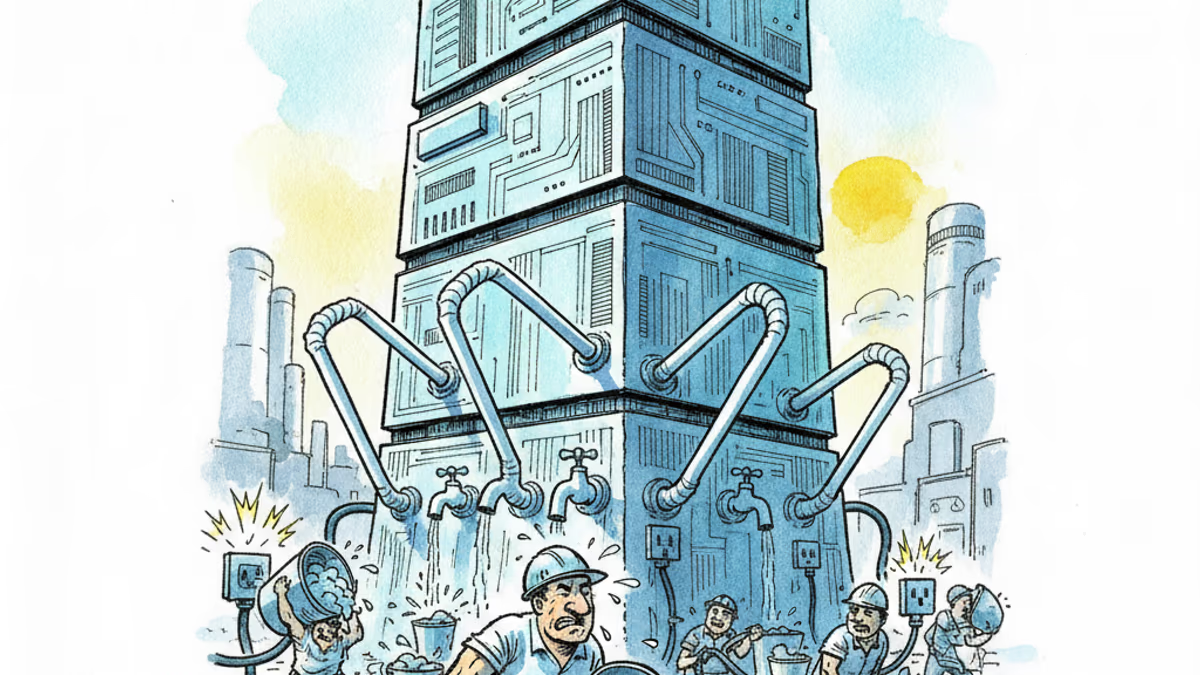
Samsung and SK unveiled a chip and AI investment package worth thousands of trillions of won on June 29. The headline number swings wildly by outlet, but the real contest isn't capital — it's water and power.
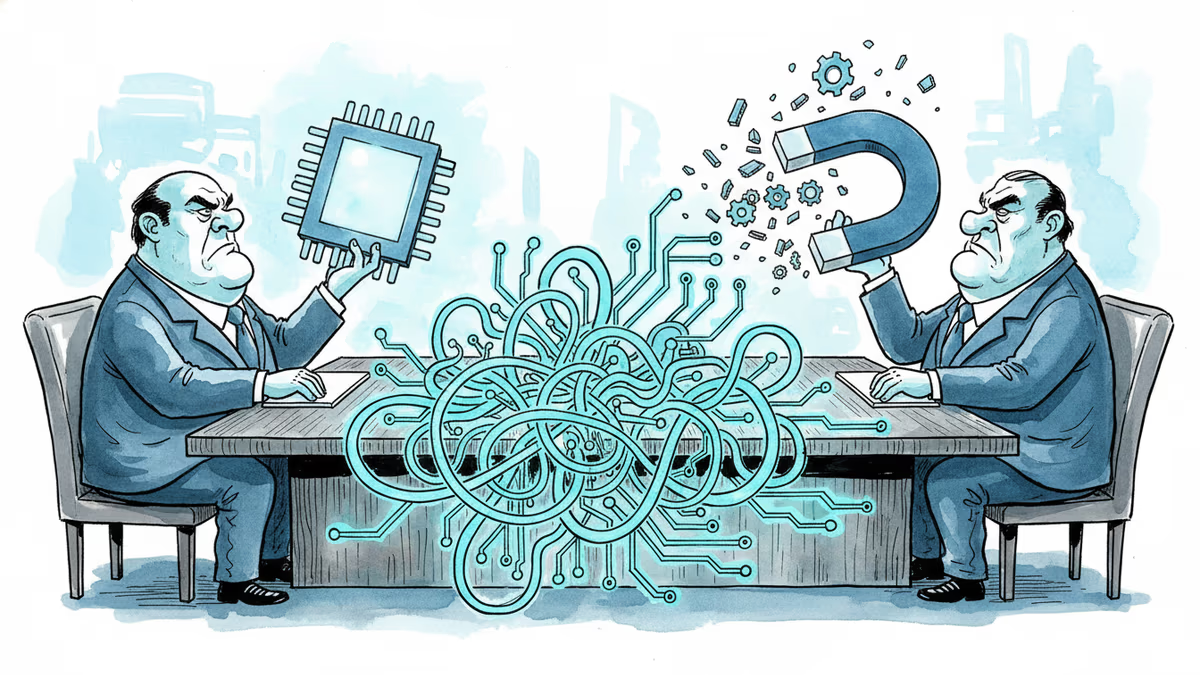
As Trump and Xi meet in Beijing, five tech flashpoints—chips, AI rivalry, supply chains, EVs, and rare earths—will quietly shape the global economy more than any diplomatic communiqué.
Samsung Electronics' union branch revealed that 84% of survey respondents oppose the government's roughly $290 billion (₩400 trillion) semiconductor megaproject in Gwangju. Government, management, the union and shareholders are all reading the same national project in sharply different ways.
IBM has unveiled 'nanostack,' the world's first sub-1nm (0.7nm) chip research. Some say it adds a decade to Moore's Law; others say a lab demo is a long way from a fab. Either way, mass production isn't IBM's job.
Samsung and SK unveiled a chip and AI investment package worth thousands of trillions of won on June 29. The headline number swings wildly by outlet, but the real contest isn't capital — it's water and power.
As Trump and Xi meet in Beijing, five tech flashpoints—chips, AI rivalry, supply chains, EVs, and rare earths—will quietly shape the global economy more than any diplomatic communiqué.
Thoughts
Share your thoughts on this article
Sign in to join the conversation