
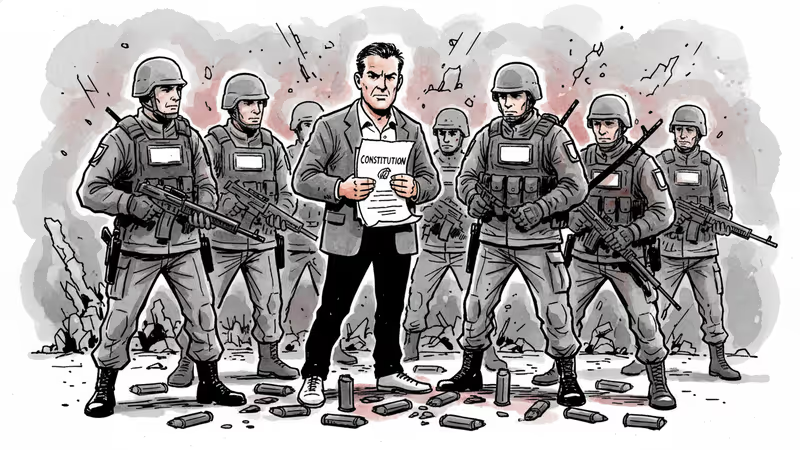
When Gun Rights Meet Federal Authority
The Alex Pretti shooting reveals deep contradictions in how gun rights advocates respond when Second Amendment meets federal law enforcement reality.
A legally armed citizen helping a pepper-sprayed woman. Federal agents tackling him to the ground. A fatal shooting that has torn apart the gun rights community's most fundamental beliefs about the Second Amendment.
The death of Alex Pretti in Minneapolis has created an unprecedented fracture in America's gun rights movement—not because of what happened, but because of how their own allies responded to it.
The Fatal Encounter
Video footage tells a clear story. Pretti, legally carrying a concealed weapon with proper permits, was holding a smartphone when he approached a woman being pepper-sprayed by federal agents. Within seconds, multiple Border Patrol agents swarmed him, forcing him to the ground. One agent removed Pretti's gun from his waist before another fired the fatal shot.
Despite the video evidence, the Trump administration's response was swift and contradictory to decades of gun rights orthodoxy. DHS Secretary Kristi Noem falsely labeled Pretti a "domestic terrorist" who was "brandishing" his weapon—something the footage clearly disproves. FBI Director Kash Patel incorrectly told Fox News that bringing guns to protests is illegal.
Most shocking to gun rights advocates was Trump's own statement: "I don't like that he had a gun. I don't like that he had two fully loaded magazines."
The Community's Divided Response
Traditional gun rights organizations responded predictably. The National Rifle Association affirmed that "all law-abiding citizens have a right to keep and bear arms anywhere they have a legal right to be." Gun Owners of America declared that "peaceful protests while armed isn't radical—it's American."
But online gun communities tell a different story. On ar15.com, which bills itself as "the world's largest firearm community," users are largely blaming Pretti himself.
"Riot, interfering with police action against that woman, pushing a cop," wrote one user. "All crimes, all while armed. Pretti did this to himself."

Another commenter rationalized the administration's position: "LEGAL, yes. SMART, NO. Anybody carrying should be smart enough to know that where and when you carry makes a difference."
The Rittenhouse Comparison
The most revealing aspect of this divide involves Kyle Rittenhouse. In 2020, the then-17-year-old traveled across state lines with an AR-15 to a protest in Kenosha, Wisconsin, ultimately killing two people. He became a conservative hero, celebrated for his "self-defense."
Pretti, by contrast, was legally carrying, had proper permits, never drew his weapon, and was attempting to help someone in distress. Yet he's being blamed for his own death by many in the same community that lionized Rittenhouse.
Even Rittenhouse himself joined the debate, posting a photo of himself surrendering to police with the caption: "The correct way to approach law enforcement when armed."
The Ideological Fracture
This response has exposed deep contradictions within the gun rights movement. Prominent gun influencer Brandon Herrera, with over 4 million YouTube followers, called the shooting "lawful but awful," arguing that Pretti brought it on himself by "interfering" with federal operations.
Meanwhile, leftist firearms advocate Karl Kasarda highlighted the hypocrisy: "Even the slightest amount of ideological consistency of the 2A rights community would require a call for justice, yet we're seeing disturbing claims that any interference with law enforcement justifies being killed by agents of the state."
Some extremist groups, particularly the Boogaloo movement, have criticized both the administration and their fellow gun rights advocates for abandoning core principles. "To the fucking turn coats thinking disarming is the answer," one member wrote, "fuck you. Shall not be infringed."
The Federal Authority Exception
What's emerging is an unspoken exception in gun rights ideology: the Second Amendment apparently doesn't apply when federal law enforcement decides it doesn't. This represents a fundamental shift from the movement's historical stance against government overreach.
The willingness of gun rights advocates to excuse Trump's anti-gun rhetoric—despite his administration's actions directly contradicting Second Amendment principles—reveals how partisan loyalty can override constitutional principles.
Authors
Related Articles
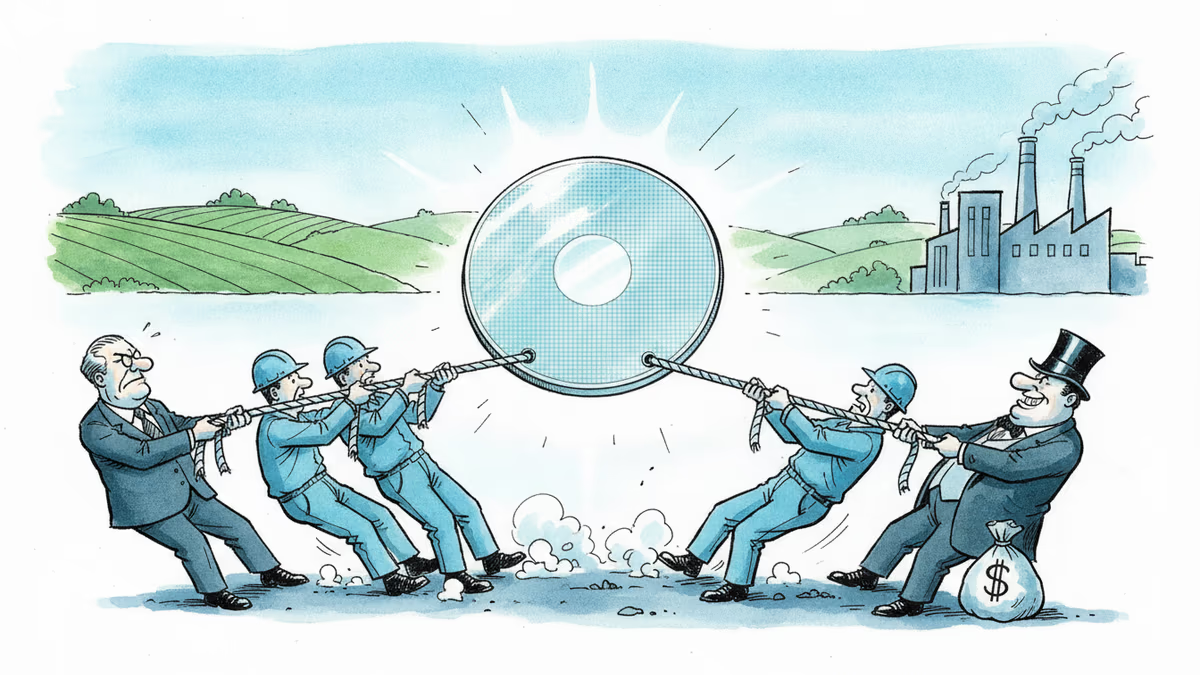
Samsung Electronics' union branch revealed that 84% of survey respondents oppose the government's roughly $290 billion (₩400 trillion) semiconductor megaproject in Gwangju. Government, management, the union and shareholders are all reading the same national project in sharply different ways.
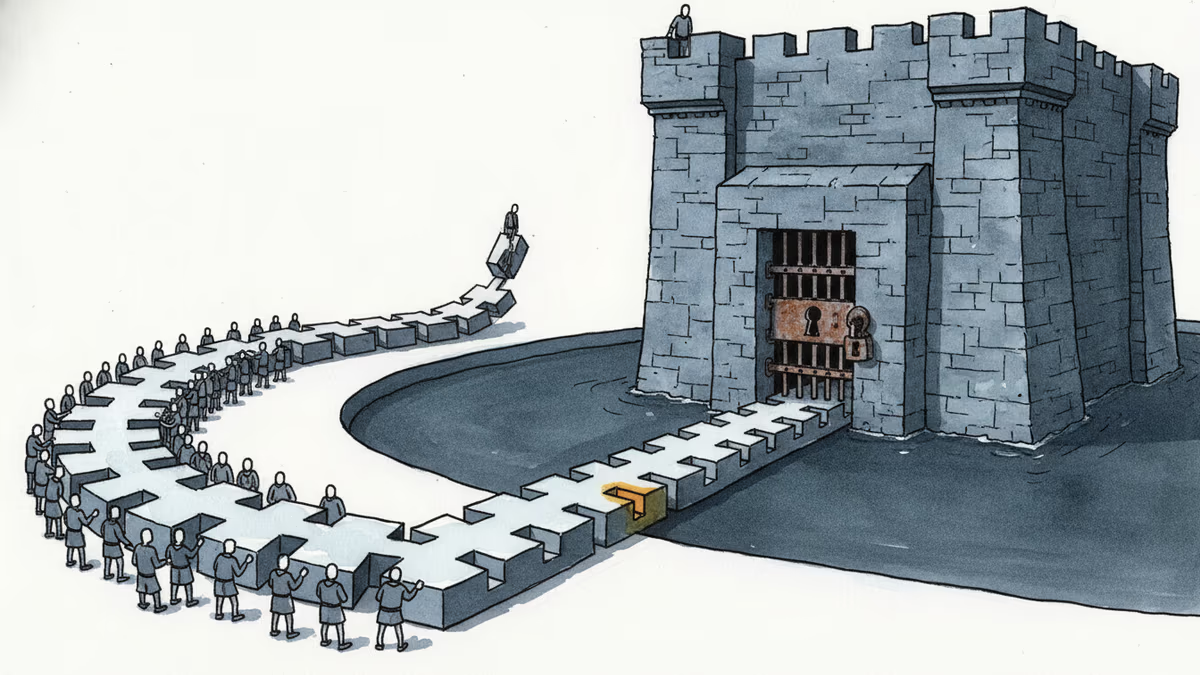
Nvidia shipped roughly a billion RISC-V cores in 2024, then announced it would run CUDA on the open standard. We break down how royalty-free instruction sets and open software stacks are trying to route around CUDA's lock-in. Part 2 of the Semiconductor Sovereignty series.
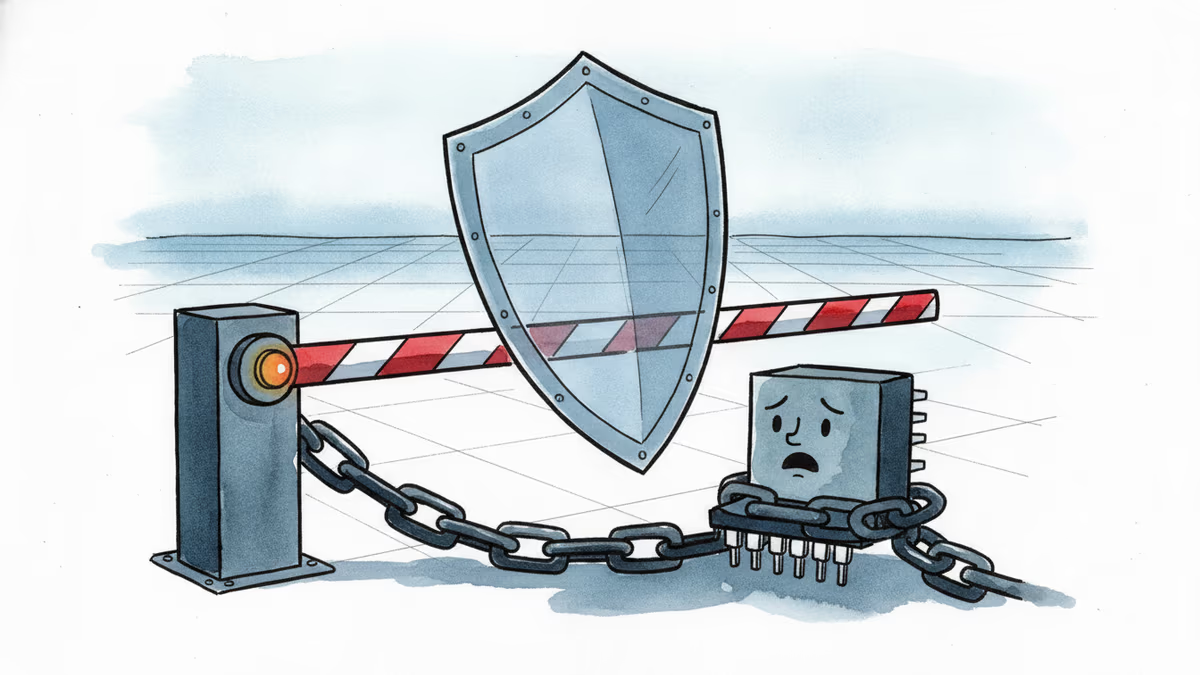
US AI-chip export controls split into three layers in the first half of 2026 — January easing, a May crackdown on circumvention, and a pending bill. Nvidia erased China from its guidance and still posted a record $81.6 billion quarter. A look at the export policy that both shields and cages it.

AMD's MI325X matches or beats Nvidia on memory and bandwidth — yet Nvidia's 86-92% share holds. The real moat is CUDA, 20 years in the making. Part 1 of 4.
Samsung Electronics' union branch revealed that 84% of survey respondents oppose the government's roughly $290 billion (₩400 trillion) semiconductor megaproject in Gwangju. Government, management, the union and shareholders are all reading the same national project in sharply different ways.
Nvidia shipped roughly a billion RISC-V cores in 2024, then announced it would run CUDA on the open standard. We break down how royalty-free instruction sets and open software stacks are trying to route around CUDA's lock-in. Part 2 of the Semiconductor Sovereignty series.
US AI-chip export controls split into three layers in the first half of 2026 — January easing, a May crackdown on circumvention, and a pending bill. Nvidia erased China from its guidance and still posted a record $81.6 billion quarter. A look at the export policy that both shields and cages it.
AMD's MI325X matches or beats Nvidia on memory and bandwidth — yet Nvidia's 86-92% share holds. The real moat is CUDA, 20 years in the making. Part 1 of 4.
Thoughts
Share your thoughts on this article
Sign in to join the conversation