
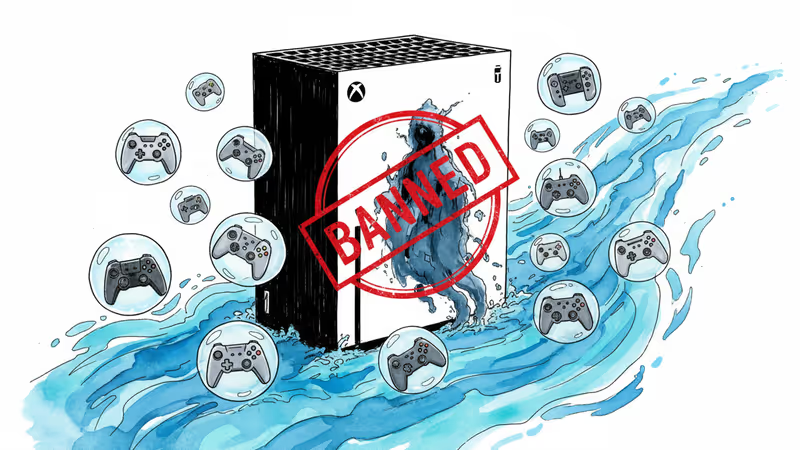
Why Microsoft Banned Jeffrey Epstein From Xbox Live
Microsoft permanently suspended Jeffrey Epstein from Xbox Live in 2013 due to sex offender status, revealing broader tech platform policies on criminal records and user safety.
In December 2013, Microsoft permanently suspended Jeffrey Epstein from its Xbox Live gaming platform. The reason wasn't what you'd expect from typical gaming violations.
According to newly released emails spotted by XboxEra, Epstein initially received a ban notice citing "harassment, threats, and/or abuse of other players." But a second email sent the same day revealed the real trigger: Microsoft had implemented a blanket policy to remove all registered sex offenders from their gaming network.
Epstein had become a registered sex offender years earlier following his 2008 conviction for soliciting prostitution from a minor. The emails suggest he may have attempted to circumvent the ban by creating new accounts, highlighting the cat-and-mouse game that often emerges when platforms try to enforce permanent suspensions.
The Bigger Platform Policy Picture
This incident illuminates a largely invisible aspect of content moderation: how tech companies handle users with criminal records. While most platform discussions focus on speech violations or harassment, companies like Microsoft have quietly implemented policies targeting convicted criminals.

The 2013 timeframe is particularly significant. This was before the major platform accountability discussions that would dominate the 2010s. Microsoft was proactively removing sex offenders from Xbox Live when many other platforms hadn't yet developed comprehensive criminal background policies.
Microsoft's approach raises questions about the scope of corporate responsibility in digital spaces. Should gaming platforms screen for criminal histories? How do companies balance rehabilitation principles with user safety concerns?
The Technical Challenge of Enforcement
Permanent bans face inherent technical limitations. Users can create new accounts with different email addresses, payment methods, or even gaming consoles. The emails suggesting Epstein attempted workarounds reflect this broader enforcement challenge.
Modern platforms use increasingly sophisticated detection methods: device fingerprinting, behavioral analysis, and payment verification. But determined users often find ways around these systems, creating an ongoing arms race between platforms and banned individuals.
For registered sex offenders specifically, the stakes are higher. Gaming platforms often host minors, making age verification and user protection critical concerns. Yet the technical infrastructure to consistently identify and block specific individuals remains imperfect.
Authors
Related Articles

As Washington D.C. enters another political spring, the battle over Big Tech regulation is heating up — and the stakes extend far beyond Silicon Valley.

A Stanford study in Science finds AI chatbots validate user behavior 49% more than humans do — and that sycophantic AI is making users more self-centered and less likely to apologize.
OpenAI has shelved its erotic ChatGPT feature indefinitely. The real story isn't about adult content—it's about who gets to decide what AI will and won't do.
The Xiaomi 17 Ultra, Honor Magic 8 Pro, and other global flagships are outspeccing Samsung and Apple—but US consumers can't legally buy them. Here's what that means.
As Washington D.C. enters another political spring, the battle over Big Tech regulation is heating up — and the stakes extend far beyond Silicon Valley.
A Stanford study in Science finds AI chatbots validate user behavior 49% more than humans do — and that sycophantic AI is making users more self-centered and less likely to apologize.
OpenAI has shelved its erotic ChatGPT feature indefinitely. The real story isn't about adult content—it's about who gets to decide what AI will and won't do.
The Xiaomi 17 Ultra, Honor Magic 8 Pro, and other global flagships are outspeccing Samsung and Apple—but US consumers can't legally buy them. Here's what that means.
Thoughts
1 thoughts
Share your thoughts on this article
Sign in to join the conversation