
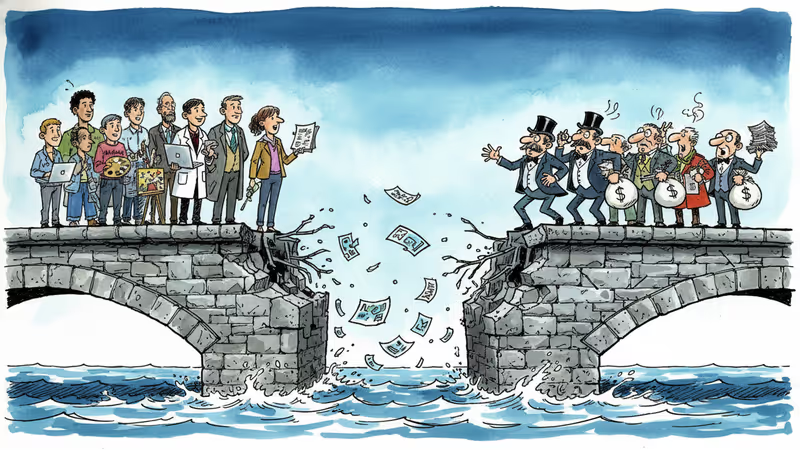
End of an Era: a16z's Diversity Champion Exits as Tech Rethinks DEI
Kofi Ampadu leaves a16z as TxO program winds down, signaling broader shift in Silicon Valley's approach to diversity investing
A four-year experiment in Silicon Valley diversity just quietly ended. Kofi Ampadu, who led a16z'sTalent x Opportunity (TxO) fund and program, has left the firm, marking what appears to be the final chapter of one of venture capital's most visible efforts to democratize startup funding.
From Systemic Assumptions to System Change
Ampadu's departure email tells a personal story that explains everything about why TxO mattered. Arriving in the US three months before his 11th birthday from Ghana—an English-speaking country—he was still required to enroll as an English-as-a-Second-Language student. "This was a systems requirement, a blanketed assumption about what students from certain places could or could not do," he wrote.
That childhood experience of being misjudged by proxy became the driving force behind TxO, launched in 2020 to identify "out-of-network entrepreneurs" who didn't fit venture capital's traditional patterns. The program challenged an industry that often relies on schools, networks, and prior credentials as shortcuts to assess founder potential.
The Controversial Structure and Mixed Results
For over four years, TxO operated as both investment fund and support program, using a donor-advised fund structure that drew criticism from some quarters. While many founders praised the program's impact, others questioned whether the charitable structure was the right approach for venture investing. In 2024, the program expanded with a grant initiative providing $50,000 to nonprofits supporting diverse founders.

But the writing was on the wall. Last November, a16z paused TxO indefinitely and laid off most of its staff. Ampadu transitioned to work on the firm's latest accelerator, Speedrun, before ultimately deciding to leave.
The Broader DEI Retreat
Ampadu's exit comes as major tech companies reframe, cut, or eliminate previous commitments to diversity, equity, and inclusion. The timing isn't coincidental—it reflects a broader recalibration in how Silicon Valley approaches diversity initiatives amid changing political and economic pressures.
For startup founders and VCs, this shift raises uncomfortable questions. Was TxO's approach too idealistic for venture capital's fundamentally profit-driven nature? Or does its end represent a missed opportunity to tap into overlooked talent pools that could drive the next wave of innovation?
What Comes Next for Overlooked Founders?
The venture ecosystem's traditional filters—elite schools, prestigious previous employers, warm introductions—remain largely intact. Without programs like TxO, how will exceptional founders from non-traditional backgrounds break through? Some argue the market will naturally evolve as successful diverse founders become the next generation of angel investors and VCs. Others worry that without deliberate intervention, the industry will revert to its historical patterns.
Authors
Related Articles
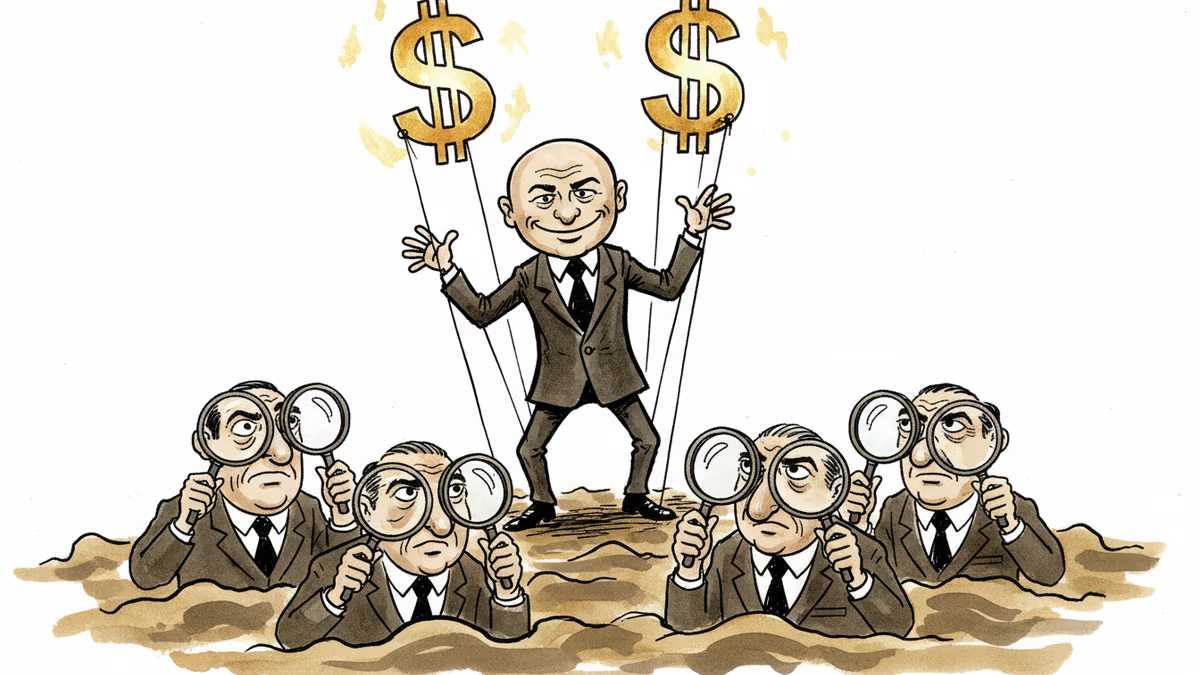
Cluely CEO admits to fabricating $7M revenue figure, exposing how startup "fake it till you make it" culture has gone too far. What this means for the ecosystem.
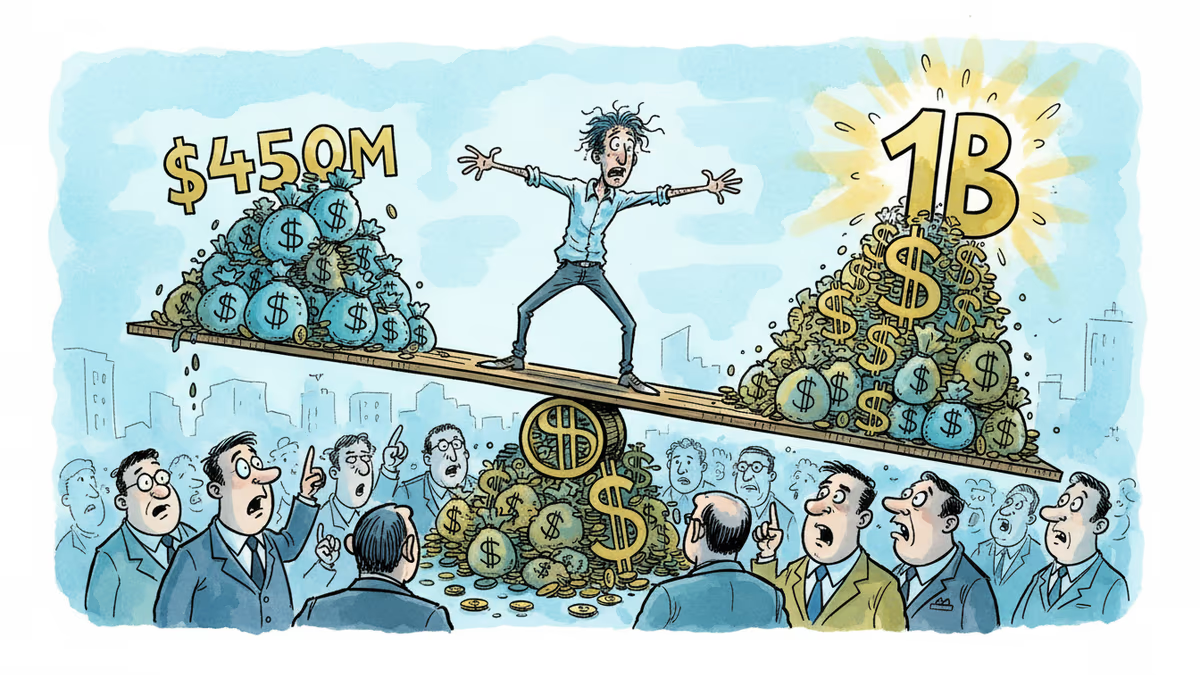
AI startups are using dual-tier valuations to manufacture unicorn status. Why are investors playing along with this new valuation game?
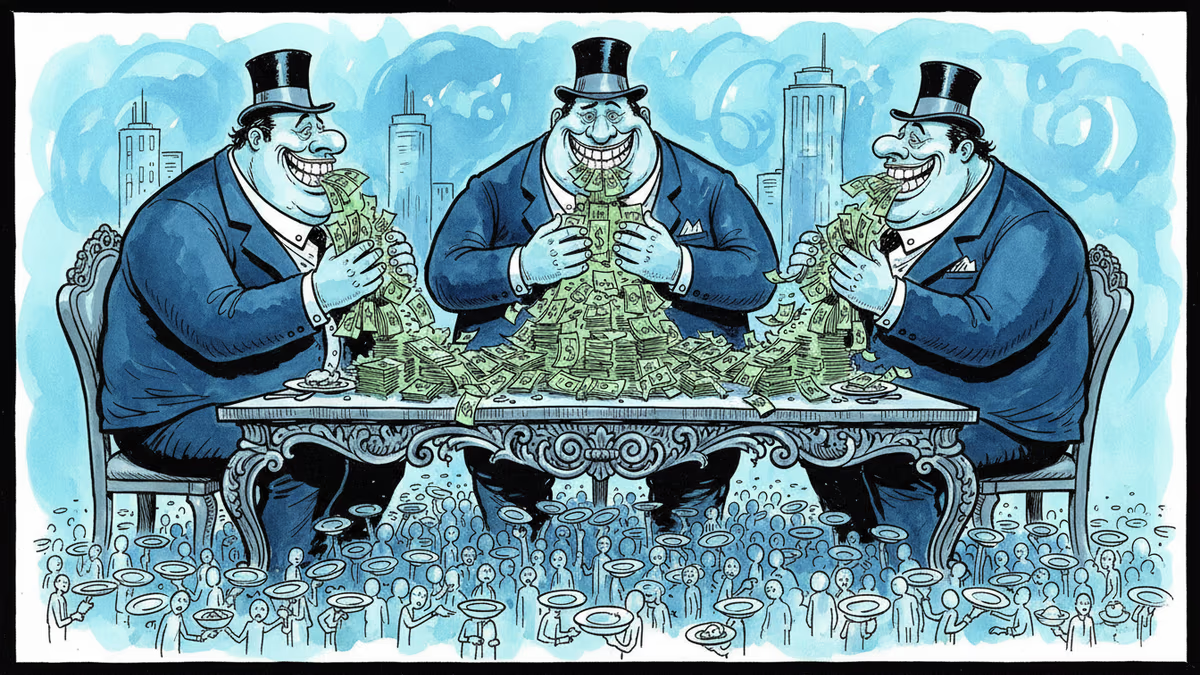
AI startups captured 90% of record $189B February VC funding, with OpenAI, Anthropic, and Waymo dominating 83% of all investments, reshaping venture landscape

Anduril's $60B valuation bid signals a seismic shift in defense tech. As VCs pour billions into weapons, what does this mean for warfare's future?
Cluely CEO admits to fabricating $7M revenue figure, exposing how startup "fake it till you make it" culture has gone too far. What this means for the ecosystem.
AI startups are using dual-tier valuations to manufacture unicorn status. Why are investors playing along with this new valuation game?
AI startups captured 90% of record $189B February VC funding, with OpenAI, Anthropic, and Waymo dominating 83% of all investments, reshaping venture landscape
Anduril's $60B valuation bid signals a seismic shift in defense tech. As VCs pour billions into weapons, what does this mean for warfare's future?
Thoughts
Share your thoughts on this article
Sign in to join the conversation