

Silicon Valley's Political Fracture Goes Public at Khosla Ventures
Keith Rabois's support for ICE shooting sparks unprecedented public rift within Khosla Ventures, exposing deep political divisions in venture capital
When ICE shot a citizen in Minneapolis this weekend, it didn't just spark national outrage—it tore open Khosla Ventures from the inside. The $15 billion venture capital firm found itself in an unprecedented public battle between its own partners, revealing just how deeply political divisions now run through Silicon Valley's most prestigious investment houses.
The Loyalist's Defense
Keith Rabois, a partner at Khosla Ventures and unwavering Trump supporter, didn't just defend ICE's actions—he celebrated them. His posts on X were so inflammatory they shocked even seasoned Valley observers. "No law enforcement has shot an innocent person," he wrote. "Illegals are committing violent crimes every day." When discussing the victim Alex Pretti, Rabois was even more direct: "He unequivocally attempted to draw his weapon. Fuck you."
Rabois isn't some fringe figure. He's the investor behind DoorDash, Affirm, Stripe, and co-founded Opendoor. His track record speaks for itself. But his political stance was about to collide with his professional world in spectacular fashion.
The Firm Fractures
What happened next was virtually unheard of in venture capital: public dissent within the ranks. Ethan Choi, another Khosla partner, broke protocol to distance himself. "I want to make it clear that Keith doesn't represent everyone's views here at @khoslaventures, at least not mine," he posted. "What happened in Minnesota is plain wrong."
Then came the knockout blow. Vinod Khosla himself—the firm's legendary founder—sided against his own partner. "Macho ICE vigilantes running amok empowered by a conscienceless administration," he wrote, calling the video "sickening to watch."
In venture capital, where discretion and unity are sacred, this was the equivalent of a public execution.
When Politics Becomes Business Risk

The fallout was immediate. Social media erupted with calls for founders to "remove Khosla from their cap tables altogether." For a venture firm, this isn't just reputational damage—it's an existential threat. If founders start rejecting investors based on political views, the entire ecosystem could reshape overnight.
This isn't Khosla's first rodeo with political controversy. When they rehired Rabois in 2024, they knew exactly what they were getting: a self-proclaimed "contrarian" who blamed the "woke" and praised Trump. Khosla, meanwhile, had been a vocal Trump critic for years. The tension was always there—it just took a Minneapolis shooting to bring it into the open.
The Sequoia Precedent
This pattern isn't isolated. Sequoia Capital faced similar turbulence when partner Shaun Maguire attacked NYC mayoral candidate Zohran Mamdani. The controversy contributed to leader Roelof Botha stepping down as senior steward in November. The firm's new leadership, Alfred Lin and Pat Grady, notably stayed silent during this weekend's ICE controversy.
The message is clear: political divisions are no longer background noise in venture capital. They're becoming business-critical decisions.
The New Investment Calculus
What makes this moment particularly significant is timing. We're in 2026, Trump's second term, with immigration enforcement ramped up nationwide. The stakes for taking political positions have never been higher, and the consequences more immediate.
For founders, the calculus is changing. It's no longer just about who can write the biggest check or provide the best connections. Political alignment—or at least political tolerance—is becoming a factor in partnership decisions.
For venture firms, the challenge is maintaining team cohesion while preserving individual expression. Khosla notably didn't directly chastise Rabois, suggesting they're still trying to thread this needle.
The answer may reshape venture capital as we know it.
Authors
Related Articles
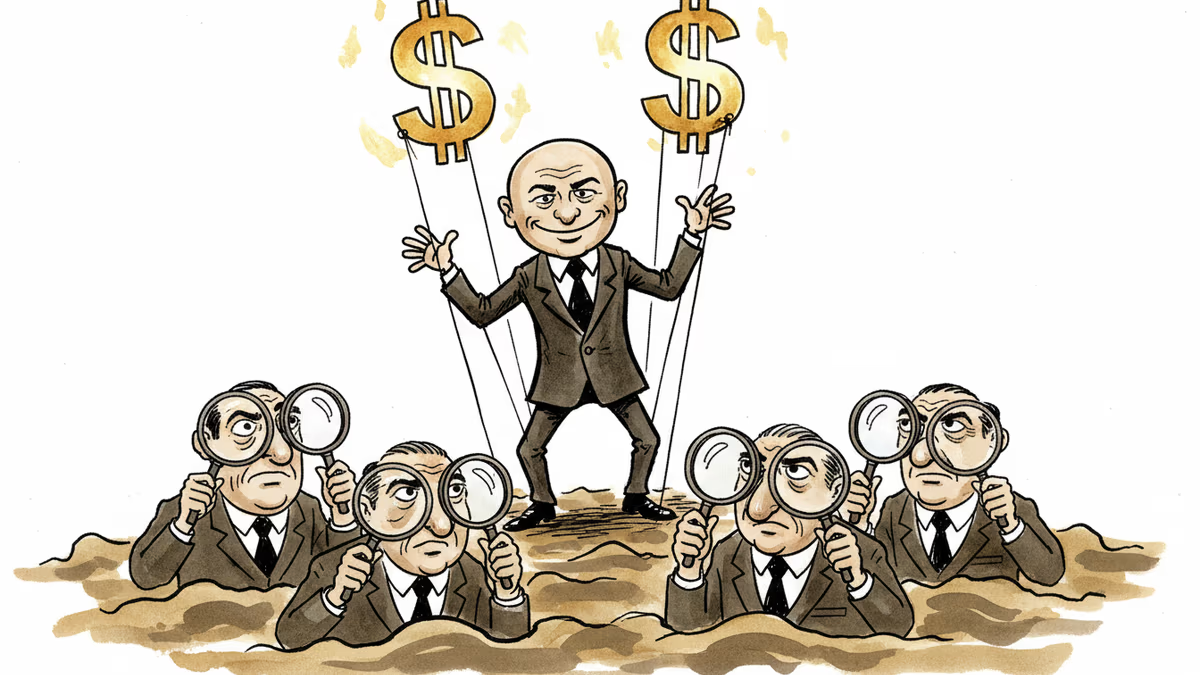
Cluely CEO admits to fabricating $7M revenue figure, exposing how startup "fake it till you make it" culture has gone too far. What this means for the ecosystem.
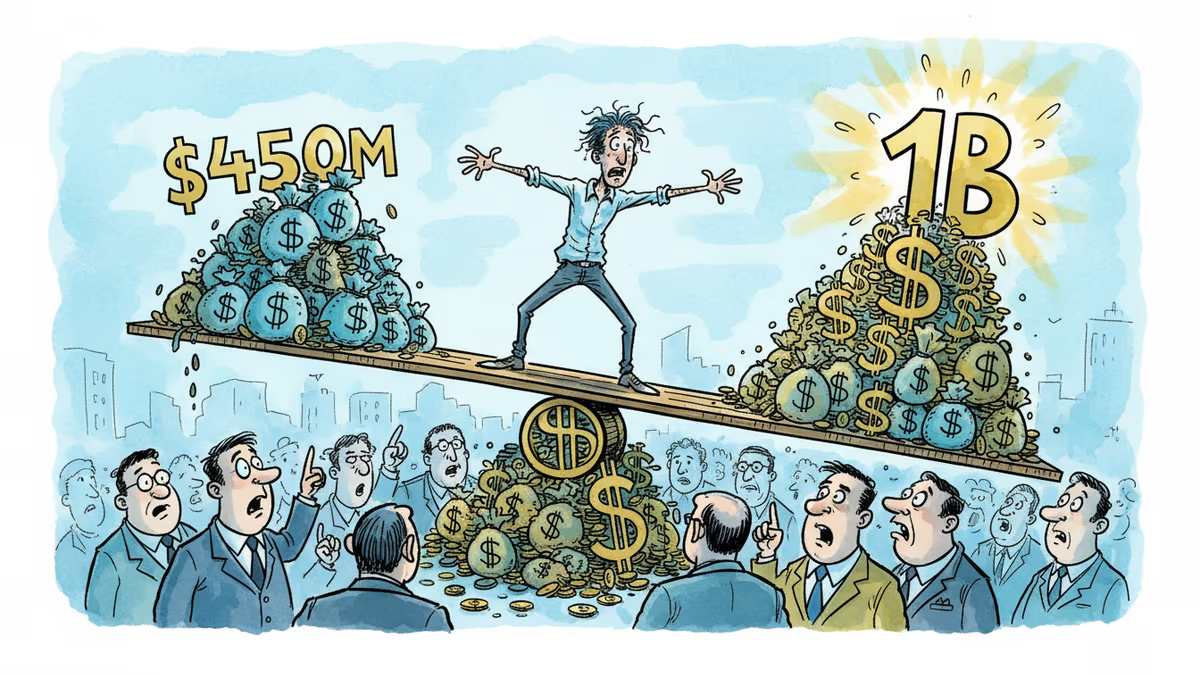
AI startups are using dual-tier valuations to manufacture unicorn status. Why are investors playing along with this new valuation game?
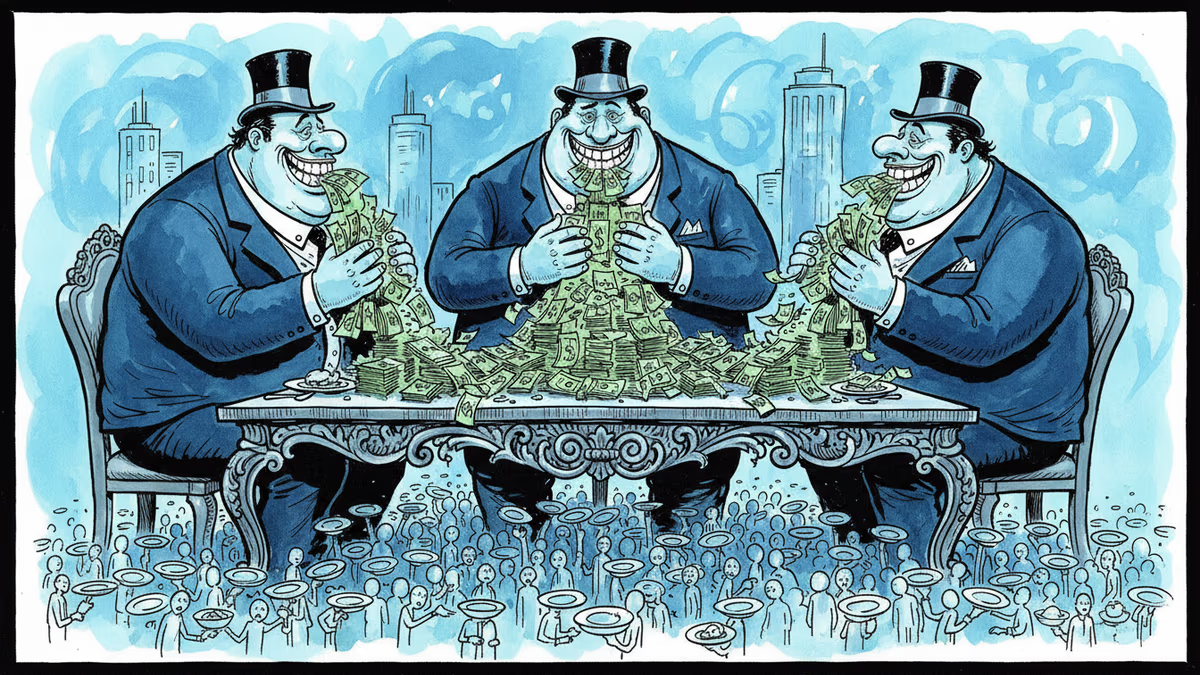
AI startups captured 90% of record $189B February VC funding, with OpenAI, Anthropic, and Waymo dominating 83% of all investments, reshaping venture landscape
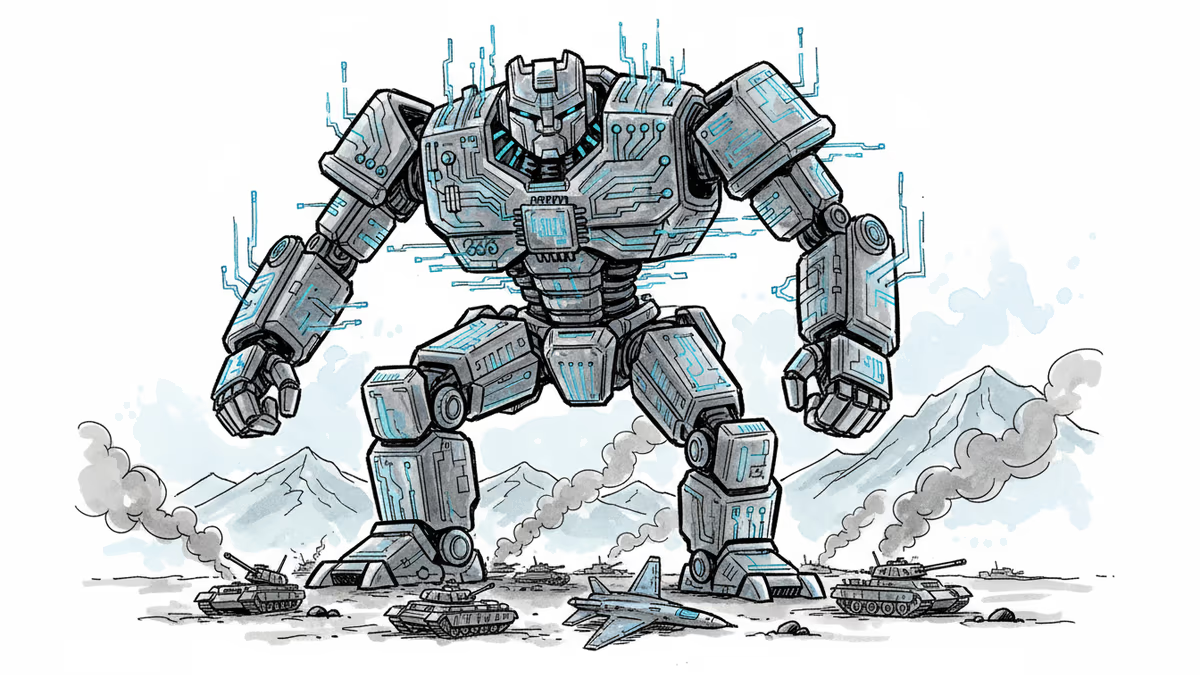
Anduril's $60B valuation bid signals a seismic shift in defense tech. As VCs pour billions into weapons, what does this mean for warfare's future?
Cluely CEO admits to fabricating $7M revenue figure, exposing how startup "fake it till you make it" culture has gone too far. What this means for the ecosystem.
AI startups are using dual-tier valuations to manufacture unicorn status. Why are investors playing along with this new valuation game?
AI startups captured 90% of record $189B February VC funding, with OpenAI, Anthropic, and Waymo dominating 83% of all investments, reshaping venture landscape
Anduril's $60B valuation bid signals a seismic shift in defense tech. As VCs pour billions into weapons, what does this mean for warfare's future?
Thoughts
Share your thoughts on this article
Sign in to join the conversation