

Why Cities Became Climate Tech's New Gold Rush
European climate fund 2150 raises €210M with city-focused investment strategy, revealing why urban solutions are driving the next wave of climate innovation and returns.
Cities generate 80% of global GDP but also produce 70% of carbon emissions. It's this paradox that European climate tech VC 2150 has turned into a €210 million investment thesis.
Co-founder Jacob Bro calls cities "beautiful vampire squids" that "suck in all the resources." They "aggregate all the prosperity in the world," he told TechCrunch, "but also 70% of emissions and all the other resources, all the waste, and all the downsides of the good life."
Rather than casting a wide net across climate solutions, 2150 zeroes in on urban problems and opportunities. The strategy appears to be working: their new fund attracted 34 institutional investors, including Denmark's sovereign fund EIFO, Novo Holdings, and the Viessmann Generations Group.
The Urban Climate Investment Edge
2150's city-first approach isn't just about geography—it's about finding where climate solutions can scale fastest. "If we look at all the stuff we consume, all the stuff we need to build, to make the urban platform of prosperity operate and thrive, you can identify technologies and the bottlenecks," Bro explained.
The fund has already deployed capital from their new raise into seven companies: AtmosZero (industrial heat pumps), GetMobil (e-waste recycling), Metycle (scrap metals marketplace), and MissionZero (direct air capture). Each check typically ranges from €5-6 million for Series A rounds.
Co-founder Christian Hernandez emphasizes the business case: "Sustainability, if done well, is just better business. It's cheaper, faster, and more independent from geopolitics." This dual focus on returns and impact helped 2150 reach €500 million in total assets under management.
AI's Unexpected Climate Connection
What's particularly interesting is how 2150 views the AI boom. While many see data centers as energy hogs, the fund sees automation opportunities that go beyond efficiency gains.

"Europe is expected to lose 100 million people between now and 2040," Hernandez noted. "The Netherlands already has 50% of their population over the age of 50." The question becomes: how can industrial automation help aging populations stay productive while generating GDP to fund pensions?
This demographic shift creates a compelling investment case for automation technologies that reduce resource consumption while maintaining economic output. It's a perspective that reframes AI not just as a climate challenge, but as part of the solution to urbanization pressures.
The Megaton Milestone
The results speak for themselves: 2150's portfolio companies mitigated one megaton of carbon emissions last year. "The fact that a small venture capital fund can already get to the megaton-level scale in only four years," Hernandez said, "makes me feel like we're doing the right thing."
But scale isn't just about carbon reduction—it's about proving that climate solutions can generate venture-scale returns. The fund's approach suggests that focusing on cities provides clearer paths to commercialization than broader climate tech plays.
Beyond European Borders
While 2150 operates primarily in Europe, their urban-focused thesis has global implications. Cities from Singapore to San Francisco are grappling with similar challenges: aging infrastructure, growing populations, and mounting climate pressures.
The fund's success could signal a shift in how investors approach climate tech globally. Instead of betting on breakthrough technologies that might scale someday, the focus turns to solutions for problems cities face right now.
This matters for American investors and entrepreneurs too. As cities like New York commit to carbon neutrality by 2050 and Los Angeles pushes aggressive electrification mandates, the market for urban climate solutions is expanding rapidly.
Authors
Related Articles

Cluely CEO admits to fabricating $7M revenue figure, exposing how startup "fake it till you make it" culture has gone too far. What this means for the ecosystem.
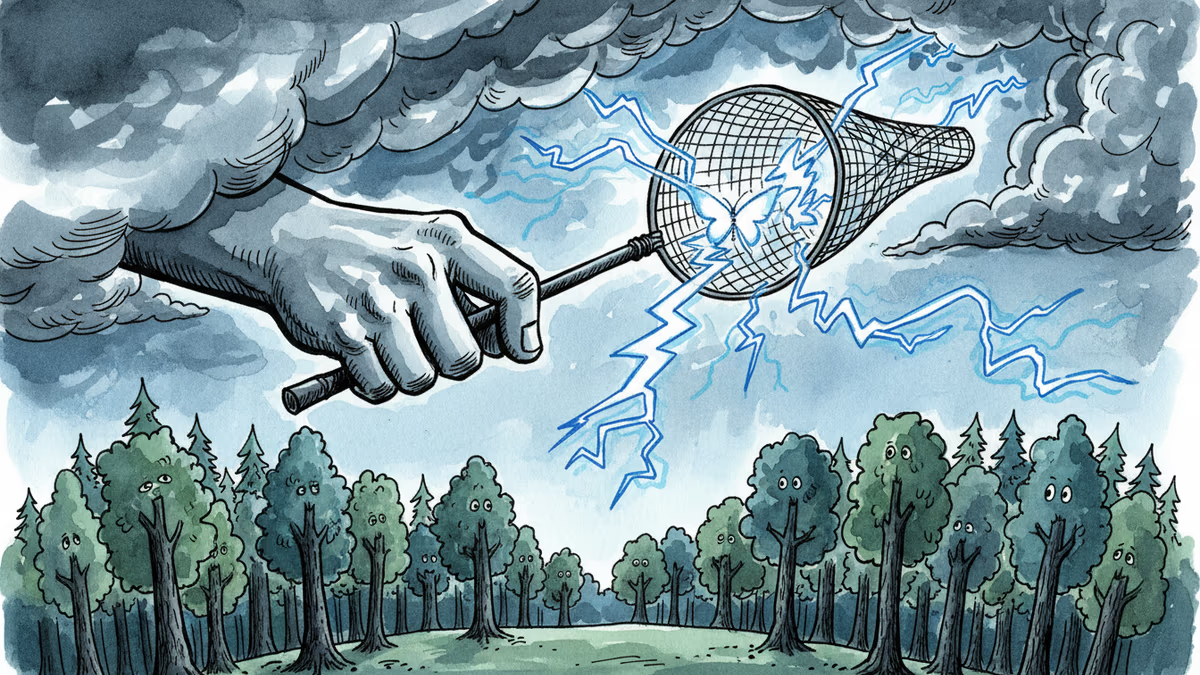
A Canadian startup claims it can prevent wildfires by stopping lightning strikes before they happen. But should we be playing god with nature's electrical storms?
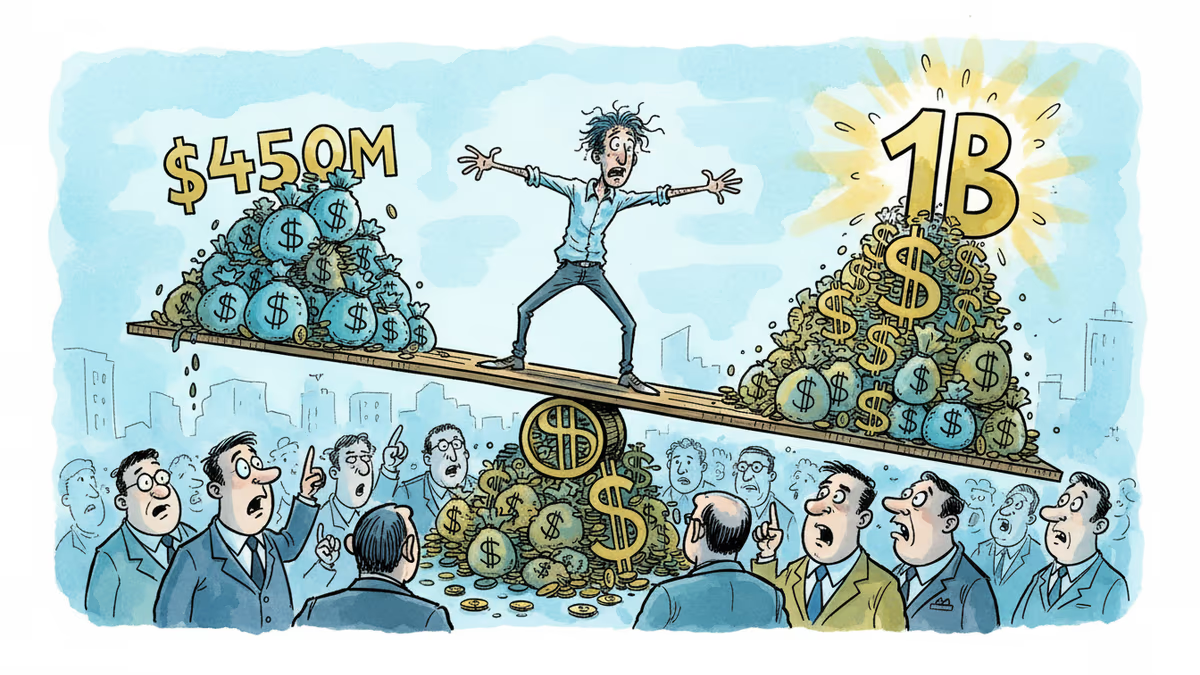
AI startups are using dual-tier valuations to manufacture unicorn status. Why are investors playing along with this new valuation game?

AI startups captured 90% of record $189B February VC funding, with OpenAI, Anthropic, and Waymo dominating 83% of all investments, reshaping venture landscape
Cluely CEO admits to fabricating $7M revenue figure, exposing how startup "fake it till you make it" culture has gone too far. What this means for the ecosystem.
A Canadian startup claims it can prevent wildfires by stopping lightning strikes before they happen. But should we be playing god with nature's electrical storms?
AI startups are using dual-tier valuations to manufacture unicorn status. Why are investors playing along with this new valuation game?
AI startups captured 90% of record $189B February VC funding, with OpenAI, Anthropic, and Waymo dominating 83% of all investments, reshaping venture landscape
Thoughts
Share your thoughts on this article
Sign in to join the conversation