
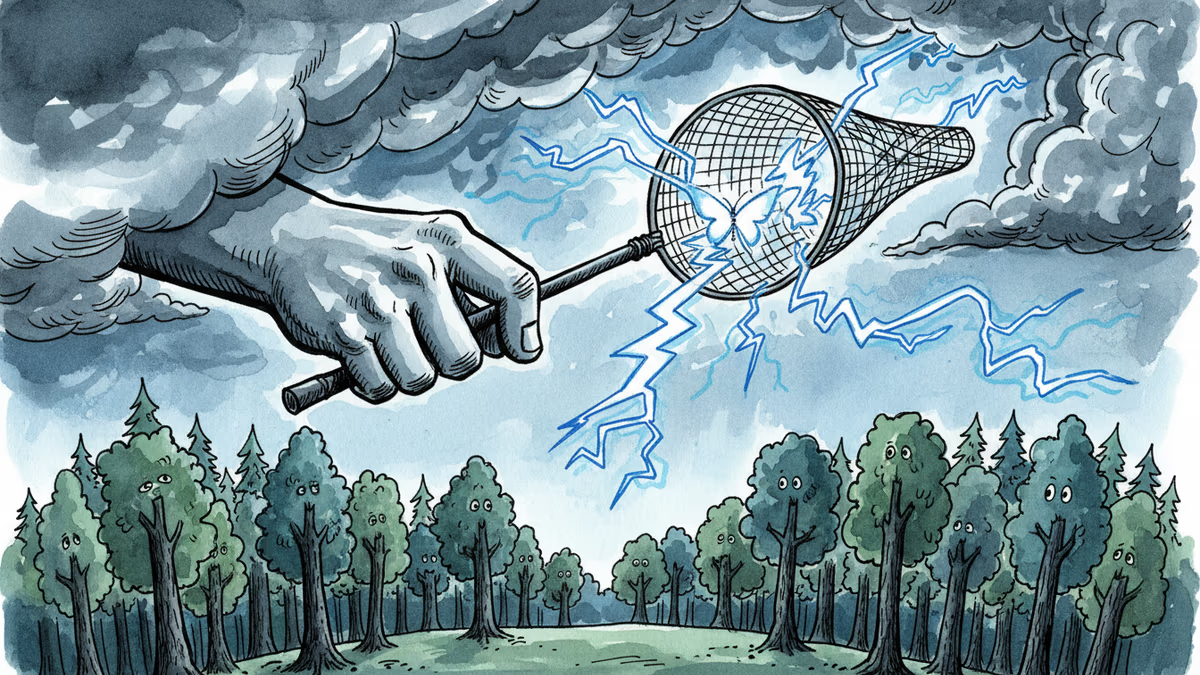
Can We Actually Stop Lightning? The Wildfire Prevention Gambit
A Canadian startup claims it can prevent wildfires by stopping lightning strikes before they happen. But should we be playing god with nature's electrical storms?
When Lightning Becomes the Enemy
Canada's 2023 wildfires pumped 500 million metric tons of carbon into the atmosphere. Here's the kicker: 93% of the burned area came from lightning-sparked fires. Now a Canadian startup called Skyward Wildfire says it has the answer—stop the lightning itself.
It sounds like science fiction, but the concept has been kicking around since the 1950s. The idea? Spray metallic chaff into storm clouds to prevent electrical buildup. Think of it as giving Mother Nature's static electricity an outlet before it can spark a catastrophe.
The Sock-and-Carpet Science
The physics are surprisingly simple. Lightning is just static discharge on a massive scale—the same phenomenon that zaps you when you touch a doorknob after shuffling across carpet.
In storm clouds, snowflakes and ice pellets called graupel collide and transfer electrons. Updrafts separate the charges, creating an electrical field that eventually discharges as lightning. Skyward's solution involves aluminum-coated fiberglass strands that act as conductors, theoretically bleeding off the charge before it can build to lightning levels.
The military already uses this "chaff" technology to jam radar signals. The question is whether it works reliably for weather modification.
The Evidence Gap
Here's where things get murky. Some research suggests you need high concentrations of chaff for effective lightning prevention. Early studies were small-scale. And Skyward hasn't released field trial data or published peer-reviewed papers yet.

But let's assume the technology works. A bigger question emerges: Should we use it?
Fire as Friend, Not Foe
Many ecosystems evolved with fire as a natural reset button. Today's catastrophic wildfires often result from decades of fire suppression that allowed fuel to accumulate unnaturally. When fires finally break out, they burn with unprecedented intensity.
Phillip Stepanian from MIT Lincoln Laboratory puts it bluntly: "Even if we can prevent lightning-ignited wildfires, we need to be strategic about when and where to prevent fires so we don't make the fuel accumulation problem worse."
Skyward acknowledges this complexity. The company says it wouldn't aim to eliminate all wildfires, just reduce ignition risk on extreme-danger days. But critics argue this misses the point entirely.
The Technological Trap
Climate scientist Daniel Swain from UC Agriculture and Natural Resources argues that tech solutions "fundamentally misunderstand the problem." The issue isn't fire's existence but its increasing intensity and collision with human development.
"Preventing ignitions doesn't actually address any of the causes of increasingly destructive wildfires," Swain notes. It's like treating a fever without addressing the infection.
Yet as climate change makes lightning-sparked fires more common—especially in rapidly warming Arctic regions—can we afford not to explore every option?
The Intervention Dilemma
Prescribed burns and better forest management could achieve much of what lightning prevention promises, without the ecological uncertainty. But these approaches require political will and long-term investment that tech solutions seem to sidestep.
The appeal of lightning prevention is obvious: It's proactive rather than reactive, potentially stopping disasters before they start. The risk is equally clear: We might be disrupting natural processes we don't fully understand.
Authors
Related Articles
Every new gadget carries hidden costs — in carbon, labor, and waste. Here's a practical, honest guide to buying tech more ethically in 2026.
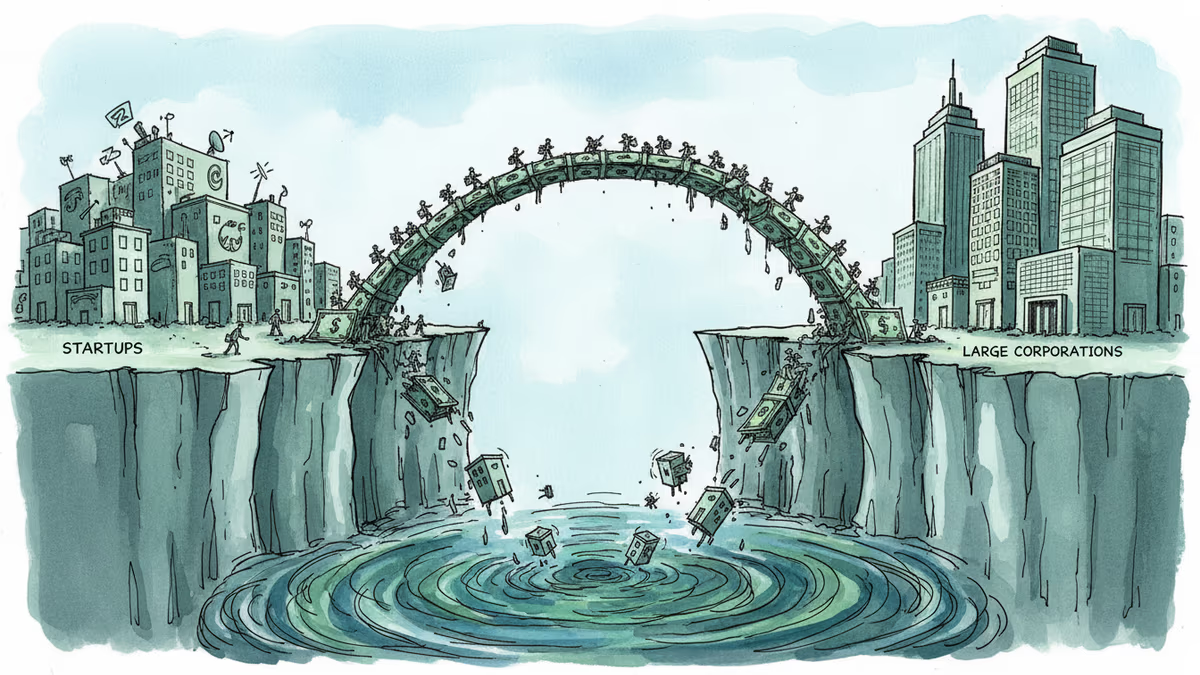
A new investment model aims to solve the chicken-and-egg problem killing climate tech materials startups by connecting guaranteed customers with scaling funding.
Georgia Tech's annual instrument competition showcases bizarre musical inventions, from synthesizers controlled by saltwater to a playable circle of 44 violins. These oddball creations might reshape how we think about music.

The 2026 Winter Olympics brings bidets back into the spotlight as athletes discover Italy's bathroom fixtures, highlighting environmental benefits and cultural differences in hygiene practices.
Every new gadget carries hidden costs — in carbon, labor, and waste. Here's a practical, honest guide to buying tech more ethically in 2026.
A new investment model aims to solve the chicken-and-egg problem killing climate tech materials startups by connecting guaranteed customers with scaling funding.
Georgia Tech's annual instrument competition showcases bizarre musical inventions, from synthesizers controlled by saltwater to a playable circle of 44 violins. These oddball creations might reshape how we think about music.
The 2026 Winter Olympics brings bidets back into the spotlight as athletes discover Italy's bathroom fixtures, highlighting environmental benefits and cultural differences in hygiene practices.
Thoughts
Share your thoughts on this article
Sign in to join the conversation