
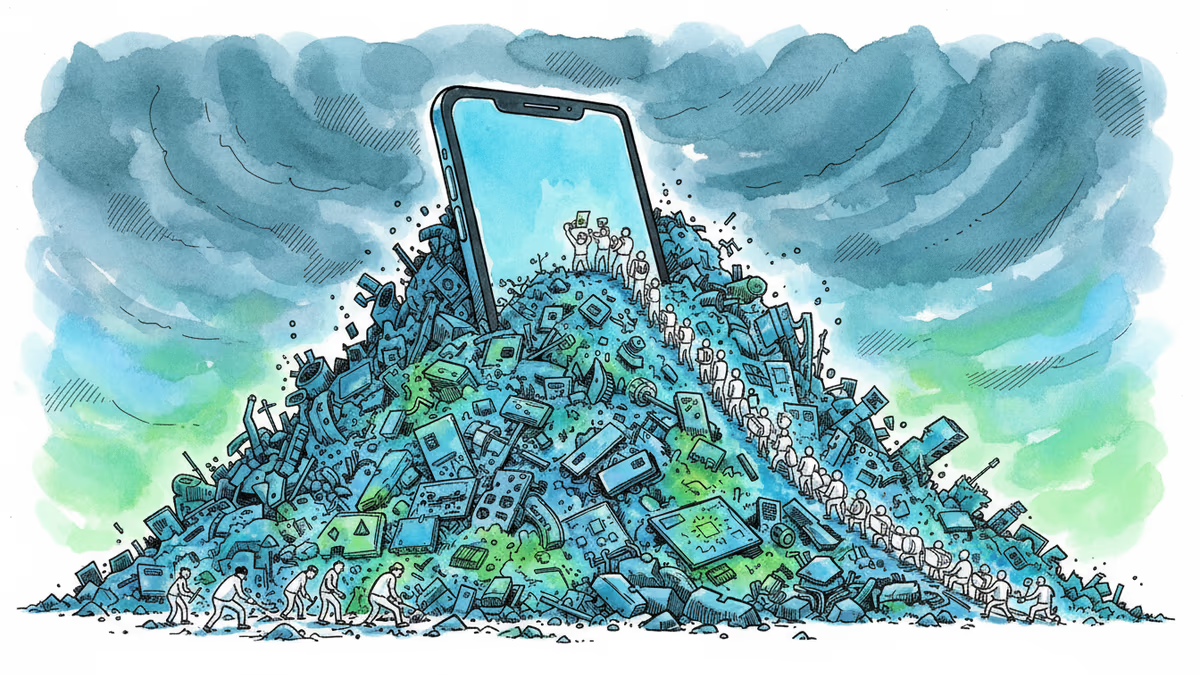
Your New Phone Has a Body Count. Here's What to Do About It.
Every new gadget carries hidden costs — in carbon, labor, and waste. Here's a practical, honest guide to buying tech more ethically in 2026.
Keep your iPhone for two years: its carbon footprint is 52.5 kg. Keep it for ten: that drops to 10.5 kg. The most powerful thing you can do for the planet might simply be to put down your wallet.
We've all felt it — that low-grade guilt when unboxing a new device. Somewhere between the satisfying peel of the screen protector and the first boot-up, there's a flicker of awareness: cobalt mines in the DRC, factory dormitories in Shenzhen, e-waste graveyards in Agbogbloshie, Ghana. Most of us push it aside. The system makes it easy to. But in 2026, the tools to make genuinely better choices are more accessible than they've ever been.
The Inconvenient Math of Manufacturing
Here's what the industry doesn't lead with: the majority of a device's environmental damage happens before you ever touch it. Mining, smelting, component fabrication, global shipping — all of it front-loaded into the manufacturing phase. This means that every extra year you use a device isn't just frugal. It's one of the most meaningful environmental decisions you make as a consumer.
Repair is becoming a realistic option for the first time in years. The US Federal Trade Commission has moved to enforce right-to-repair protections, and manufacturers like Apple and Samsung have begun — reluctantly, critics say — releasing official repair guides and parts kits. iFixit remains the most comprehensive independent resource, offering teardown guides for thousands of devices alongside the tools and components to fix them. Some public libraries in the US now even lend out repair kits.
The caveat: official repair costs from major manufacturers are still often steep enough to push consumers toward buying new. The right-to-repair movement has won legal ground, but the economic incentives haven't fully shifted yet.
Secondhand Isn't a Compromise — It's a Strategy
"Buying secondhand is generally much better in terms of the environment, especially if it means something gets more life rather than going to landfill," says Alex Crumbie, researcher at Ethical Consumer, the UK publication that scores brands on everything from environmental reporting to workers' rights.
The refurbished market has matured significantly. Apple's Certified Refurbished store, Amazon Renewed, and Best Buy Refurbished offer near-new devices with warranties at discounts of 20–40%. For steeper savings, private sellers on eBay or Swappa carry more risk but also more upside. The key variables to check: battery health, repair history, and whether the device is carrier-unlocked.
For vintage and analog tech — Polaroid cameras, Game Boys, cassette players — Retrospekt has built an entire business around skilled refurbishment, complete with limited warranties and some genuinely charming collaborations with brands like Peanuts and Hello Kitty.

How to Read Through the Greenwashing
Every major electronics brand now has a sustainability page. Most of them are carefully worded exercises in selective disclosure. "Ocean-reclaimed plastic in the packaging" and "carbon-neutral shipping" are real, but they can also be designed to distract from supply chain practices that haven't changed at all.
Two certifications are worth actually looking for. EPEAT (Electronic Product Environmental Assessment Tool), managed by the Global Electronics Council, evaluates products against environmental performance criteria. TCO Certified goes further — it covers the full product lifecycle, including workers' rights in manufacturing, conflict minerals, hazardous chemicals, and end-of-life recyclability. If a product carries TCO Certified, someone has actually audited the supply chain.
For energy consumption, the Energy Star label in the US signals EPA-verified efficiency standards. The EnergyGuide label goes further, showing estimated annual running costs — useful for appliances you'll run continuously for years. Switching to LED lighting and rechargeable batteries (Panasonic's Eneloop range is the consistent recommendation among reviewers) are small moves that compound meaningfully over time.
The Brands Actually Building Differently
A handful of companies have made structural commitments rather than marketing ones.
Fairphone is the clearest case. Since its founding, it has centered conflict minerals as a core business problem, not a PR talking point. Its phones are modular — you can replace the battery, screen, or camera module yourself — and it publishes detailed supply chain transparency reports annually. It's Europe-focused and not widely available in the US, but it represents what the industry could look like.
Framework makes laptops designed explicitly against the disposability model. Every component is user-replaceable. A screwdriver ships in the box. Step-by-step upgrade guides are included. The Framework Laptop 13 and Laptop 16 have both received strong reviews from hardware critics — proof that repairability and performance aren't mutually exclusive.
Nimble occupies the accessories space: chargers, cables, and power banks made from recycled and renewable materials, with free prepaid return shipping for old electronics sent to their recycling partner. Humanscale (office furniture and peripherals) has formalized a net-positive carbon impact goal — rare enough in any industry to be worth noting.
When It's Time to Let Go
E-waste is the fastest-growing waste stream globally. The UN estimated 62 million metric tons were generated in 2022 alone, with less than 23% formally recycled. In the US, only a handful of states have strong e-waste recycling mandates.
The practical steps: use manufacturer take-back programs (Apple, Samsung, and Best Buy all run them), check your municipality's hazardous waste disposal calendar, or use a service like Nimble's that handles collection and certified recycling. Before you hand anything over, factory reset the device and remove your SIM. Your data matters as much as the materials.
Authors
Related Articles
OpenAI is closing its Sora video generation app less than two years after its splashy debut. The move raises hard questions about AI product longevity, creator trust, and where the video AI race is really headed.
A Canadian startup claims it can prevent wildfires by stopping lightning strikes before they happen. But should we be playing god with nature's electrical storms?
German study reveals shocking truth about plug-in hybrids - most owners rarely charge them. Porsche drivers averaged just 0.8% electric usage over two years.

From BMW i7's cashmere wool seats to vegan leather alternatives, luxury automakers are reimagining car interiors. What's driving this shift away from traditional leather?
OpenAI is closing its Sora video generation app less than two years after its splashy debut. The move raises hard questions about AI product longevity, creator trust, and where the video AI race is really headed.
A Canadian startup claims it can prevent wildfires by stopping lightning strikes before they happen. But should we be playing god with nature's electrical storms?
German study reveals shocking truth about plug-in hybrids - most owners rarely charge them. Porsche drivers averaged just 0.8% electric usage over two years.
From BMW i7's cashmere wool seats to vegan leather alternatives, luxury automakers are reimagining car interiors. What's driving this shift away from traditional leather?
Thoughts
Share your thoughts on this article
Sign in to join the conversation