
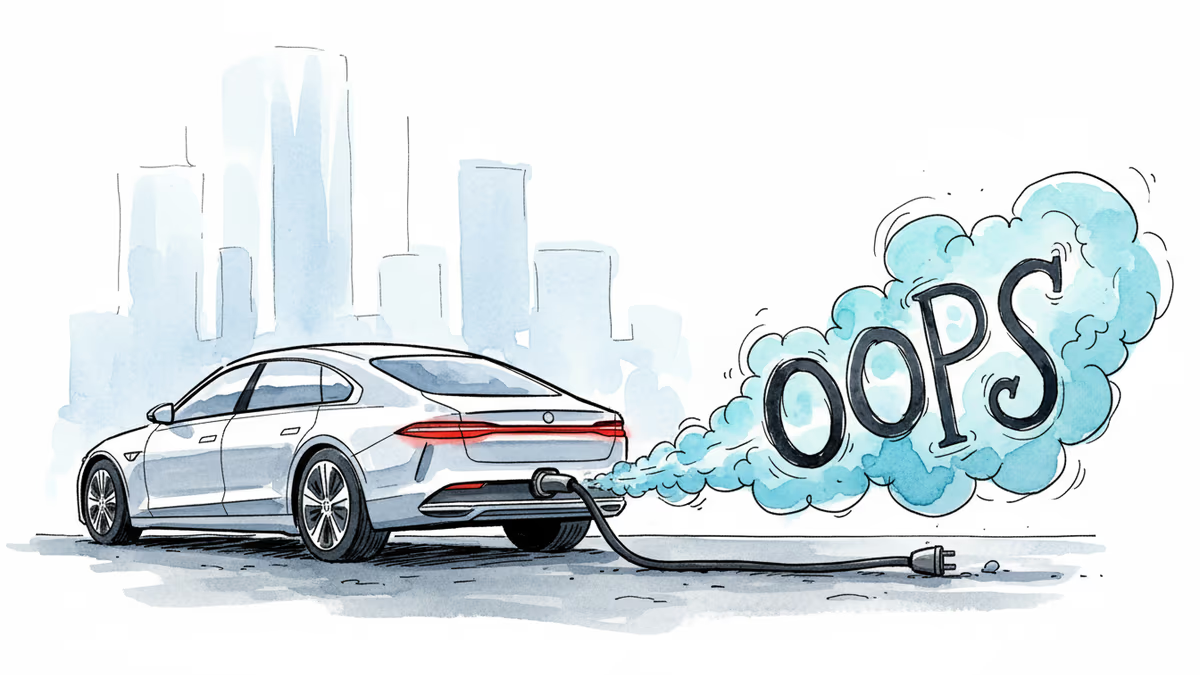
The PHEV Betrayal: Only 1 in 3 Actually Plug In
German study reveals shocking truth about plug-in hybrids - most owners rarely charge them. Porsche drivers averaged just 0.8% electric usage over two years.
One Million Cars, One Uncomfortable Truth
Plug-in hybrid vehicles were supposed to be the perfect compromise—electric for short trips, gas for long ones. But 1 million PHEVs in Germany tell a different story. According to new data from the Fraunhofer Institute, less than a third of PHEV owners actually plug in regularly. Some barely plug in at all.
The brand breakdown is even more telling. Toyota drivers used electricity for 44% of their energy—the best of the bunch. Porsche drivers? A measly 0.8%, averaging just 7 kilowatt-hours over two years. That's less than one full battery charge. Ever.
The Industry's Expensive Miscalculation
Ford CEO Jim Farley recently boasted about making "CO2 reductions across our lineup in a very efficient way" through PHEVs. But efficiency requires participation. When drivers don't plug in, PHEVs produce 3.5 times more emissions than their official ratings suggest.
The problem isn't laziness—it's design. Most PHEVs are built on fossil fuel platforms where electric motors can't handle the vehicle's full power demands. Floor the accelerator? The gas engine kicks in. Turn on the heat in winter? Gas engine again. For many drivers, the question becomes: why bother charging?
Three Perspectives on a Failed Promise
Automakers' View: PHEVs represent a pragmatic transition strategy. They offer flexibility while charging infrastructure develops, and they help manufacturers meet fleet emissions targets without betting everything on full EVs.

Environmental Groups' Take: PHEVs have become a form of greenwashing. Drivers get the psychological benefit of "going green" while maintaining the same polluting habits. The complex drivetrain adds weight and manufacturing emissions without delivering promised benefits.
Consumer Reality: Many PHEV buyers wanted the best of both worlds but got the worst instead. They're carrying hundreds of pounds of unused battery, dealing with more complex maintenance, and often getting worse fuel economy than a regular hybrid.
The Charging Infrastructure Red Herring
Regulators and automakers keep proposing longer electric ranges for future PHEVs, hoping better batteries will encourage more charging. But range isn't really the issue—behavior is. Even with 20-30 miles of electric range, most daily commutes could run on battery alone. The infrastructure exists; the habits don't.
Meanwhile, pure EV charging networks continue expanding rapidly. Tesla's Supercharger network is opening to other brands, and charging times keep dropping. By the time automakers scale up PHEV production, the "range anxiety" they're meant to solve may no longer exist.
What Comes Next?
Some automakers are pivoting to Extended Range Electric Vehicles (EREVs), which run primarily on battery power with gas engines as backup generators. Ford and Stellantis have announced EREV pickup trucks, though none have hit the market yet.
But here's the twist: early EREVs like the BMW i3 didn't require plugging in either. Drivers could run them on gas indefinitely. Will the next generation of "bridge" technologies repeat the same mistakes?
The author traded a PHEV for a full EV two years ago and hasn't looked back.
Authors
Related Articles
Every new gadget carries hidden costs — in carbon, labor, and waste. Here's a practical, honest guide to buying tech more ethically in 2026.
Despite EV success, electric sports cars struggle with consumer rejection, technical hurdles, and emotional disconnect from traditional performance enthusiasts
Exploring the used EV market at $15,000 budget point. BMW i3 and Chevrolet Bolt options compared with lower mileage, newer features, and better value propositions.
Average new car price hits $48,576 in the US, up a third since 2019. Even with tariff rollbacks, affordable cars aren't coming back. Here's why the auto industry's cost structure has fundamentally shifted.
Every new gadget carries hidden costs — in carbon, labor, and waste. Here's a practical, honest guide to buying tech more ethically in 2026.
Despite EV success, electric sports cars struggle with consumer rejection, technical hurdles, and emotional disconnect from traditional performance enthusiasts
Exploring the used EV market at $15,000 budget point. BMW i3 and Chevrolet Bolt options compared with lower mileage, newer features, and better value propositions.
Average new car price hits $48,576 in the US, up a third since 2019. Even with tariff rollbacks, affordable cars aren't coming back. Here's why the auto industry's cost structure has fundamentally shifted.
Thoughts
Share your thoughts on this article
Sign in to join the conversation