
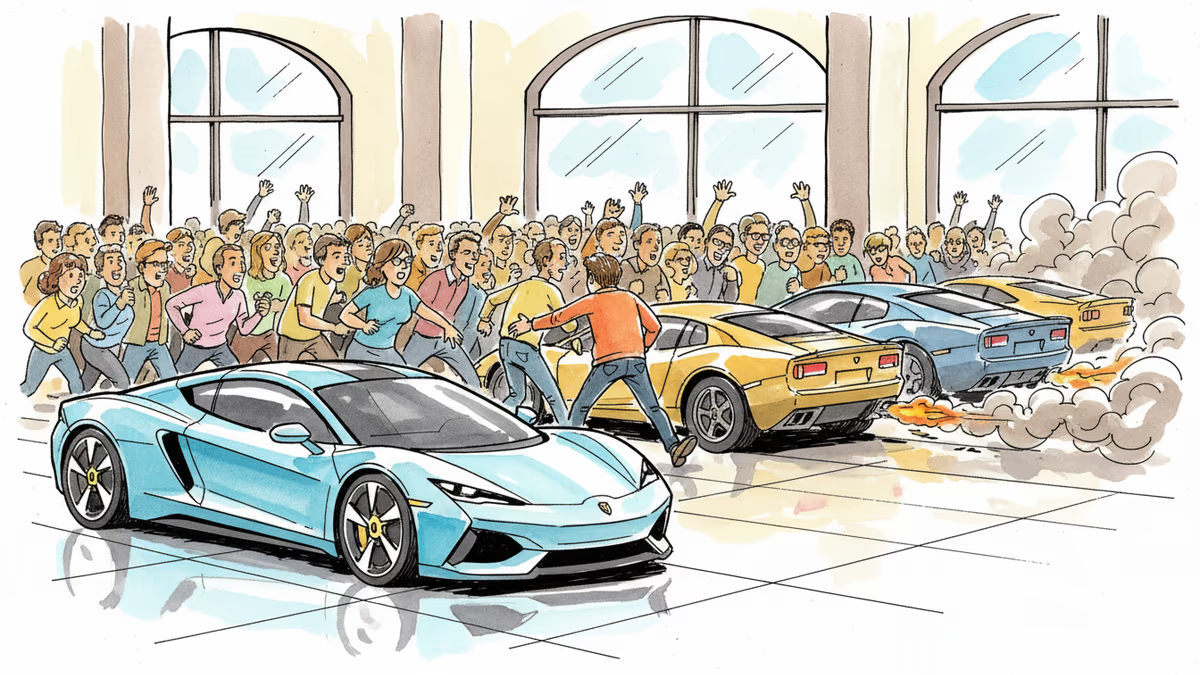
Why Electric Sports Cars Are Failing
Despite EV success, electric sports cars struggle with consumer rejection, technical hurdles, and emotional disconnect from traditional performance enthusiasts
When Elon Musk's Tesla Roadster hit the scene in 2008, it seemed like the beginning of the end for gas-powered sports cars. Nearly two decades later, that revolution has stalled in the most unexpected place: the very segment that was supposed to lead it.
Porsche just walked back its promise to make the next-generation Boxster and Cayman fully electric. Lamborghini scrapped plans for its first all-electric model entirely. The reason? Customers have shown "almost zero interest" in electric supercars, according to Lamborghini's CEO.
The Emotional Disconnect
This isn't about range anxiety or charging infrastructure – problems that have largely been solved for everyday EVs. This is about something deeper: the soul of a sports car.
"You can't replicate the sound of a V10 screaming at 8,000 RPM," says one Ferrari dealer who requested anonymity. "That's not just noise – it's the heartbeat of the machine." Electric motors, for all their instant torque and smooth acceleration, deliver performance without the sensory drama that sports car buyers crave.
The numbers back this up. While global EV sales jumped 47% last year, electric sports cars remain a tiny fraction of the market. The BMW i8 was discontinued after lackluster sales. The Honda NSX hybrid struggled to find buyers. Even Audi's e-tron GT, praised by critics, hasn't moved the needle significantly.
The Technical Reality Check
Beyond the emotional hurdle, electric sports cars face unique engineering challenges. High-performance driving generates enormous heat, requiring complex cooling systems that add weight and complexity. Track sessions often trigger "thermal protection mode," limiting power output just when drivers need it most.
Charging infrastructure presents another problem. While regular EV owners charge at home overnight, sports car enthusiasts expect to drive cross-country or spend days at the track. They need 800V ultra-fast charging, which remains rare outside major metropolitan areas.

Then there's cost. Electric sports cars typically run 20-30% more than equivalent gas models due to battery expenses. A Porsche Taycan starts around $80,000 – money that could buy a 911 Turbo with change to spare.
The Generational Divide
But dismissing electric sports cars entirely might be premature. The resistance appears strongest among traditional enthusiasts – those who grew up with carburetor engines and manual transmissions. Younger buyers, raised on video games and digital experiences, might not share the same emotional attachment to internal combustion.
Tesla continues pushing forward with its next-generation Roadster, promising 0-60 mph in 1.9 seconds and a top speed exceeding 250 mph. Ferrari remains committed to launching its first fully electric model in 2025, betting that Italian engineering can solve the emotion equation.
Chinese manufacturers like NIO have already proven electric performance credentials, with their EP9 setting a 6:45 lap time at the Nürburgring – faster than many legendary supercars.
The Luxury Paradox
There's an interesting paradox at play. Luxury car buyers typically embrace new technology – they were early adopters of GPS, advanced driver assistance, and connectivity features. Yet when it comes to electrification, they're surprisingly conservative.
This might reflect the unique psychology of sports car ownership. These aren't just transportation devices; they're mechanical art, weekend therapy, and status symbols rolled into one. The fear isn't that electric sports cars won't be fast enough – it's that they won't be special enough.
Market Forces vs. Regulations
Regulatory pressure adds another layer of complexity. European emissions standards are pushing all automakers toward electrification, regardless of consumer preference. Some manufacturers may have no choice but to go electric, even if it means alienating their core customers.
This creates a fascinating tension: What happens when regulatory requirements clash with market demand? Do brands risk their heritage for compliance, or do they find creative workarounds?
Authors
Related Articles
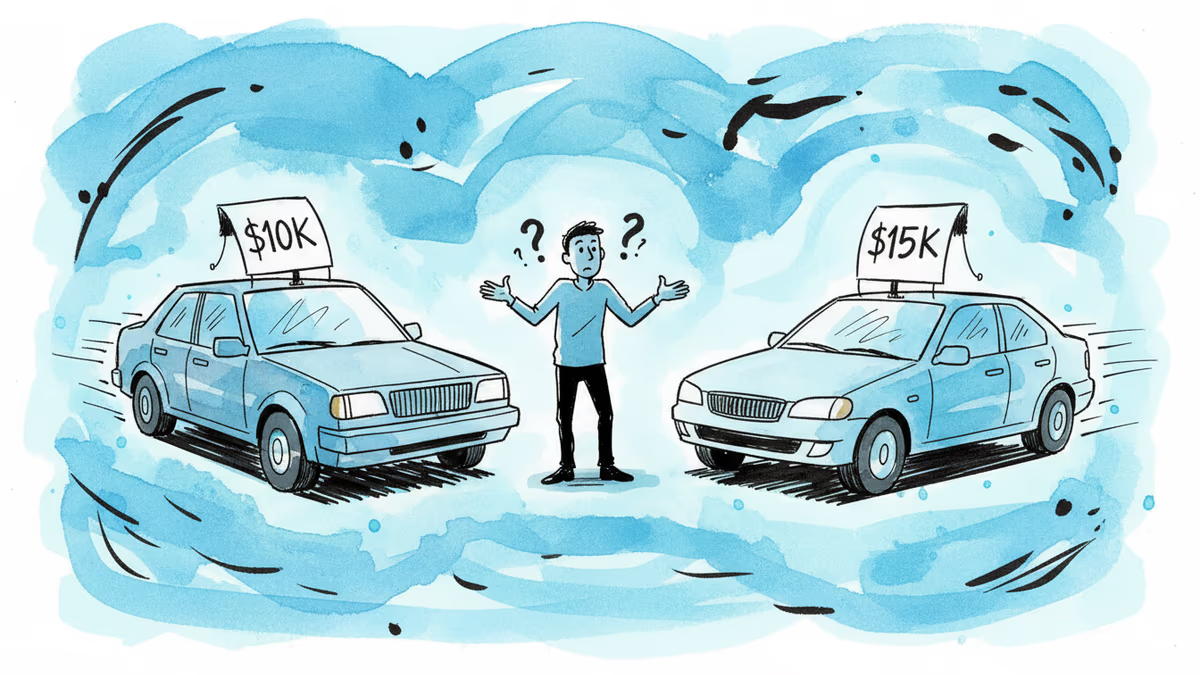
Exploring the used EV market at $15,000 budget point. BMW i3 and Chevrolet Bolt options compared with lower mileage, newer features, and better value propositions.
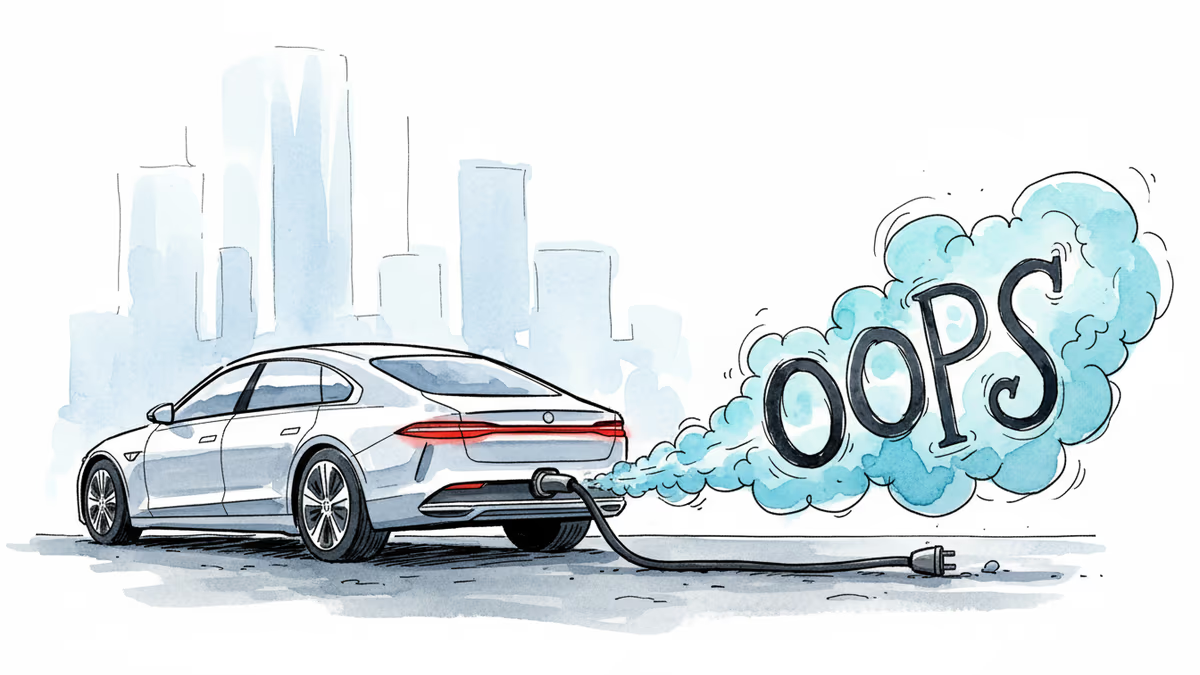
German study reveals shocking truth about plug-in hybrids - most owners rarely charge them. Porsche drivers averaged just 0.8% electric usage over two years.
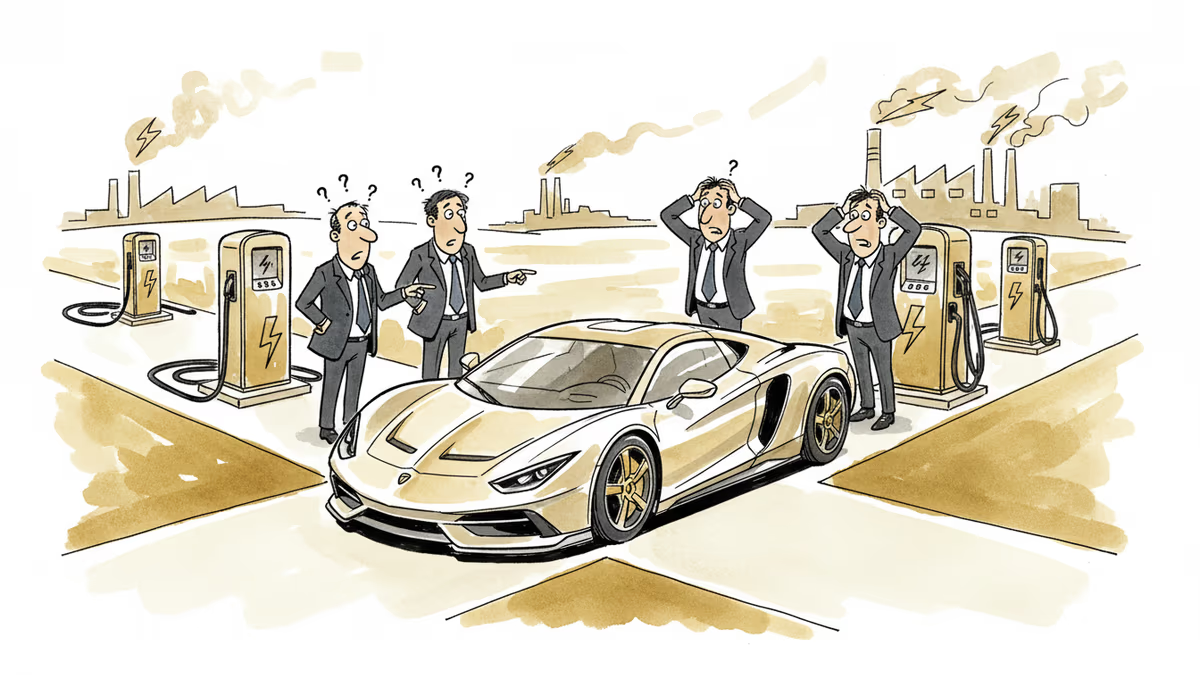
The 1,341-hp Lanzador EV has been canceled. What's really happening in the luxury electric car market?
Used EV market explodes with sub-$10k options as battery degradation fears prove overblown. Mass adoption accelerates with improved reliability data
Exploring the used EV market at $15,000 budget point. BMW i3 and Chevrolet Bolt options compared with lower mileage, newer features, and better value propositions.
German study reveals shocking truth about plug-in hybrids - most owners rarely charge them. Porsche drivers averaged just 0.8% electric usage over two years.
The 1,341-hp Lanzador EV has been canceled. What's really happening in the luxury electric car market?
Used EV market explodes with sub-$10k options as battery degradation fears prove overblown. Mass adoption accelerates with improved reliability data
Thoughts
Share your thoughts on this article
Sign in to join the conversation