
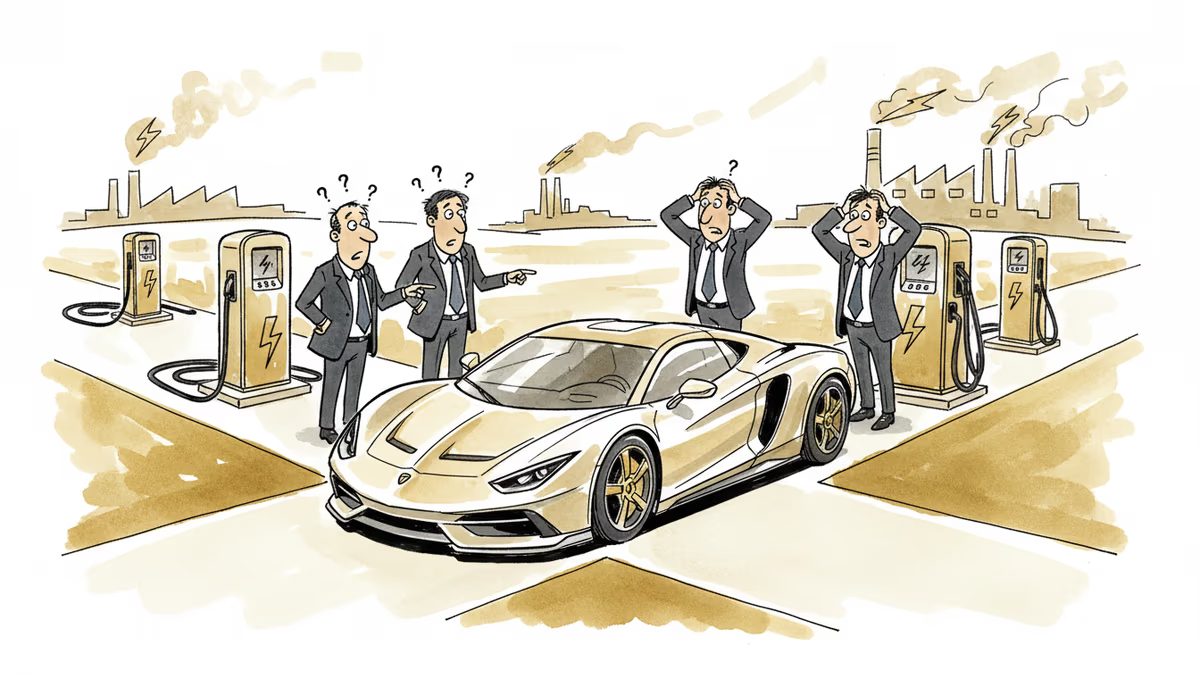
Why Lamborghini Just Killed Its Electric Dreams
The 1,341-hp Lanzador EV has been canceled. What's really happening in the luxury electric car market?
1,341 horsepower. That was going to be the output of Lamborghini's most powerful car ever—the electric Lanzador. Yesterday, that dream officially died.
The Italian supercar maker announced it's scrapping the fully electric "Ultra GT" that was supposed to arrive in 2028. Instead, they're pivoting to a plug-in hybrid coming in 2029. This wasn't just a concept car gathering dust—the Lanzador had finalized interior and exterior designs and could actually drive on public roads.
"The acceptance of full electric cars is flattening worldwide for our type of cars," CEO Stephan Winkelmann told WIRED. "It's going almost to zero—if not to zero."
The Luxury EV Exodus
Lamborghini isn't alone in this retreat. The luxury EV market is experiencing what can only be described as a mass exodus:
- Bentley: Pushed electric plans back five years to 2035
- Aston Martin: Delayed first EV to late in the decade
- Porsche: Dramatically scaled back electrification after plummeting profits
- Mercedes: Abandoned 2030 full-EV timeline, planning to keep gas cars longer
The numbers tell a stark story. Mercedes sold just 1,450 units of its flagship $162,000 electric G-Wagon in Europe during Q1 2025. Meanwhile, almost every luxury EV model in Europe posted declines last year, with the Lucid Air down 49% and Rolls-Royce Spectre down 44%.
The Great EV Paradox
Here's what's puzzling: while luxury EVs are tanking, the overall electric car market is booming. Global EV registrations rose 20% to 20.7 million in 2025. China hit 12.9 million registrations (up 17%), Europe recorded 4.3 million (up 33%).
So why are wealthy buyers—the ones who can most easily afford EVs and charging infrastructure—the ones saying no?

The $600-a-Day Problem
Winkelmann points to three critical issues: "First, there's no need to buy a car like Lamborghini. Then there's the experience with electric cars on purchase price, resale value, and residual value. And technology that customers think will be obsolete in 10 years."
That resale value problem is brutal. Some high-end EVs lose half their value in just one year. Certain models depreciate more than $600 every single day. For buyers spending six figures on a car, watching it become worthless isn't exactly appealing.
Then there's the obsolescence anxiety. Your $300 smartphone feels outdated after two years—imagine how a $300,000 electric supercar's battery and software will feel in a decade.
Ferrari's Gamble
While competitors retreat, Ferrari is doubling down. The Italian marque is still launching its first EV, the Luce, later this year. It's a risky bet, but Ferrari has defied critics before—their Purosangue SUV faced harsh criticism but became one of their best-sellers.
"Ferrari has successfully drawn strong attention to the project," says automotive analyst Daniele Ministeri. "Whether the new Luce will generate the same level of enthusiasm remains difficult to predict."
The question is whether Ferrari can avoid "the mistakes of Porsche with the Taycan," which started strong but lost appeal to the brand's ICE models.
Beyond the Showroom
This luxury EV crisis reflects deeper market realities. Luxury cars aren't just transportation—they're emotional purchases tied to sound, heritage, and status. Electric motors, however efficient, can't replicate the roar of a V12 or the ritual of a manual transmission.
For investors, this signals that the EV transition isn't uniform across price segments. Mass-market EVs benefit from cost savings and environmental consciousness. Luxury EVs compete against emotional attachment and brand mythology.
What happens when luxury meets the disposable tech economy?
Authors
Related Articles
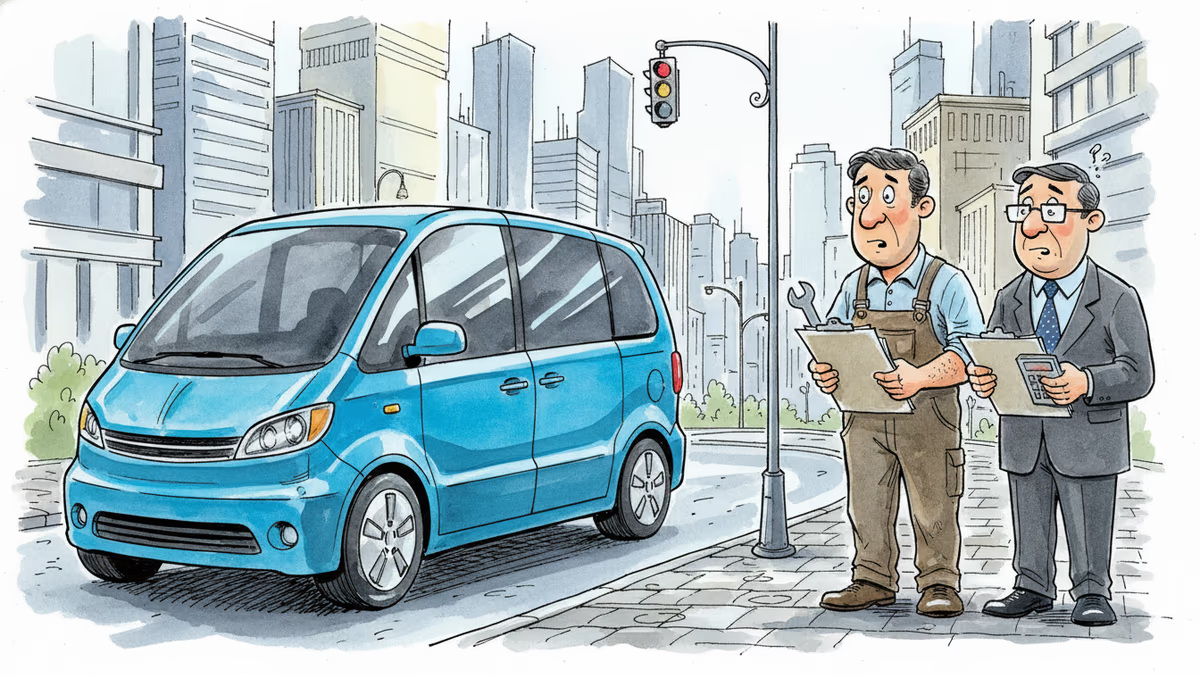
Waymo's new Ojai robotaxi isn't just a vehicle upgrade. It's the company's most serious attempt yet at cracking the cost problem that has kept autonomous vehicles from scaling. Here's what's really at stake.
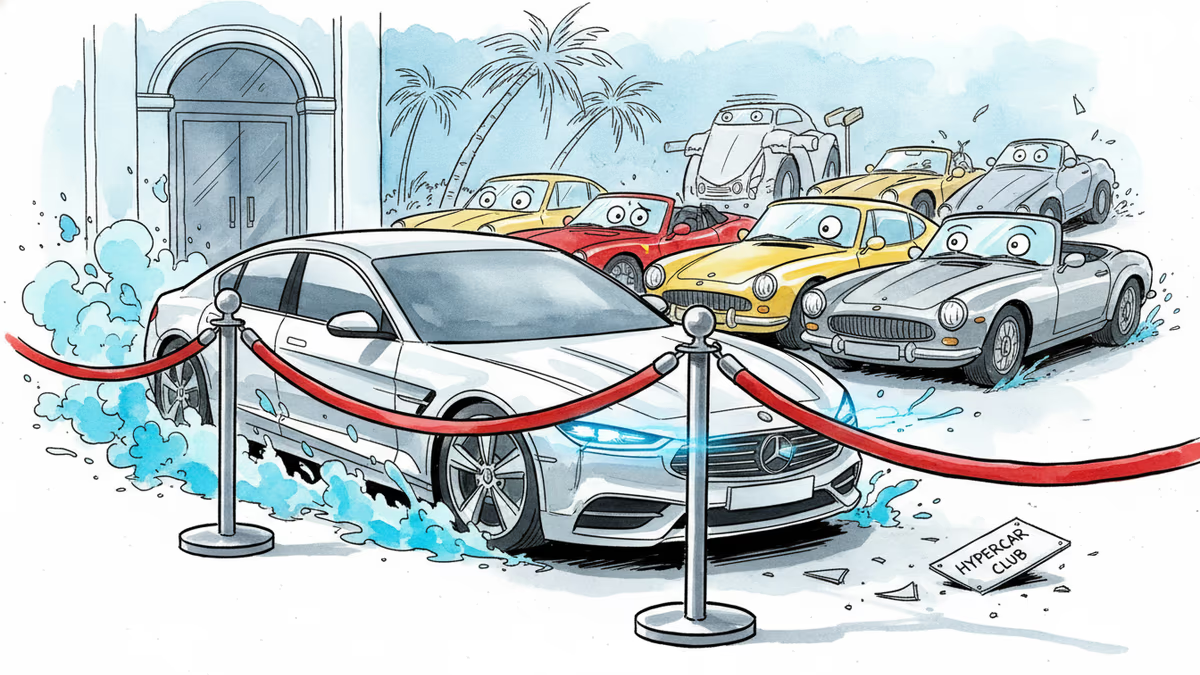
Mercedes-AMG's new GT 4-door coupe packs three YASA axial flux motors producing 1,153 hp and 1,475 lb-ft of torque. Here's what it means for the EV performance race—and who actually wins.
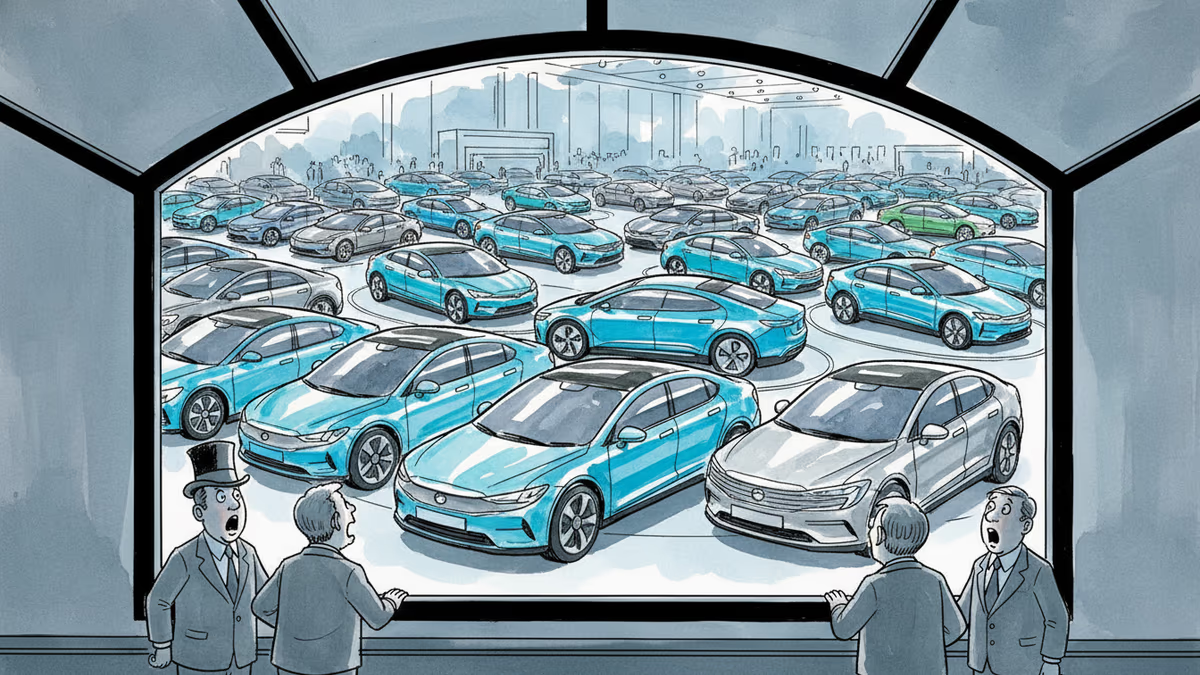
Auto China 2026 set records with 1,451 vehicles and 181 world premieres. But the real story isn't the size—it's how Chinese automakers stopped competing on price and started competing on brains.
Expiring leases will flood the US used car market with over a million electric vehicles by 2028. Could this do what subsidies couldn't — make EVs genuinely affordable?
Waymo's new Ojai robotaxi isn't just a vehicle upgrade. It's the company's most serious attempt yet at cracking the cost problem that has kept autonomous vehicles from scaling. Here's what's really at stake.
Mercedes-AMG's new GT 4-door coupe packs three YASA axial flux motors producing 1,153 hp and 1,475 lb-ft of torque. Here's what it means for the EV performance race—and who actually wins.
Auto China 2026 set records with 1,451 vehicles and 181 world premieres. But the real story isn't the size—it's how Chinese automakers stopped competing on price and started competing on brains.
Expiring leases will flood the US used car market with over a million electric vehicles by 2028. Could this do what subsidies couldn't — make EVs genuinely affordable?
Thoughts
Share your thoughts on this article
Sign in to join the conversation