
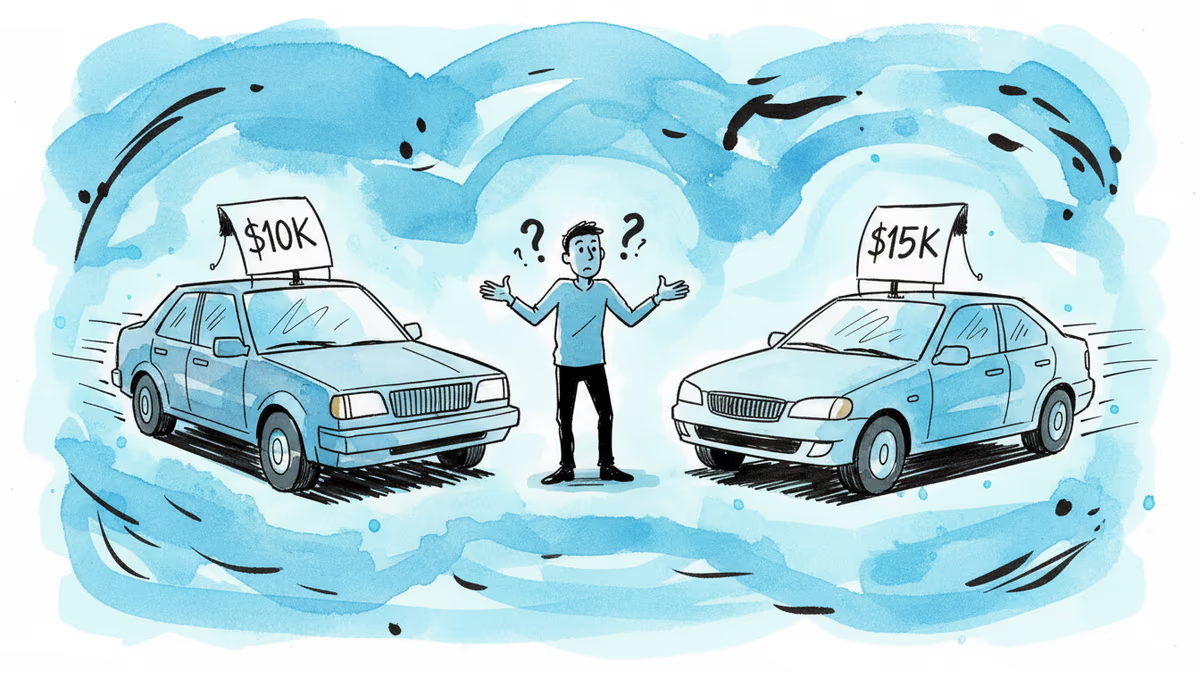
$15K Used EVs: When Budget Cars Become Actually Tempting
Exploring the used EV market at $15,000 budget point. BMW i3 and Chevrolet Bolt options compared with lower mileage, newer features, and better value propositions.
When $5,000 More Opens a Different Universe
The jump from $10,000 to $15,000 in the used EV market isn't just about money—it's about crossing into a realm where compromises start feeling less like sacrifices. That extra 50% budget increase transforms the same cars from "decent options" to "actually tempting choices."
Sudenly, those BMW i3s and Chevrolet Bolts that caught your eye at the lower price point are available with newer model years and lower mileage. The difference isn't just cosmetic; it's about getting features that actually work and batteries that haven't been through the wringer.
The i3 Gets Serious: 2018+ Models Change Everything
The facelifted i3 from 2018 onwards solves the original's biggest weakness: range anxiety. With a larger-capacity battery, you're looking at 114 miles of real-world range, or 150 miles if you opt for the range-extender version with its quirky two-cylinder engine.
But here's what really matters for daily use: Apple CarPlay and Android Auto come built-in. No more fumbling with aftermarket solutions or living with BMW's dated infotainment system. Your phone becomes the brain of the car, which is exactly how it should be in 2026.
The i3 remains what it always was—a city car with premium pretensions. The rear seats are still cramped, and you'll never mistake it for a family hauler. But as a commuter special with genuine style, it's hard to beat.
Bolt: The Practical Choice Gets Better

At $15,000, you can afford both pre- and post-facelift Bolts, including some 2022+ models with improved interiors and tech. The slightly roomier Bolt EUV is still rare at this price point, but the standard Bolt remains a compelling package.
What hasn't changed is the Bolt's core strength: genuine long-range capability. With 250+ miles of EPA range, this is the EV that doesn't make you plan your life around charging stations. Every model comes with CarPlay and Android Auto standard—no premium package required.
The trade-offs remain real, though. Slow DC charging means road trips require patience, and those firm seats can turn a comfortable commute into an endurance test on longer drives.
The Bigger Picture: What $15K Really Buys
This price point reveals something interesting about the used EV market's maturation. You're not just buying lower mileage—you're buying into proven reliability. These cars have survived their first few years, meaning the early adopter risks have been absorbed by someone else.
The battery degradation question becomes less scary when you're looking at 3-4 year old cars instead of 6-7 year old ones. Most EVs from this era still retain 80-90% of their original capacity, meaning range loss isn't yet a daily concern.
The American Perspective: Infrastructure Reality Check
For U.S. buyers, the charging infrastructure equation has shifted dramatically since these cars were new. The Supercharger network is opening up, and public DC fast charging has become genuinely reliable in most metro areas. This makes the Bolt's slow charging less of a deal-breaker and the i3's limited range less of a prison sentence.
But regional differences matter enormously. In California or the Northeast corridor, either choice works well. In rural areas or charging deserts, that extra range from the Bolt becomes genuinely valuable.
Authors
Related Articles
Despite EV success, electric sports cars struggle with consumer rejection, technical hurdles, and emotional disconnect from traditional performance enthusiasts
German study reveals shocking truth about plug-in hybrids - most owners rarely charge them. Porsche drivers averaged just 0.8% electric usage over two years.
Average new car price hits $48,576 in the US, up a third since 2019. Even with tariff rollbacks, affordable cars aren't coming back. Here's why the auto industry's cost structure has fundamentally shifted.
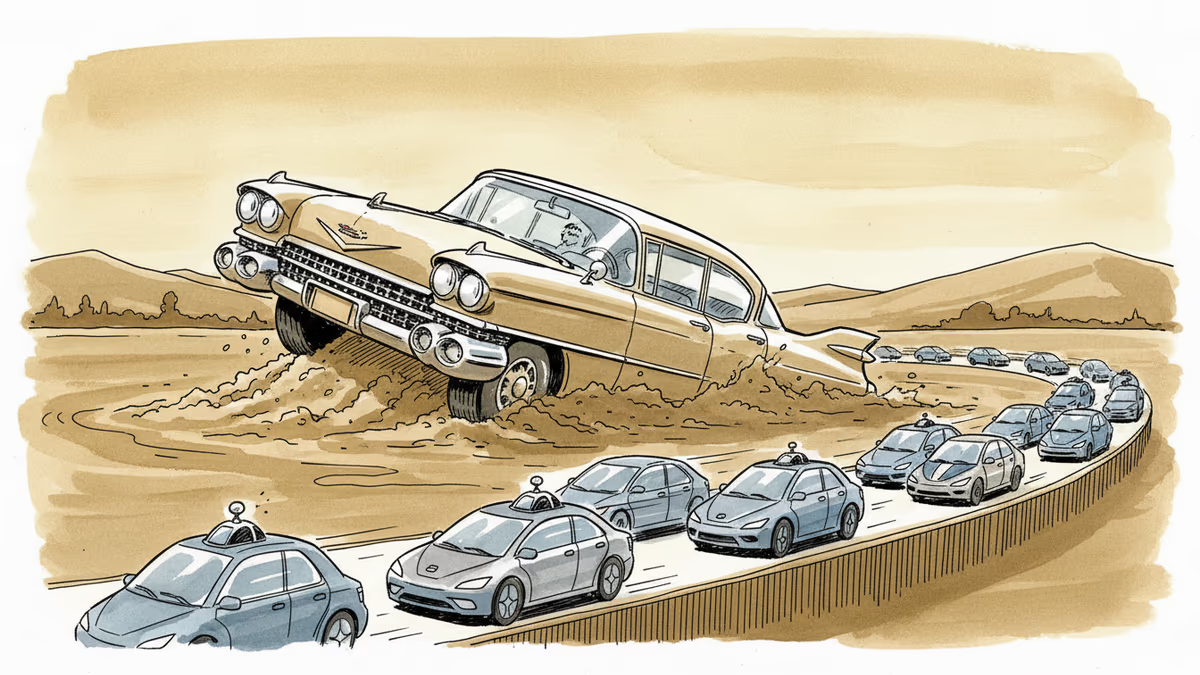
How America's once-dominant auto industry collapsed offers crucial lessons for today's market leaders facing rapid technological disruption.
Despite EV success, electric sports cars struggle with consumer rejection, technical hurdles, and emotional disconnect from traditional performance enthusiasts
German study reveals shocking truth about plug-in hybrids - most owners rarely charge them. Porsche drivers averaged just 0.8% electric usage over two years.
Average new car price hits $48,576 in the US, up a third since 2019. Even with tariff rollbacks, affordable cars aren't coming back. Here's why the auto industry's cost structure has fundamentally shifted.
How America's once-dominant auto industry collapsed offers crucial lessons for today's market leaders facing rapid technological disruption.
Thoughts
Share your thoughts on this article
Sign in to join the conversation