
Olympic Bathrooms Spark Global Bidet Revival
The 2026 Winter Olympics brings bidets back into the spotlight as athletes discover Italy's bathroom fixtures, highlighting environmental benefits and cultural differences in hygiene practices.
When Olympic Athletes Meet Italian Plumbing
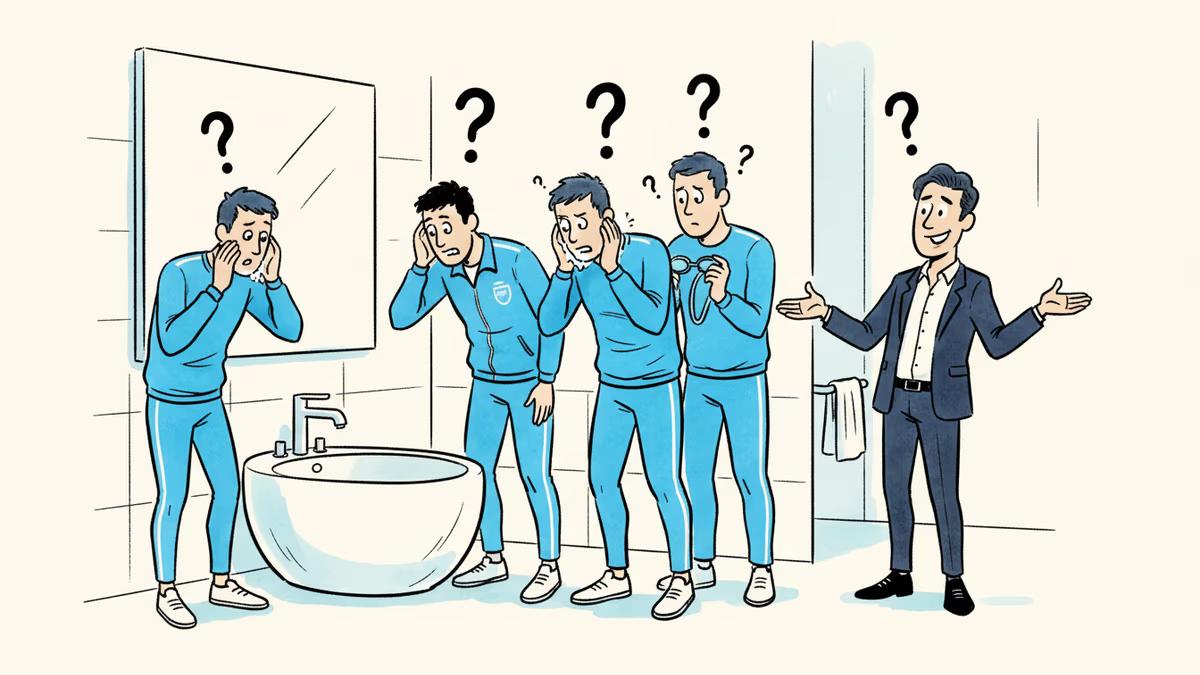
48 hours into the 2026 Winter Olympics buildup, and social media is buzzing—not about training times or medal predictions, but about bathroom fixtures. US broadcaster Alicia Lewis sparked thousands of comments with a simple TikTok question: "Is this actually a bidet?"
The Associated Press noted that while the fixture is standard in Italian homes, it "often perplexes visitors—including some athletes whose room videos have done double-takes." What started as innocent confusion has reignited global interest in a device that's been quietly revolutionizing personal hygiene for centuries.
From French Ponies to Italian Law
The bidet's journey began in early 18th century France, though its inventor remains anonymous. The name itself tells a story—derived from the French word for pony, referencing the straddling position users adopt. It was a cheeky but practical metaphor that stuck.
Italy embraced the concept around 1720, but real adoption came later when Queen Maria Carolina of Habsburg-Lorraine demanded bidets in her private quarters at the Palace of Caserta. What began as royal luxury gradually trickled down to common households.
The game-changer came in 1975 when Italy made bidets legally mandatory in all private homes. Suddenly, what was once optional became as essential as running water itself.
Global Adoption Patterns Tell Different Stories

Today's bidet map reveals fascinating cultural choices. Greece, Turkey, and Finland have embraced them—though Finland opts for "shower bidets" with nozzles beside toilets. South America shows strong adoption in Argentina, Uruguay, and Paraguay, while North Africa has integrated them into traditional hygiene practices.
Japan took innovation further, merging bidets with toilets to create "washlets"—automated systems with adjustable jets built into the bowl. It's technology meeting tradition in typically Japanese fashion.
Ironically, France—the birthplace—shows relatively low modern usage, proving that cultural innovation doesn't always flourish where it starts.
Environmental Awakening Drives New Interest
The current bidet renaissance isn't just about hygiene—it's about sustainability. When New York's new mayor Zohran Mamdani mentioned installing bidets at Gracie Mansion, the city's Department of Environmental Protection quickly posted: "more bidets = fewer wet wipes."
This hits a real problem. As consumers increasingly choose wet wipes over toilet paper, wastewater treatment facilities face mounting challenges. Wet wipes don't break down like tissue, creating costly blockages and environmental damage. Bidets use only water—a dramatically cleaner solution.
The American Resistance
Despite growing environmental awareness, US adoption remains limited. Cultural barriers run deep—many Americans associate bidets with European "otherness" or view them as unnecessary luxury. Bathroom space constraints in older homes don't help either.
Yet change is brewing. High-end hotels increasingly install them, tech-savvy consumers embrace Japanese-style smart toilets, and environmental advocates push water-based alternatives to disposable wipes.
Perhaps the real Olympic spirit isn't just about athletic competition, but about being open to learning from other cultures' solutions to shared human challenges.
Authors
Related Articles
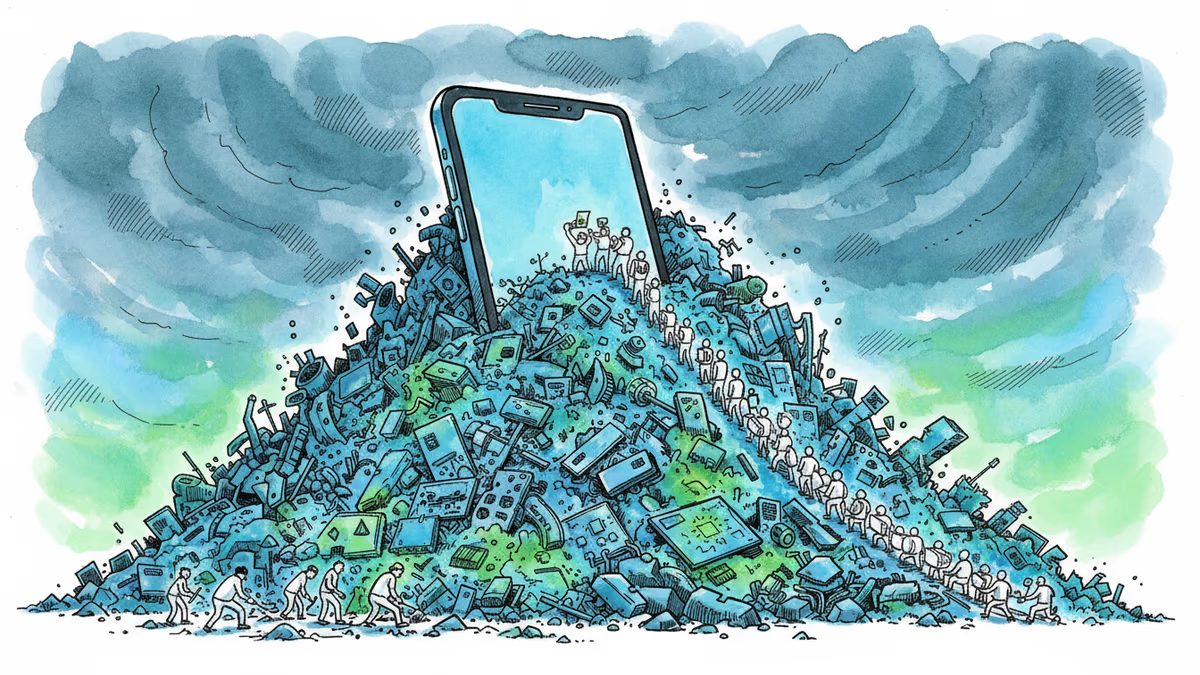
Every new gadget carries hidden costs — in carbon, labor, and waste. Here's a practical, honest guide to buying tech more ethically in 2026.
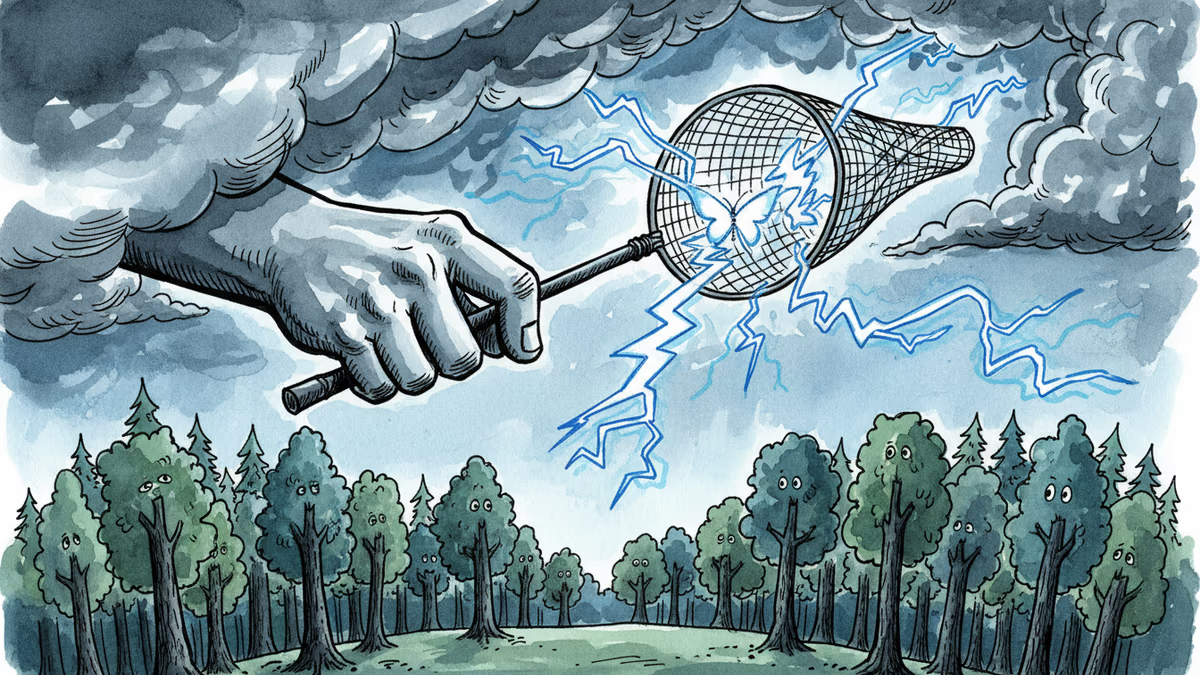
A Canadian startup claims it can prevent wildfires by stopping lightning strikes before they happen. But should we be playing god with nature's electrical storms?

Five stories from late September, traced to where the paper trail stops: Korea's export record, Nvidia's Hugging Face 8-K, a US-China AI channel, the UN on AI, and rising births.

Huawei's CANN is open source under a license barring software for non-Ascend chips. Inside China's second CUDA, and the two links still outside it: pre-training compute and 5nm capacity.
Every new gadget carries hidden costs — in carbon, labor, and waste. Here's a practical, honest guide to buying tech more ethically in 2026.
A Canadian startup claims it can prevent wildfires by stopping lightning strikes before they happen. But should we be playing god with nature's electrical storms?
Five stories from late September, traced to where the paper trail stops: Korea's export record, Nvidia's Hugging Face 8-K, a US-China AI channel, the UN on AI, and rising births.
Huawei's CANN is open source under a license barring software for non-Ascend chips. Inside China's second CUDA, and the two links still outside it: pre-training compute and 5nm capacity.
Thoughts
Share your thoughts on this article
Sign in to join the conversation