
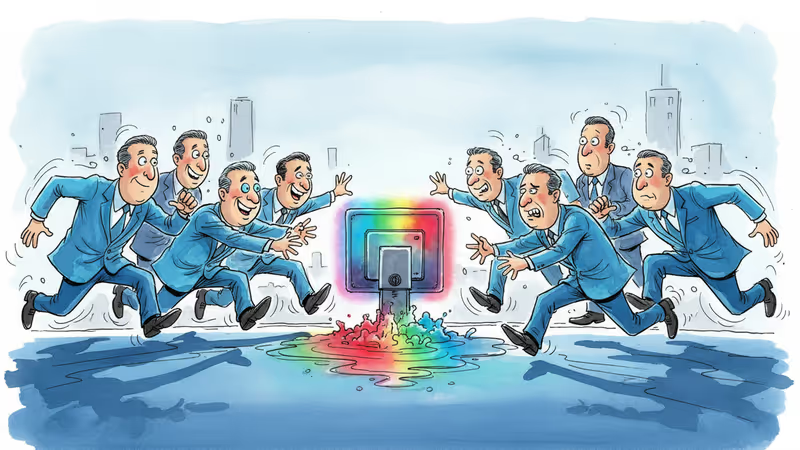
The RGB LED TV Gold Rush - Is Everyone Just Following the Crowd?
Every TV manufacturer is suddenly pushing RGB LED TVs in 2026. But are they doing it for the right reasons, or just following trends?
Something curious is happening in the TV world this year. Nearly every manufacturer has suddenly decided that RGB LED is the technology to bet on, flooding the market with new models and marketing campaigns. But here's the thing: not all of them seem equally convinced.
Hisense appears genuinely excited about RGB LED, treating it as their ticket to premium status. Meanwhile, LG is making RGB LED TVs too, but you can tell their heart still belongs to OLED. It's like watching someone go on a date while texting their ex.
The Bandwagon Effect in Action
This simultaneous rush toward RGB LED feels less like organic innovation and more like a classic case of industry groupthink. When one major player makes a move, others often follow—not because they've discovered something revolutionary, but because they're afraid of being left behind.
The timing is telling. The TV industry has been struggling to find the next big thing that can justify premium pricing. 4K became standard, 8K never quite took off with consumers, and OLED remains expensive to manufacture. RGB LED offers a middle ground—better than traditional LCD, cheaper than OLED, and marketable as "premium."
But here's what's interesting: the technology itself isn't new. RGB LED backlighting has been around for years. What's changed is the industry's collective decision to make it the star of the show.
When Marketing Meets Reality

The challenge for manufacturers now is differentiating themselves in a crowded RGB LED market. Sony is emphasizing their color processing algorithms. TCL is focusing on brightness levels. Samsung (though they haven't fully committed yet) would likely leverage their semiconductor expertise.
For consumers, this creates a confusing landscape. When everyone claims to have the "best" RGB LED technology, how do you choose? The answer might lie not in the technology itself, but in how each company implements it.
LG's half-hearted approach might actually work in their favor. By not putting all their eggs in the RGB LED basket, they're hedging their bets. If RGB LED becomes the next 3D TV—a technology that promised everything but delivered disappointment—LG won't be caught off guard.
The Consumer Perspective
From a buyer's standpoint, this RGB LED rush could be great news. More competition typically means better prices and faster innovation. The technology does offer genuine improvements over standard LCD: better color accuracy, improved contrast ratios, and enhanced viewing experiences.
But there's a risk too. When an entire industry pivots toward one technology simultaneously, it often signals desperation rather than confidence. Remember when every smartphone manufacturer added a 3D touch feature after Apple introduced it? Most of those features are now forgotten.
The real test won't be in the marketing materials or tech specifications. It'll be in living rooms, where families decide whether the $1,500-2,000 price point for RGB LED TVs offers enough value over $800 LCD models or justifies not spending $2,500+ on OLED.
Authors
Related Articles
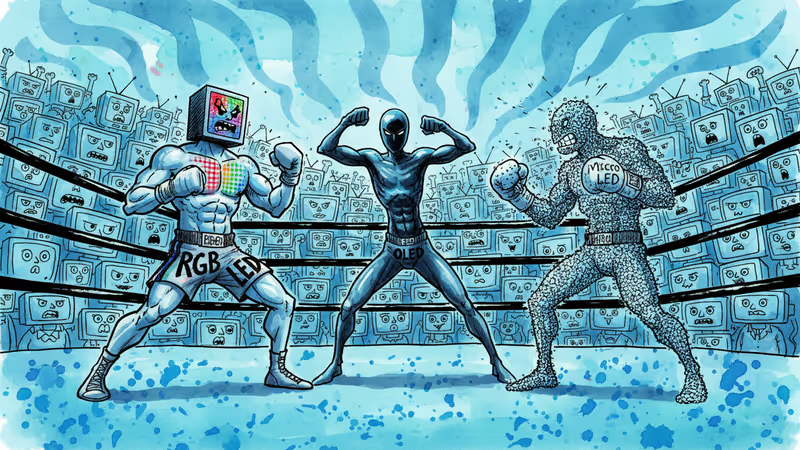
Hisense and Sony unveil RGB LED TVs promising 10,000 nits brightness and superior color accuracy. Could this new tech reshape the premium display market dominated by OLED?

Five stories from late September, traced to where the paper trail stops: Korea's export record, Nvidia's Hugging Face 8-K, a US-China AI channel, the UN on AI, and rising births.

Huawei's CANN is open source under a license barring software for non-Ascend chips. Inside China's second CUDA, and the two links still outside it: pre-training compute and 5nm capacity.
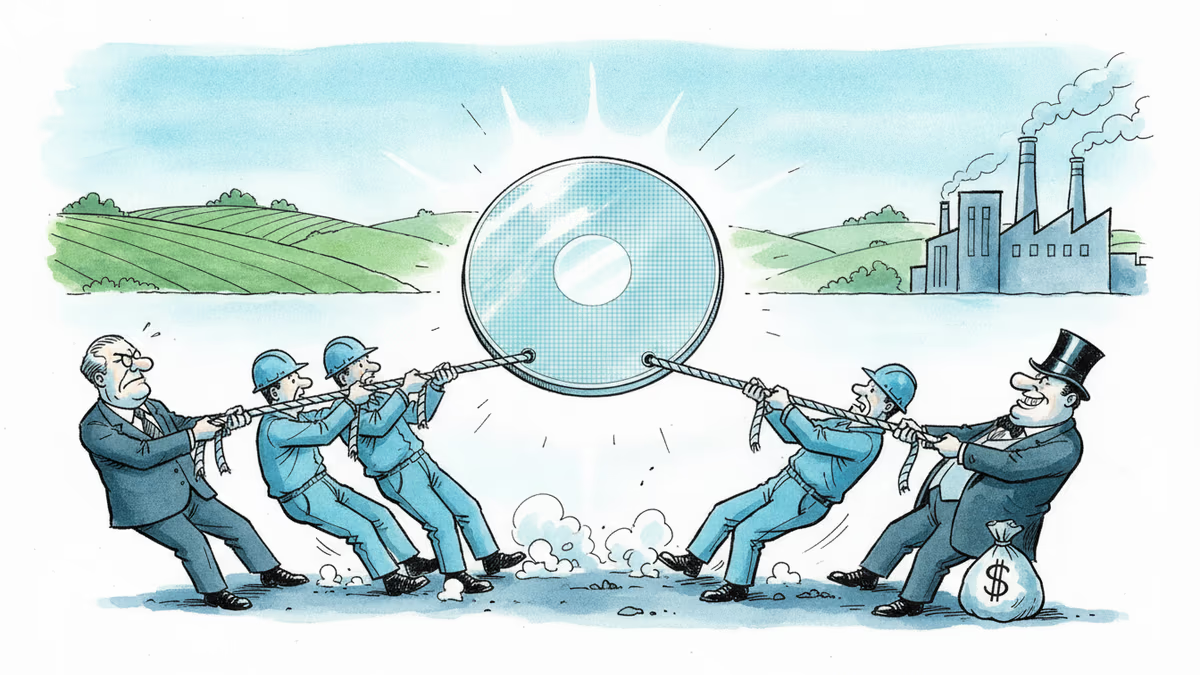
Samsung Electronics' union branch revealed that 84% of survey respondents oppose the government's roughly $290 billion (₩400 trillion) semiconductor megaproject in Gwangju. Government, management, the union and shareholders are all reading the same national project in sharply different ways.
Hisense and Sony unveil RGB LED TVs promising 10,000 nits brightness and superior color accuracy. Could this new tech reshape the premium display market dominated by OLED?
Five stories from late September, traced to where the paper trail stops: Korea's export record, Nvidia's Hugging Face 8-K, a US-China AI channel, the UN on AI, and rising births.
Huawei's CANN is open source under a license barring software for non-Ascend chips. Inside China's second CUDA, and the two links still outside it: pre-training compute and 5nm capacity.
Samsung Electronics' union branch revealed that 84% of survey respondents oppose the government's roughly $290 billion (₩400 trillion) semiconductor megaproject in Gwangju. Government, management, the union and shareholders are all reading the same national project in sharply different ways.
Thoughts
Share your thoughts on this article
Sign in to join the conversation