

Space Goes Social: NASA Astronauts Get Smartphones for First Time
NASA allows smartphones on space missions for first time, transforming how we experience and share space exploration. From decade-old cameras to real-time social media from orbit.
Forget the decade-old Nikon cameras. NASA astronauts are about to become the ultimate content creators, armed with the latest iPhones and Android devices as they venture into space for the first time.
What's Changing
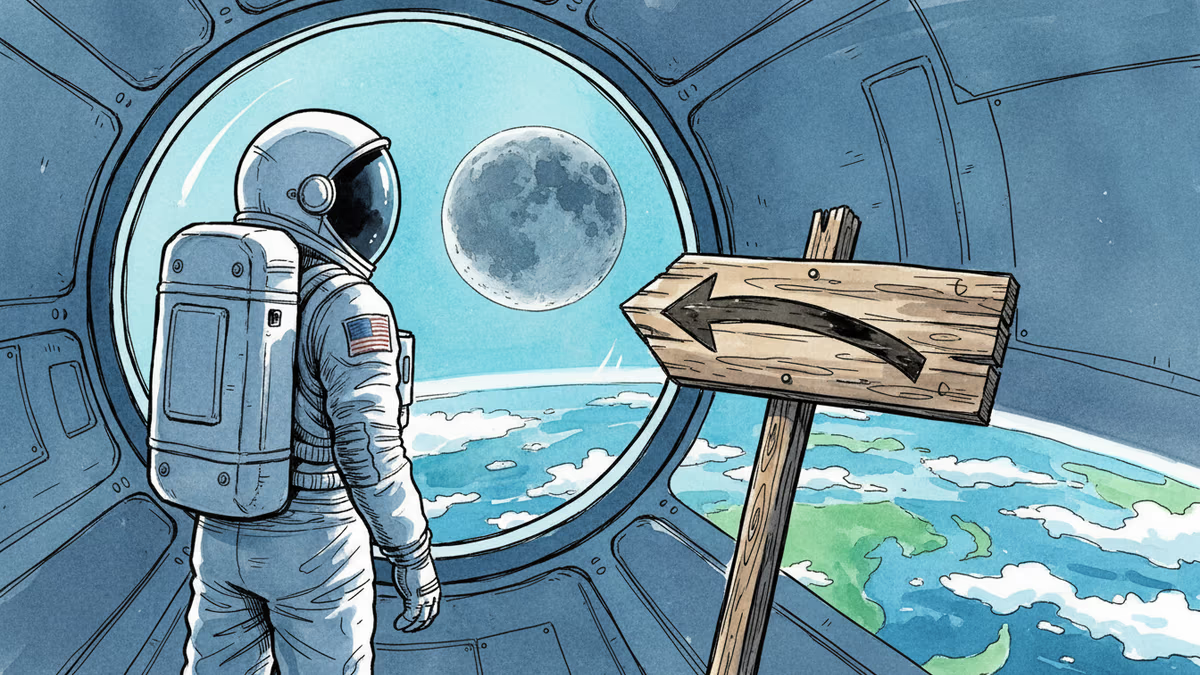
NASA announced that astronauts on the upcoming Crew-12 mission (launching next week) and the highly anticipated Artemis II mission (delayed until March) will be allowed to bring personal smartphones to space. Artemis II marks humanity's first return to lunar orbit since the 1960s.
"We are giving our crews the tools to capture special moments for their families and share inspiring images and video with the world," NASA administrator Jared Isaacman wrote on X. Until now, space missions relied on decade-old Nikon DSLRs and GoPros—capable but hardly spontaneous.
The change represents more than just a tech upgrade. It's about transforming how space exploration connects with people back on Earth.
The Democratization of Space Content
Imagine scrolling through TikTok and seeing an astronaut doing zero-gravity flips, or receiving an Instagram story from the International Space Station. This isn't just about better cameras—it's about real-time intimacy with space exploration.
The spontaneity of smartphones could revolutionize space communication. Instead of carefully curated, official NASA footage released days later, we might get raw, authentic moments as they happen 250 miles above Earth. Ultra-wide selfies in spacecraft, time-lapse videos of Earth rotations, or even mundane moments like eating floating M&Ms.

For younger generations especially, this could bridge the gap between the seemingly distant world of space exploration and their daily digital lives. Space might finally feel accessible, not just aspirational.
Breaking Bureaucratic Barriers
Isaacman highlighted something equally significant: the speed of approval. "We challenged long-standing processes and qualified modern hardware for spaceflight on an expedited timeline," he noted. "That operational urgency will serve NASA well."
In an industry where every component undergoes years of testing—because one malfunction can be catastrophic—this rapid approval signals NASA's push toward greater agility. It's a small but telling shift from the traditionally cautious space agency culture.
Interestingly, this isn't entirely unprecedented. SpaceX has already allowed smartphones on private astronaut missions, suggesting that commercial space companies are leading the charge in modernizing space technology protocols.
The Bigger Picture
This move reflects broader changes in how institutions communicate with the public. Government agencies increasingly recognize that authentic, real-time content builds stronger connections than polished press releases.
But there are questions worth pondering. Will constant documentation and social sharing enhance or diminish the profound experience of seeing Earth from space? Could astronauts become distracted by content creation when they should focus on mission-critical tasks?
Authors
Related Articles
NASA's Artemis III has been redesigned as an Earth-orbit mission. SpaceX and Blue Origin say their landers won't be ready until late 2027. What does this mean for the future of lunar exploration?

Artemis II splashed down successfully in the Pacific, marking humanity's first crewed deep space mission in over 50 years. But the harder question isn't whether we can go back — it's why we should.

NASA's Orion capsule splashed down safely after humanity's first crewed lunar voyage in 54 years. The mission succeeded. Now the harder questions begin.

Artemis II's four astronauts are returning to Earth Friday night. The splashdown off Southern California isn't the anticlimax it sounds—it's the most technically perilous moment of the entire lunar journey.
NASA's Artemis III has been redesigned as an Earth-orbit mission. SpaceX and Blue Origin say their landers won't be ready until late 2027. What does this mean for the future of lunar exploration?
Artemis II splashed down successfully in the Pacific, marking humanity's first crewed deep space mission in over 50 years. But the harder question isn't whether we can go back — it's why we should.
NASA's Orion capsule splashed down safely after humanity's first crewed lunar voyage in 54 years. The mission succeeded. Now the harder questions begin.
Artemis II's four astronauts are returning to Earth Friday night. The splashdown off Southern California isn't the anticlimax it sounds—it's the most technically perilous moment of the entire lunar journey.
Thoughts
Share your thoughts on this article
Sign in to join the conversation