
Moon Dreams Delayed Again: Artemis II Faces Another Setback
NASA's Artemis II mission to return astronauts to the Moon after 53 years faces another delay due to hydrogen leaks during testing. What this means for the future of space exploration.
53 years. That's how long it's been since humans last walked on the Moon during Apollo 17. NASA's ambitious plan to break this drought just hit another speed bump.
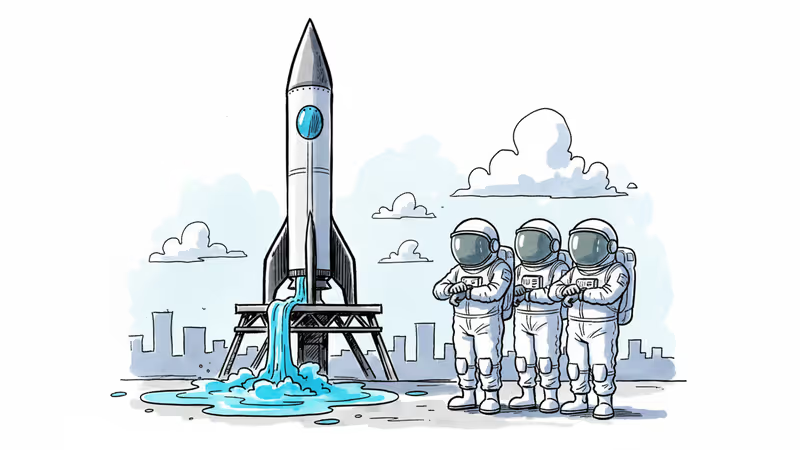
The Artemis II mission, designed to carry astronauts around the Moon for the first time in over half a century, has been pushed back to March after Monday's fueling test revealed hydrogen leaks in the connection between the rocket and launch platform at Kennedy Space Center.
"Engineers pushed through several challenges during the two-day test and met many of the planned objectives," NASA said in a statement. But the most critical objective—proving the system is safe for human flight—remains elusive.
The Hydrogen Headache That Won't Go Away
This isn't déjà vu; it's a recurring nightmare. The unmiloted Artemis I test flight faced identical hydrogen leak issues that delayed its launch by several months in 2022. Engineers thought they'd solved the problem by revising hydrogen loading procedures, but clearly, the fix was more of a workaround than a cure.
Hydrogen is both a blessing and a curse for rocket engineers. It's an incredibly efficient fuel, but its tiny molecular structure makes it notoriously difficult to contain. When stored as a liquid at extremely cold temperatures, even microscopic gaps in seals can become significant leaks as metals contract and expand.
This isn't just a technical glitch—it's a fundamental engineering challenge that highlights the complexity of returning to deep space after decades away. The Wet Dress Rehearsal (WDR) is specifically designed to catch these issues before they become catastrophic failures with crew aboard.
The Cost of a 50-Year Gap

The delays reveal something deeper than technical difficulties: America lost its institutional knowledge of lunar missions. When Apollo ended in 1972, NASA didn't just stop going to the Moon—it essentially forgot how.
The current Space Launch System (SLS) rocket represents a massive technological leap from Apollo-era hardware, but it also carries the burden of rebuilding capabilities from scratch. The engineers who designed the Saturn V rockets have long since retired, taking decades of hands-on experience with them. What remains are blueprints, documentation, and the daunting task of recreating magic.
Unlike Apollo's sprint to beat the Soviets, Artemis aims for sustainability. The program isn't just about planting flags—it's about building a permanent lunar presence. This requires a level of reliability and repeatability that Apollo never needed, making every component failure a potential program-killer.
The Global Space Race Heats Up
While NASA wrestles with hydrogen leaks, competitors aren't standing still. China has set 2030 as its target for crewed lunar landing, and its recent success in collecting samples from the Moon's far side demonstrates serious capabilities. India shocked the world by successfully landing on the lunar south pole with Chandrayaan-3, joining an exclusive club of Moon-landing nations.
The private sector adds another layer of complexity. SpaceX, selected to build Artemis's lunar lander, is simultaneously developing its own Moon ambitions as a stepping stone to Mars. Jeff Bezos's Blue Origin is pushing its own lunar agenda, creating a web of competing and complementary interests.
European and Japanese partners in the Artemis program are also developing independent capabilities, hedging their bets on American leadership. The delay gives these players more time to close technology gaps and potentially reshape the power dynamics of lunar exploration.
The Innovation Paradox
The Artemis delays highlight a fundamental tension in modern space exploration. Traditional government programs prioritize safety and reliability above all else—a reasonable approach when human lives are at stake. But this caution comes at the cost of speed and agility.
Private companies like SpaceX have revolutionized the industry with a "fail fast, learn faster" mentality. They've achieved in two decades what traditional aerospace took five decades to accomplish. Yet when it comes to human spaceflight beyond Earth orbit, even SpaceX proceeds with extreme caution.
Authors
Related Articles

NASA's Artemis III has been redesigned as an Earth-orbit mission. SpaceX and Blue Origin say their landers won't be ready until late 2027. What does this mean for the future of lunar exploration?

Artemis II splashed down successfully in the Pacific, marking humanity's first crewed deep space mission in over 50 years. But the harder question isn't whether we can go back — it's why we should.
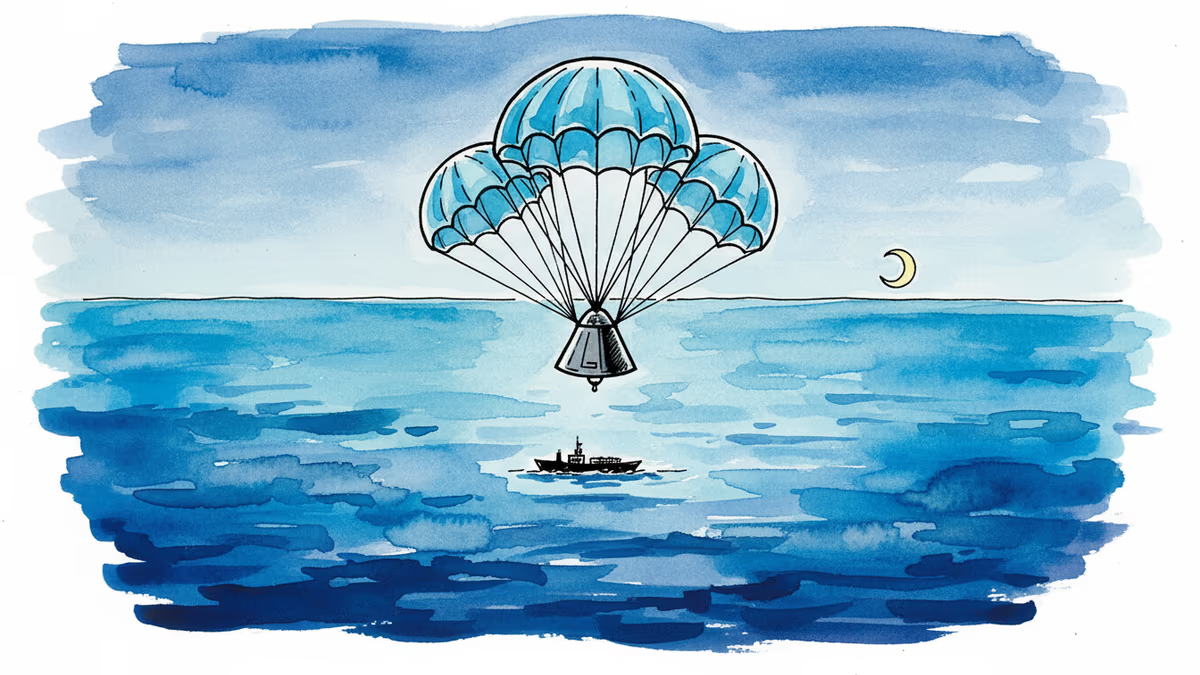
NASA's Orion capsule splashed down safely after humanity's first crewed lunar voyage in 54 years. The mission succeeded. Now the harder questions begin.
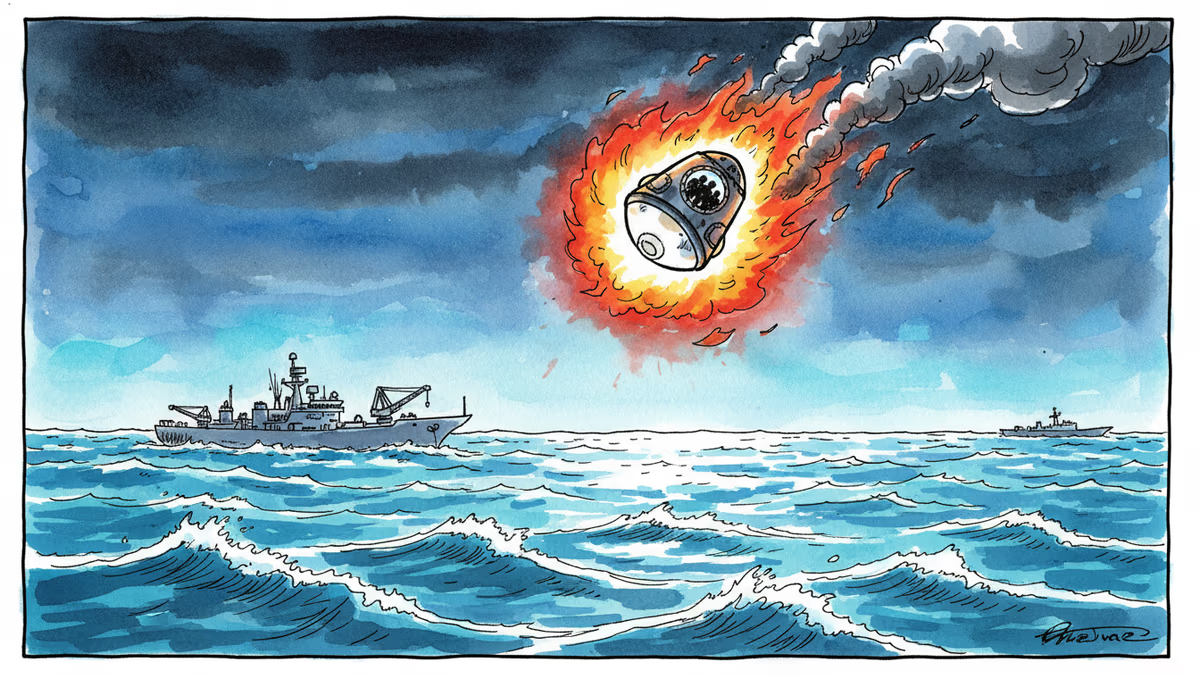
Artemis II's four astronauts are returning to Earth Friday night. The splashdown off Southern California isn't the anticlimax it sounds—it's the most technically perilous moment of the entire lunar journey.
NASA's Artemis III has been redesigned as an Earth-orbit mission. SpaceX and Blue Origin say their landers won't be ready until late 2027. What does this mean for the future of lunar exploration?
Artemis II splashed down successfully in the Pacific, marking humanity's first crewed deep space mission in over 50 years. But the harder question isn't whether we can go back — it's why we should.
NASA's Orion capsule splashed down safely after humanity's first crewed lunar voyage in 54 years. The mission succeeded. Now the harder questions begin.
Artemis II's four astronauts are returning to Earth Friday night. The splashdown off Southern California isn't the anticlimax it sounds—it's the most technically perilous moment of the entire lunar journey.
Thoughts
Share your thoughts on this article
Sign in to join the conversation