
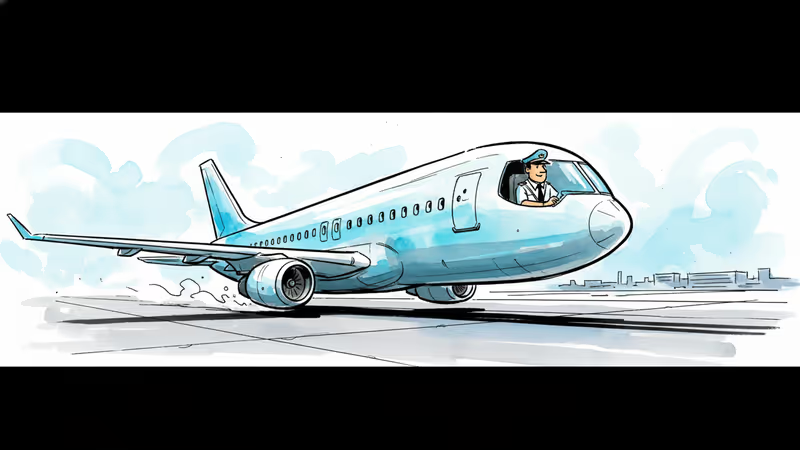
When Landing Gear Fails, Human Skill Prevails: NASA Pilot's Textbook Emergency Landing
A NASA WB-57 aircraft successfully completed a gear-up landing at Ellington Field, demonstrating that human expertise remains crucial even in our high-tech aviation era
Tuesday morning at Ellington Field in southeastern Houston delivered a masterclass in aviation skill that no flight simulator could fully replicate. One of NASA's three WB-57 high-altitude research aircraft faced every pilot's nightmare scenario: a mechanical failure that left the landing gear inoperable.
What happened next wasn't panic or catastrophe—it was textbook precision under pressure.
When Technology Meets Human Expertise
The KHOU 11 footage captures a moment that aviation professionals will study for years. The massive aircraft approaches the runway, touches down without extended landing gear, and slides along the tarmac in a controlled descent. The pilot maintains perfect directional control, using friction to gradually slow the aircraft until it comes to a safe stop.
No injuries. No fire. No drama—just professional competence in action.
NASA spokesperson Bethany Stevens confirmed all crew members were safe, emphasizing the agency's commitment to transparency: "A thorough investigation will be conducted by NASA into the cause. NASA will transparently update the public as we gather more information."
The High-Stakes World of Research Aviation

The WB-57 isn't just any aircraft. These three specialized platforms conduct atmospheric science research and Earth observation missions at altitudes exceeding 60,000 feet. They're flying laboratories equipped with millions of dollars worth of scientific instruments, often carrying irreplaceable research data.
Losing such an aircraft would impact not just NASA's budget, but ongoing climate research, atmospheric studies, and disaster monitoring capabilities. The successful emergency landing preserved both human lives and critical scientific infrastructure.
This incident highlights a fascinating paradox in modern aviation. While we're rapidly advancing toward autonomous flight systems and AI-assisted piloting, mechanical failures still require the kind of split-second decision-making and muscle memory that only comes from years of human experience.
Lessons for Commercial Aviation
Commercial aviation has an extraordinary safety record, but incidents like this remind us why pilot training remains so rigorous. Airlines invest millions in simulator training for emergency scenarios, but real-world mechanical failures often present unique challenges that can't be perfectly replicated.
The Federal Aviation Administration and aircraft manufacturers will undoubtedly analyze this incident. Emergency landing procedures, pilot training protocols, and aircraft design all benefit from real-world data that only comes from situations like this.
The Transparency Factor
NASA's immediate public disclosure and promise of transparent investigation sets a standard that extends beyond government agencies. In an era where public trust in institutions faces constant challenges, this straightforward communication approach builds confidence.
The aviation industry's culture of shared learning—where one organization's incident becomes everyone's education—has contributed to making flying the safest form of travel. This incident will likely generate safety bulletins, training updates, and procedural reviews across the aviation community.
Authors
Related Articles
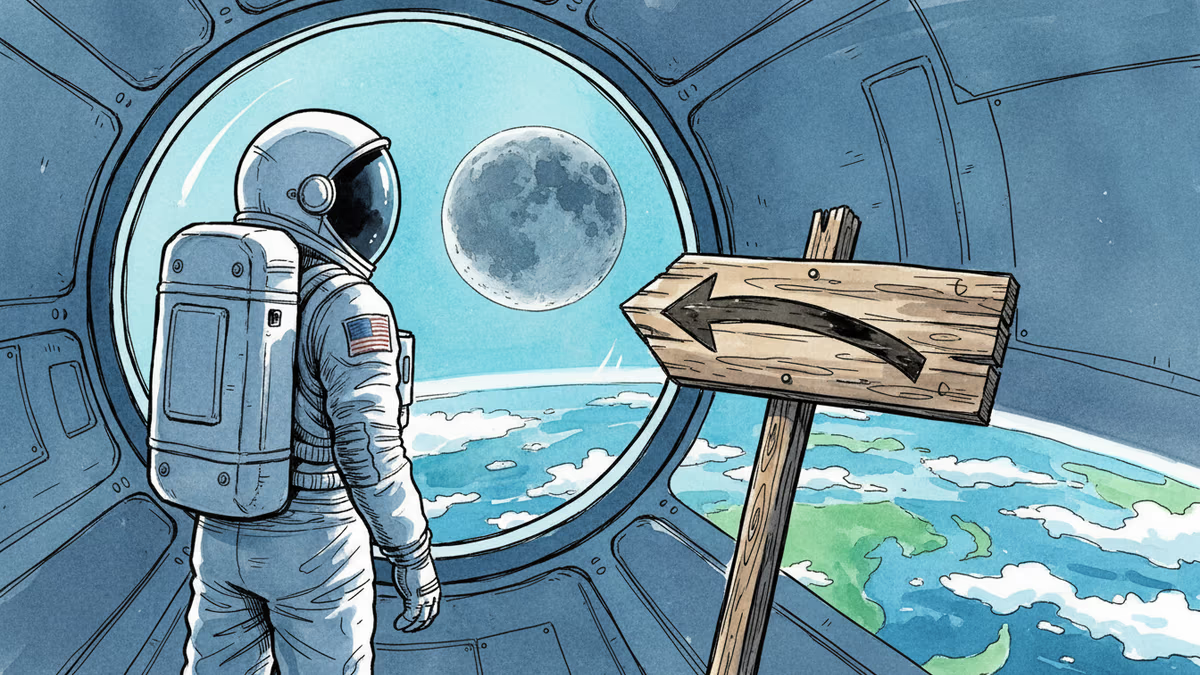
NASA's Artemis III has been redesigned as an Earth-orbit mission. SpaceX and Blue Origin say their landers won't be ready until late 2027. What does this mean for the future of lunar exploration?

Artemis II splashed down successfully in the Pacific, marking humanity's first crewed deep space mission in over 50 years. But the harder question isn't whether we can go back — it's why we should.
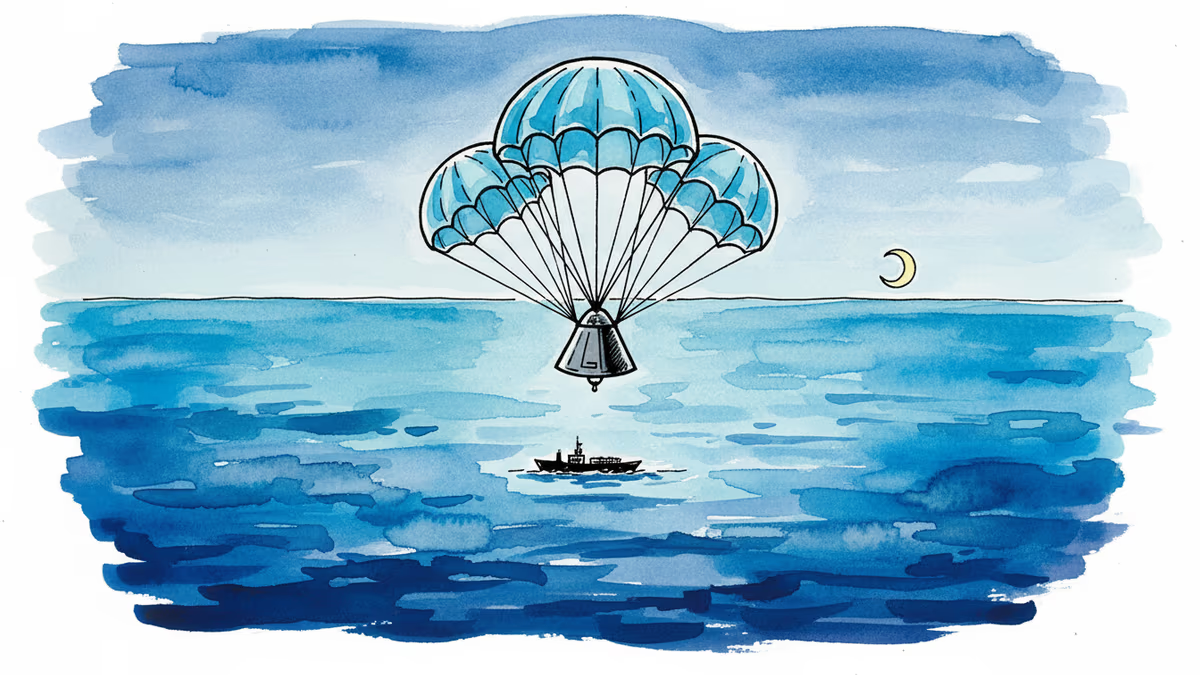
NASA's Orion capsule splashed down safely after humanity's first crewed lunar voyage in 54 years. The mission succeeded. Now the harder questions begin.
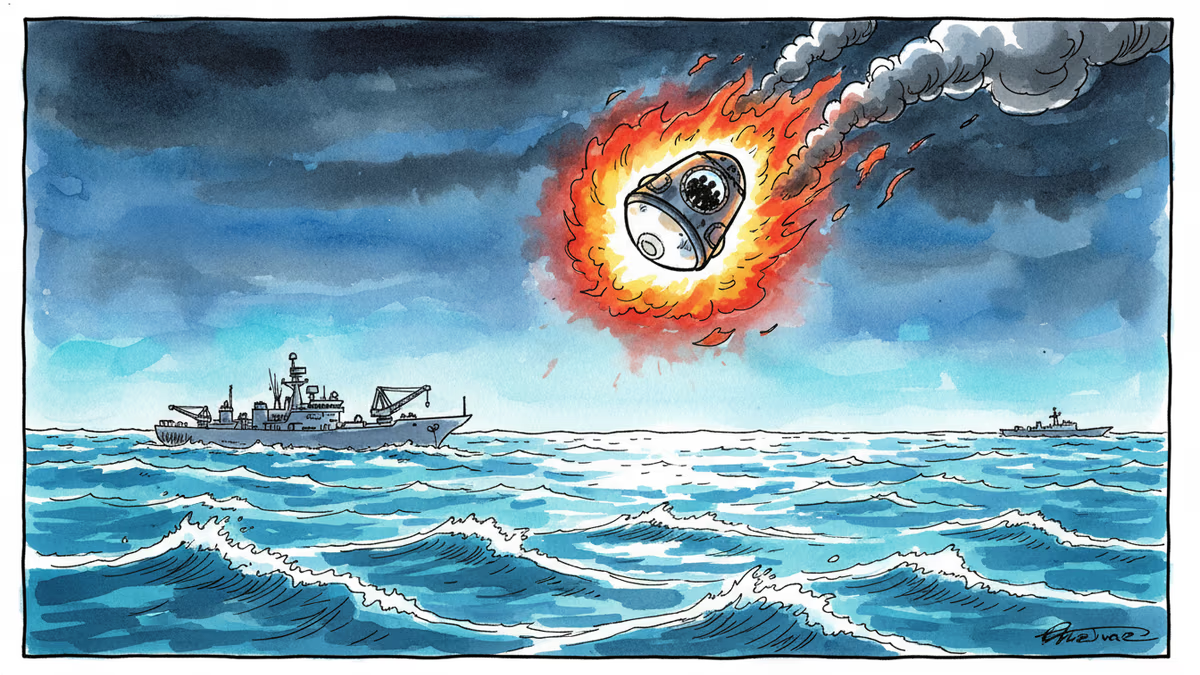
Artemis II's four astronauts are returning to Earth Friday night. The splashdown off Southern California isn't the anticlimax it sounds—it's the most technically perilous moment of the entire lunar journey.
NASA's Artemis III has been redesigned as an Earth-orbit mission. SpaceX and Blue Origin say their landers won't be ready until late 2027. What does this mean for the future of lunar exploration?
Artemis II splashed down successfully in the Pacific, marking humanity's first crewed deep space mission in over 50 years. But the harder question isn't whether we can go back — it's why we should.
NASA's Orion capsule splashed down safely after humanity's first crewed lunar voyage in 54 years. The mission succeeded. Now the harder questions begin.
Artemis II's four astronauts are returning to Earth Friday night. The splashdown off Southern California isn't the anticlimax it sounds—it's the most technically perilous moment of the entire lunar journey.
Thoughts
Share your thoughts on this article
Sign in to join the conversation