
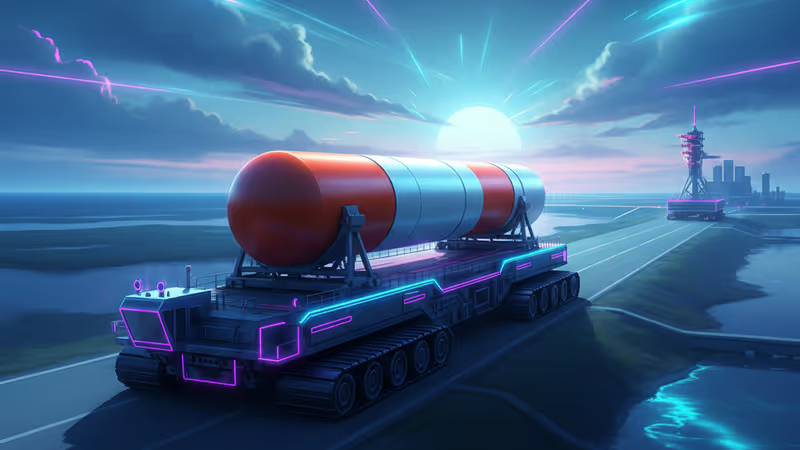
NASA Artemis II SLS Rollout 2026: Mega Rocket Begins Moon Trek
NASA's Artemis II SLS rocket begins its historic rollout on January 17, 2026. Learn about the specs, crew, and the multi-billion dollar journey back to the Moon.
Humanity is one step closer to the Moon. Early Saturday morning on January 17, 2026, NASA's mega moon rocket began its slow trek to the Florida launchpad, marking a pivotal milestone for Artemis II—the first crewed lunar mission in over 50 years.
The Space Launch System (SLS) and Orion spacecraft exited the Vehicle Assembly Building at 7 a.m. ET. Moving at a "cruising speed" of just under 1 mph, the journey to the pad is expected to take between 8 to 10 hours. This rollout initiates the final series of ground tests before four astronauts—Reid Wiseman, Victor Glover, Christina Koch, and Jeremy Hansen—embark on their 10-day deep space flight.
The Power Behind the NASA Artemis II SLS Rollout 2026
The SLS is a beast of a machine, generating 8.8 million pounds of thrust at liftoff. While SpaceX's Starship now exceeds this power, the SLS remains the only flight-ready rocket certified to carry humans to the Moon today. Standing 322 feet tall, it towers over the Statue of Liberty.

| Metric | SLS (Artemis II) | Saturn V (Apollo) |
|---|---|---|
| Height | 322 feet | 363 feet |
| Thrust | 8.8M lbs | 7.6M lbs |
| Payload to Moon | 27+ metric tons | 45+ metric tons |
| Reusability | Expendable | Expendable |
Engineers built the SLS using "retro" hardware from the Space Shuttle program. It uses modified RS-25 main engines and solid rocket boosters to save on development time. However, unlike the shuttle, these parts aren't reusable. They're sacrificed to achieve the 24,500 mph velocity needed to reach the Moon, located 239,000 miles away.
Cost and National Significance
Often called "America's Rocket," the SLS is as much a political asset as a scientific one. With over 3,800 suppliers across all 50 states, it's a massive industrial effort. But it comes with a hefty price tag: $4.1 billion per launch, according to NASA's Inspector General. Critics point to this cost as a major hurdle for long-term lunar sustainability.
Authors
Related Articles
NASA's Artemis III has been redesigned as an Earth-orbit mission. SpaceX and Blue Origin say their landers won't be ready until late 2027. What does this mean for the future of lunar exploration?
Flying to Mars means navigating without trees, wind, or GPS. Here's the surprisingly elegant physics behind how spacecraft measure their own velocity in the void.

Artemis II splashed down successfully in the Pacific, marking humanity's first crewed deep space mission in over 50 years. But the harder question isn't whether we can go back — it's why we should.
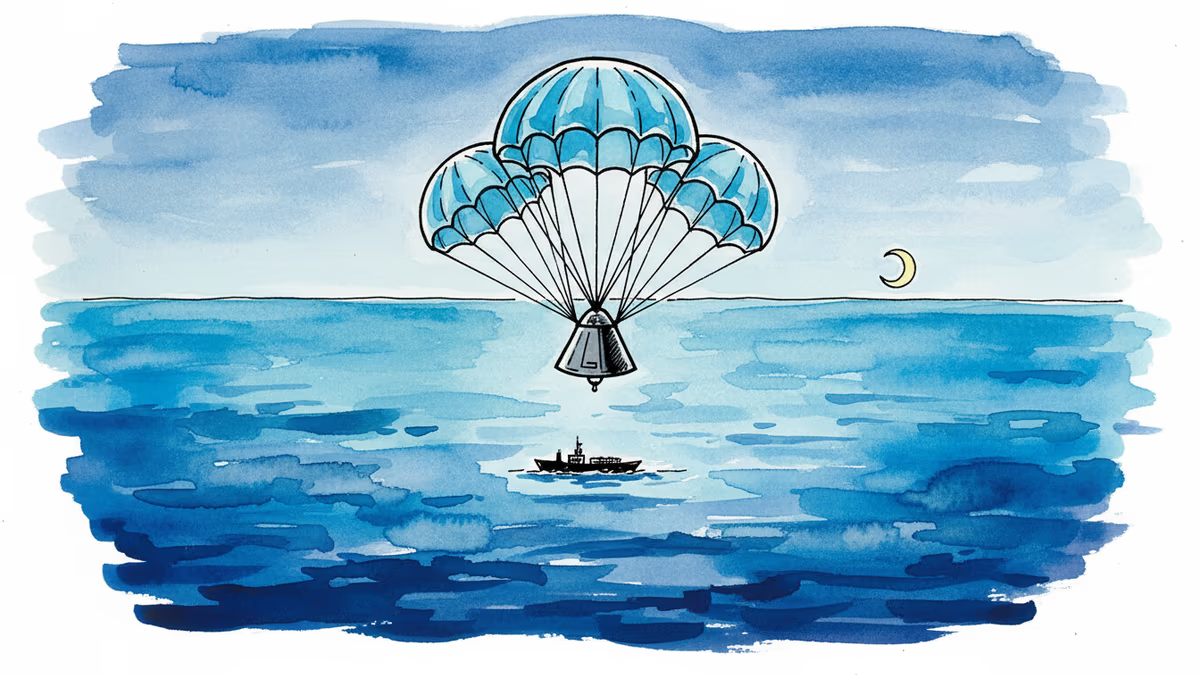
NASA's Orion capsule splashed down safely after humanity's first crewed lunar voyage in 54 years. The mission succeeded. Now the harder questions begin.
NASA's Artemis III has been redesigned as an Earth-orbit mission. SpaceX and Blue Origin say their landers won't be ready until late 2027. What does this mean for the future of lunar exploration?
Flying to Mars means navigating without trees, wind, or GPS. Here's the surprisingly elegant physics behind how spacecraft measure their own velocity in the void.
Artemis II splashed down successfully in the Pacific, marking humanity's first crewed deep space mission in over 50 years. But the harder question isn't whether we can go back — it's why we should.
NASA's Orion capsule splashed down safely after humanity's first crewed lunar voyage in 54 years. The mission succeeded. Now the harder questions begin.
Thoughts
Share your thoughts on this article
Sign in to join the conversation