

Moon Missions Will Push Astronauts to Physical Breaking Point
NASA's Artemis lunar missions will be far more physically demanding than Apollo, with heavier spacesuits and complex tasks creating an extreme challenge for astronauts' health and endurance.
Remember those iconic images of Apollo astronauts bouncing effortlessly across the lunar surface? Artemis crews won't have that luxury.
The message from Kate Rubins, a former NASA astronaut, was stark: lunar landings will be an "extreme physical event" for crews selected for the Artemis program's first Moon missions. Speaking to a panel of researchers, physicians, and engineers at the National Academies, Rubins painted a picture of unprecedented physical demands that will push human endurance to its limits.
Heavier Gear, Harder Tasks
The challenges start with the basics. Artemis astronauts will wear significantly heavier spacesuits than their Apollo predecessors, and NASA expects them to accomplish far more during their time on the lunar surface. While Apollo crews primarily focused on sample collection and basic exploration, Artemis astronauts will tackle complex, multi-faceted missions that demand sustained physical effort.
The Moon's gravity may be just one-sixth of Earth's, but hauling heavy equipment across the lunar terrain while performing intricate tasks will test even the fittest astronauts. The planned mission duration extends well beyond Apollo's brief surface stays, compounding the physical stress on crew members.
The Human Cost of Space Travel
Rubins outlined the familiar litany of spaceflight health risks: radiation exposure, muscle and bone atrophy, cardiovascular deconditioning, and immune system suppression. But Artemis missions will layer these challenges in ways we haven't seen before.

Astronauts will arrive at the Moon already weakened by the journey from Earth. Months of microgravity exposure will have reduced their muscle mass and bone density. Then they'll need to perform physically demanding work while encased in bulky protective gear on an alien world with no atmosphere and extreme temperature swings.
The Broader Space Economy Impact
These physical challenges aren't just medical concerns—they're reshaping the space industry. Companies developing life support systems, advanced spacesuits, and health monitoring technologies are seeing increased demand. The need for better human factors engineering is driving innovation across the aerospace sector.
SpaceX, Blue Origin, and other commercial space companies are watching NASA's findings closely. As private lunar missions become reality, understanding and mitigating these health risks will be crucial for mission success and crew safety. The lessons learned from Artemis will likely influence decades of human space exploration.
Training for the Ultimate Marathon
The implications extend to astronaut selection and training. Future lunar crews will need to be not just pilots and scientists, but elite athletes capable of sustained physical performance under extreme conditions. This could fundamentally change who gets selected for space missions and how they prepare.
Training programs are already evolving to address these challenges. Astronauts spend months building the specific muscle groups and cardiovascular fitness needed for lunar surface operations. But there's only so much Earth-based training can do to prepare humans for the unique stresses of working on another world.
Authors
Related Articles
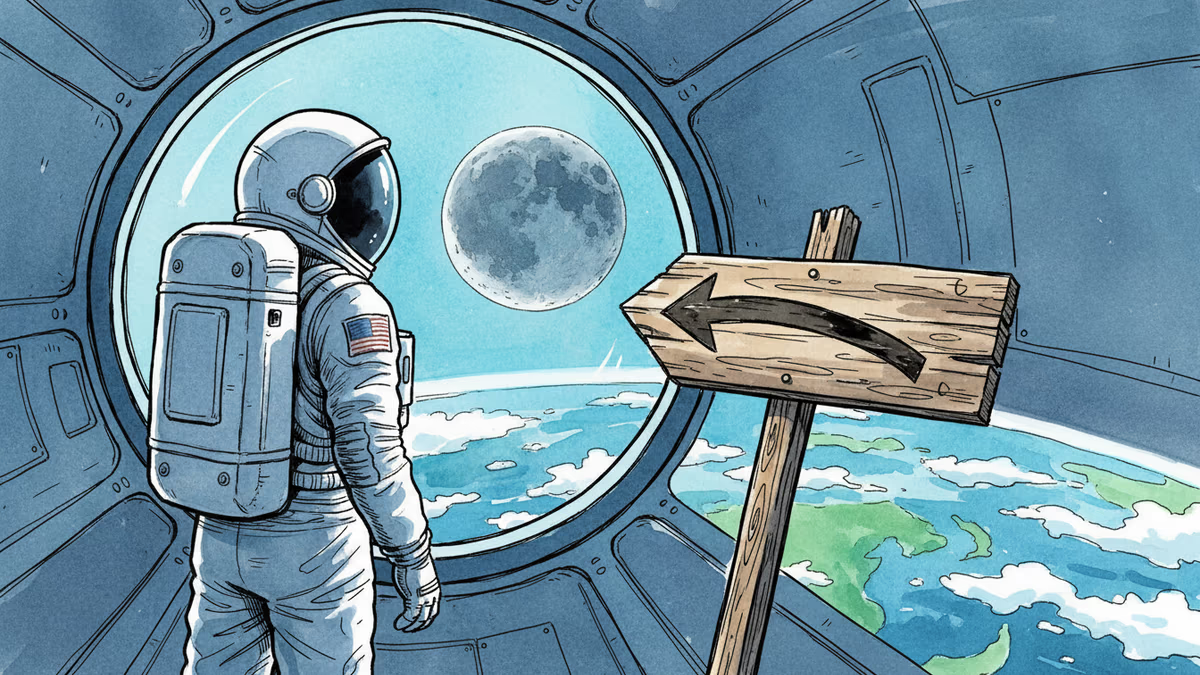
NASA's Artemis III has been redesigned as an Earth-orbit mission. SpaceX and Blue Origin say their landers won't be ready until late 2027. What does this mean for the future of lunar exploration?

Artemis II splashed down successfully in the Pacific, marking humanity's first crewed deep space mission in over 50 years. But the harder question isn't whether we can go back — it's why we should.
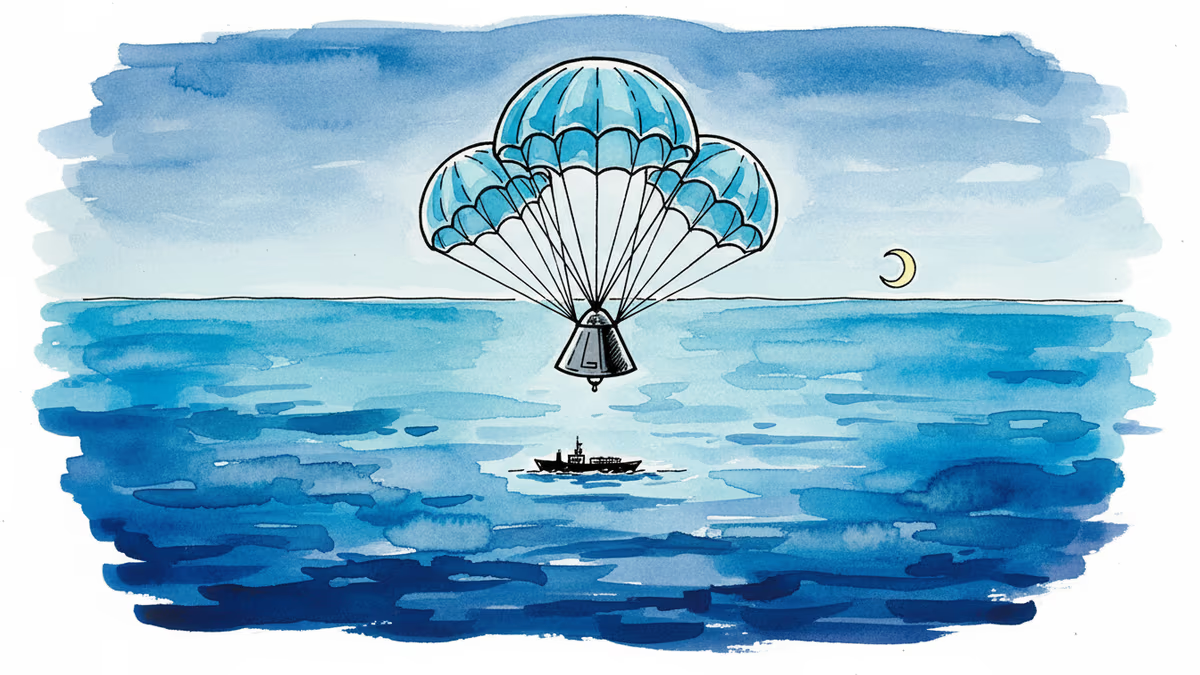
NASA's Orion capsule splashed down safely after humanity's first crewed lunar voyage in 54 years. The mission succeeded. Now the harder questions begin.
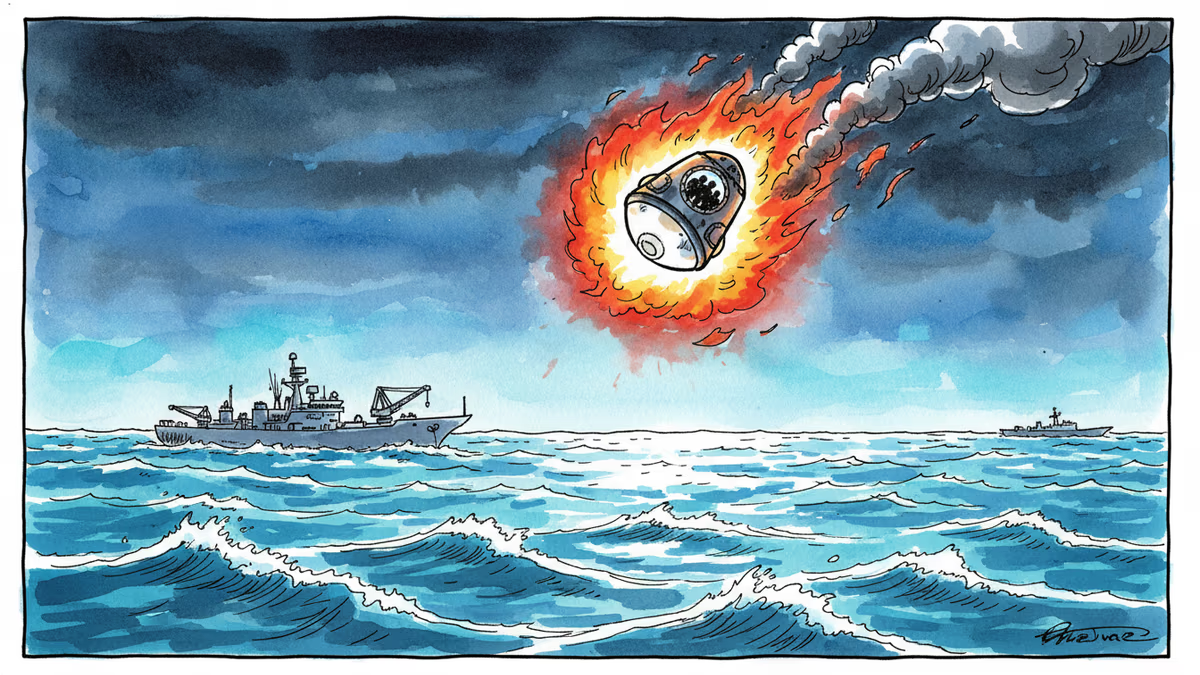
Artemis II's four astronauts are returning to Earth Friday night. The splashdown off Southern California isn't the anticlimax it sounds—it's the most technically perilous moment of the entire lunar journey.
NASA's Artemis III has been redesigned as an Earth-orbit mission. SpaceX and Blue Origin say their landers won't be ready until late 2027. What does this mean for the future of lunar exploration?
Artemis II splashed down successfully in the Pacific, marking humanity's first crewed deep space mission in over 50 years. But the harder question isn't whether we can go back — it's why we should.
NASA's Orion capsule splashed down safely after humanity's first crewed lunar voyage in 54 years. The mission succeeded. Now the harder questions begin.
Artemis II's four astronauts are returning to Earth Friday night. The splashdown off Southern California isn't the anticlimax it sounds—it's the most technically perilous moment of the entire lunar journey.
Thoughts
Share your thoughts on this article
Sign in to join the conversation