
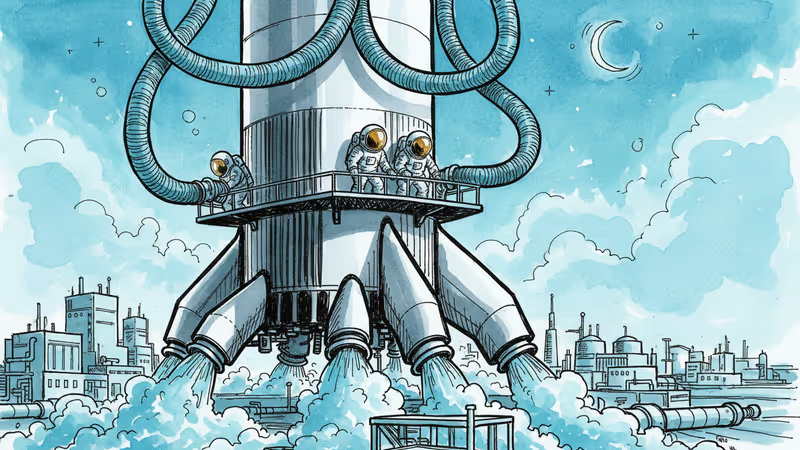
NASA's Final Countdown: 755,000 Gallons Before Moon Return
NASA conducts final wet dress rehearsal for Artemis II mission, loading massive amounts of fuel into the most powerful rocket ever built for human spaceflight.
755,000 gallons of super-cold rocket fuel will flow into NASA's most powerful rocket Monday. It's not the real launch—it's the final dress rehearsal before humanity returns to the Moon after more than half a century.
The Last Test Before History
The Wet Dress Rehearsal sounds mundane, but it's anything but. NASA's launch team at Kennedy Space Center will simulate every aspect of launch day except the actual liftoff. They'll load propellants, run through countdown procedures, and verify that all 40+ systems work in perfect harmony.
Charlie Blackwell-Thompson, NASA's launch director, calls this the "best risk reduction test" they have. She'll oversee the simulation from the Launch Control Center, the same room where Apollo missions were launched decades ago. The stakes couldn't be higher—four astronauts' lives will depend on getting every detail right.
The Space Launch System (SLS) rocket stands 322 feet tall, making it taller than the Statue of Liberty. It generates 8.8 million pounds of thrust at liftoff—more power than 13 Boeing 747s at full throttle. But raw power means nothing without precision and reliability.
Why This Mission Changes Everything
Artemis II isn't just about going to the Moon again. It's about proving humans can survive and work in deep space for extended periods. The four-person crew will spend nearly 10 days in the harsh environment beyond Earth's protective magnetosphere, facing radiation levels no human has experienced since 1972.

Unlike the Apollo missions, which were sprint-style national competitions, Artemis is designed for the long haul. NASA plans to establish a permanent lunar base, mine resources, and use the Moon as a stepping stone to Mars. The economic implications are staggering—the lunar economy could be worth $1 trillion by 2040, according to industry estimates.
Private companies are already positioning themselves. SpaceX will provide the lunar lander, while companies like Blue Origin and Lockheed Martin are developing infrastructure. Even smaller firms are finding niches—from life support systems to mining equipment.
The Geopolitical Space Race
While NASA prepares for Artemis II, China is advancing its own lunar ambitions. Their Chang'e program has successfully landed rovers on both sides of the Moon, and they're planning crewed lunar missions by 2030. This isn't just about scientific prestige—it's about who controls future lunar resources and establishes the rules for space commerce.
The Artemis Accords, signed by 29 countries including major allies, establish principles for peaceful lunar exploration. But China and Russia haven't signed on, preferring their own bilateral agreements. The Moon is becoming the next arena for great power competition.
For American taxpayers, the question is whether the $93 billion Artemis program is worth it. Critics argue the money could solve earthly problems like climate change or infrastructure. Supporters counter that space technology has historically driven innovation that benefits everyone—from GPS to weather forecasting to medical devices.
The Human Element
Behind all the technology and geopolitics are four astronauts who will risk their lives for this mission. Reid Wiseman, Victor Glover, Christina Hammock Koch, and Jeremy Hansen (representing Canada) have trained for years, knowing they'll be farther from Earth than any human in history.
Their mission profile is both thrilling and terrifying. They'll loop around the Moon's far side, where Earth disappears from view and radio contact is impossible. If something goes wrong, there's no rescue mission possible. They're truly on their own, just like the Apollo crews were.
Authors
Related Articles

NASA's Artemis III has been redesigned as an Earth-orbit mission. SpaceX and Blue Origin say their landers won't be ready until late 2027. What does this mean for the future of lunar exploration?

Artemis II splashed down successfully in the Pacific, marking humanity's first crewed deep space mission in over 50 years. But the harder question isn't whether we can go back — it's why we should.
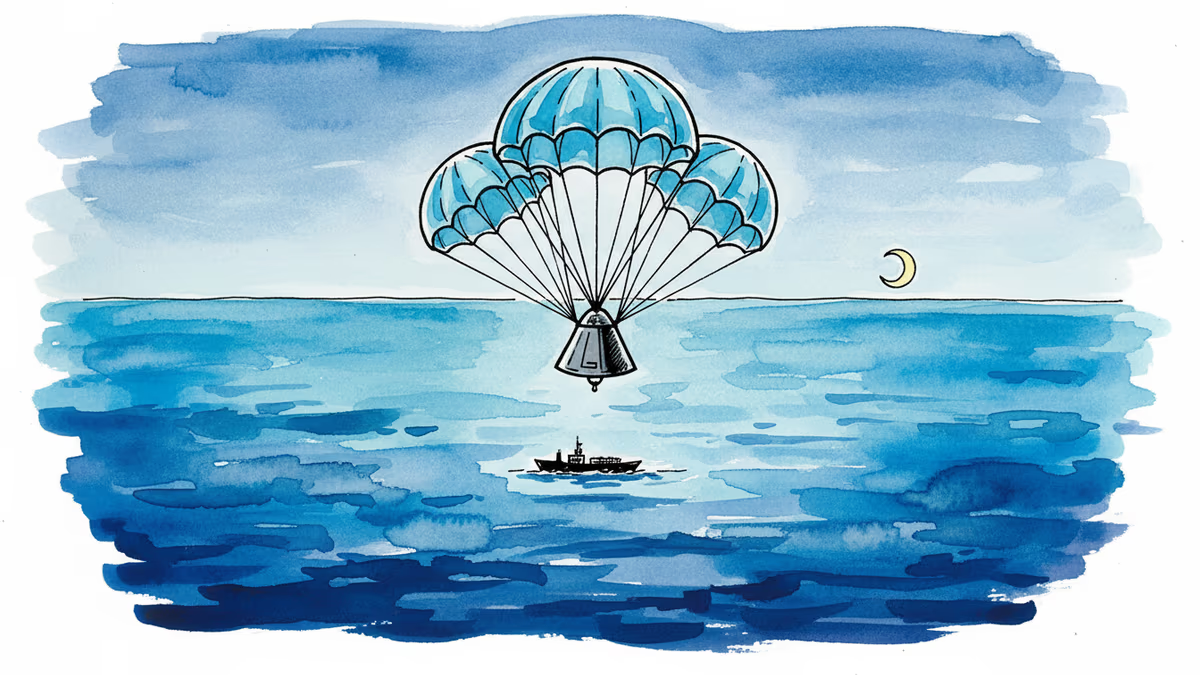
NASA's Orion capsule splashed down safely after humanity's first crewed lunar voyage in 54 years. The mission succeeded. Now the harder questions begin.
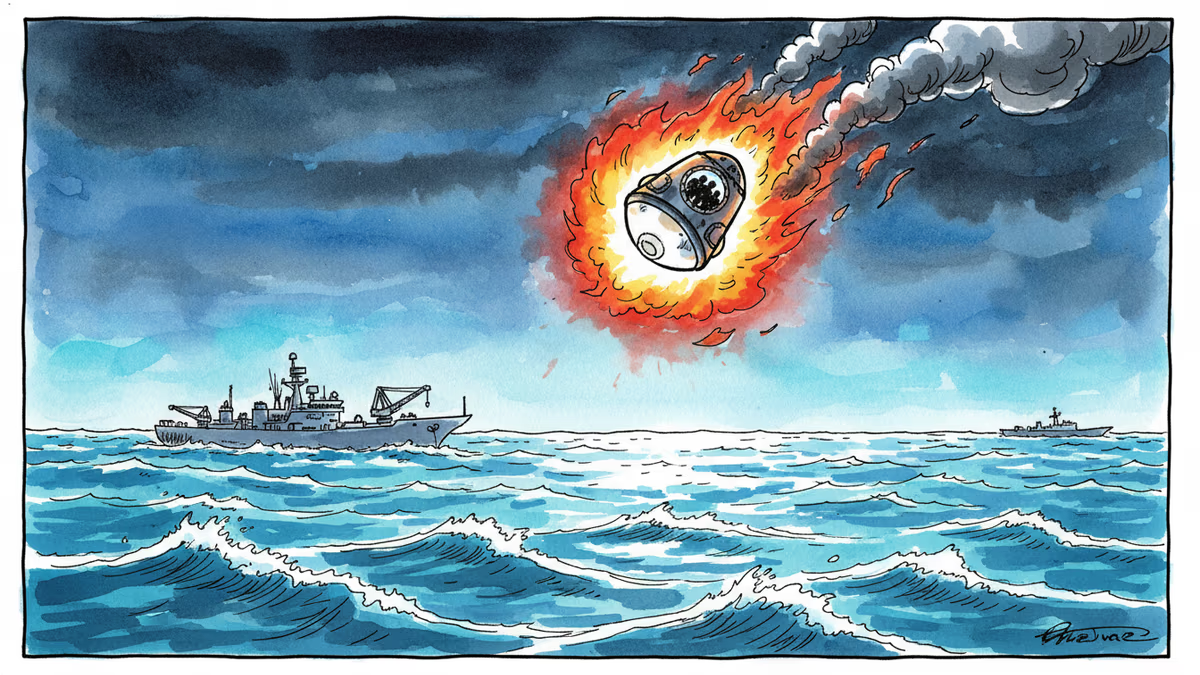
Artemis II's four astronauts are returning to Earth Friday night. The splashdown off Southern California isn't the anticlimax it sounds—it's the most technically perilous moment of the entire lunar journey.
NASA's Artemis III has been redesigned as an Earth-orbit mission. SpaceX and Blue Origin say their landers won't be ready until late 2027. What does this mean for the future of lunar exploration?
Artemis II splashed down successfully in the Pacific, marking humanity's first crewed deep space mission in over 50 years. But the harder question isn't whether we can go back — it's why we should.
NASA's Orion capsule splashed down safely after humanity's first crewed lunar voyage in 54 years. The mission succeeded. Now the harder questions begin.
Artemis II's four astronauts are returning to Earth Friday night. The splashdown off Southern California isn't the anticlimax it sounds—it's the most technically perilous moment of the entire lunar journey.
Thoughts
Share your thoughts on this article
Sign in to join the conversation