
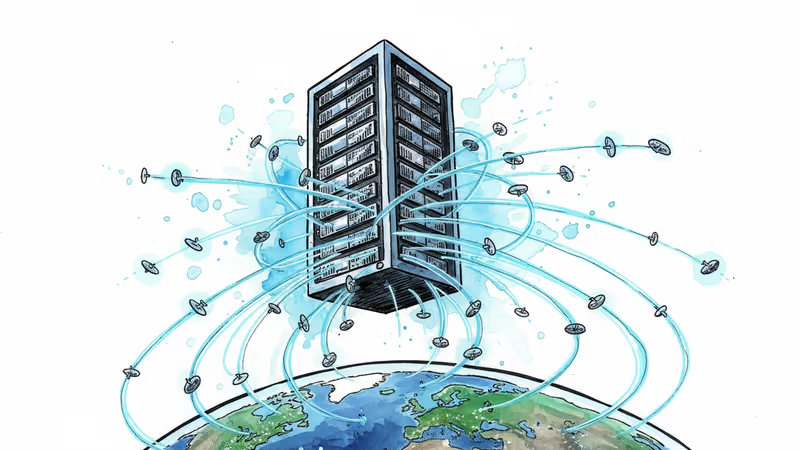
Why Musk Really Wants to Put AI Data Centers in Space
After SpaceX-xAI merger, orbital data center plans accelerate. Will space become the optimal location for AI computing by 2028? Analyzing Musk's ambitious strategy.
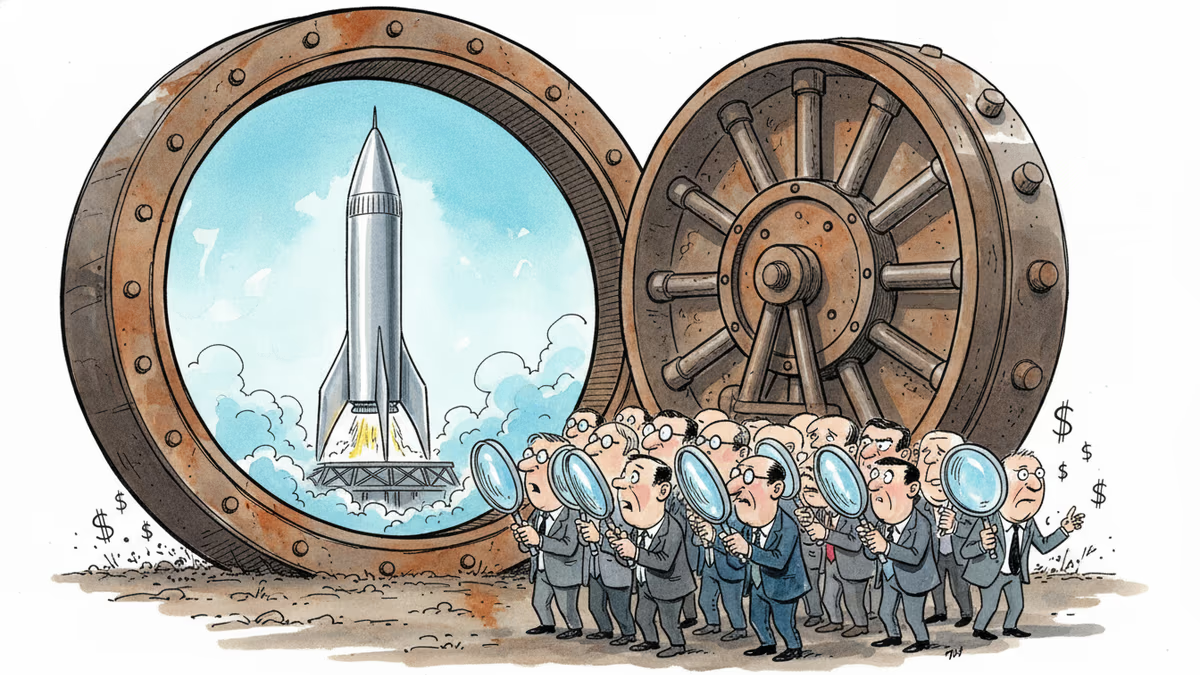
A million-satellite data center network orbiting Earth. What seemed like another Elon Musk fever dream just a week ago is rapidly becoming Silicon Valley's next big bet.
Last Friday's FCC filing from SpaceX wasn't just paperwork—it was a declaration of intent. Monday's official merger between SpaceX and xAI suddenly made the whole thing click. Wednesday brought FCC acceptance and a public comment schedule. The timeline is moving fast, and with FCC Chairman Brendan Carr publicly endorsing the filing on X, regulatory hurdles seem minimal.
The Economics of Space Computing
Musk laid out his case on Patrick Collison's "Cheeky Pint" podcast, and the logic is deceptively simple: solar panels produce five times more power in space than on Earth, slashing one of data centers' biggest operating expenses.
"It's harder to scale on the ground than it is to scale in space," Musk argued. "Any given solar panel is going to give you about five times more power in space than on the ground, so it's actually much cheaper to do in space."
But there's a gap in that reasoning. Power isn't the only cost in running a data center, and solar isn't the only way to power one. Guest Dwarkesh Patel pressed on practical issues like servicing failed GPUs during model training—a fair point when your repair shop is 250 miles up.
Musk wasn't deterred. He marked 2028 as the tipping point: "You can mark my words, in 36 months but probably closer to 30 months, the most economically compelling place to put AI will be space."
The Trillion-Dollar Space Race

The predictions get bolder. "Five years from now," Musk continued, "we will launch and be operating every year more AI in space than the cumulative total on Earth."
For context, global data center capacity will hit an estimated 200 GW by 2030—roughly $1 trillion worth of infrastructure. Musk is essentially proposing to relocate that entire industry to orbit.
The timing is convenient. With the new SpaceX-xAI conglomerate headed for an IPO in just months, orbital data centers make for compelling investor pitches. Tech companies are still pouring hundreds of billions into data center spending annually, and some of that money might indeed leave Earth's atmosphere.
Beyond the Hype: Real Challenges
The technical hurdles are substantial. Space-hardened hardware costs significantly more than terrestrial equivalents. Radiation shielding, thermal management in vacuum, and the complexity of maintenance all add layers of expense that Musk's solar panel math doesn't address.
Then there's latency. For many AI applications, the speed-of-light delay between Earth and orbital data centers could be problematic. Training massive language models might work fine in space, but real-time inference for consumer applications? That's trickier.
Regulatory questions loom large too. Who governs orbital data centers? How do privacy laws apply in space? What happens when a satellite full of sensitive data malfunctions?
The Bigger Game
Perhaps the most telling aspect isn't the technical feasibility but the business model. SpaceX makes money launching things into orbit. xAI needs massive computing power. An orbital data center network creates demand for both services while potentially undercutting terrestrial cloud providers.
It's a vertically integrated play that could reshape the entire AI infrastructure market. If successful, it positions Musk's companies at the center of the next computing paradigm. If it fails, well, SpaceX still gets paid for the launches.
Authors
Related Articles
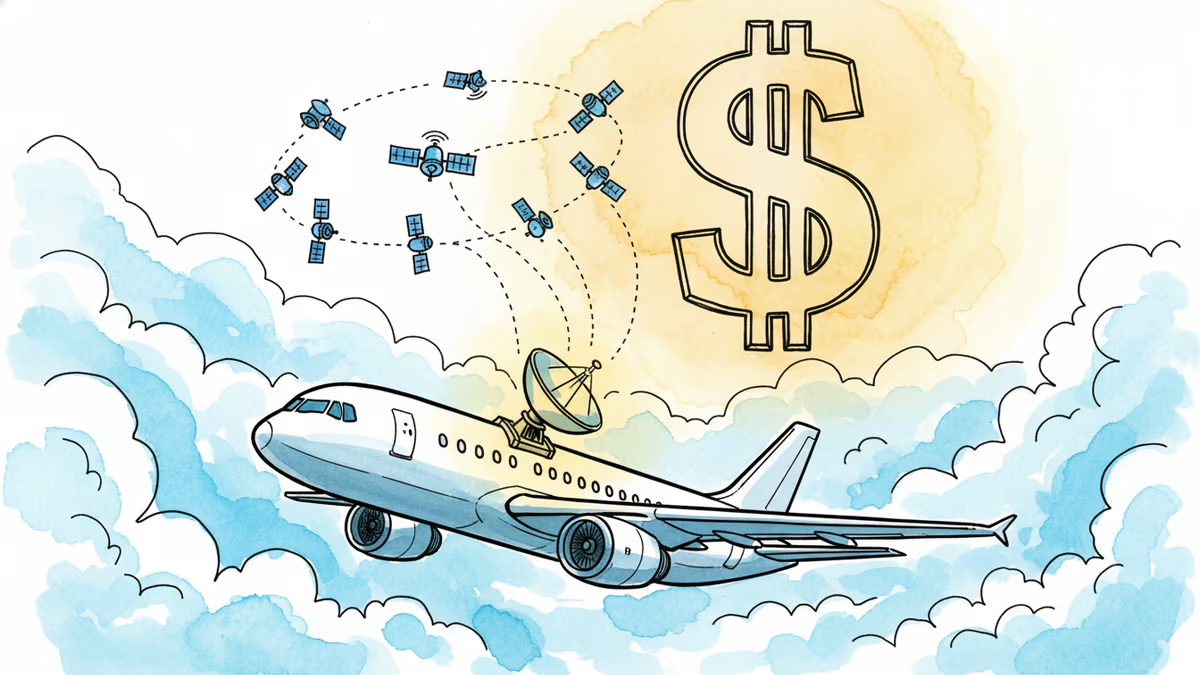
American Airlines just signed Starlink for 500+ aircraft. It's not just about faster inflight internet — it's a calculated move in the run-up to what could be the largest IPO in history.
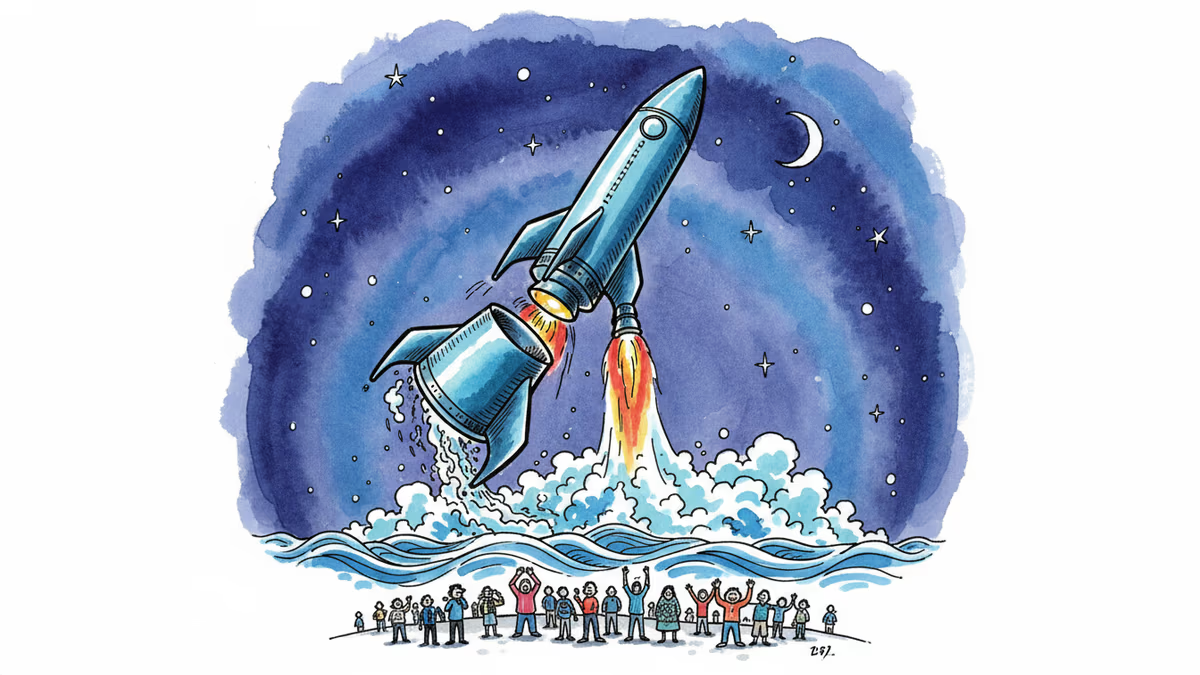
SpaceX's upgraded Starship V3 completed its first test flight, deploying 20 Starlink simulators but losing the Super Heavy booster. With an IPO weeks away, the stakes just got higher.
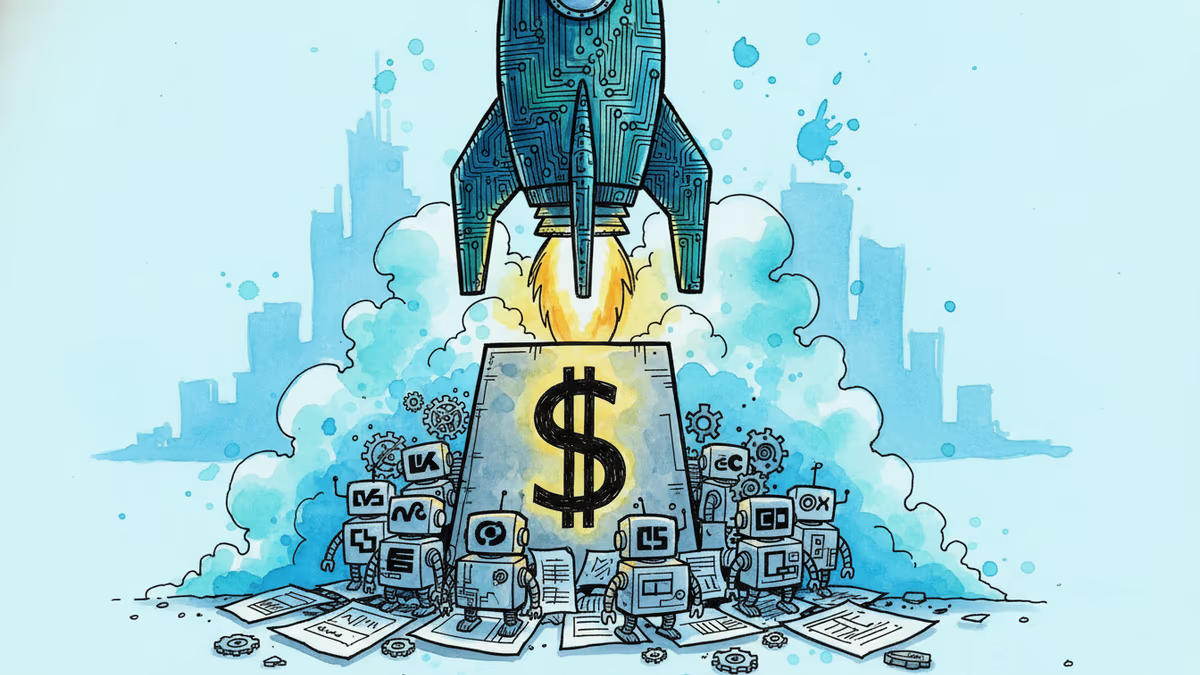
SpaceX's IPO filing puts AI at the center, claiming a $26.5 trillion market opportunity. But can Grok compete with OpenAI and Anthropic for enterprise customers?
SpaceX filed a nearly 400-page S-1 with the SEC, targeting an IPO as early as June 12. Here's what the filing reveals—and what it doesn't.
American Airlines just signed Starlink for 500+ aircraft. It's not just about faster inflight internet — it's a calculated move in the run-up to what could be the largest IPO in history.
SpaceX's upgraded Starship V3 completed its first test flight, deploying 20 Starlink simulators but losing the Super Heavy booster. With an IPO weeks away, the stakes just got higher.
SpaceX's IPO filing puts AI at the center, claiming a $26.5 trillion market opportunity. But can Grok compete with OpenAI and Anthropic for enterprise customers?
SpaceX filed a nearly 400-page S-1 with the SEC, targeting an IPO as early as June 12. Here's what the filing reveals—and what it doesn't.
Thoughts
Share your thoughts on this article
Sign in to join the conversation