
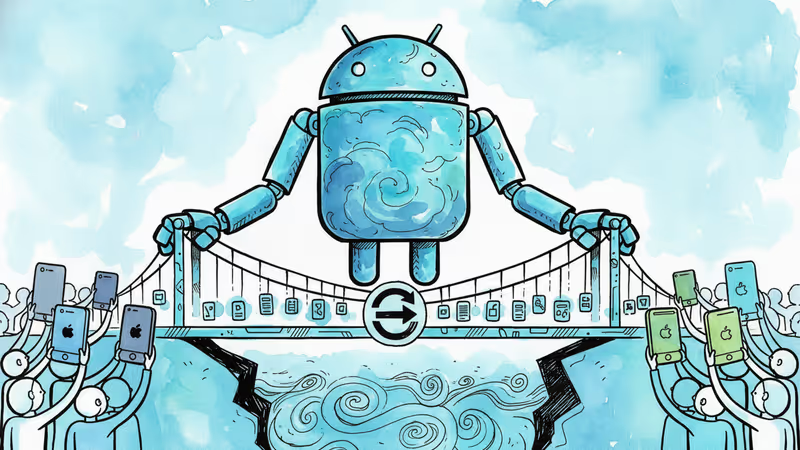
Google's AirDrop Gambit Could End Apple's File-Sharing Monopoly
Google plans major AirDrop expansion across Android devices in 2026, following Pixel 10's breakthrough. The move challenges Apple's 15-year ecosystem lock-in strategy.
For 15 years, iPhone users have enjoyed a superpower that Android users could only watch enviously: tapping a few buttons to instantly share photos, documents, or videos with nearby Apple devices. AirDrop wasn't just a feature—it was a moat around Apple's ecosystem.
That moat is starting to crack. After Google quietly enabled basic AirDrop support on Pixel 10 devices last year, the company is now planning a major expansion. Eric Kay, Google's VP of engineering for Android, outlined the roadmap at a Taipei office event: 2026 will see AirDrop support roll out to many more Android phones.
The $1.4 Trillion Lock-In Strategy
Apple's approach has always been elegant in its simplicity: make switching away from iPhone so inconvenient that users stay trapped—sorry, "engaged"—within the ecosystem. AirDrop was perhaps the most effective piece of this puzzle. Try explaining to your iPhone-using family why you can't receive their vacation photos directly, and you'll understand the frustration.
The numbers tell the story. Apple commands roughly 30% of the global smartphone market but captures over 50% of industry profits. That premium largely stems from ecosystem stickiness—features like AirDrop that work seamlessly within Apple's walled garden but create friction everywhere else.
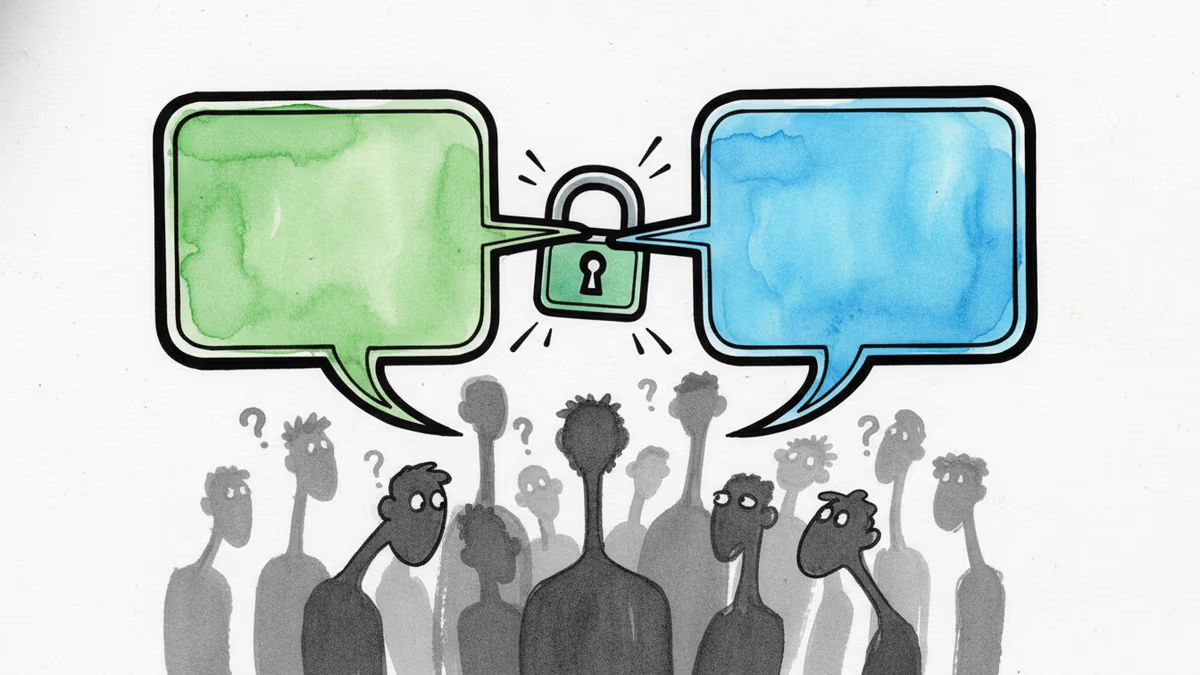
Google tried to counter with Nearby Share, but it only worked between Android devices. With 2.5 billion Android users worldwide cut off from 1.4 billion iPhone users, file sharing remained a tale of two incompatible worlds.
Breaking the Protocol Barrier
Google's breakthrough with Pixel 10 wasn't just about adding a feature—it required reverse-engineering Apple's proprietary protocols. This represents a significant technical achievement, considering Apple has never published AirDrop specifications or encouraged third-party adoption.
Currently, the integration is one-way: Pixel 10 users can send files to iPhones, but iPhone users can't initiate transfers to Android devices. It's progress, but incomplete progress. The 2026 expansion promises to address these limitations while extending support beyond Google's own hardware.

Samsung's Strategic Dilemma
Samsung finds itself in an interesting position. As the world's largest Android manufacturer, with over 270 million phones shipped annually, Samsung's participation could make or break Google's AirDrop ambitions.
The Korean giant already operates Quick Share, its own file-transfer system that works across Samsung devices and select Android phones. Adopting Google's AirDrop implementation would mean acknowledging that cross-platform compatibility matters more than proprietary advantages.
For Samsung, the calculation is complex. Supporting AirDrop could help Galaxy users who frequently interact with iPhone users—a significant portion of the premium smartphone market. But it also means ceding some control over the user experience to Google's implementation.
Apple's Response Playbook
Apple faces what strategists call a "damned if you do, damned if you don't" scenario. Maintaining AirDrop exclusivity preserves ecosystem lock-in but risks regulatory scrutiny and user frustration. Opening up the protocol could reduce switching costs but might weaken one of iOS's key differentiators.
The company's recent moves suggest a gradual shift toward openness—likely driven by regulatory pressure rather than strategic choice. The 2024 adoption of USB-C, App Store policy changes in the EU, and increased interoperability features all point to a company adapting to a world where complete ecosystem control is becoming harder to maintain.
The Bigger Platform War
This battle extends far beyond file sharing. Google, Apple, Microsoft, and others are all grappling with the same fundamental question: In an increasingly connected world, how much isolation can platforms maintain before users revolt?
The stakes are enormous. Platform lock-in generates hundreds of billions in recurring revenue through app stores, subscriptions, and hardware upgrades. But younger users, who've grown up expecting seamless connectivity, are increasingly frustrated by artificial barriers between devices.
Authors
Related Articles
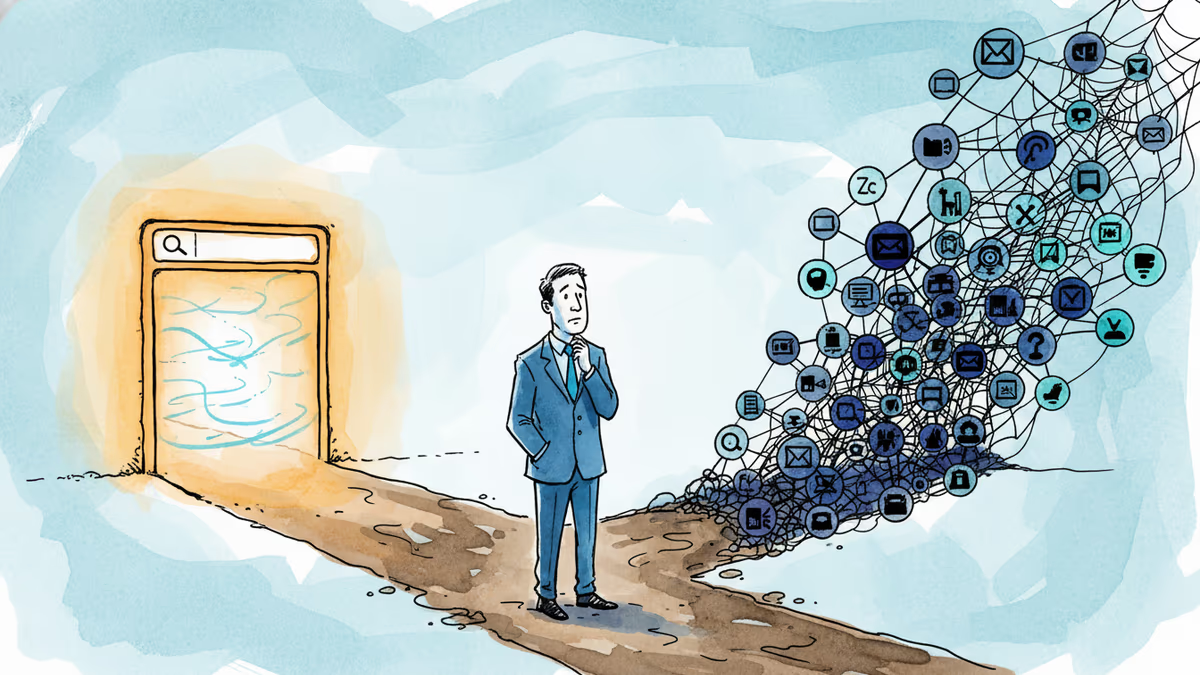
In a post-Google I/O interview, Sundar Pichai acknowledged flawed search results, real AI anxiety, and an AGI timeline that makes the label irrelevant. Here's what he said — and what it means.
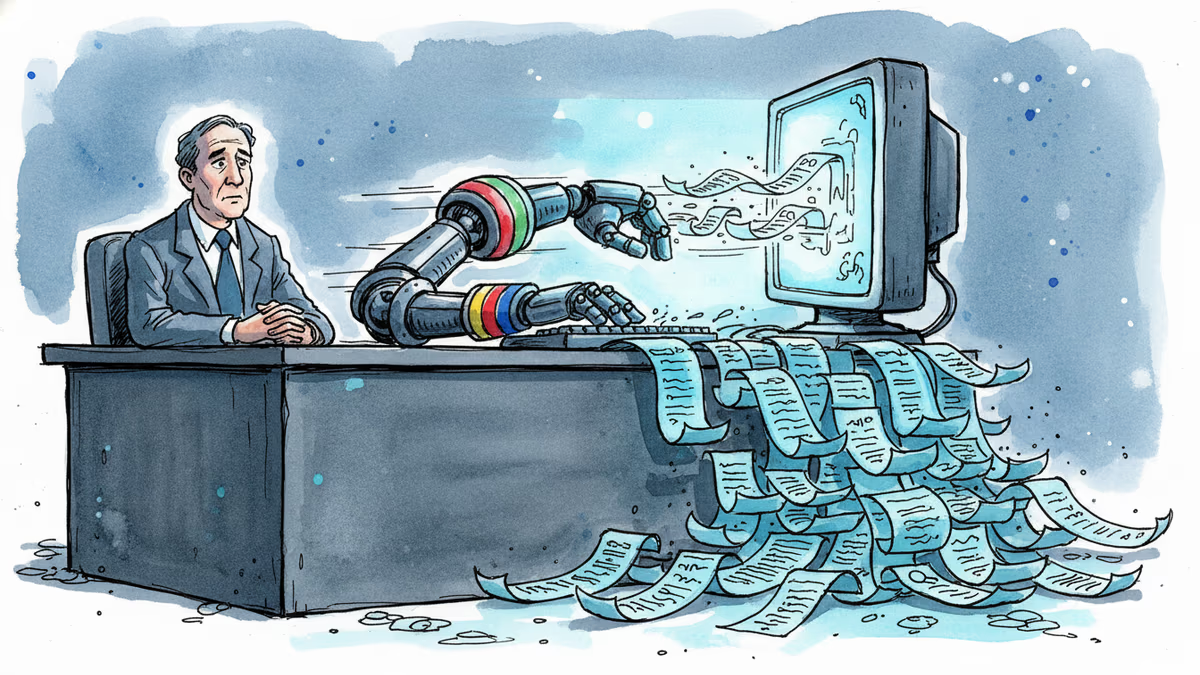
Google is building AI agents that search the web proactively, without user prompting. That's not just a product update — it's a fundamental shift in who controls the information you receive.
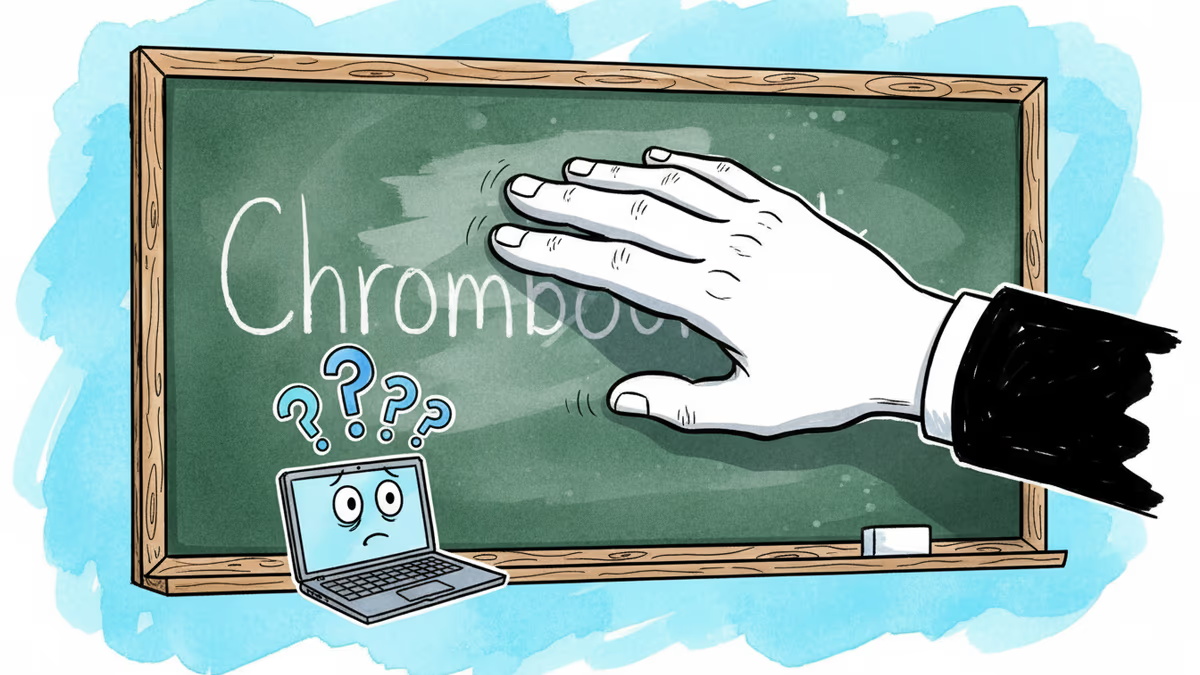
Google unveiled the 'Googlebook' platform to replace Chromebook and ChromeOS—but revealed zero hardware specs. What's the strategy, and what does it mean for users, manufacturers, and the education market?
After 15 years of fragmented mobile messaging, Apple and Google are rolling out end-to-end encrypted RCS messaging between iPhones and Android devices. Here's what changed, why it took so long, and what it means for your privacy.
In a post-Google I/O interview, Sundar Pichai acknowledged flawed search results, real AI anxiety, and an AGI timeline that makes the label irrelevant. Here's what he said — and what it means.
Google is building AI agents that search the web proactively, without user prompting. That's not just a product update — it's a fundamental shift in who controls the information you receive.
Google unveiled the 'Googlebook' platform to replace Chromebook and ChromeOS—but revealed zero hardware specs. What's the strategy, and what does it mean for users, manufacturers, and the education market?
After 15 years of fragmented mobile messaging, Apple and Google are rolling out end-to-end encrypted RCS messaging between iPhones and Android devices. Here's what changed, why it took so long, and what it means for your privacy.
Thoughts
Share your thoughts on this article
Sign in to join the conversation