
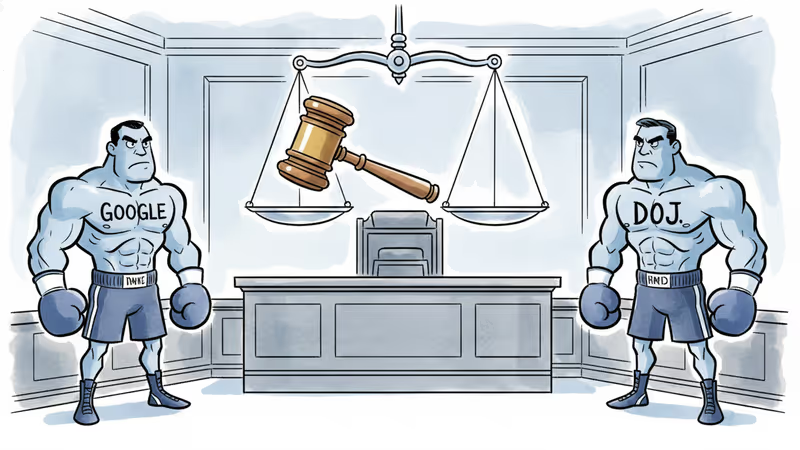
Google and DOJ Both Appeal Search Monopoly Ruling, Setting Up Legal Marathon
Both Google and the Department of Justice file appeals in the landmark search monopoly case, signaling years more of legal battles ahead over big tech regulation.
Both sides are doubling down. On Tuesday, the Department of Justice filed a cross-appeal in the landmark antitrust case against Google, just weeks after the tech giant filed its own appeal of Judge Amit Mehta's ruling that found Google illegally monopolized internet search.
The DOJ's move signals that neither side is satisfied with the court's remedies—and that this legal battle is far from over.
What the Court Ordered vs. What Each Side Wanted
Last year, DC District Court Judge Amit Mehta delivered a split decision that pleased no one completely. He ruled that Google had indeed illegally monopolized search and search advertising, but the remedies he ordered were relatively modest: requiring Google to share search data with competitors and barring exclusive deals that cement Google's dominance.
For Google, even these measures go too far. The company argues it earned its 90%+ market share through superior technology and user preference, not illegal tactics. Google's appeal seeks to overturn the monopoly finding entirely and halt all remedies.
The DOJ, meanwhile, wanted much stronger medicine. The department had pushed for more dramatic structural changes that could have forced Google to divest parts of its search business or fundamentally alter how it operates. By cross-appealing, the DOJ is essentially saying: "We won, but not enough."
The Stakes Beyond Search

This case represents the most significant antitrust action against a tech giant in decades, and its outcome will likely influence how regulators approach other big tech companies. Microsoft, Apple, Amazon, and Meta are all watching closely, as are regulators in Europe and Asia who are pursuing their own cases against American tech giants.
The appeals process means the current remedies are effectively paused, and a final resolution could take several more years as the case works its way through higher courts. During this time, Google maintains its current business practices while the legal uncertainty continues.
What This Means for Competition and Innovation
The dual appeals highlight a fundamental tension in antitrust law: How do you balance protecting competition without stifling innovation? Google's defenders argue that breaking up successful companies or forcing them to share proprietary data could reduce incentives to innovate.
Critics counter that Google's dominance comes not just from better technology, but from using its massive resources to block competitors. The company pays Apple an estimated $15-20 billion annually to be the default search engine on iPhones—a sum so large that potential competitors can't match it.
For consumers, the implications are complex. Google's search quality has generally improved over time, and users seem satisfied with the service. But reduced competition might mean slower innovation and fewer choices in the long run.
The Broader Regulatory Landscape
This case is unfolding as governments worldwide are taking a harder line on big tech. The European Union has implemented the Digital Markets Act, which imposes specific obligations on "gatekeeper" platforms. China has cracked down on its own tech giants. And bipartisan sentiment in the US Congress has grown more skeptical of concentrated tech power.
The Google case could set precedents for how courts balance innovation incentives against competitive concerns in the digital age. It's also testing whether traditional antitrust tools designed for industrial-age monopolies can effectively address platform-based market power.
Authors
Related Articles

In a post-Google I/O interview, Sundar Pichai acknowledged flawed search results, real AI anxiety, and an AGI timeline that makes the label irrelevant. Here's what he said — and what it means.
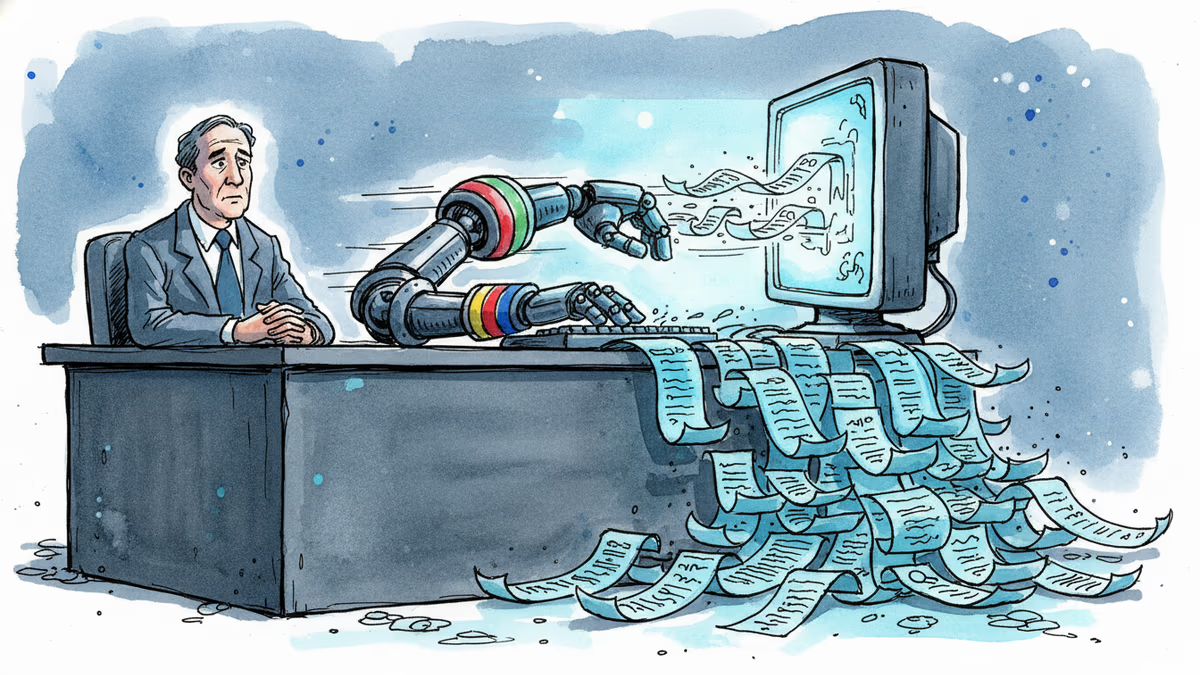
Google is building AI agents that search the web proactively, without user prompting. That's not just a product update — it's a fundamental shift in who controls the information you receive.
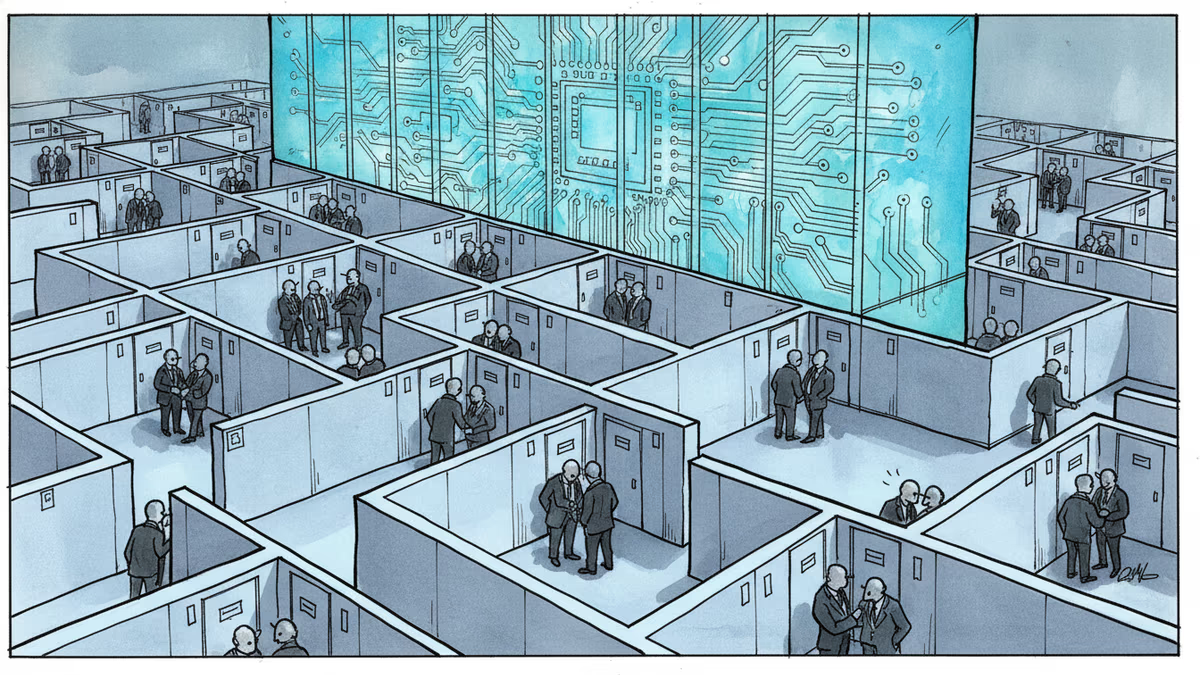
Behind every congressional hearing on Big Tech, there's a quieter room where the real rules get negotiated. As AI regulation, antitrust battles, and privacy law converge on Capitol Hill in 2026, the stakes have never been higher.

Google unveiled the 'Googlebook' platform to replace Chromebook and ChromeOS—but revealed zero hardware specs. What's the strategy, and what does it mean for users, manufacturers, and the education market?
In a post-Google I/O interview, Sundar Pichai acknowledged flawed search results, real AI anxiety, and an AGI timeline that makes the label irrelevant. Here's what he said — and what it means.
Google is building AI agents that search the web proactively, without user prompting. That's not just a product update — it's a fundamental shift in who controls the information you receive.
Behind every congressional hearing on Big Tech, there's a quieter room where the real rules get negotiated. As AI regulation, antitrust battles, and privacy law converge on Capitol Hill in 2026, the stakes have never been higher.
Google unveiled the 'Googlebook' platform to replace Chromebook and ChromeOS—but revealed zero hardware specs. What's the strategy, and what does it mean for users, manufacturers, and the education market?
Thoughts
Share your thoughts on this article
Sign in to join the conversation