
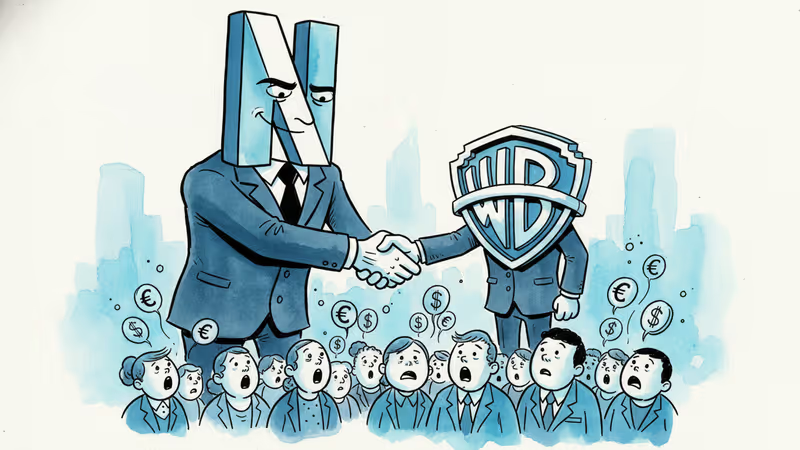
Netflix's Bold Promise: Mega-Merger Will Cut Your Bills
Netflix CEO tells Senate that acquiring Warner Bros. Discovery would lower prices, not raise them. But can the streaming giant convince skeptical regulators?
Netflix co-CEO Ted Sarandos stood before skeptical senators today with a counterintuitive promise: let us buy Warner Bros. Discovery, and we'll actually make streaming cheaper for everyone.
Speaking at a US Senate Judiciary hearing examining the proposed acquisition, Sarandos argued that combining Netflix's301.63 million subscribers with WBD's128 million streaming users wouldn't create a monopoly—it would create efficiencies that benefit consumers through lower prices.
The Case Against Consolidation
The Senate Subcommittee on Antitrust isn't buying it yet. Their core concern mirrors what happened when cable companies consolidated decades ago: fewer players, higher prices, less innovation.
Netflix already dominates subscription video-on-demand with nearly 302 million global subscribers. Adding Warner Bros. Discovery's content library—which includes HBO, Discovery+, and major film studios—would create an entertainment behemoth controlling both distribution and production at unprecedented scale.
Senators questioned whether this concentration would eliminate the competitive pressure that currently keeps streaming prices in check. After all, Netflix has already raised prices multiple times in recent years, and competitors like Disney+ and Apple TV+ have followed suit.

Netflix's Efficiency Argument
Sarandos countered with an economics lesson about scale and competition. His argument: bigger doesn't always mean more expensive when you're competing in a global market against tech giants like Amazon, Apple, and Google.
The Netflix executive emphasized that streaming success depends on content quality and user experience, not just market share. He suggested that combining Netflix's technology platform with WBD's content creation capabilities would reduce operational costs—savings that could be passed to consumers.
This echoes similar promises made during other media mergers, though critics note that AT&T's acquisition of Time Warner (later sold to become Warner Bros. Discovery) didn't exactly deliver on cost-saving promises to consumers.
The Global Competition Reality
Sarandos may have a point about international competition. While Netflix dominates in many markets, it faces fierce competition from local players worldwide. In India, it competes with Disney+ Hotstar. In China, it's blocked entirely. Even in the US, YouTube, TikTok, and gaming platforms vie for the same screen time.
The streaming landscape has also evolved beyond simple subscription models. Ad-supported tiers, live sports, and bundling with other services have created a complex ecosystem where traditional market share metrics may not tell the whole story.
Authors
Related Articles
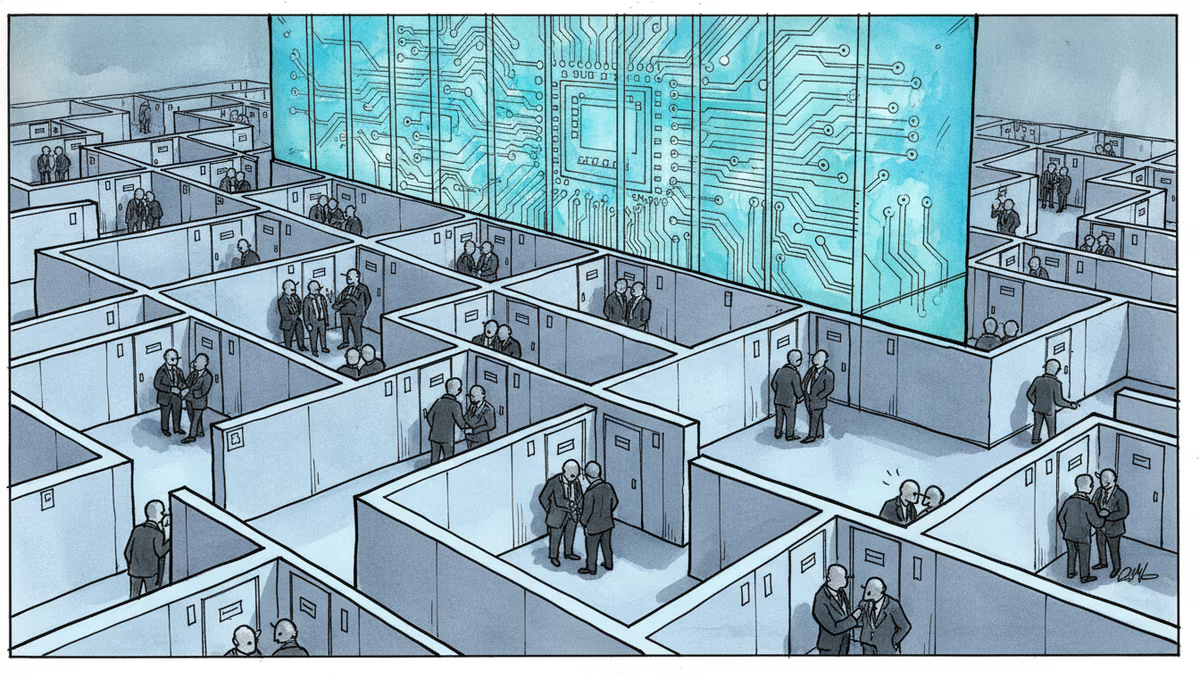
Behind every congressional hearing on Big Tech, there's a quieter room where the real rules get negotiated. As AI regulation, antitrust battles, and privacy law converge on Capitol Hill in 2026, the stakes have never been higher.
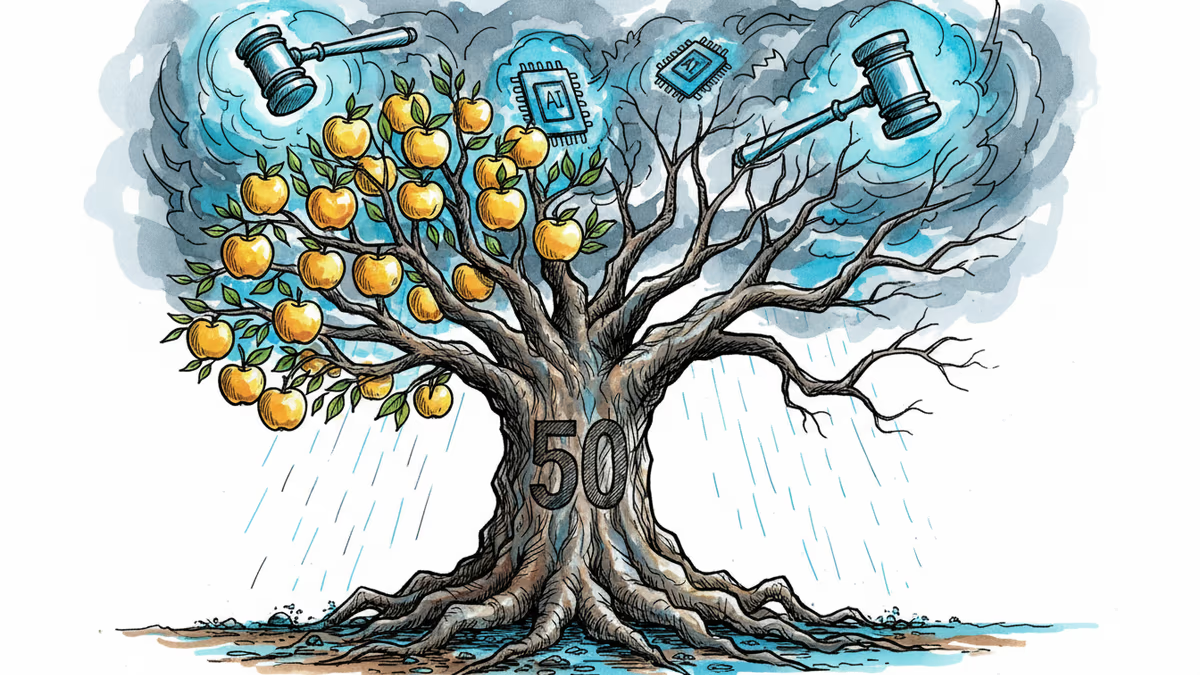
Apple hits its 50th birthday with a $3 trillion valuation — but AI struggles, antitrust pressure, and a quiet innovation drought are raising real questions about what comes next.
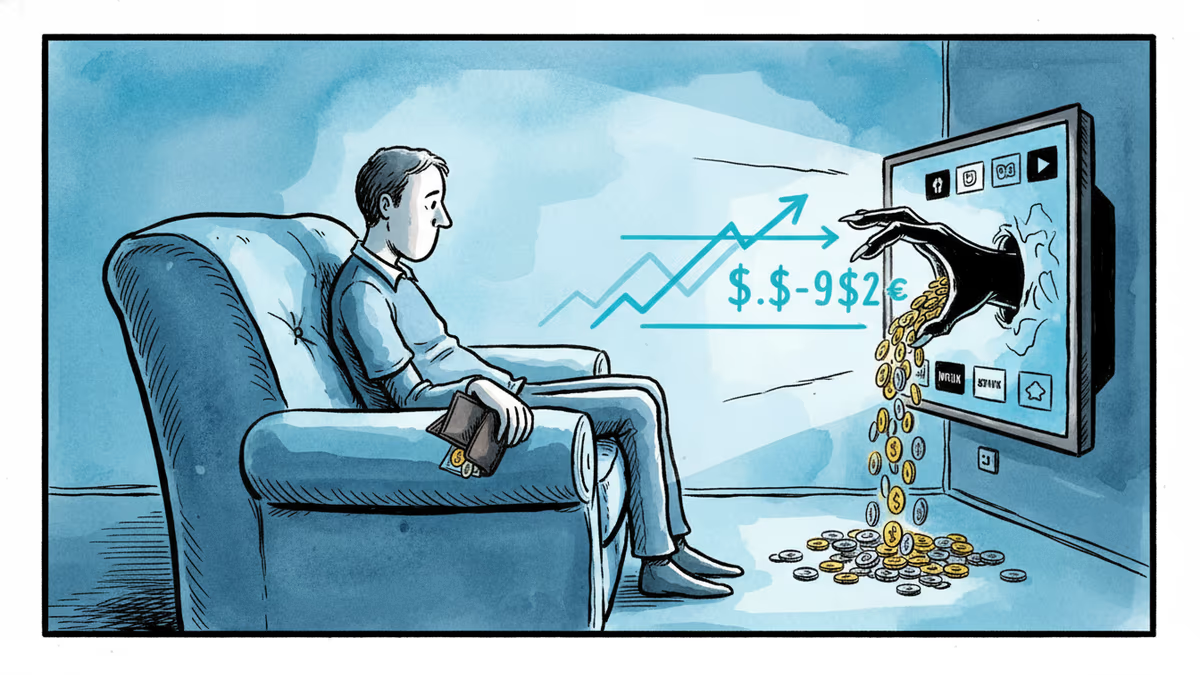
Netflix has hiked prices across all plans, including its ad-supported tier, just 14 months after its last increase. What this means for subscribers, competitors, and the future of streaming economics.
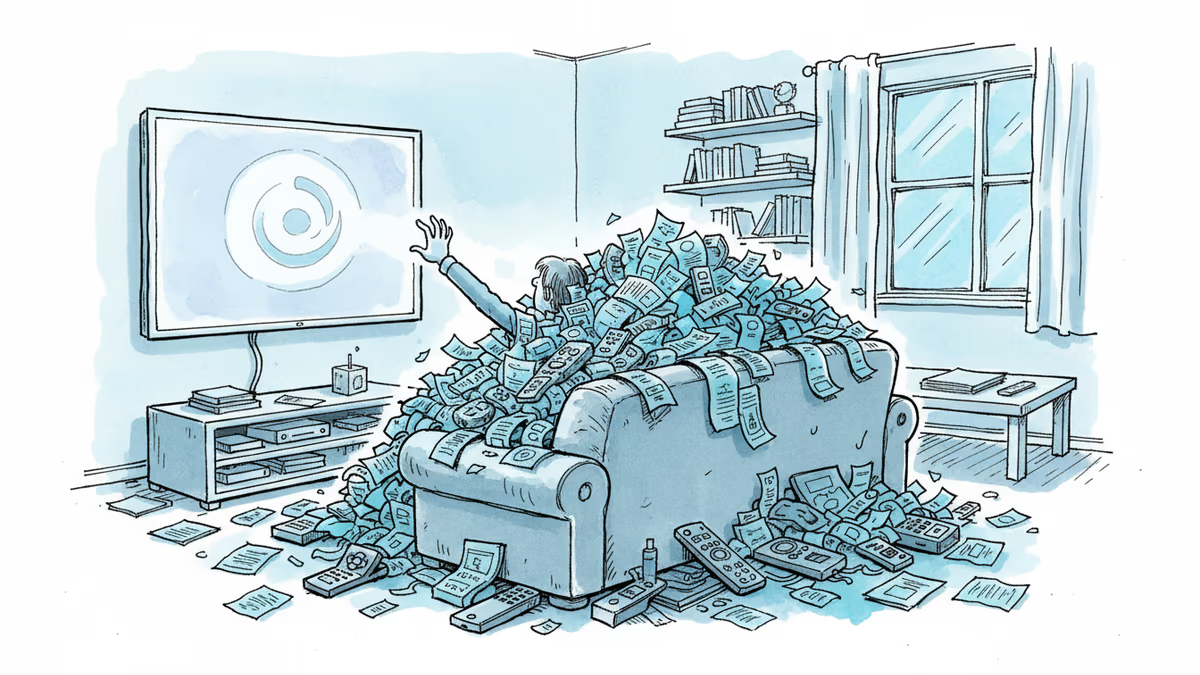
Streaming prices have doubled in a decade. Netflix, Disney, HBO Max — every platform is charging more and adding ads. Here's why, and what it means for you.
Behind every congressional hearing on Big Tech, there's a quieter room where the real rules get negotiated. As AI regulation, antitrust battles, and privacy law converge on Capitol Hill in 2026, the stakes have never been higher.
Apple hits its 50th birthday with a $3 trillion valuation — but AI struggles, antitrust pressure, and a quiet innovation drought are raising real questions about what comes next.
Netflix has hiked prices across all plans, including its ad-supported tier, just 14 months after its last increase. What this means for subscribers, competitors, and the future of streaming economics.
Streaming prices have doubled in a decade. Netflix, Disney, HBO Max — every platform is charging more and adding ads. Here's why, and what it means for you.
Thoughts
Share your thoughts on this article
Sign in to join the conversation