
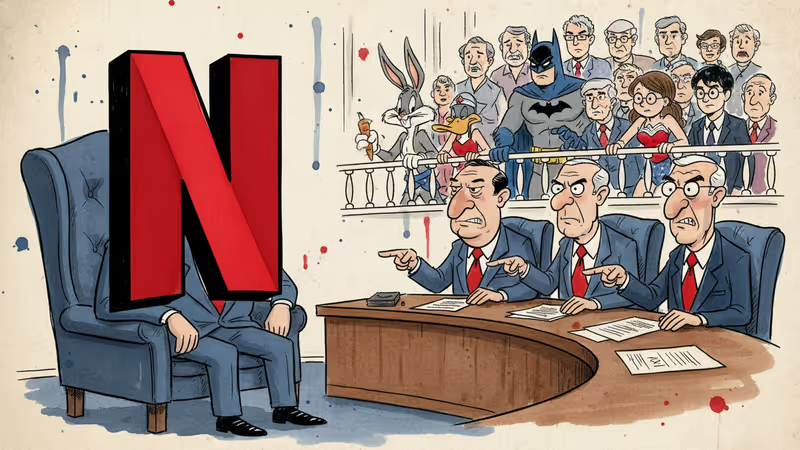
Netflix's Warner Bros Deal Becomes a Congressional Culture War Battleground
Netflix CEO Ted Sarandos faced unexpected scrutiny over 'woke' programming during a Senate hearing about the company's Warner Bros acquisition plans. What this reveals about streaming's political dimension.
Netflix CEO Ted Sarandos walked into a Senate hearing expecting to discuss market concentration and consumer prices. Instead, he found himself defending transgender characters and "woke" programming choices.
When Antitrust Meets Culture Wars
Tuesday's Senate Judiciary antitrust subcommittee hearing was supposed to focus on Netflix's bid to acquire parts of Warner Bros Discovery. Senators did raise traditional merger concerns—higher consumer costs, fewer theatrical releases, potential job losses in entertainment. But a significant portion of the session centered on Netflix's content choices, particularly shows featuring LGBTQ+ characters.
This unexpected turn reveals how America's culture wars have infiltrated even corporate merger reviews. Republican senators questioned whether Netflix's programming agenda should factor into antitrust decisions, while Sarandos defended creative freedom and audience diversity.
The hearing exposed a new reality: when platforms become powerful enough to shape cultural narratives, their content choices become political lightning rods.
The Real Stakes Behind the Deal
Netflix's interest in Warner Bros Discovery assets isn't just about adding HBO Max subscribers or Discovery+ documentaries. It's about securing premium content libraries and, crucially, theatrical distribution networks that could challenge Disney and Amazon's integrated entertainment empires.

The streaming giant currently spends over $17 billion annually on content but lacks the theatrical muscle that Warner Bros brings. Acquiring Warner's film studio operations would give Netflix control over the entire pipeline—from production to streaming to cinema screens.
This vertical integration strategy could reshape how audiences consume entertainment. Imagine Netflix originals getting full theatrical releases before streaming, or exclusive early access for subscribers. The traditional "windows" separating theaters and streaming could collapse entirely.
Regulatory Complexity in a Polarized Era
The merger review process has become exponentially more complex. Antitrust officials must now weigh market concentration alongside content ideology—a challenge that didn't exist when media companies produced more politically neutral entertainment.
Netflix's270 million global subscribers give it unprecedented influence over cultural conversations. When senators question whether a company with such reach should expand further while producing "controversial" content, they're essentially asking: should political alignment influence business regulation?
This precedent could affect future media mergers. Will Disney's family-friendly brand help or hurt its expansion plans? Could Amazon's perceived political neutrality become a competitive advantage in regulatory reviews?
The Global Implications
While American politicians debate Netflix's domestic content choices, the company's international expansion continues unabated. A strengthened Netflix-Warner entity would have even greater resources to compete with local streaming services worldwide and fund non-English content production.
For international markets, this could mean more investment in local programming—or greater homogenization under American cultural exports. The outcome may depend on whether regulatory approval comes with content-related conditions.
Authors
Related Articles
Netflix has hiked prices across all plans, including its ad-supported tier, just 14 months after its last increase. What this means for subscribers, competitors, and the future of streaming economics.
Streaming prices have doubled in a decade. Netflix, Disney, HBO Max — every platform is charging more and adding ads. Here's why, and what it means for you.
The first full trailer for Denis Villeneuve's Dune: Part Three reveals Paul and Chani awaiting twins — a detail that carries enormous weight for fans of Frank Herbert's novels.
Netflix acquired Ben Affleck's AI company InterPositive, signaling a major shift in how streaming giants plan to revolutionize content production and compete in Hollywood.
Netflix has hiked prices across all plans, including its ad-supported tier, just 14 months after its last increase. What this means for subscribers, competitors, and the future of streaming economics.
Streaming prices have doubled in a decade. Netflix, Disney, HBO Max — every platform is charging more and adding ads. Here's why, and what it means for you.
The first full trailer for Denis Villeneuve's Dune: Part Three reveals Paul and Chani awaiting twins — a detail that carries enormous weight for fans of Frank Herbert's novels.
Netflix acquired Ben Affleck's AI company InterPositive, signaling a major shift in how streaming giants plan to revolutionize content production and compete in Hollywood.
Thoughts
Share your thoughts on this article
Sign in to join the conversation