
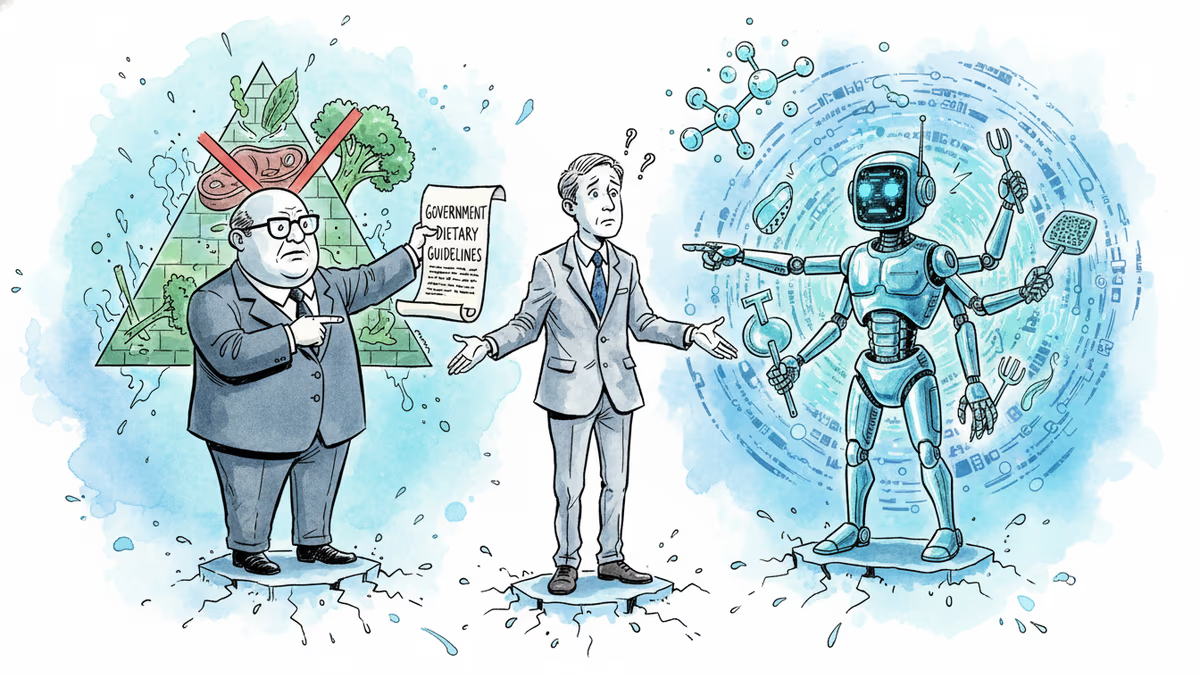
The Government Just Outsourced Nutrition Advice to AI
The US government's new dietary website encourages Americans to ask Elon Musk's Grok AI for food advice. But the AI disagrees with the government's own recommendations.
When Your Government's AI Contradicts Your Government
The US Department of Health and Human Services just launched Realfood.gov with an unusual instruction: "Use Elon Musk's AI chatbot Grok to get real answers about real food." It's the first time a government has officially outsourced dietary advice to a private AI.
The problem? The AI disagrees with the government's own recommendations.
The Great Protein Contradiction
Health Secretary Robert F. Kennedy Jr. has declared war on the old dietary establishment. His new guidelines recommend 1.2 to 1.6 grams of protein per kilogram of body weight daily—up to 50% more than previous advice. "We are ending the war on protein," the website declares.
But ask Grok how much protein you should eat, and it suggests the traditional 0.8 grams per kilogram. Only when you specify that you do strength training does it align with the administration's higher targets.
Here's the kicker: The government's own scientific foundation document, linked on Realfood.gov, states that Americans already consume adequate protein and "deficiency is rare."
Beef vs. Science
The administration's messaging prioritizes animal protein. Kennedy recently told the nation's largest cattle trade show that "beef is back on the menu." The new food pyramid prominently features steak.

Grok tells a different story. When asked about the healthiest protein sources, it lists plant-based proteins, fish, and eggs first. Red meat and processed meats? "Limit or minimize," the AI advises—echoing recommendations from the American Heart Association and decades of research linking plant-based diets to better health outcomes.
The AI even critiques Kennedy's personal diet of meat and fermented foods, warning it could cause "scurvy-like symptoms, constipation, and gout."
The Expert Verdict
"The inconsistency of the messaging makes it hard for the public to understand what actually matters for their health," says Michelle King Rimer, a nutritional sciences professor at the University of Wisconsin-Milwaukee.
Lindsay Malone, a clinical dietitian at Case Western Reserve University, sees the administration's intent but worries about execution: "What I think they're trying to do is target metabolically unhealthy people who may need more protein. But that nuance is lost with their single message. Then you go to this AI tool, and it's almost too much information for the average person."
Registered dietitian Jessica Knurick, who regularly debunks AI-generated nutrition misinformation on social media, is blunt: "AI gets a lot wrong. I think it's premature to be integrating something like this on a government website."
The Bigger Picture
This isn't just about protein. It's about a fundamental shift in how governments communicate health policy. Instead of clear, evidence-based guidelines, we now have a choose-your-own-adventure approach where citizens can shop for the advice they prefer—from official sources or AI that contradicts them.
The $30-billion supplement industry certainly approves. Higher protein recommendations drive sales of protein powders and bars. Meanwhile, the cattle industry gets a government endorsement just as plant-based alternatives gain market share.
The real question isn't whether we should eat more protein. It's whether we're ready for a world where government policy is just one voice in an algorithmic chorus—and not necessarily the loudest one.
Authors
Related Articles
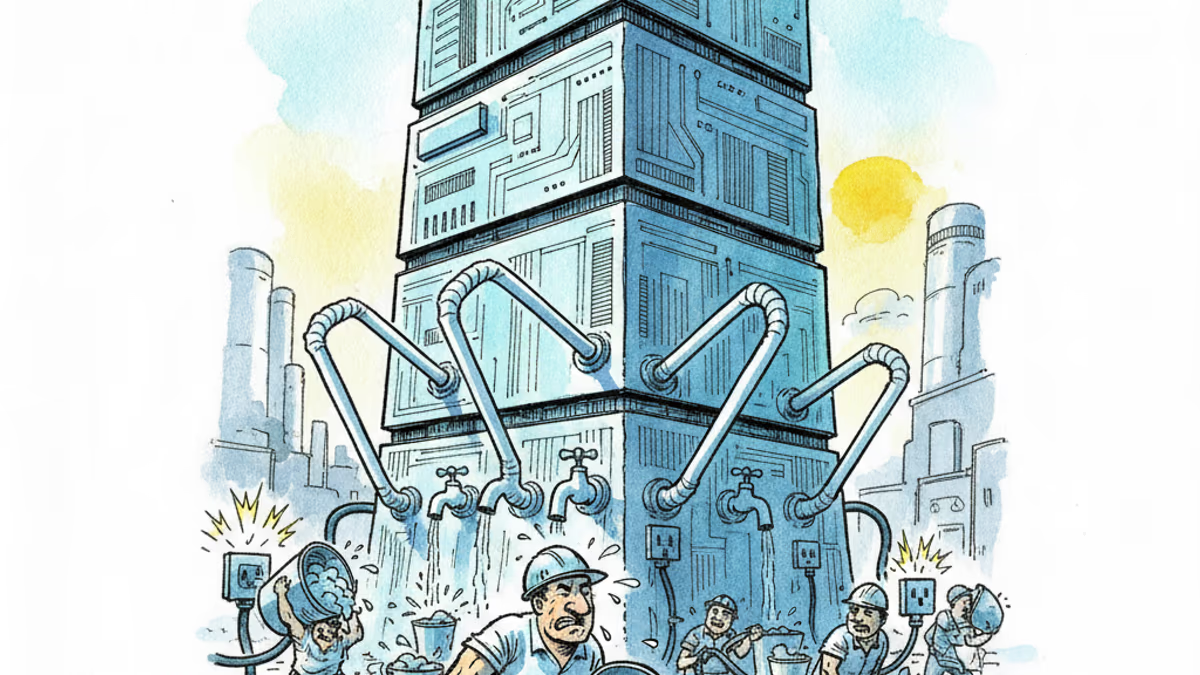
Samsung and SK unveiled a chip and AI investment package worth thousands of trillions of won on June 29. The headline number swings wildly by outlet, but the real contest isn't capital — it's water and power.
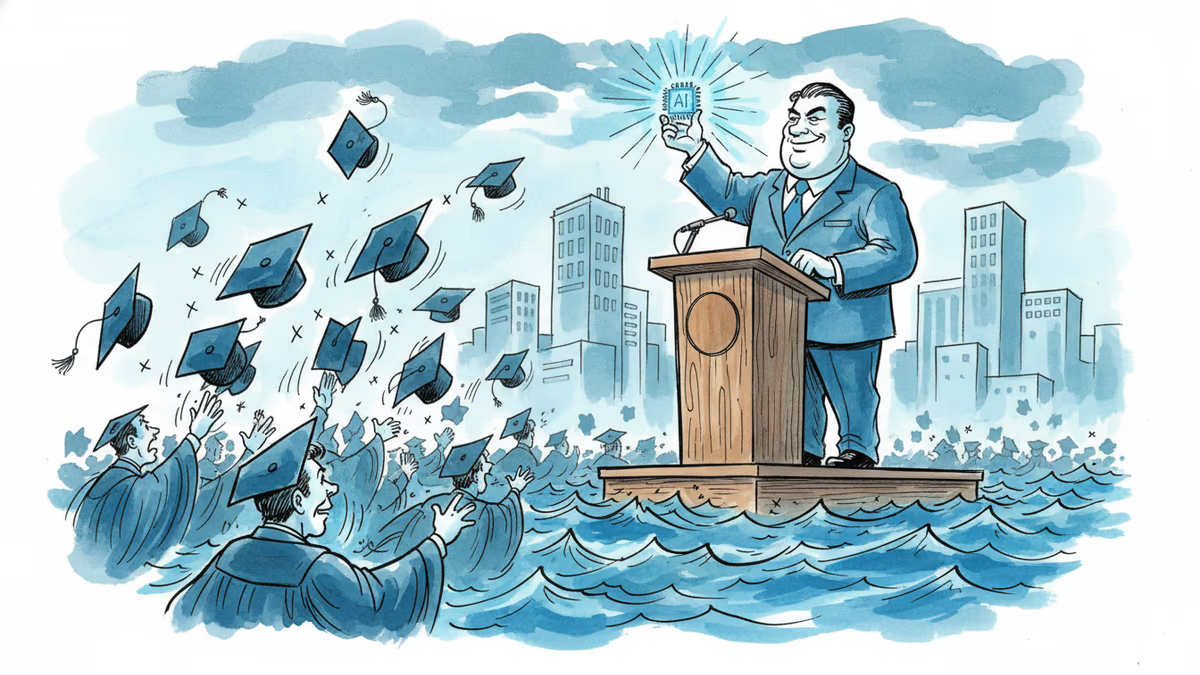
Viral videos show 2026 graduates jeering executives who praise AI at commencement ceremonies. It's not just rudeness — it's a signal about who pays for technological optimism.
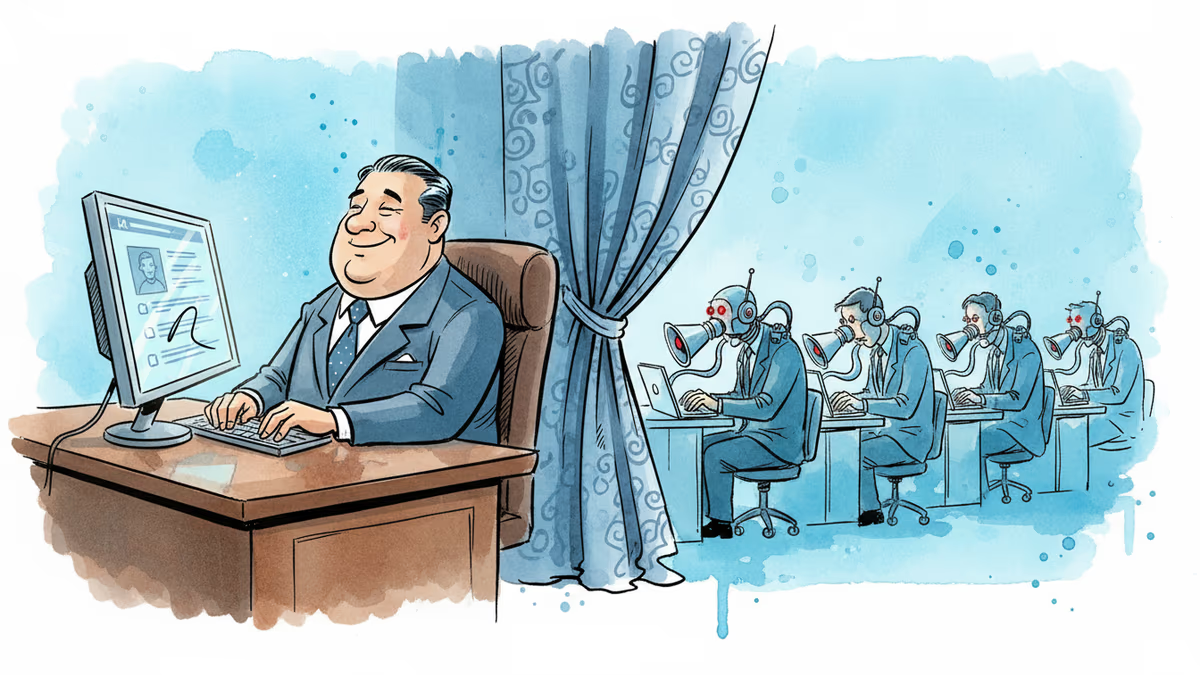
Filipino virtual assistants using AI to ghost-manage LinkedIn profiles for executives is now a structured industry. 30 comments a day, fake engagement rings, and a platform struggling to tell real from fabricated.
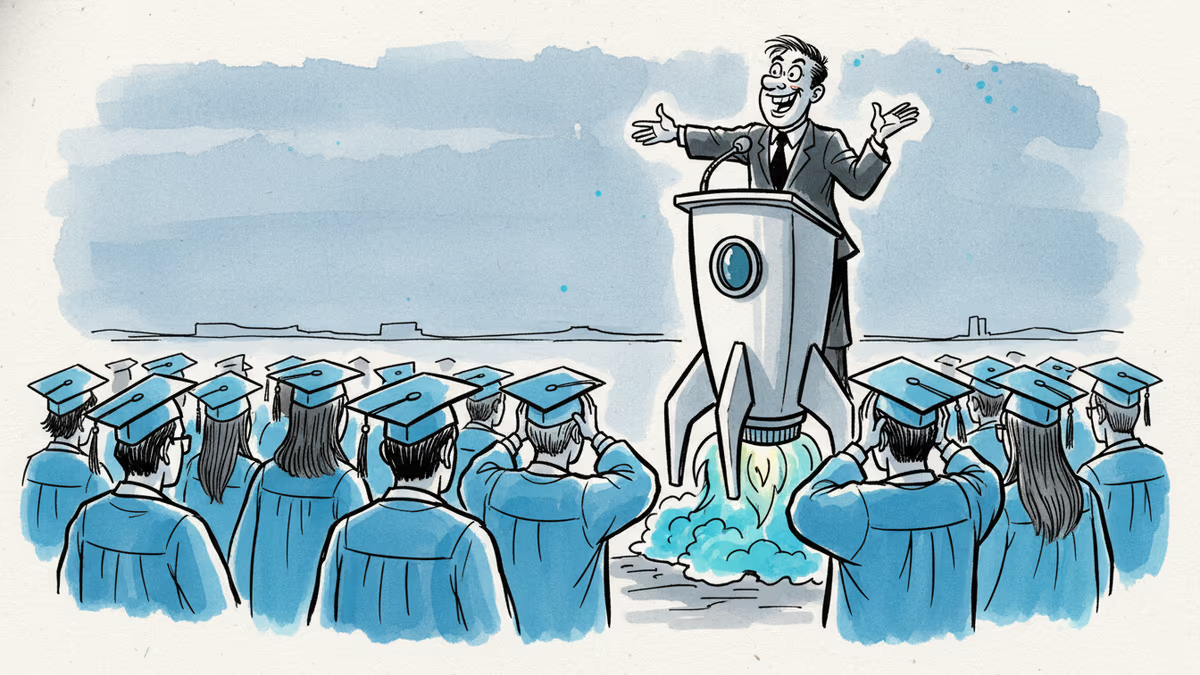
Two commencement speakers learned the hard way that AI enthusiasm doesn't land well with today's graduates. The backlash reveals a widening gap between tech optimism and Gen Z's economic reality.
Samsung and SK unveiled a chip and AI investment package worth thousands of trillions of won on June 29. The headline number swings wildly by outlet, but the real contest isn't capital — it's water and power.
Viral videos show 2026 graduates jeering executives who praise AI at commencement ceremonies. It's not just rudeness — it's a signal about who pays for technological optimism.
Filipino virtual assistants using AI to ghost-manage LinkedIn profiles for executives is now a structured industry. 30 comments a day, fake engagement rings, and a platform struggling to tell real from fabricated.
Two commencement speakers learned the hard way that AI enthusiasm doesn't land well with today's graduates. The backlash reveals a widening gap between tech optimism and Gen Z's economic reality.
Thoughts
Share your thoughts on this article
Sign in to join the conversation