
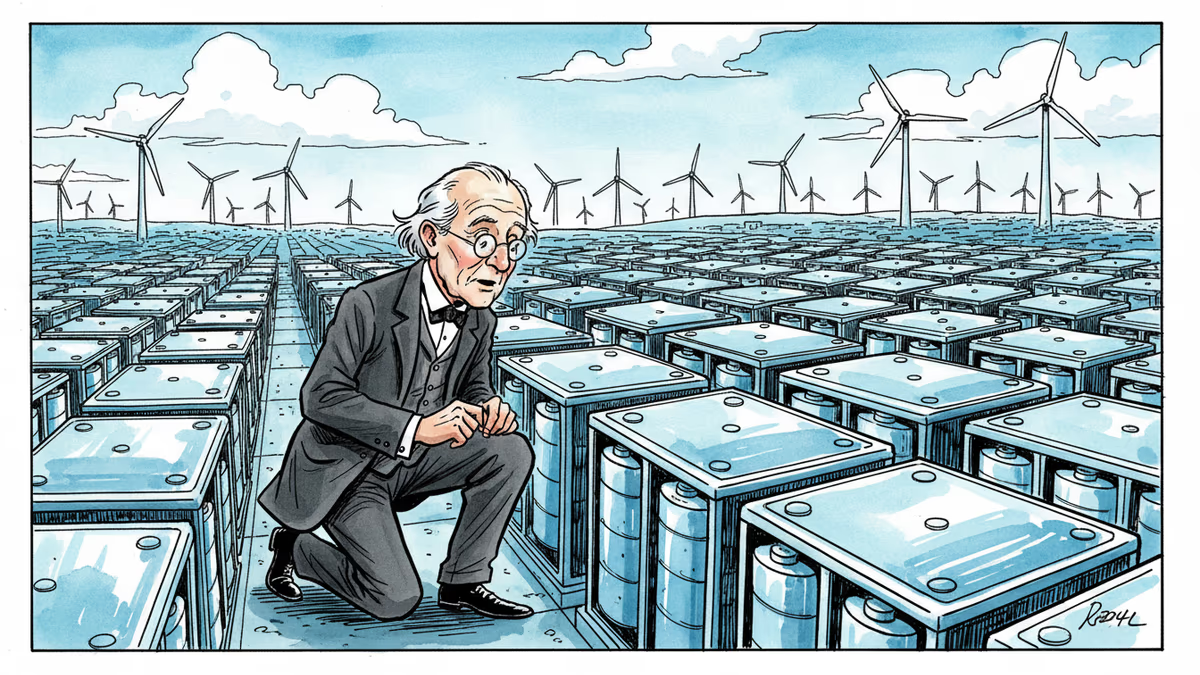
Edison's 100-Year-Old Battery Idea Could Power Tomorrow's Grid
UCLA researchers revive Thomas Edison's nickel-iron battery concept with modern nanotechnology, potentially solving renewable energy storage challenges that stumped the grid for decades.
What if the 100-year-old idea was right all along?
In 1900, electric cars outnumbered gasoline cars on American roads. They couldn't go far—just 30 miles on lead-acid batteries—but Thomas Edison had a different vision. His nickel-iron battery could push that range to 100 miles while lasting decades longer than any competitor. The internal combustion engine ultimately won, but was Edison's battery idea simply ahead of its time?
A UCLA-led international team thinks so. They've revived Edison's nickel-iron concept using modern nanotechnology, publishing their results in the journal Small. Their timing couldn't be better: as renewable energy grows, we desperately need batteries that can store massive amounts of power safely and cheaply.
The problem Edison couldn't solve (but we might)
Edison's original nickel-iron batteries were nearly indestructible. They could survive 20,000 charge cycles—ten times more than today's lithium-ion batteries. They didn't catch fire, didn't explode, and worked in extreme temperatures. But they were heavy, expensive, and charged slowly.
For cars, those flaws were fatal. But for grid-scale energy storage? They might be exactly what we need.
The UCLA team solved Edison's biggest problem: speed. By creating nickel and iron electrodes at the nanoscale and improving the electrolyte, they achieved three times faster charging while maintaining the legendary durability. The battery still weighs more than lithium-ion alternatives, but weight doesn't matter when you're storing solar power in a warehouse.

Why utilities are paying attention
Grid operators face a dilemma. Renewable energy is cheap and clean, but the sun doesn't always shine and wind doesn't always blow. They need massive battery farms to store excess energy, but lithium-ion batteries cost $150-200 per kWh and degrade after 2,000-3,000 cycles.
Nickel-iron batteries could change that math. Iron is abundant and cheap—the fourth most common element in Earth's crust. Nickel is pricier but still far cheaper than lithium or cobalt. More importantly, these batteries could last 20-30 years instead of 5-10 years for lithium-ion systems.
Tesla has dominated battery storage with its Megapack systems, but even Elon Musk has acknowledged that different battery chemistries will serve different purposes. For long-duration storage where weight doesn't matter, Edison's chemistry might finally have its moment.
The geopolitical angle nobody's talking about
China controls 60% of global lithium processing and 80% of battery cell manufacturing. Nickel-iron batteries could reduce that dependence. The U.S. has plenty of iron ore, and while nickel is more globally distributed, it's not as geopolitically concentrated as lithium.
This matters as countries race to build renewable energy infrastructure. The Inflation Reduction Act includes $370 billion for clean energy, much of which will require energy storage. European utilities are equally hungry for alternatives to Chinese-dominated supply chains.
Authors
Related Articles
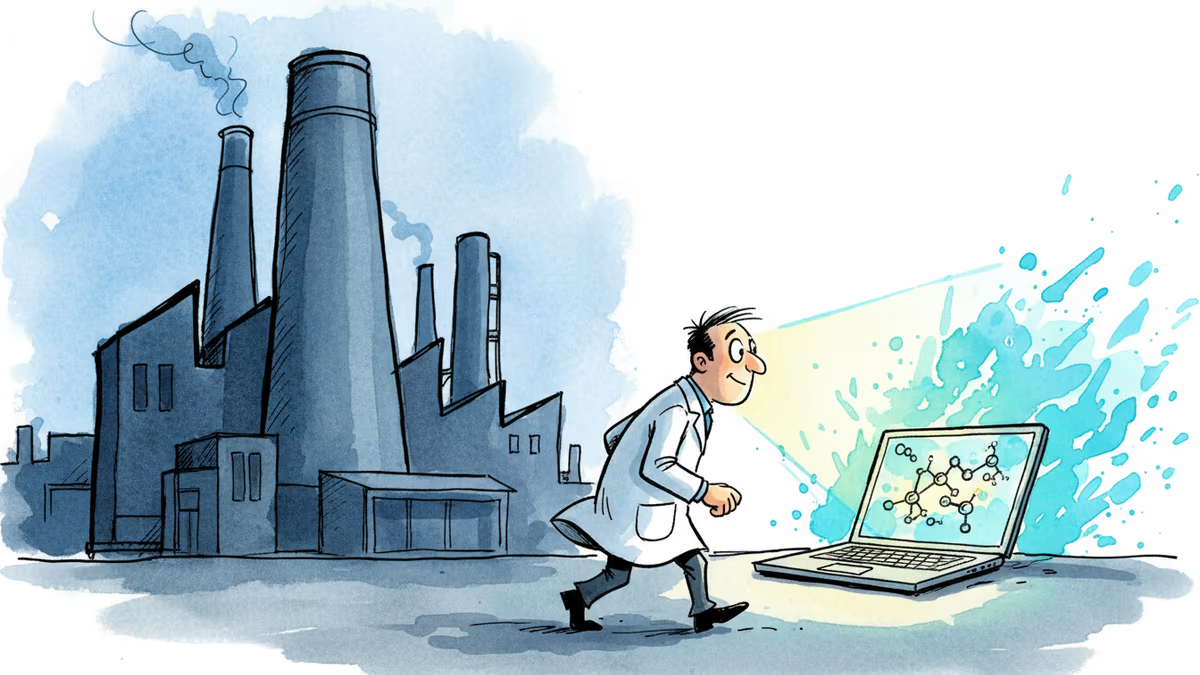
SES AI once partnered with GM, Hyundai, and Honda to build next-gen EV batteries. Now it's pivoting to AI-powered materials discovery. What does this tell us about the future of Western energy manufacturing?
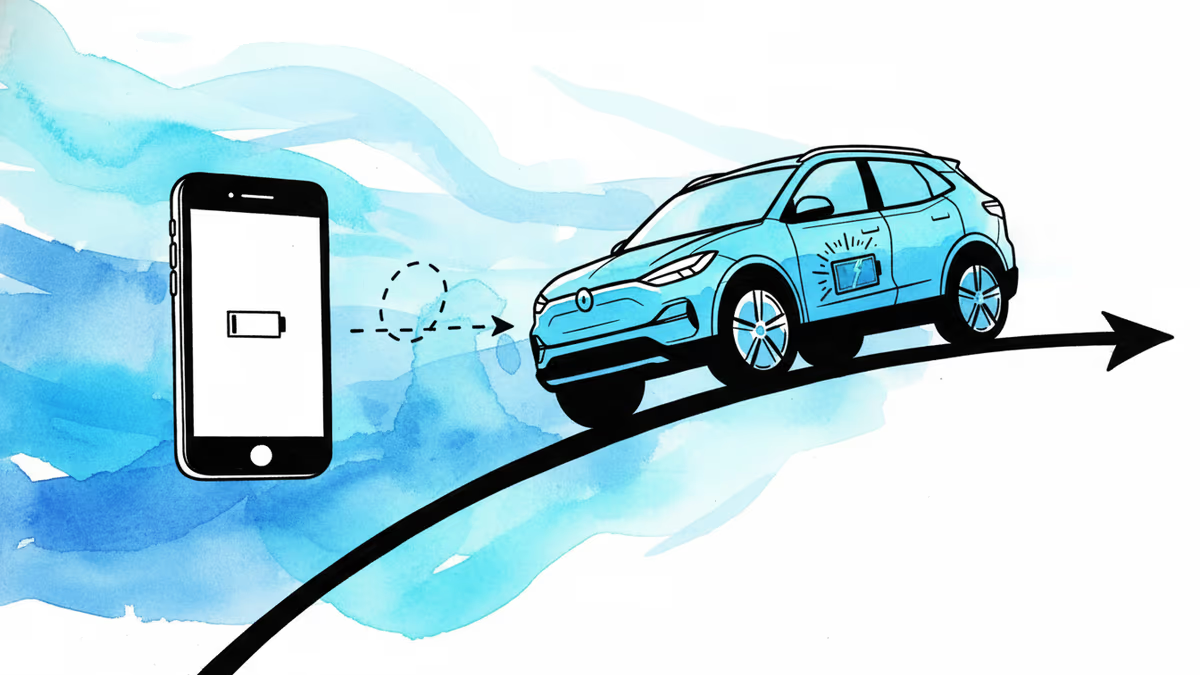
University of Michigan study reveals modern EV batteries lose only 2% capacity annually, lasting over a decade. How liquid cooling and thermal management changed everything.
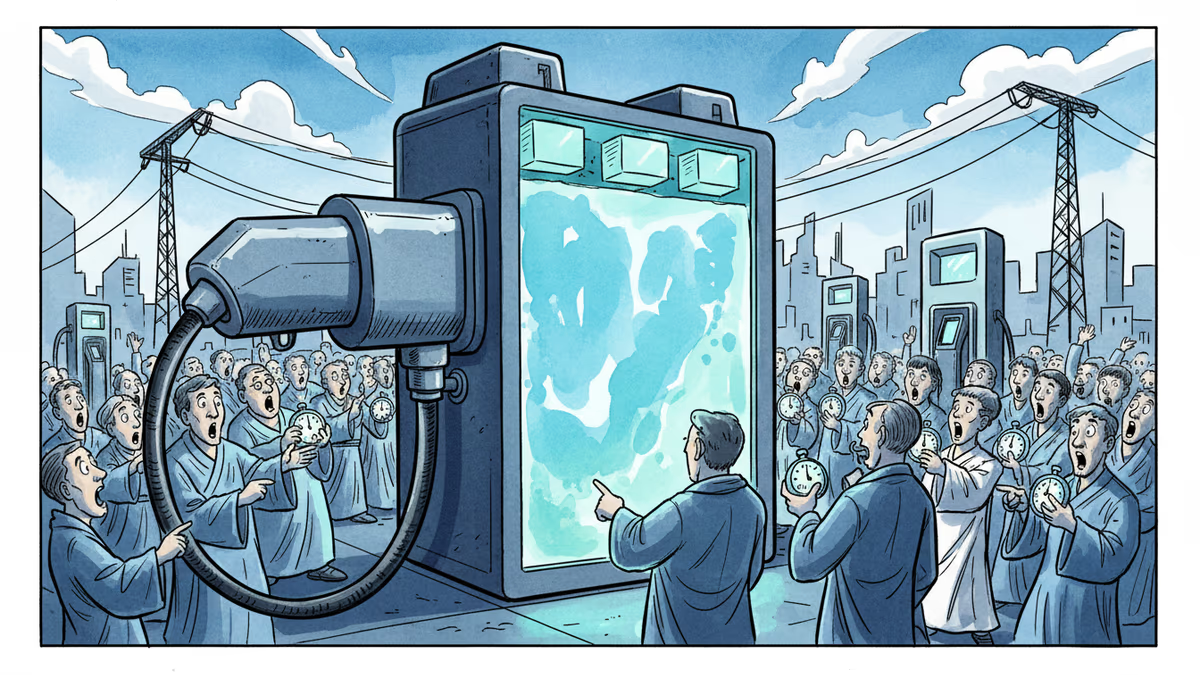
Chinese automaker BYD unveils battery technology that charges from 10% to 70% in just 5 minutes, potentially eliminating EVs' biggest weakness
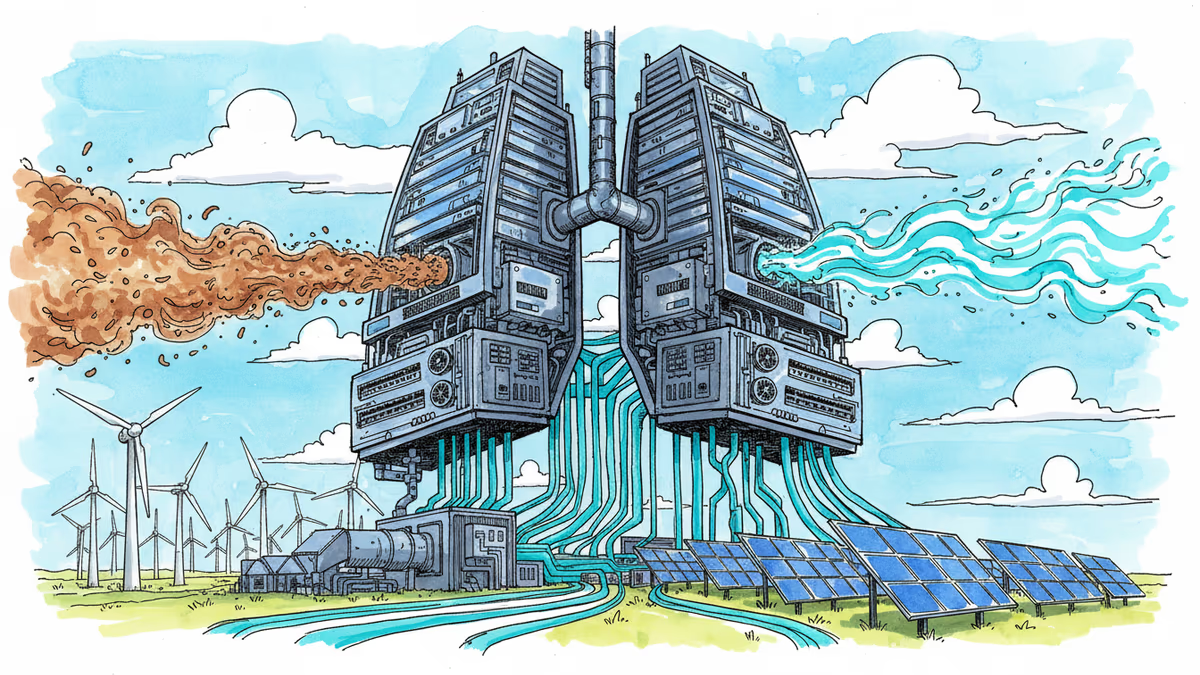
Google's billion-dollar bet on Form Energy's 100-hour iron-air battery isn't just about powering data centers—it's reshaping how we think about energy storage in the AI era.
SES AI once partnered with GM, Hyundai, and Honda to build next-gen EV batteries. Now it's pivoting to AI-powered materials discovery. What does this tell us about the future of Western energy manufacturing?
University of Michigan study reveals modern EV batteries lose only 2% capacity annually, lasting over a decade. How liquid cooling and thermal management changed everything.
Chinese automaker BYD unveils battery technology that charges from 10% to 70% in just 5 minutes, potentially eliminating EVs' biggest weakness
Google's billion-dollar bet on Form Energy's 100-hour iron-air battery isn't just about powering data centers—it's reshaping how we think about energy storage in the AI era.
Thoughts
Share your thoughts on this article
Sign in to join the conversation