
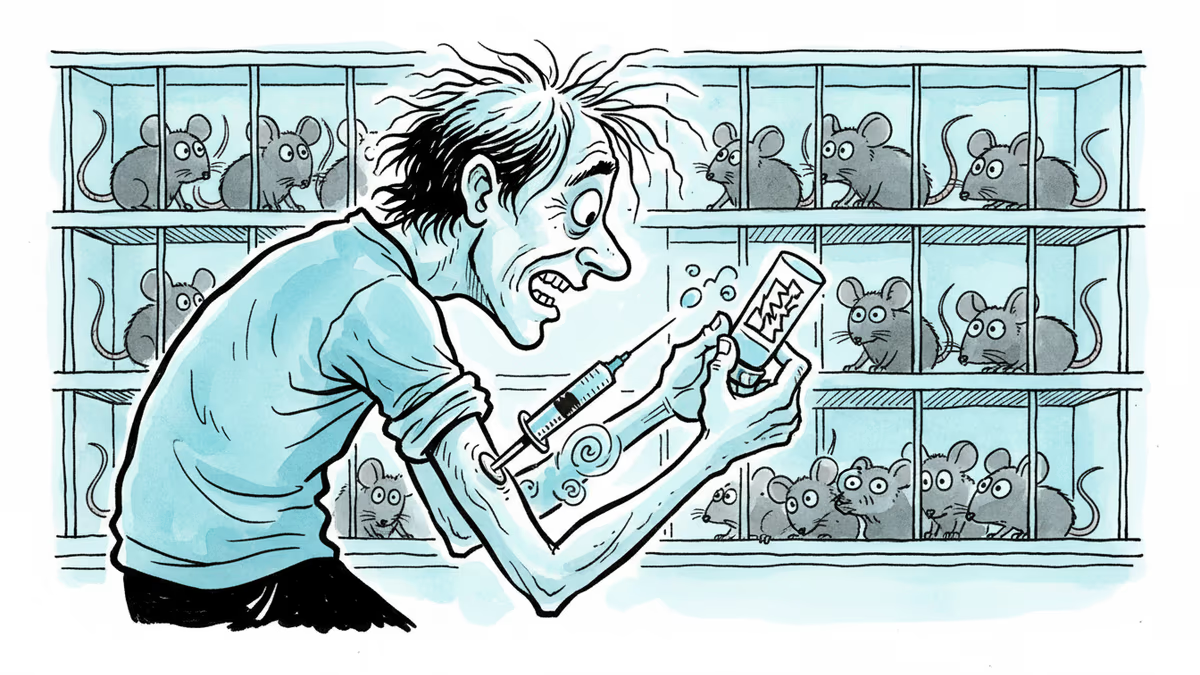
The "Research Only" Peptide Boom That's Actually for Humans
Experimental peptides flood the wellness market with animal data as evidence. Why millions inject unapproved compounds sold with research disclaimers, and what regulators plan to do about it.
Employees at a Los Angeles health-tech startup get free peptide shots every Friday. A Phoenix health food store posts a sidewalk sign: "We have peptides!" A South Carolina tae kwon do center hosts a peptide wholesaler's info night.
Within 48 hours at a Las Vegas longevity conference, two women were hospitalized and put on ventilators after peptide injections. Both recovered, but the cause remains unclear.
This is the peptide boom—a $10+ billion market built on animal studies, online testimonials, and regulatory loopholes.
The "Research Only" Wink-Wink Economy
Peptides are short chains of amino acids. Insulin is one. So is human growth hormone. But when wellness influencers talk peptides, they mean experimental compounds like BPC-157, TB-500, and CJC-1295.
Most lack FDA approval. Legally, they can only be sold "for research purposes." Vials carry disclaimers: "Research use only" or "Not for human consumption." Yet websites clearly market to consumers who'll inject themselves.
"Anybody can set up an online shop selling research-grade peptides," says Tenille Davis, a pharmacist with the Alliance for Pharmacy Compounding. "And nobody knows what's even in the vials."
The practice isn't legal, but enforcement is spotty. Companies can "make millions of dollars without having to spend money and time doing research," says UC Davis stem-cell researcher Paul Knoepfler. "It's a cash grab."
Animal Data, Human Guinea Pigs
BPC-157 supposedly promotes tissue repair and curbs inflammation. GHK-Cu allegedly helps wound healing and collagen production. The evidence? Mostly animal studies and online testimonials.

"There's no human clinical evidence to show that they even do what people are claiming," says McMaster University muscle physiologist Stuart Phillips. "So it could be just a giant rip-off."
Optimal dosage? Duration? Administration method? These basic questions lack answers. Doctors "just make up their own protocols," says longevity researcher Matt Kaeberlein. Some consumers go DIY, reconstituting powdered peptides at home.
The Chinese Supply Chain Problem
Texas-based Finnrick Analytics tested over 5,000 samples from 173 vendors. Some vials sold as BPC-157 contained no such compound. Purity ranged from 82% to 100%.
Worse: 8% of all samples contained measurable endotoxins—bacterial fragments that can cause fever, chills, or septic shock. Most peptides come from China, prompting Senator Tom Cotton to urge FDA crackdowns on illegal shipments.
Some buyers now send purchases for third-party testing. "Like it's some kind of flex," Phillips says. "You just proved that this stuff lives in the shadows."
Trump 2.0: Deregulation Incoming?
Health Secretary Robert F. Kennedy Jr. has promised to "end the war at FDA against alternative medicine—the war on stem cells, the war on chelating drugs, the war on peptides."
Experts anticipate Kennedy will pressure the FDA to allow compounding of popular peptides like BPC-157 and GHK-Cu. "Such a step would put public health at great risk, while giving compounders and likely wellness influencers a lot more profit," Knoepfler warns.
The Athlete's Dilemma
For competitive athletes, peptides pose dual risks: potential health problems and suspension. Some peptides like BPC-157 are banned by the World Anti-Doping Agency. Yet their alleged recovery benefits make them tempting for athletes seeking an edge.
The regulatory gray area creates impossible choices: follow the rules and potentially fall behind, or risk career-ending consequences for unproven benefits.
The answer may reshape not just peptides, but how we regulate the entire frontier of experimental medicine.
Authors
Related Articles
Nine people across three states have been sickened in an E. coli outbreak linked to Raw Farm's unpasteurized dairy. The company refuses to recall. What does this reveal about food safety systems?
After Trump administration officials publicly promoted leucovorin as a potential autism treatment, new prescriptions for children surged 71% in three months. What happens when government rhetoric moves faster than science?
Trump appointee overruled FDA scientists to reject Moderna's mRNA flu vaccine, then reversed course within a week after public backlash. Political interference in vaccine approval raises concerns.
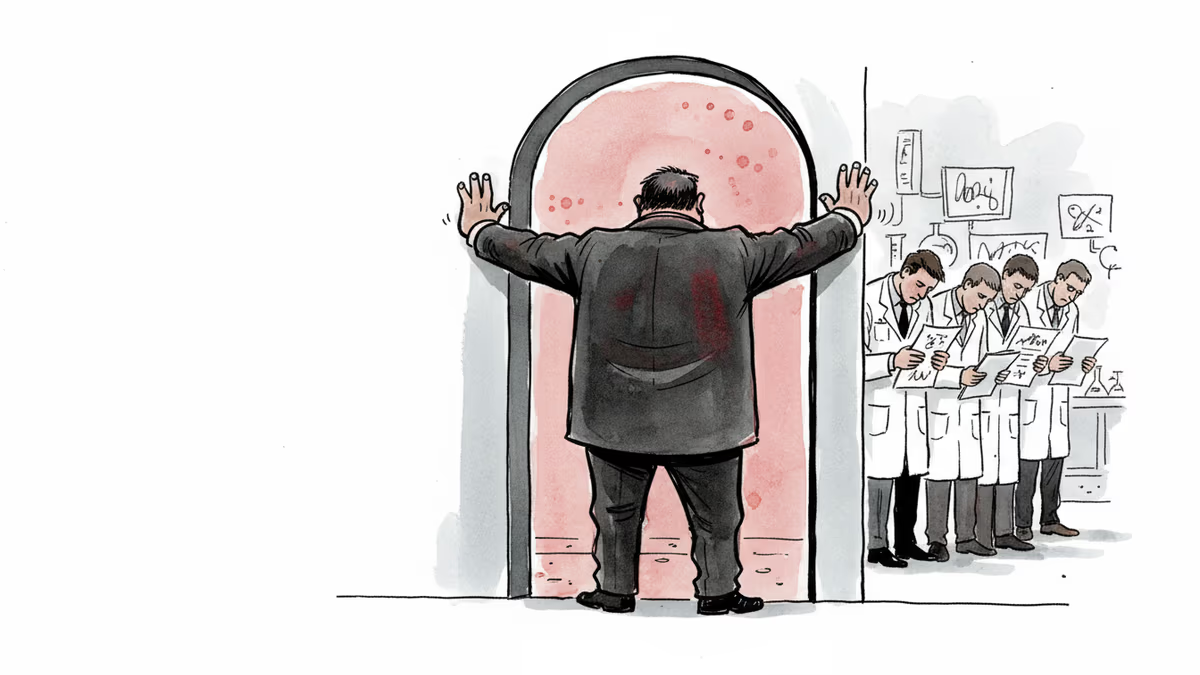
Trump's top vaccine regulator at FDA single-handedly blocked Moderna's mRNA flu vaccine review despite strong internal opposition from career scientists.
Nine people across three states have been sickened in an E. coli outbreak linked to Raw Farm's unpasteurized dairy. The company refuses to recall. What does this reveal about food safety systems?
After Trump administration officials publicly promoted leucovorin as a potential autism treatment, new prescriptions for children surged 71% in three months. What happens when government rhetoric moves faster than science?
Trump appointee overruled FDA scientists to reject Moderna's mRNA flu vaccine, then reversed course within a week after public backlash. Political interference in vaccine approval raises concerns.
Trump's top vaccine regulator at FDA single-handedly blocked Moderna's mRNA flu vaccine review despite strong internal opposition from career scientists.
Thoughts
Share your thoughts on this article
Sign in to join the conversation