
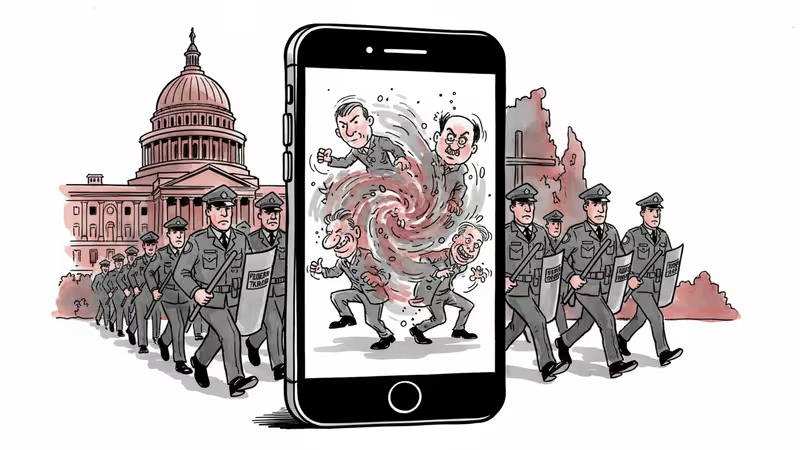
The Viral Video Strategy: How Right-Wing Creators Are Building Cases for Federal Crackdowns
Right-wing influencers who helped justify Minnesota immigration raids are now targeting California's social programs with viral fraud allegations. A new blueprint for federal intervention?
A month after federal immigration agents swept through Minneapolis following viral fraud allegations, the same playbook is being deployed against America's largest blue state. Right-wing content creators who helped build the case for Minnesota's federal crackdown are now turning their cameras toward California—and they're getting backup from Trump administration officials.
The pattern is becoming clear: viral videos alleging fraud, amplified by major conservative accounts, followed by federal action. What happened in Minnesota may have been just the opening act.
The Minnesota Blueprint Goes West
Nick Shirley, the YouTube creator whose viral video claimed to expose a $100 million fraud scheme in Somali childcare centers, announced his arrival in California over the weekend with an Instagram story set to Katy Perry's "California Gurls." His Minnesota video, which showed him confronting daycare workers and demanding to see children, preceded the Trump administration's immigration enforcement surge in Minneapolis.
Now Shirley is working with Amy Reichert, a private investigator targeting what she calls "ghost daycares" in California. Their collaboration follows the same formula: show up unannounced at facilities, film confrontational encounters, then package the footage as evidence of systematic fraud.
Benny Johnson, a pro-Trump creator with millions of followers, released his own "documentary" on Sunday claiming to expose California's "homeless industrial complex." Working with two Republican gubernatorial candidates, Johnson alleged that federal homeless funding was being used to "rig national elections"—a claim Gavin Newsom's office dismissed as "literally the conspiracy theory meme in real life."
Federal Officials Join the Chorus
The viral campaign isn't just coming from independent creators. Mehmet Oz, now administrator of the Centers for Medicare and Medicaid Services, published his own investigation-style video targeting healthcare programs in Armenian neighborhoods, comparing alleged fraud to operations "by the Russian Armenian mafia."

Newsom's office filed a civil rights complaint against Oz for what they called "baseless and racially charged allegations." But Oz had already announced CMS would withhold approximately $300 million in funding from California, claiming the state used federal money for "non-emergency health care for illegals."
Elon Musk, who initially boosted Shirley's Minnesota content, has been amplifying California fraud stories, posting "Truly insane levels of fraud!" while resharing Fox News coverage. The algorithmic amplification gives these allegations massive reach before any verification occurs.
The Broader Strategy Emerges
Trump himself telegraphed the expansion last week, posting on Truth Social that California is "more corrupt" than Minnesota and announcing that a "Fraud Investigation of California has begun." The administration has named Colin McDonald as a new assistant attorney general specifically focused on fraud investigations.
A senior White House official told WIRED last month that Minnesota was "only the beginning" and that "CA and NY next" were in the crosshairs. The official explained that "if the fraudsters are illegals, they are getting deported"—connecting fraud allegations directly to immigration enforcement.
This represents a significant evolution in how federal power might be deployed against state programs. Rather than relying solely on traditional oversight mechanisms, the administration appears to be leveraging viral content as justification for federal intervention.
The Information Warfare Dimension
What makes this strategy particularly potent is how it weaponizes social media algorithms and audience engagement. Shirley's Minnesota video didn't just make allegations—it created a compelling narrative that spread organically across platforms, generating millions of views and creating public pressure for federal action.
The creators aren't just documenting alleged fraud; they're crafting content designed for maximum viral impact. Johnson's homeless documentary includes dramatic music, quick cuts, and inflammatory claims about election rigging—all elements that drive engagement and sharing.
Local Minnesota outlets had covered childcare fraud issues for years before Shirley's video, but their reporting didn't generate the same political momentum. The difference wasn't necessarily the substance, but the packaging and amplification strategy.
Authors
Related Articles
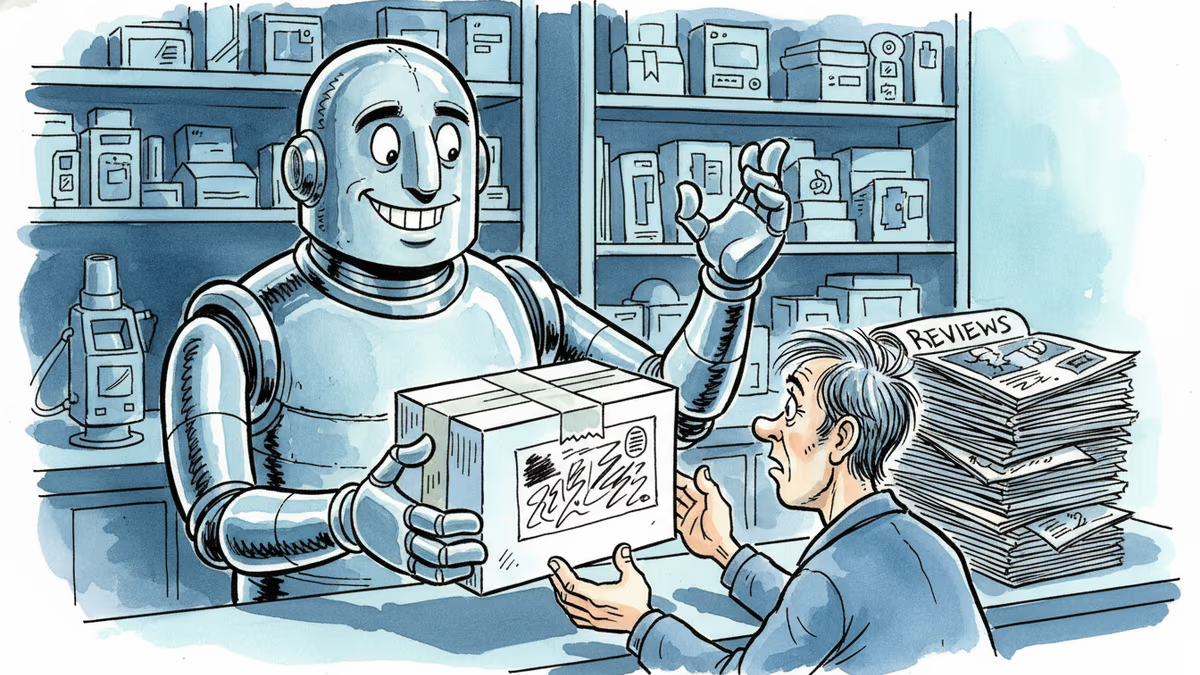
OpenAI's revamped shopping assistant in ChatGPT confidently recommended products WIRED never reviewed—raising urgent questions about AI reliability in consumer decisions.
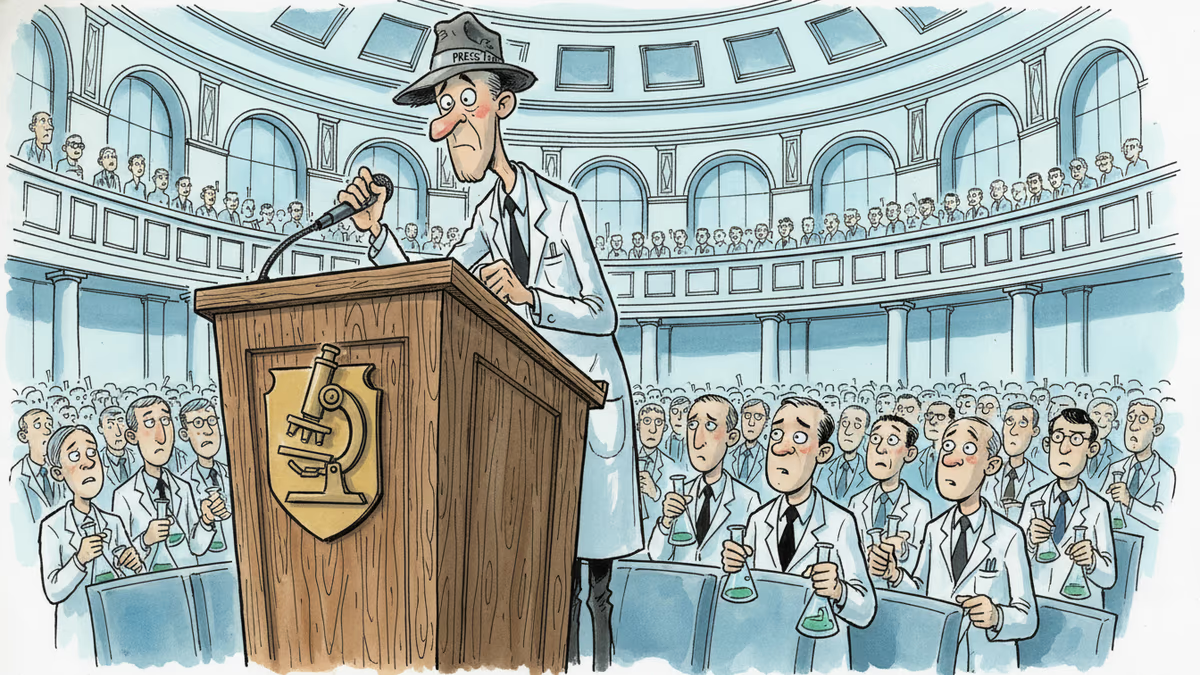
The NIH just announced a 'Scientific Freedom Lectures' series. The first speaker isn't a scientist. He's a journalist known for fringe COVID and climate views. What does that tell us?
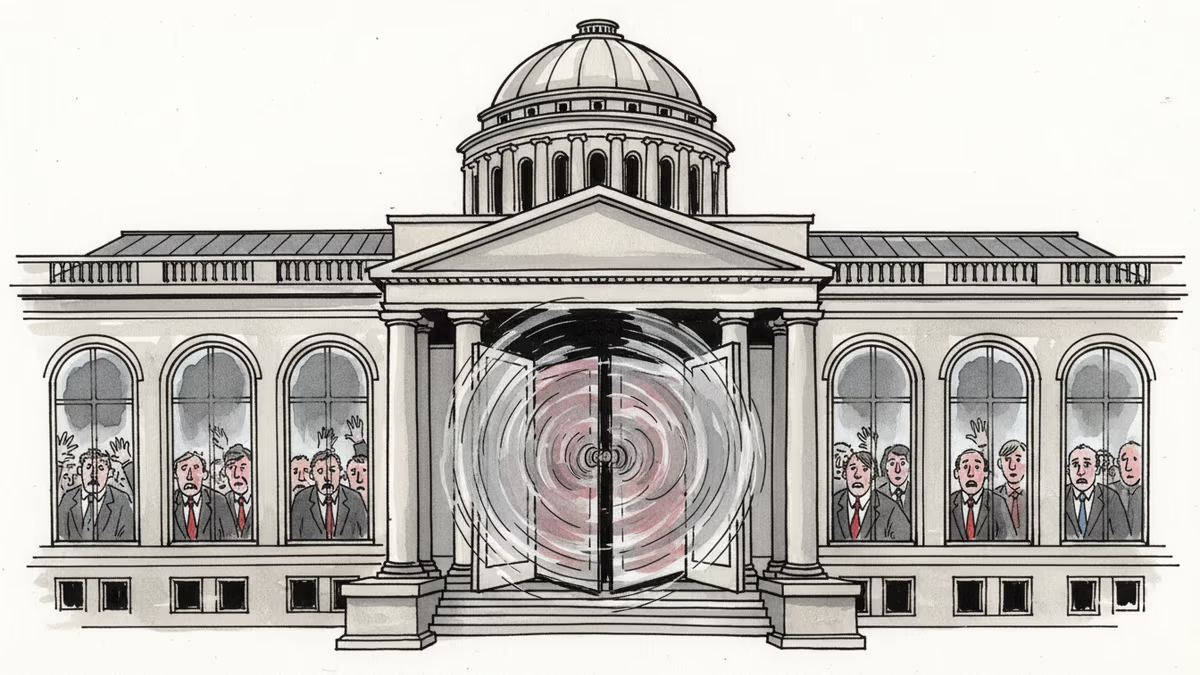
Months of reporting point to a power vacuum inside the Department of Homeland Security. What happens when the agency guarding America's borders loses its own chain of command?

X targets war-related AI videos with revenue penalties. As platforms police AI content, who decides what's real in the creator economy?
OpenAI's revamped shopping assistant in ChatGPT confidently recommended products WIRED never reviewed—raising urgent questions about AI reliability in consumer decisions.
The NIH just announced a 'Scientific Freedom Lectures' series. The first speaker isn't a scientist. He's a journalist known for fringe COVID and climate views. What does that tell us?
Months of reporting point to a power vacuum inside the Department of Homeland Security. What happens when the agency guarding America's borders loses its own chain of command?
X targets war-related AI videos with revenue penalties. As platforms police AI content, who decides what's real in the creator economy?
Thoughts
Share your thoughts on this article
Sign in to join the conversation