
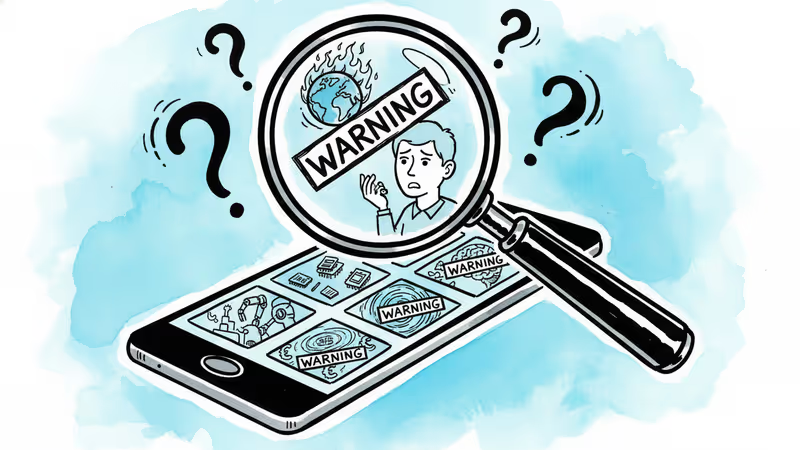
X's New "Manipulated Media" Labels: Progress or Performance?
Elon Musk announces X will label edited images as "manipulated media," but critical details remain unclear. What does this mean for misinformation and platform accountability?
Elon Musk dropped a cryptic two-word announcement that could reshape how we spot fake content on social media: "Edited visuals warning." But like many X features, the devil—and the questions—are in the missing details.
The announcement came through Musk's typical playbook: a repost from the anonymous DogeDesigner account claiming X now has a feature to label "manipulated media." According to the post, this will make it "harder for legacy media groups to spread misleading clips or pictures." Yet X hasn't explained how it will determine what counts as "manipulated," whether this includes basic Photoshop edits, or if it's specifically targeting AI-generated content.
The Complexity of "Manipulated"
Here's where things get tricky. Twitter (before becoming X) already had policies against manipulated media, covering everything from selective editing and cropping to overdubbing and subtitle manipulation. The company would label suspicious content rather than remove it entirely—a middle-ground approach that acknowledged the nuanced nature of media editing.
But defining "manipulated" in 2026 is far more complex than it was in 2020. When Meta launched its AI image labeling system, it quickly discovered the challenges. Real photographs were incorrectly tagged as "Made with AI" simply because photographers used Adobe's cropping tool or removed a shirt wrinkle with Generative AI Fill. The backlash forced Meta to soften its language from "Made with AI" to "AI info."
The problem isn't just technical—it's philosophical. Is a photo "manipulated" if you adjust the brightness? What about removing a distracting background element? Or using AI to enhance image quality? These are tools that professional photographers and everyday users rely on daily.
The Standards Game
The content authenticity world isn't flying blind. The Coalition for Content Provenance and Authenticity (C2PA) has been developing standards for verifying digital content authenticity. Major players like Microsoft, Adobe, Sony, and even OpenAI are steering committee members. Google Photos already uses C2PA standards to show how images were created.

Notably absent from this coalition? X itself. While other platforms are collaborating on industry-wide solutions, Musk's company appears to be going it alone—again.
This raises questions about interoperability. If X uses different standards than other platforms, users could see conflicting labels on the same content across different social networks. That's not just confusing—it could undermine trust in content labeling altogether.
The Political Dimension
X's timing is interesting. The platform has become a battleground for political content, with both domestic and foreign actors using it to spread propaganda. A robust content labeling system could help users identify suspicious material. But it could also become a weapon itself—imagine the outcry if political content from one side gets labeled more frequently than the other.
The DogeDesigner post specifically mentioned "legacy media groups," suggesting this feature might be positioned as a way to fact-check traditional news outlets. That's a bold stance for a platform that has struggled with its own Community Notes system and has seen deepfake controversies, including non-consensual nude images.
What's Really at Stake
For users, this represents a fundamental question about platform responsibility. Should social media companies act as arbiters of content authenticity? And if so, what standards should they use?
For the broader tech industry, X's approach could influence how other platforms handle similar challenges. If X's system works well, expect copycats. If it fails spectacularly—like early AI detection systems—it could set back industry-wide efforts.
The enforcement question looms large too. X's current policy against inauthentic media exists but is "rarely enforced," according to recent analysis. Will this new labeling system actually be applied consistently, or will it suffer the same fate?
Authors
Related Articles
Snap, YouTube, and TikTok settled a landmark school district lawsuit over social media addiction. With 1,000+ similar cases pending, this could reshape Big Tech's liability landscape.
New Mexico already won $375 million from Meta. Now it wants something harder to give: a court order forcing Facebook, Instagram, and WhatsApp to redesign themselves. A three-week trial starts Monday.
A small pro-Iran team is racking up millions of views with AI-generated Lego videos that mock Trump — and Americans are sharing them. What does that tell us about information warfare?
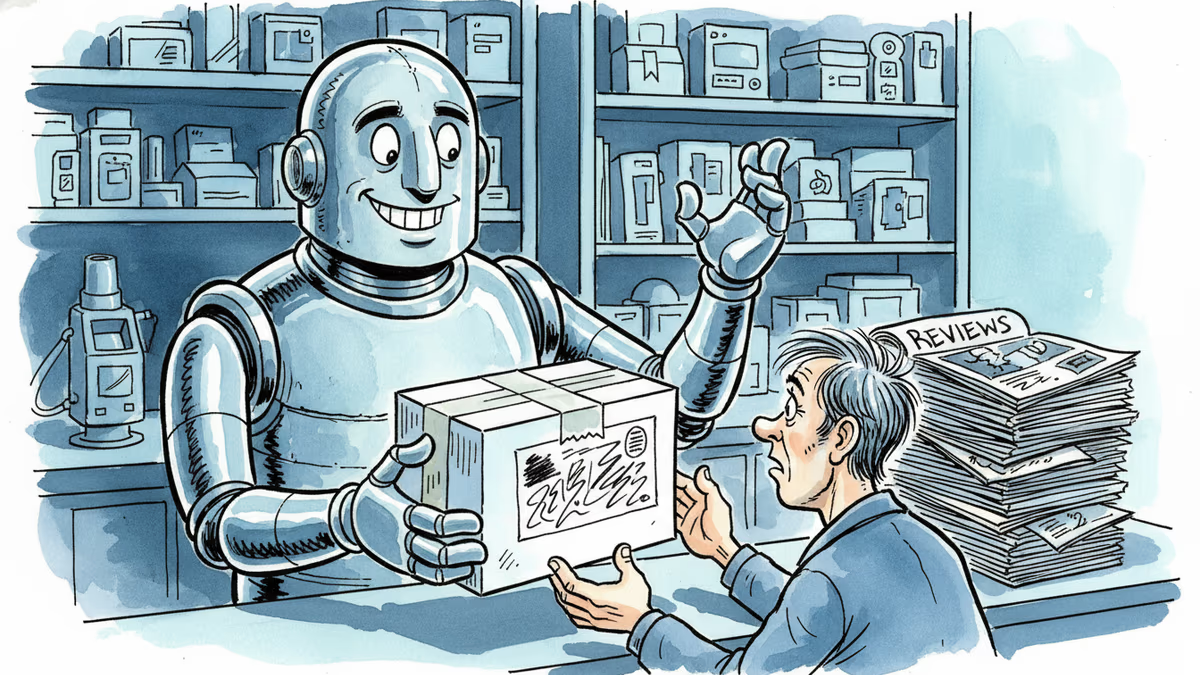
OpenAI's revamped shopping assistant in ChatGPT confidently recommended products WIRED never reviewed—raising urgent questions about AI reliability in consumer decisions.
Snap, YouTube, and TikTok settled a landmark school district lawsuit over social media addiction. With 1,000+ similar cases pending, this could reshape Big Tech's liability landscape.
New Mexico already won $375 million from Meta. Now it wants something harder to give: a court order forcing Facebook, Instagram, and WhatsApp to redesign themselves. A three-week trial starts Monday.
A small pro-Iran team is racking up millions of views with AI-generated Lego videos that mock Trump — and Americans are sharing them. What does that tell us about information warfare?
OpenAI's revamped shopping assistant in ChatGPT confidently recommended products WIRED never reviewed—raising urgent questions about AI reliability in consumer decisions.
Thoughts
Share your thoughts on this article
Sign in to join the conversation