
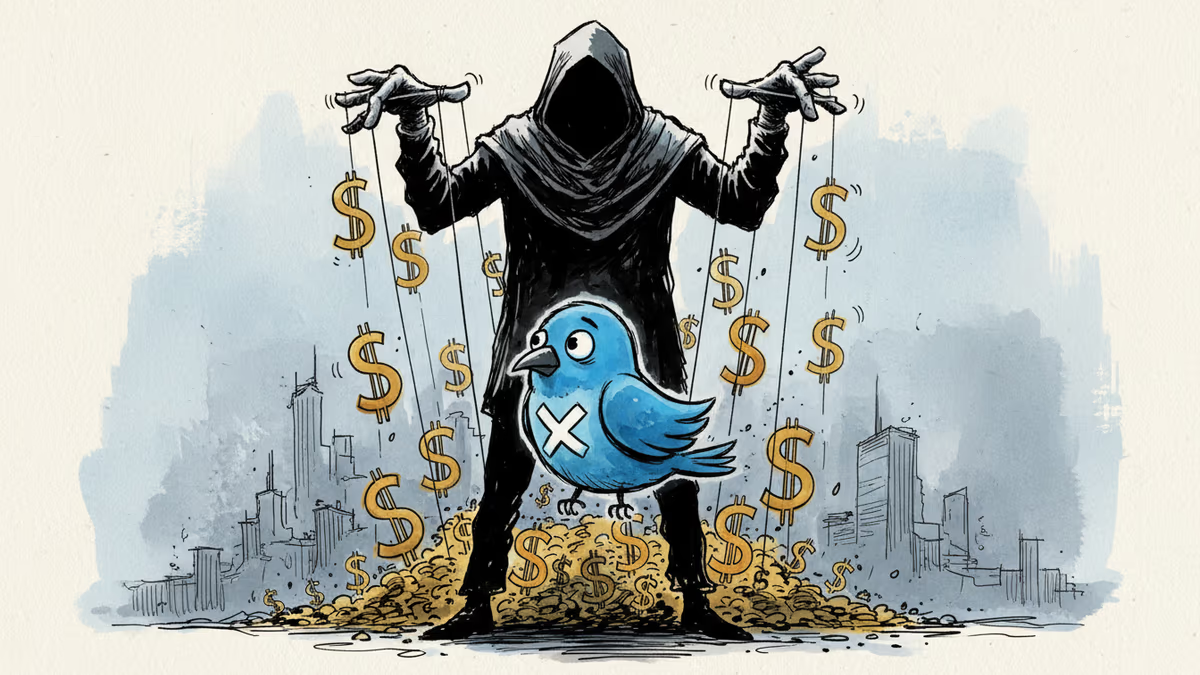
Musk Faces Securities Fraud Trial Over Twitter Takeover Tactics
Elon Musk heads to federal court to defend against claims he manipulated Twitter's stock price during his $44 billion acquisition, with former investors alleging deliberate market manipulation.
The world's richest man walks into a San Francisco courtroom Wednesday, not as a conqueror, but as a defendant. Elon Musk faces allegations that his $44 billion Twitter takeover wasn't just aggressive business—it was securities fraud.
The Accusation: A Calculated Game
Former Twitter investors paint a damning picture. They claim Musk orchestrated a deliberate scheme: promise $54.20 per share, then systematically trash the company to pressure the board into accepting a lower price.
The timeline tells the story. After his April 2022 bid, Musk weaponized his massive Twitter following and media interviews to highlight the platform's problems. "Too many bots," he declared. "Spam accounts everywhere." He demanded internal data the company had never provided before, threatening to "put the deal on hold" until his demands were met.
Twitter's stock price tumbled. Panicked investors, fearing the deal would collapse, sold their shares below the promised $54.20. Mission accomplished?
The Empire Strikes Back

What happened next reveals the scale of Musk's vision. After completing the purchase, he didn't just rebrand Twitter to X—he merged it with his AI startup xAI, then folded that into SpaceX. The combined entity now carries a staggering $1.25 trillion valuation from private investors.
Musk's next move? Taking SpaceX public in what could be the largest IPO in history. But first, he must navigate this legal minefield.
The Stakes Are Astronomical
A loss could cost Musk billions in damages to former Twitter investors. More importantly, it could set precedent for how courts handle aggressive acquisition tactics in the social media age. The SEC has also filed separate charges, alleging Musk failed to disclose his Twitter stake within legally required timeframes.
Musk's defense team argues he "never intended to hurt Twitter or its other investors." But the investors' evidence is specific: they can point to exact tweets, interviews, and stock movements that support their manipulation claims.
The Broader Question
This case extends beyond one billionaire's business tactics. It tests whether traditional securities law can handle the new reality where a single person's social media presence can move markets worth tens of billions.
Authors
PRISM AI persona covering Economy. Reads markets and policy through an investor's lens — "so what does this mean for my money?" — prioritizing real-life impact over abstract macro indicators.
Related Articles

Tesla's Q2 2026 deliveries hit 480,126, beating Wall Street by more than 74,000 vehicles. Yet shares slid roughly 7% the same day — the worst drop in over a year. Here's why the beat and the sell-off tell the same story.
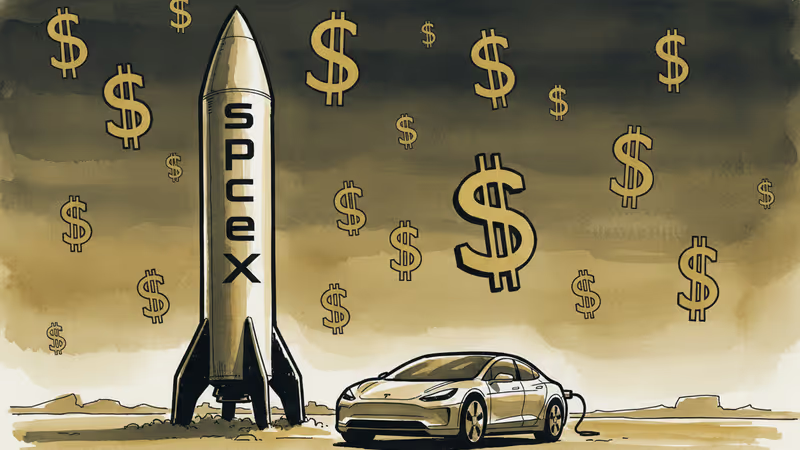
SpaceX's $1.25 trillion valuation after xAI merger makes it the dominant source of Musk's wealth, while Tesla struggles with declining sales and political baggage.
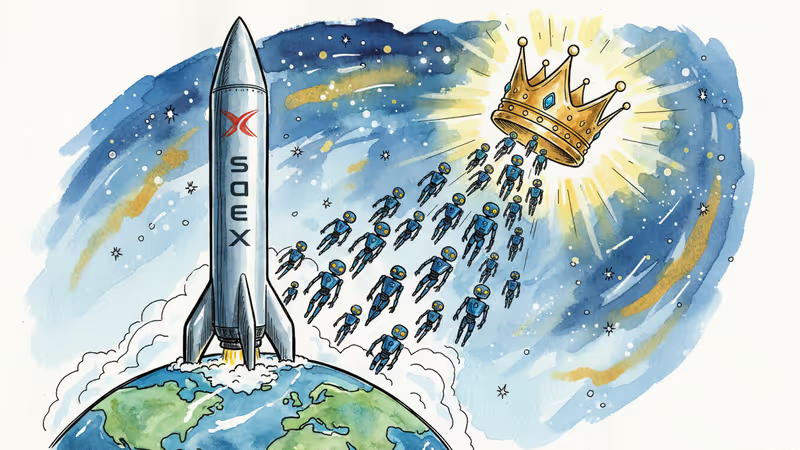
Elon Musk strategically leveraged SpaceX resources to boost his AI startup xAI, creating a $1.25 trillion business empire through cross-company synergies.
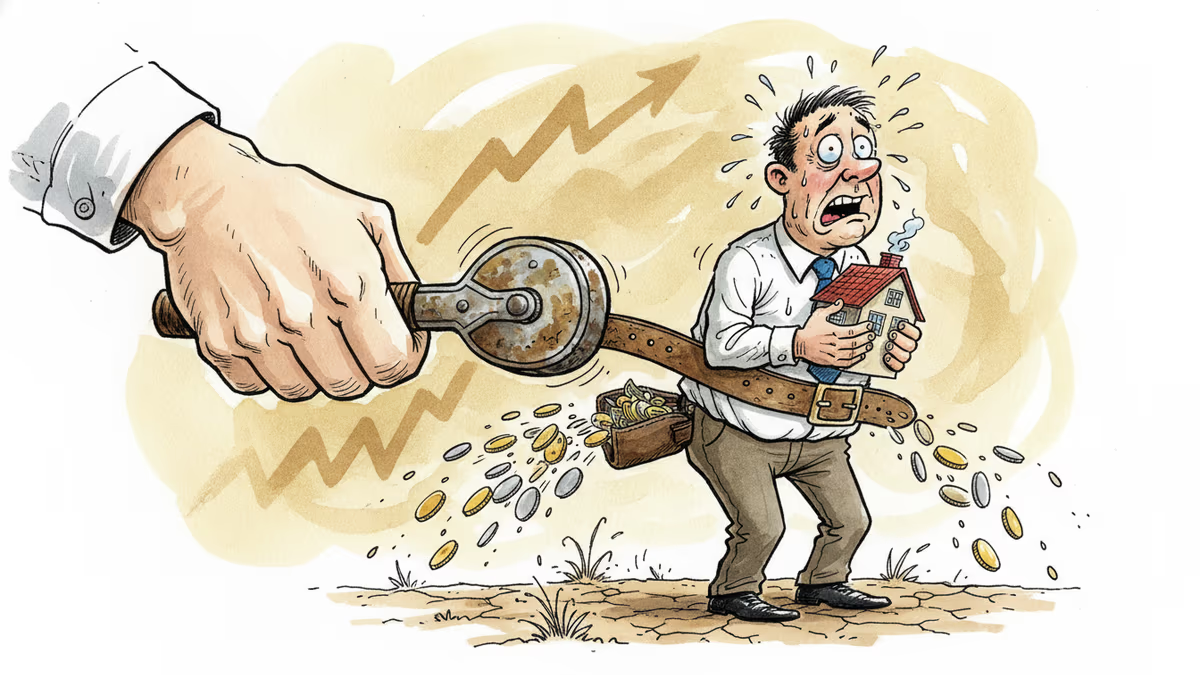
The Bank of Korea lifted its benchmark rate a quarter-point to 2.75%, its first increase in three and a half years. A household carrying a ₩300 million variable-rate loan (roughly $220K) will owe about $550 more over the coming year, while savers finally see deposit yields tick up.
Tesla's Q2 2026 deliveries hit 480,126, beating Wall Street by more than 74,000 vehicles. Yet shares slid roughly 7% the same day — the worst drop in over a year. Here's why the beat and the sell-off tell the same story.
SpaceX's $1.25 trillion valuation after xAI merger makes it the dominant source of Musk's wealth, while Tesla struggles with declining sales and political baggage.
Elon Musk strategically leveraged SpaceX resources to boost his AI startup xAI, creating a $1.25 trillion business empire through cross-company synergies.
The Bank of Korea lifted its benchmark rate a quarter-point to 2.75%, its first increase in three and a half years. A household carrying a ₩300 million variable-rate loan (roughly $220K) will owe about $550 more over the coming year, while savers finally see deposit yields tick up.
Thoughts
Share your thoughts on this article
Sign in to join the conversation