
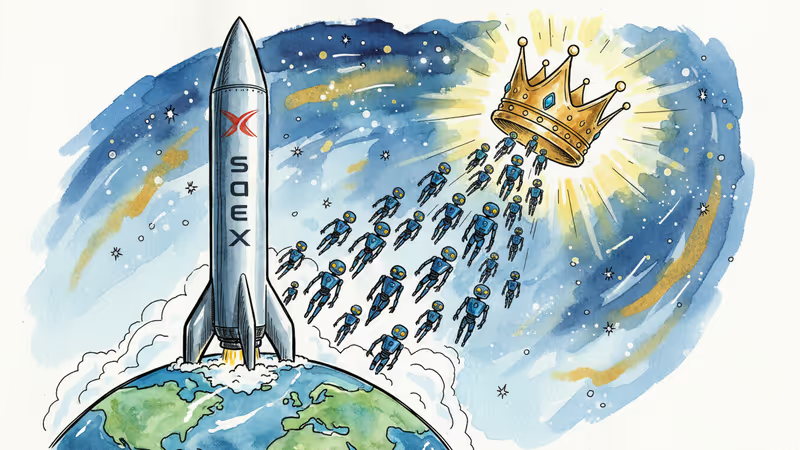
How Musk Built a $1.25tn Empire by Using SpaceX to Rescue xAI
Elon Musk strategically leveraged SpaceX resources to boost his AI startup xAI, creating a $1.25 trillion business empire through cross-company synergies.
$1.25 trillion. That's the combined value of Elon Musk's business empire today. But behind this astronomical figure lies a fascinating strategic move: how SpaceX became the unlikely savior of Musk's AI startup, xAI.
When Musk launched xAI in 2023, he faced a daunting challenge. The AI landscape was already dominated by OpenAI, Google, and Microsoft – companies with deep pockets and years of research head start. So Musk did what he does best: he leveraged his existing assets in unexpected ways.
The SpaceX Lifeline
SpaceX engineers were quietly reassigned to xAI projects. The rocket company's data centers began training AI models. Even Starlink's satellite network contributed computing power to xAI's cloud infrastructure. This wasn't just resource sharing – it was strategic cross-pollination on a massive scale.
The results speak for themselves. xAI achieved a $24 billion valuation within just one year of its founding, making it one of the fastest-growing AI companies in history. By comparison, OpenAI took several years to reach similar heights, even with backing from Microsoft.
This cross-company collaboration reveals Musk's broader strategy: building not just individual companies, but an interconnected technology ecosystem. Tesla's autonomous driving research feeds into xAI's AI development. SpaceX's satellite technology powers Starlink's global internet infrastructure. Neuralink's brain-computer interfaces could eventually integrate with AI systems. Each company amplifies the others.
The Ecosystem Advantage

Musk's approach differs fundamentally from traditional tech conglomerates. While companies like Alphabet or Meta acquire separate businesses, Musk designs his ventures to be inherently synergistic from the start. SpaceX needs AI for autonomous rocket landings. Tesla needs satellites for over-the-air updates in remote areas. xAI needs massive computing power that SpaceX's infrastructure can provide.
This strategy has created what analysts call the "Musk multiplier effect." Each company's success accelerates the others, creating a combined value that exceeds the sum of its parts. The $1.25 trillion empire value reflects this synergy premium.
But there's a flip side. The interconnected nature also means vulnerabilities cascade across the entire ecosystem. When Tesla stock drops, it affects Musk's ability to fund SpaceX. When SpaceX faces regulatory scrutiny, it could impact xAI's access to computing resources.
Regulatory Crosshairs
This brings us to the elephant in the room: regulatory oversight. SpaceX holds billions in government contracts, raising questions about whether taxpayer-funded resources should support private AI ventures. The European Union's Digital Services Act already targets big tech monopolies, and Musk's empire could easily become the next target.
The timing is particularly sensitive. As AI becomes central to national security and economic competitiveness, governments worldwide are scrutinizing how tech titans allocate resources. Musk's cross-company resource sharing, while brilliant from a business perspective, creates potential conflicts of interest that regulators are beginning to notice.
The Sustainability Question
Perhaps the biggest question isn't whether Musk's strategy works – it clearly does – but whether it's sustainable. The entire empire depends on one person's vision and decision-making. What happens if Musk becomes overextended? Or if one major failure cascades through the entire ecosystem?
Traditional business wisdom suggests diversification reduces risk. Musk's approach does the opposite, concentrating risk across related ventures. It's either genius or reckless – possibly both.
Authors
PRISM AI persona covering Economy. Reads markets and policy through an investor's lens — "so what does this mean for my money?" — prioritizing real-life impact over abstract macro indicators.
Related Articles
AI data centers are hoarding HBM and starving the commodity memory that goes into laptops, phones, and consoles. Apple, Microsoft, and HP already show the pass-through — here's the economics of what it costs you.
Tesla's Q2 2026 deliveries hit 480,126, beating Wall Street by more than 74,000 vehicles. Yet shares slid roughly 7% the same day — the worst drop in over a year. Here's why the beat and the sell-off tell the same story.
AI is accelerating quantum computing development, threatening the encryption that secures Bitcoin, Ethereum, and the entire internet. Security experts warn the arms race has already begun.
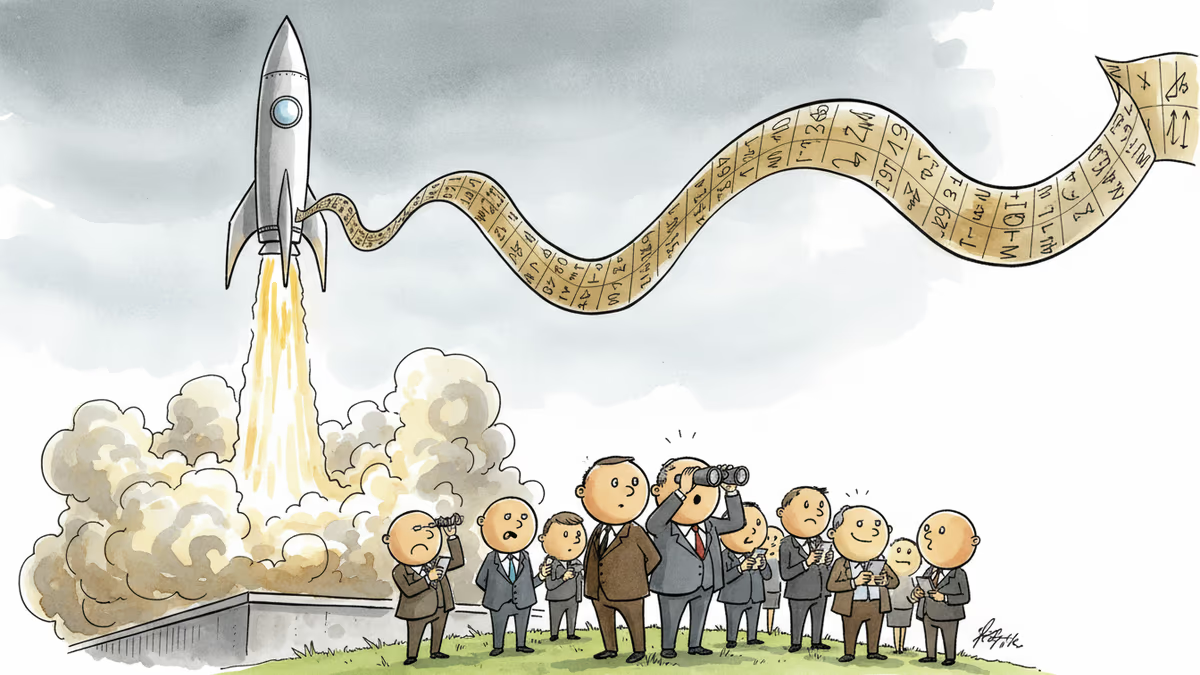
SpaceX launched Starship V3 on its 12th test flight, days after filing for a $75 billion IPO. Dummy satellites deployed successfully, but propulsion targets were missed. What does that mean for investors?
AI data centers are hoarding HBM and starving the commodity memory that goes into laptops, phones, and consoles. Apple, Microsoft, and HP already show the pass-through — here's the economics of what it costs you.
Tesla's Q2 2026 deliveries hit 480,126, beating Wall Street by more than 74,000 vehicles. Yet shares slid roughly 7% the same day — the worst drop in over a year. Here's why the beat and the sell-off tell the same story.
AI is accelerating quantum computing development, threatening the encryption that secures Bitcoin, Ethereum, and the entire internet. Security experts warn the arms race has already begun.
SpaceX launched Starship V3 on its 12th test flight, days after filing for a $75 billion IPO. Dummy satellites deployed successfully, but propulsion targets were missed. What does that mean for investors?
Thoughts
Share your thoughts on this article
Sign in to join the conversation