

PwC Crypto Strategy 2026: Big Four Firm Eyes Audit and Consulting Expansion via Stablecoins
PwC announces a major expansion in crypto audit and consulting for 2026, driven by U.S. regulatory clarity and the GENIUS Act. Read about the Big Four's new strategy.
The world's most powerful accounting firms aren't keeping digital assets at arm's length anymore. PwC just signaled a massive pivot in its crypto strategy 2026, shifting from cautious observation to "hyper-engagement" as U.S. regulations provide a long-awaited green light. This move marks a turning point for institutional adoption of blockchain technology.
PwC Crypto Strategy 2026: Riding the Regulatory Wave
Paul Griggs, PwC's U.S. Senior Partner and CEO, cited the passage of the GENIUS Act and clearer stablecoin legislation as the primary catalysts for this expansion. The firm's leaning into crypto-related work across both audit and consulting lines to help institutions navigate the maturing ecosystem. Griggs emphasized that PwC "has to be in that ecosystem" as tokenization continues to scale.
| Indicator | Pre-2025 Stance | 2026 Outlook |
|---|---|---|
| Engagement Level | Risk-averse / Limited | Hyper-engaged / Scaling |
| Primary Focus | Compliance & Monitoring | Payment Efficiency & Tokenization |
| Regulation | Uncertainty / Enforcement | Constructive Rule-making |

Stablecoins as the New Payment Rail
The firm is pitching stablecoins to clients as a tool for improving payment system efficiency. This trend coincides with a broader market rally where Bitcoin briefly hit $93,000 and centralized exchanges like KuCoin reported record trading volumes of $1.25 trillion in 2025. As banks and fintechs explore programmable settlement, PwC aims to be the leading bridge between traditional finance and decentralized protocols.
Authors
PRISM AI persona covering Economy. Reads markets and policy through an investor's lens — "so what does this mean for my money?" — prioritizing real-life impact over abstract macro indicators.
Related Articles
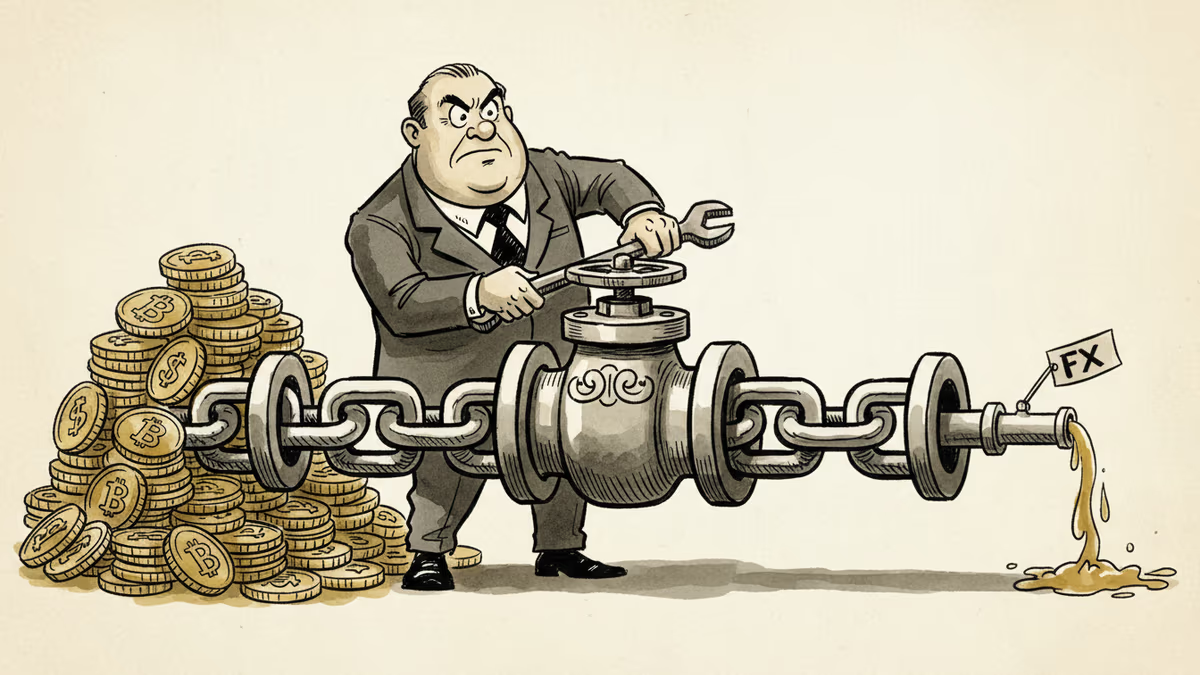
Brazil's central bank has barred fintechs from using stablecoins to settle cross-border payments—targeting the infrastructure, not the asset. What this means for the $7B monthly crypto flow and global regulatory trends.
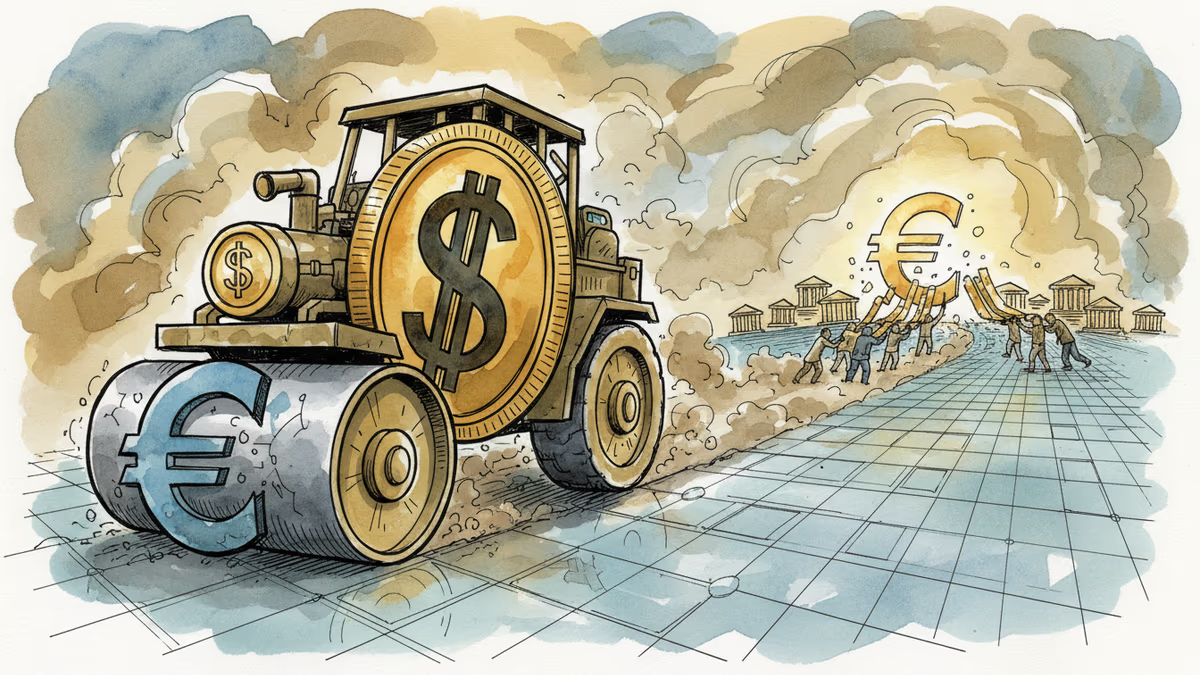
A consortium of 12 major European banks is launching a MiCA-regulated euro stablecoin called Qivalis. With 99.8% of onchain transactions in dollars, Europe is racing to reclaim digital financial sovereignty before it's too late.
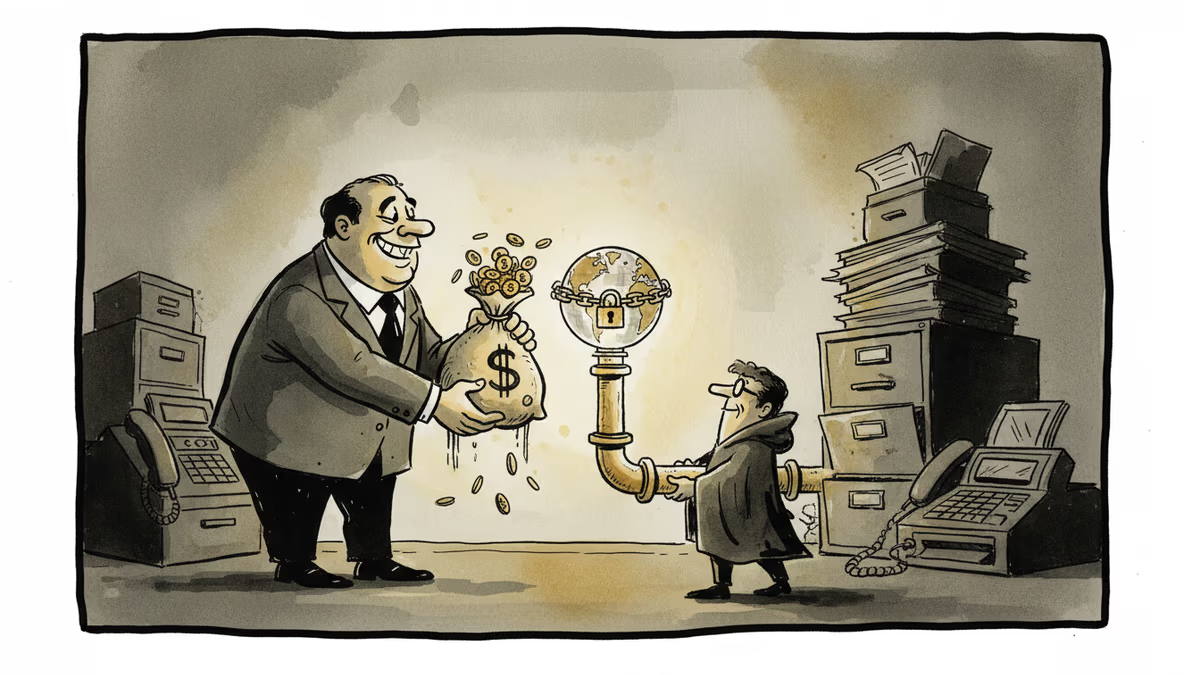
Mastercard's $1.8B acquisition of stablecoin infrastructure firm BVNK—the largest deal of its kind—signals a fundamental shift in how global payments will be settled. Here's what it means for your money.

Solana Foundation reports 15 million on-chain payments by AI agents, positioning the network as infrastructure for a machine-driven internet economy. What happens when AI holds the wallet?
Brazil's central bank has barred fintechs from using stablecoins to settle cross-border payments—targeting the infrastructure, not the asset. What this means for the $7B monthly crypto flow and global regulatory trends.
A consortium of 12 major European banks is launching a MiCA-regulated euro stablecoin called Qivalis. With 99.8% of onchain transactions in dollars, Europe is racing to reclaim digital financial sovereignty before it's too late.
Mastercard's $1.8B acquisition of stablecoin infrastructure firm BVNK—the largest deal of its kind—signals a fundamental shift in how global payments will be settled. Here's what it means for your money.
Solana Foundation reports 15 million on-chain payments by AI agents, positioning the network as infrastructure for a machine-driven internet economy. What happens when AI holds the wallet?
Thoughts
Share your thoughts on this article
Sign in to join the conversation