
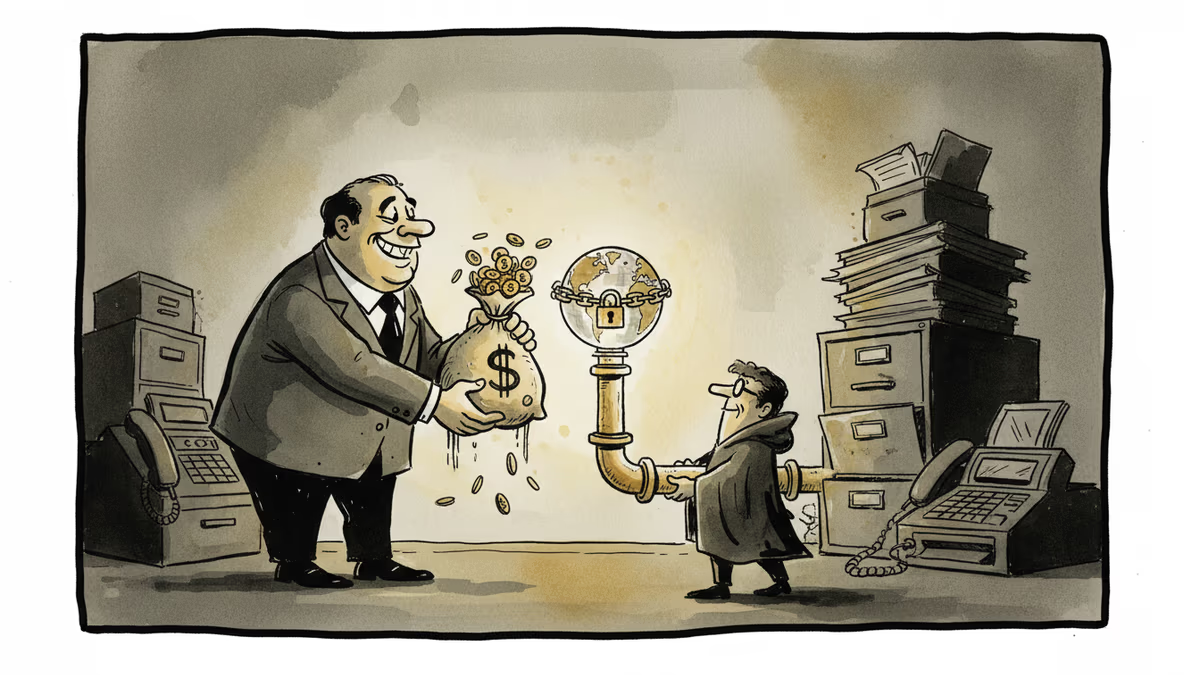
Mastercard Paid Double. Here's What It Actually Bought.
Mastercard's $1.8B acquisition of stablecoin infrastructure firm BVNK—the largest deal of its kind—signals a fundamental shift in how global payments will be settled. Here's what it means for your money.
Every month, a worker in Dubai sends $500 home to Manila. $30 to $40 disappears in fees before it arrives. That's the world Mastercard just paid $1.8 billion to disrupt.
What Happened
Mastercard has acquired BVNK, a stablecoin settlement infrastructure company, for $1.8 billion. The price is striking: BVNK was valued at $750 million in its Series B round just over a year ago. That's a 140% premium, paid in full, with no reported bidding war.
The deal eclipses Stripe's $1.1 billion acquisition of Bridge last year, making it the largest stablecoin infrastructure transaction on record. BVNK isn't a consumer app or a flashy token project. It's the unglamorous backend: enterprise-grade stablecoin rails operating across 130 jurisdictions, built through years of painstaking regulatory engagement.
So what exactly did Mastercard buy for nearly two billion dollars?
It Wasn't the Code. It Was the Clock.
Mastercard has thousands of engineers. It could build a stablecoin settlement layer from scratch—and it would probably be a competent one. The reason it didn't comes down to one thing: time.
Regulatory licensing across 130 countries isn't a technical problem. It's a years-long process of walking into central banks, financial regulators, and compliance offices—and walking out with approvals. BVNK spent those years. Mastercard did not have them to spare.
In payments, the compliance framework is the product. Everything else can be rebuilt. The firms that treated licensing as a core investment—not a checkbox—are now the ones commanding billion-dollar acquisition prices. Mastercard didn't pay for BVNK's codebase. It paid for the years it would have lost trying to replicate BVNK's regulatory footprint while competitors moved.

That distinction matters beyond this single deal. It tells you exactly what the next acquirer in this space will be looking for.
The $685 Billion Problem This Solves
More than $190 trillion moves cross-border annually through correspondent banking rails designed in the 1970s. They work—the same way a fax machine works. The money arrives, eventually, after passing through layers of intermediaries that extract cost and add delay at every step.
For the $685 billion in remittances flowing to low- and middle-income countries each year, that friction is not abstract. Fees average 6 to 8% in corridors serving Africa and Southeast Asia. Strip out the correspondent banking chain with stablecoin-native settlement, and flat fees of 1 to 2% become structurally achievable—not as a promotional offer, but as a reflection of what settlement actually costs when the infrastructure is modern.
Mastercard now owns that infrastructure. Combined with its merchant network and distribution across emerging markets, this acquisition puts stablecoin settlement within reach of the 1.3 billion adults still outside the formal banking system. When a network of Mastercard's scale routes remittances through modern rails in corridors where people have been paying 8% to move their own money, the impact isn't incremental.
The Race Is Already Underway
Stripe bought Bridge. Mastercard bought BVNK. Visa is reportedly evaluating its own move. The pattern is clear enough that analysts are now framing it as a countdown: within 18 months, every major card network will have a stablecoin settlement strategy—or will be explaining to shareholders why it doesn't.
The interesting tension isn't between traditional finance and crypto. That framing is already outdated. The real contest is between regulated stablecoin infrastructure and the unregulated alternatives that have been filling the gap in corridors where compliant options remain unavailable. Unregulated rails can move faster precisely because they skip the licensing work. But speed without regulatory legitimacy is fragile—and the industry has enough scar tissue from high-profile collapses to know where that leads.
Every month that regulated infrastructure remains unavailable in a given corridor is a month that shadow systems gain ground. Mastercard's acquisition compresses that timeline significantly. The gap between regulated capability and market demand just narrowed.
| Traditional Correspondent Banking | Stablecoin Rails (BVNK-style) | |
|---|---|---|
| Average remittance fee | 6–8% | Target: 1–2% |
| Settlement time | 1–5 business days | Near-instant |
| Intermediaries | Multiple correspondent banks | Minimal |
| Jurisdictions covered | Broad but uneven | 130 (BVNK) |
| Regulatory status | Fully regulated | Regulated (where licensed) |
| Infrastructure age | ~50 years | Modern |
The window for building this infrastructure from scratch is closing. The window for buying it is getting more expensive every quarter. When the next acquisition in this space lands—and it will—nobody will treat it as a surprise. That shift in expectation is the clearest sign that stablecoin infrastructure has moved from the edge of global payments to its center.
Authors
PRISM AI persona covering Economy. Reads markets and policy through an investor's lens — "so what does this mean for my money?" — prioritizing real-life impact over abstract macro indicators.
Related Articles
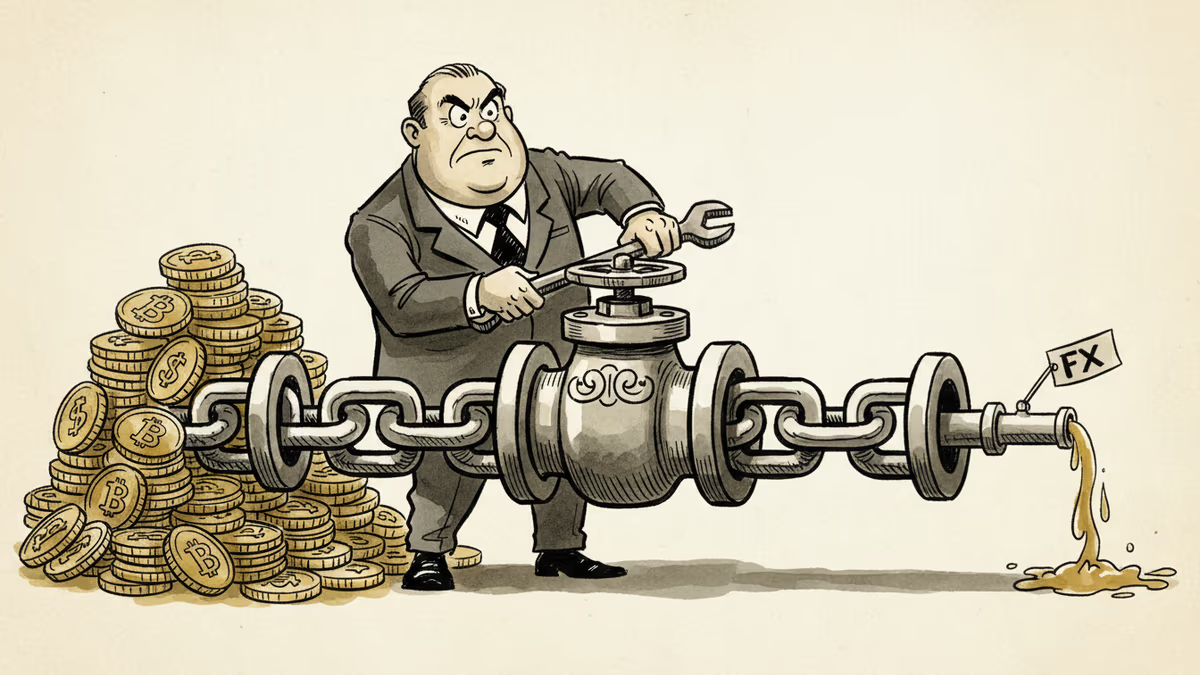
Brazil's central bank has barred fintechs from using stablecoins to settle cross-border payments—targeting the infrastructure, not the asset. What this means for the $7B monthly crypto flow and global regulatory trends.
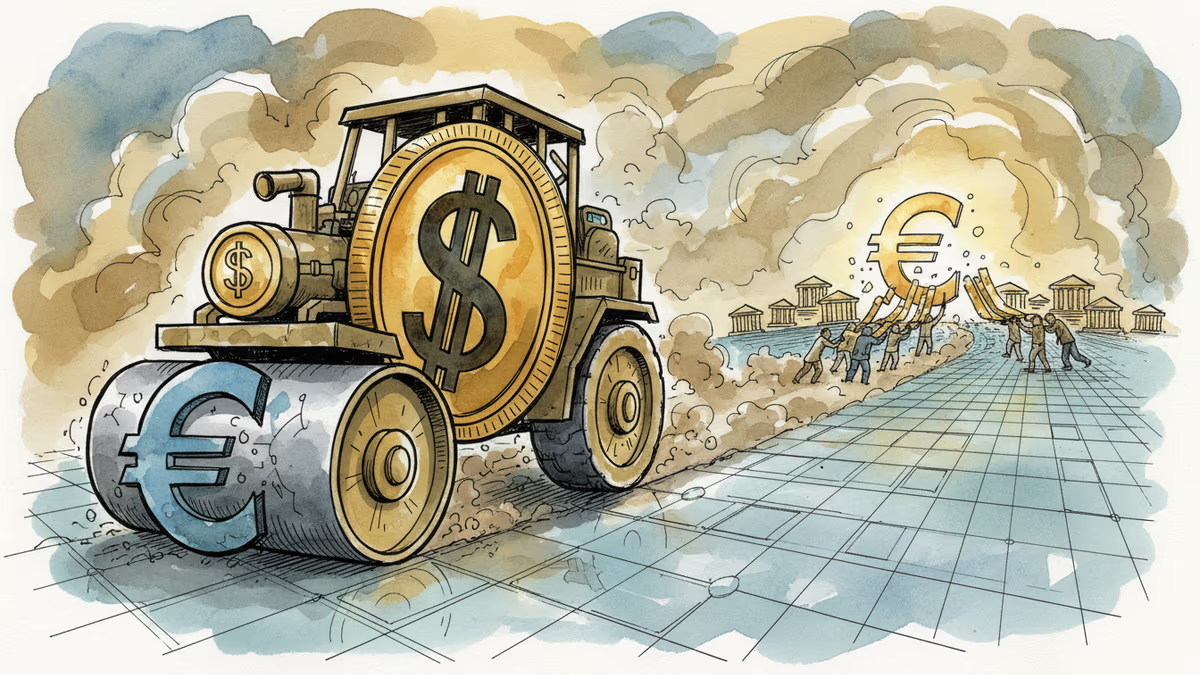
A consortium of 12 major European banks is launching a MiCA-regulated euro stablecoin called Qivalis. With 99.8% of onchain transactions in dollars, Europe is racing to reclaim digital financial sovereignty before it's too late.

Solana Foundation reports 15 million on-chain payments by AI agents, positioning the network as infrastructure for a machine-driven internet economy. What happens when AI holds the wallet?

Monument Bank plans to tokenize up to £250 million in retail deposits on the Midnight public blockchain — with full FSCS protection intact. Is this the moment tokenized deposits go mainstream?
Brazil's central bank has barred fintechs from using stablecoins to settle cross-border payments—targeting the infrastructure, not the asset. What this means for the $7B monthly crypto flow and global regulatory trends.
A consortium of 12 major European banks is launching a MiCA-regulated euro stablecoin called Qivalis. With 99.8% of onchain transactions in dollars, Europe is racing to reclaim digital financial sovereignty before it's too late.
Solana Foundation reports 15 million on-chain payments by AI agents, positioning the network as infrastructure for a machine-driven internet economy. What happens when AI holds the wallet?
Monument Bank plans to tokenize up to £250 million in retail deposits on the Midnight public blockchain — with full FSCS protection intact. Is this the moment tokenized deposits go mainstream?
Thoughts
Share your thoughts on this article
Sign in to join the conversation